
Your first visit
- Initial assessment: 60 minutes, $175. A thorough assessment, a clear explanation of what is going on, and your first treatment in the same visit.
- HICAPS on the spot for eligible health funds. No GP referral needed.
- Treated at all seven clinics: Wahroonga · St Leonards · Bella Vista · Macquarie Park · Sydney CBD · Brookvale · Roseville
Prefer to call? 1300 903 929, Monday to Friday 7:30am to 7:30pm, Saturday 7:30am to 3:00pm.
Book at Wahroonga · Bella Vista · Macquarie Park · Brookvale
Overview:
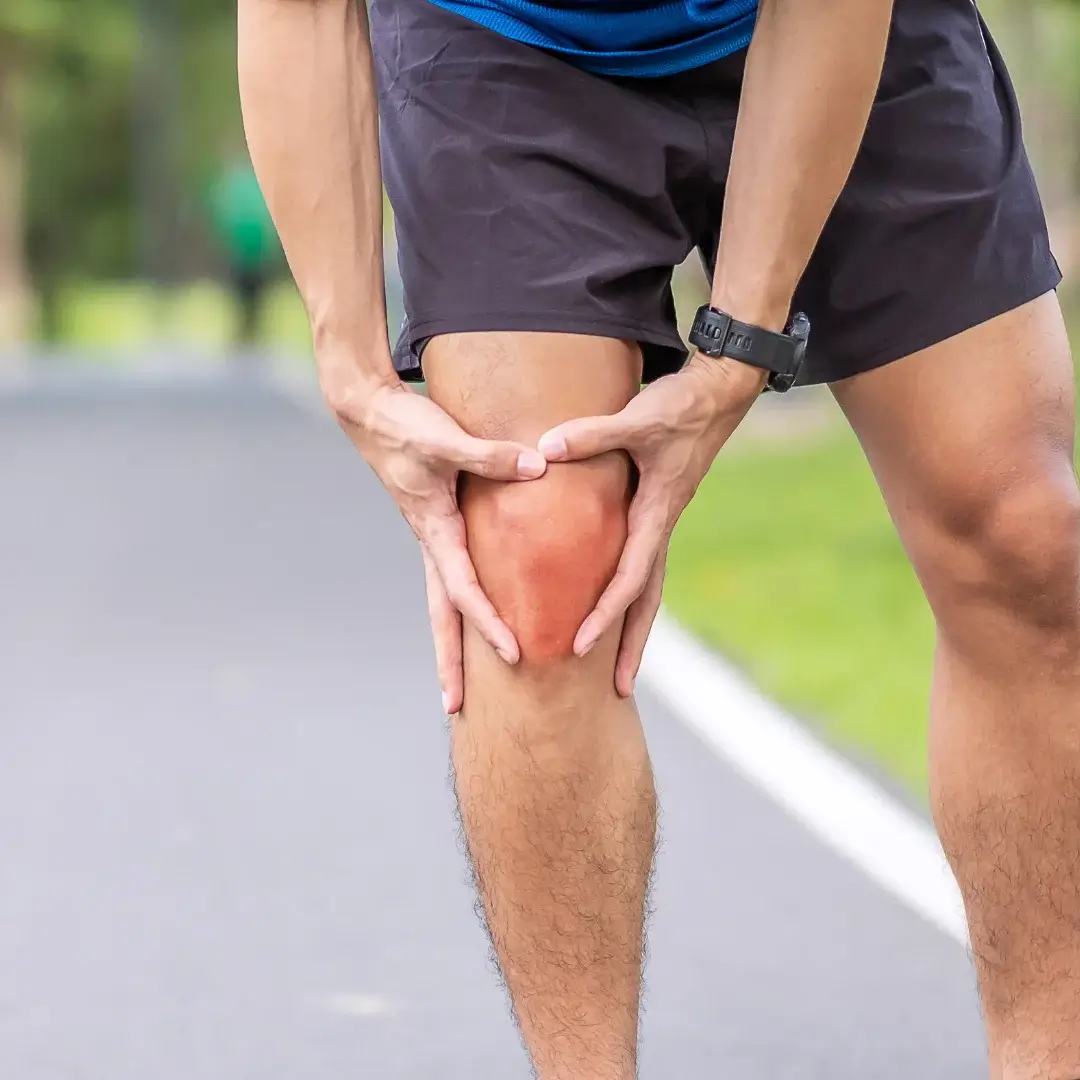
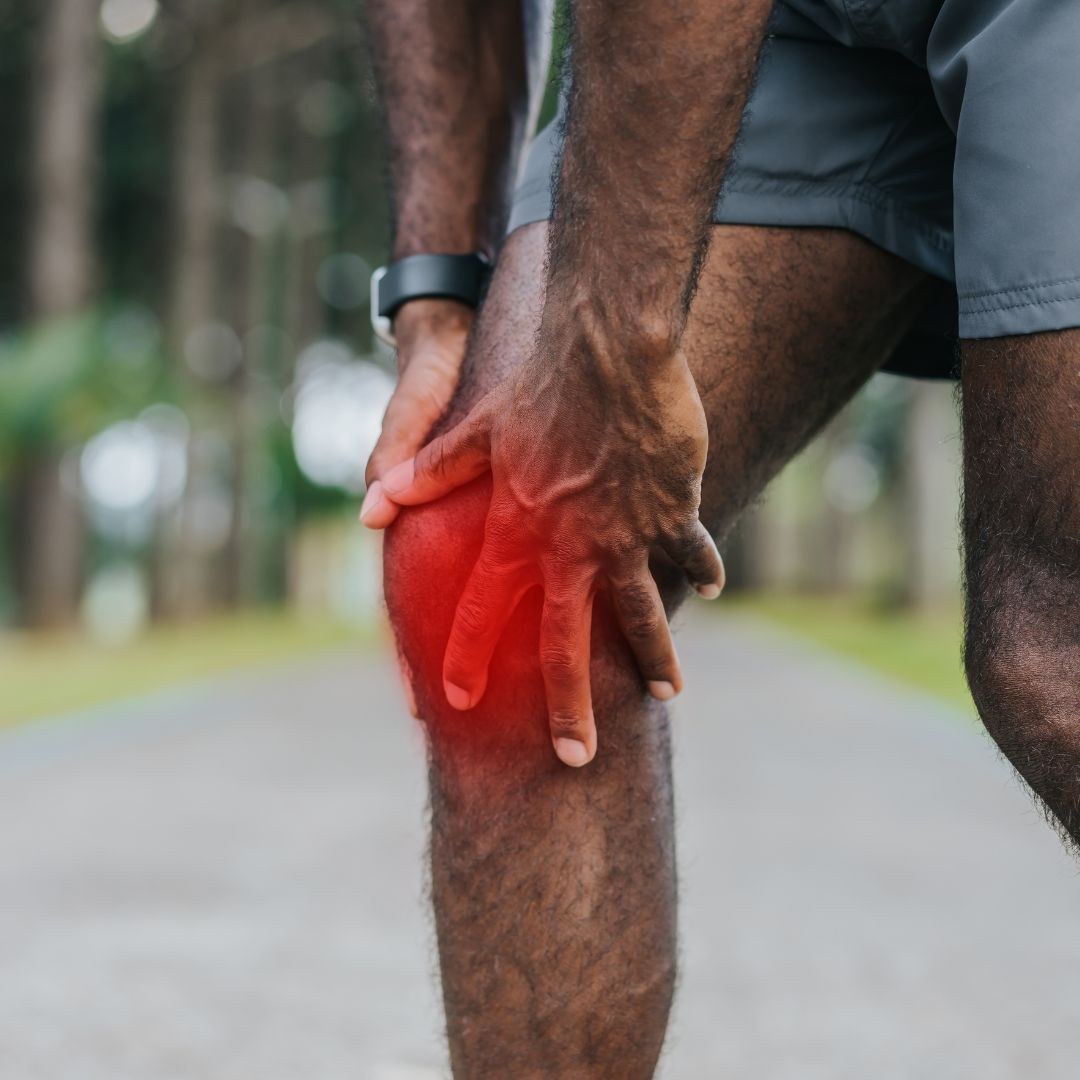
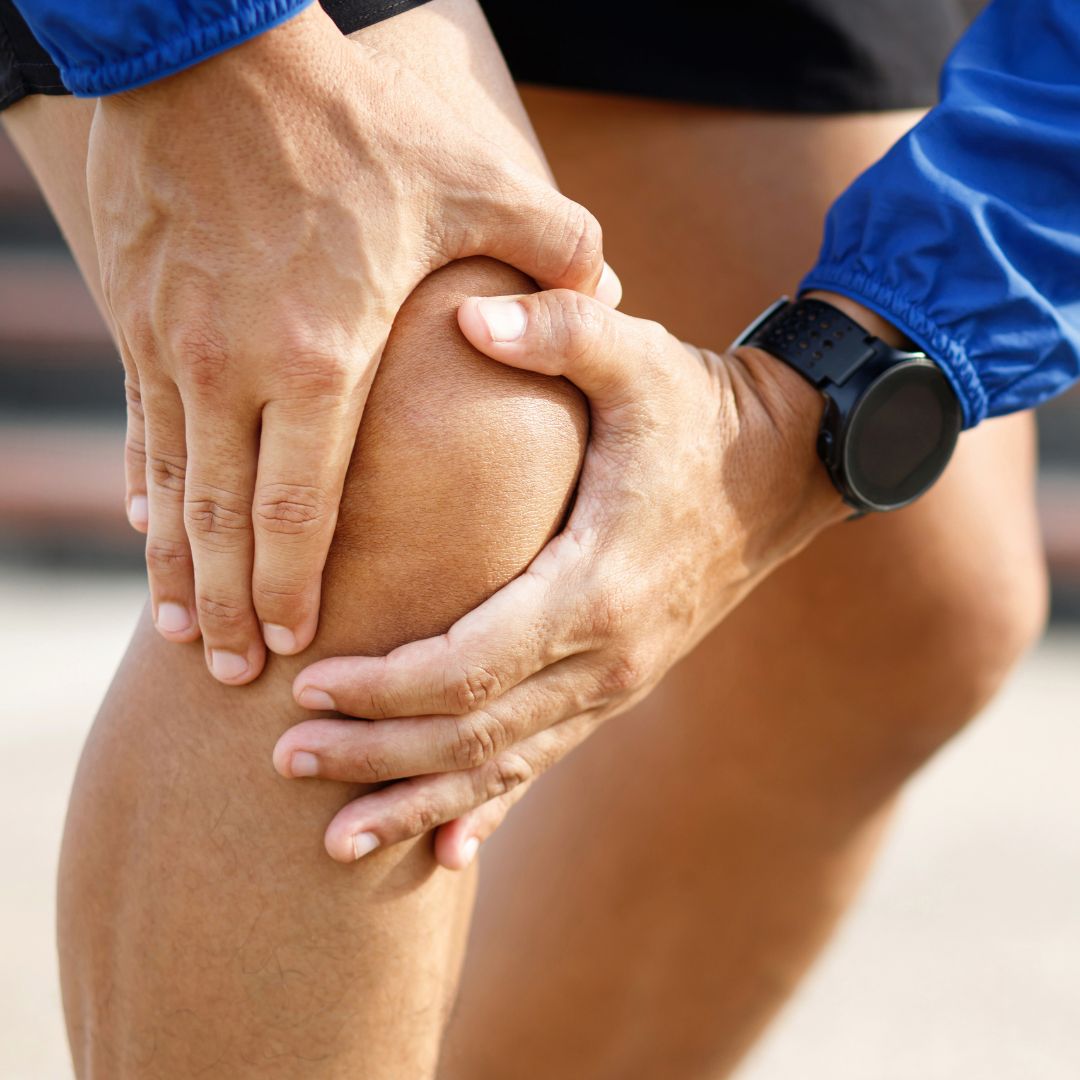
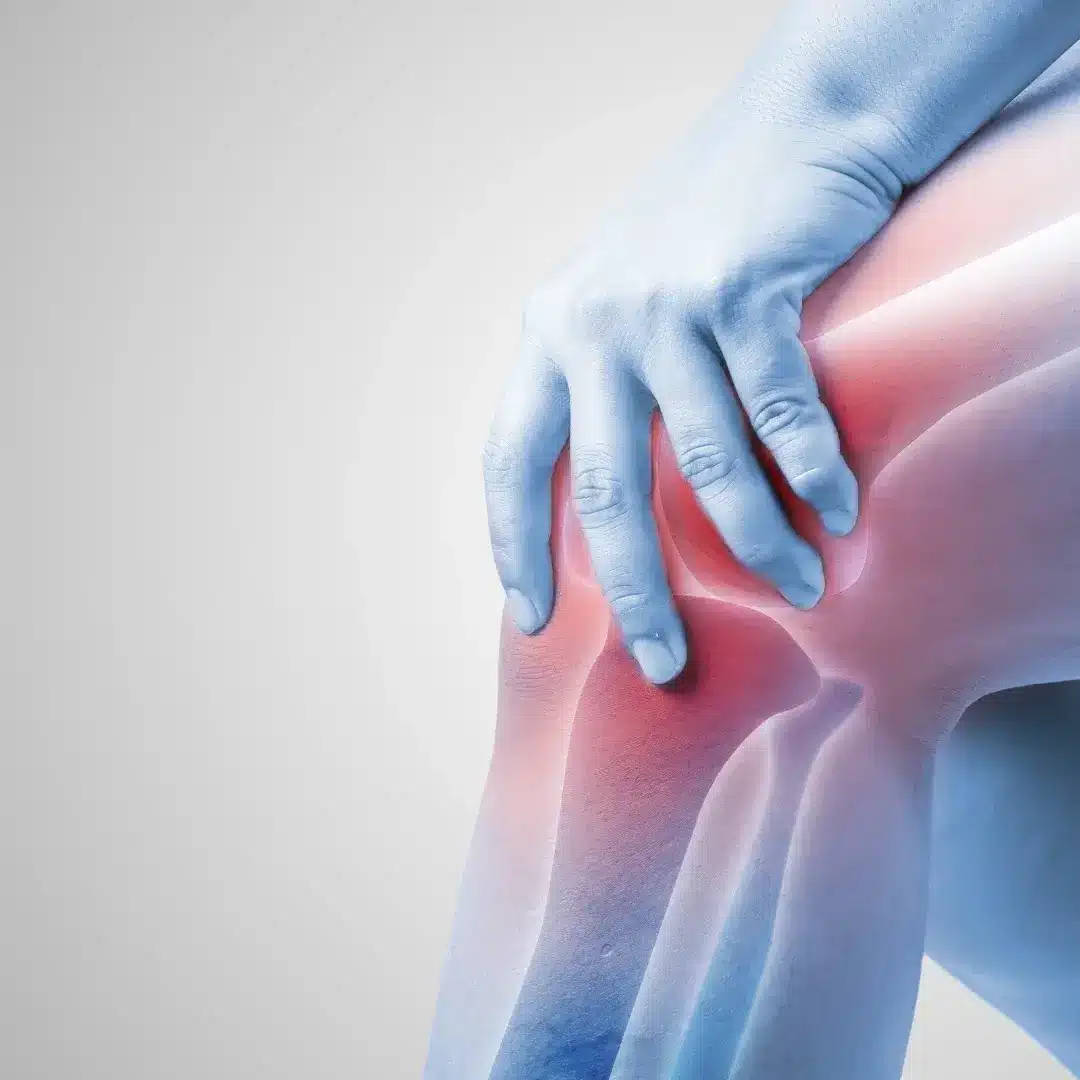
Knee pain is one of the most common reasons people come through our doors. It can arrive suddenly with a twist on a netball court, or build slowly over months of running, squatting, or kneeling at work. Either way the knee usually tells you something specific: which movements hurt, how far it will bend, and whether it swells the next morning.
The knee is not a simple hinge. It sits between the hip and the foot and carries load from both, so a sore knee is often reporting a problem that started somewhere else. That is why the assessment matters more than the label. Two people with the same diagnosis can need very different programs.
This page covers what causes knee pain, what the common presentations look like, how we assess it, and what treatment usually involves. Each condition below has its own page with more detail and exercises you can start on.
Anatomy:
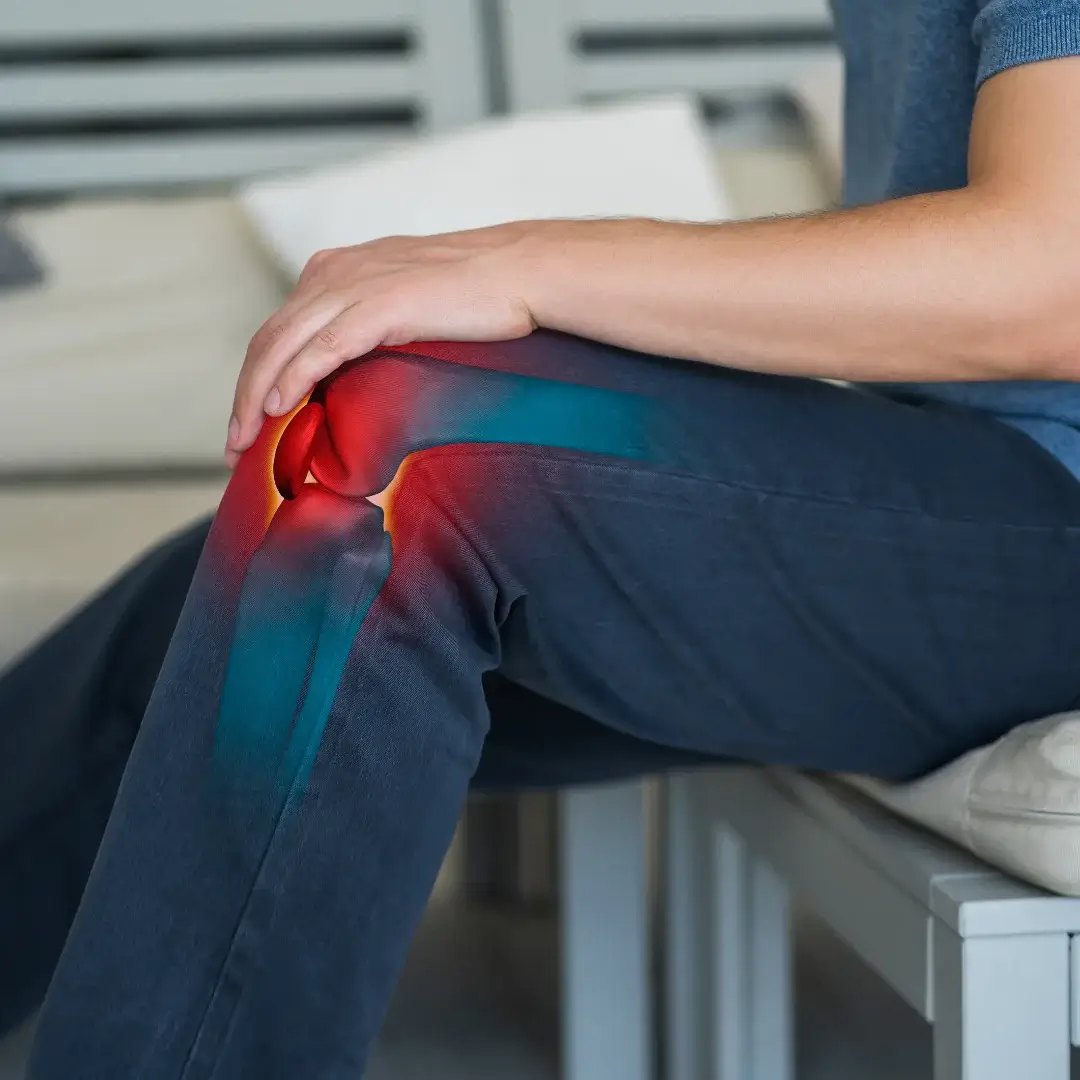
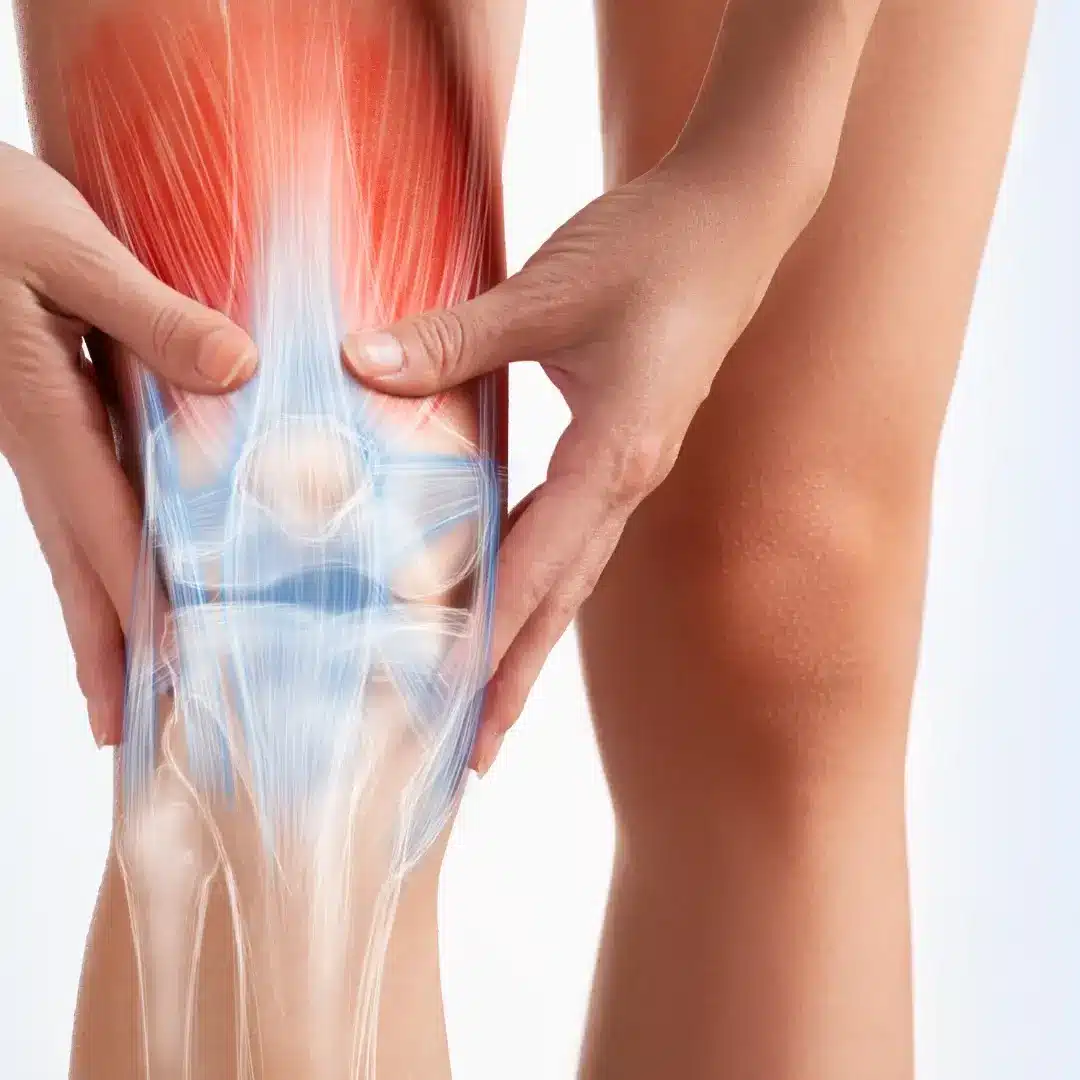
Three bones meet at the knee: the femur, or thigh bone, the tibia, or shin bone, and the patella, the kneecap. The joint has two working parts. The tibiofemoral joint is where the thigh and shin meet and carries most of your body weight. The patellofemoral joint is where the kneecap runs in a groove at the end of the femur.
Four ligaments hold it steady. The ACL and PCL cross inside the joint and control forward and backward movement of the shin. The MCL and LCL sit on the inside and the outside and control side to side movement.
Two menisci, wedges of cartilage, sit between the femur and the tibia. They spread load across the joint and help it move smoothly. Bursae, small fluid-filled sacs, reduce friction where tendons cross bone.
The quadriceps, hamstrings and calf muscles move and control the knee. The glutes matter more than most people expect. When the hip does not control the thigh well, the knee ends up absorbing forces it was not built to take.
Causes:
Knee pain is a symptom, not a diagnosis. These are the presentations we see most often.
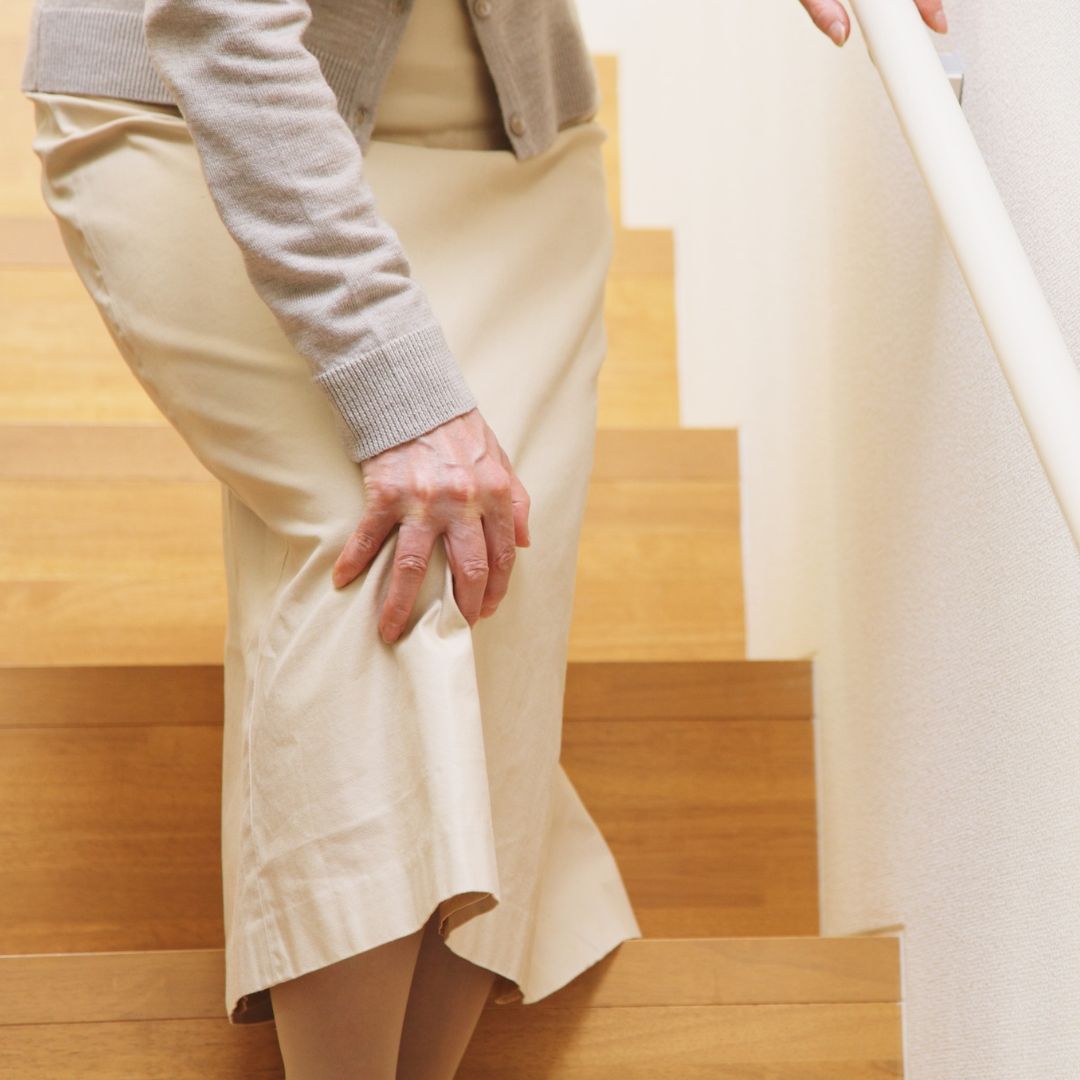
Runner’s knee, or patellofemoral pain. Pain around or behind the kneecap, worse on stairs, squatting, or after sitting for a long stretch. Common in runners and in anyone who has recently pushed their training up.
Patellar tendinopathy, or jumper’s knee. Pain at the point just below the kneecap, worse with jumping, landing and decelerating. Typical in basketball, netball and volleyball.
Knee osteoarthritis. Gradual stiffness and ache, worst first thing in the morning and after sitting, easing once you get moving. More common after 45, and after a previous knee injury.
Meniscus tear. Often a twist on a planted foot, followed by swelling over the next 24 to 48 hours. Catching, locking, or a sense that the knee will not fully straighten.
ACL tear. Usually a non-contact pivot or landing, often with a pop, rapid swelling, and a knee that feels like it will give way. This one needs prompt assessment.
MCL tear. A force to the outside of the knee that pushes it inwards. Pain and tenderness along the inside of the joint, sometimes with a feeling of giving way sideways.
Osgood-Schlatter disease. A tender bump below the kneecap in growing adolescents, worse with running and jumping. It settles with time, but managing training load makes the months in between a lot easier.
Knee bursitis. Swelling and tenderness over the front of the knee, often after prolonged kneeling at work or on a renovation.
ITB syndrome. Sharp pain on the outside of the knee that turns up at a predictable point in a run. Driven more by hip control and training load than by the band itself.
Symptoms:
Knee pain does not always sit where the problem is. What we pay attention to:
- Where the pain is. Front, inside, outside, or deep in the joint.
- What brings it on. Stairs, squatting, running, kneeling, twisting, or sitting still.
- Swelling, and how fast it came on. Swelling within an hour or two points to bleeding inside the joint. Swelling that builds over a day or two usually points somewhere else.
- Mechanical symptoms. Catching, locking, or the knee giving way.
- Stiffness, and whether it is worse in the morning or after activity.
- Whether the pain wakes you at night, or stops you getting to sleep.
Diagnosis and Tests:
Most knee pain is worked out from the history and the physical examination. Imaging is used to answer a specific question, not as a starting point.
- History. When it started, what you were doing at the time, what makes it better and worse, and what you need to get back to.
- Movement assessment. Watching you walk, squat, step down and balance on one leg shows how the hip, knee and foot are working together.
- Joint testing. Specific tests for the ligaments and the menisci, plus range of motion and swelling.
- Strength testing. Quadriceps, hamstring and glute strength, compared side to side.
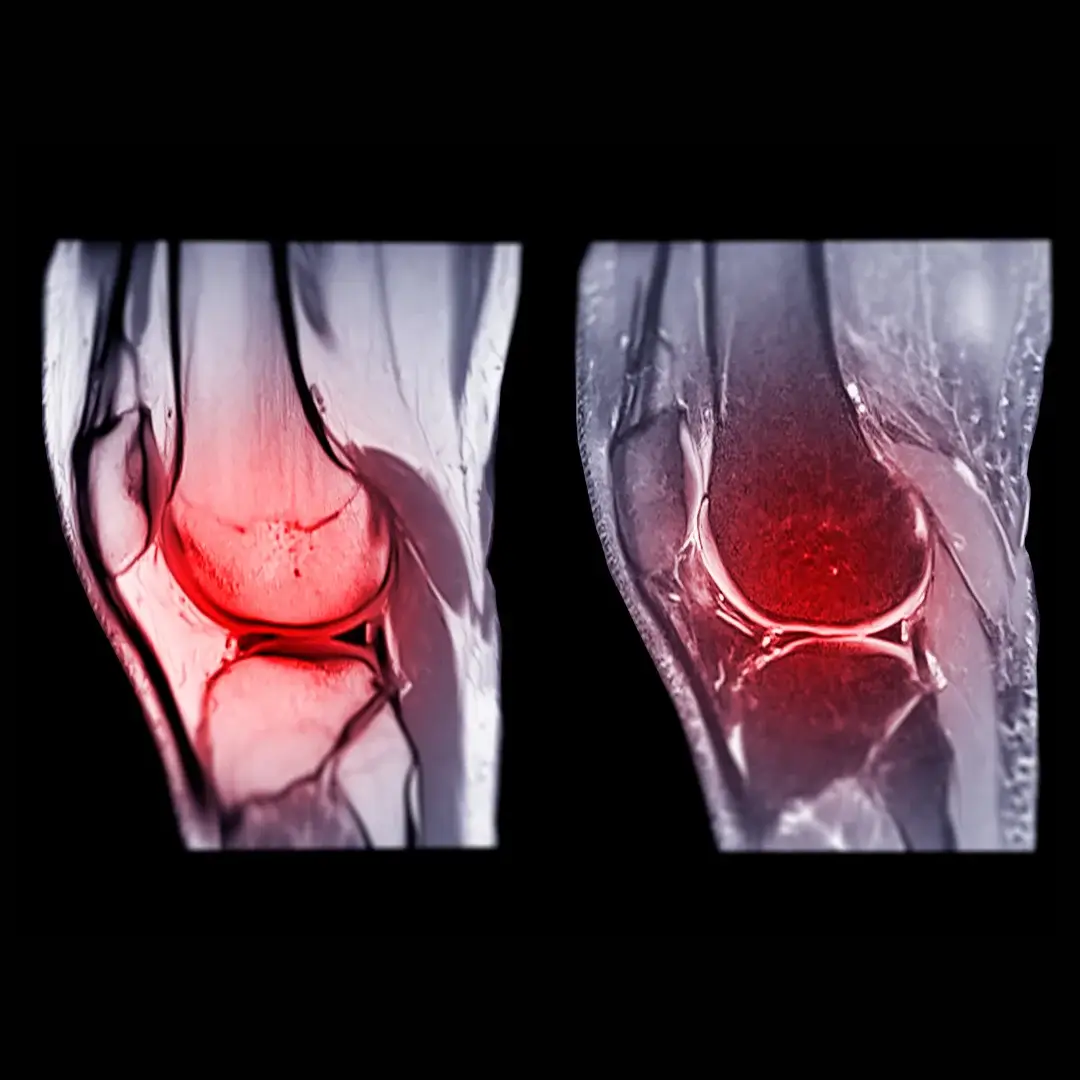
- Imaging. X-ray for a suspected fracture or to look at arthritic change. MRI when a ligament or meniscus injury would change the plan. Plenty of people over 40 have meniscal wear on MRI with no pain at all, which is why a scan is read alongside the examination rather than instead of it.
Treatment:
What we do depends on what is driving the pain, but the shape of it is consistent.
- Settling the irritated tissue. Adjusting load in the short term, with hands-on treatment and soft tissue work where it helps.
- Restoring movement. Getting full bend and full straightening back. A knee that will not straighten fully changes how you walk, and that shows up elsewhere.
- Rebuilding strength. Quadriceps strength is the most consistent factor across almost every knee condition. Hip and calf strength matter too.
- Load management. Working out how much you can currently do without flaring it, then building from there.
- Medication and injection-based options: These sit outside a chiropractor’s scope of practice. If pain is limiting your sleep or stopping you starting rehabilitation, that is worth discussing with your GP rather than self-prescribing long term.
- Surgical opinion. For a complete ACL tear, a knee that is locking, or arthritis that has stopped responding to conservative care, referral to an orthopaedic surgeon is the right next step.
Rehabilitation:
Knee rehabilitation runs in stages, and skipping one is the most common reason pain comes back.
- Early stage. Calm the joint down, get range of motion back, and switch the quadriceps back on. Isometric holds are useful here because they load the muscle without moving the sore joint much.
- Middle stage. Build strength through range. Step-downs, split squats, bridges and hamstring work, with the load increased week by week rather than session by session.
- Late stage. Add speed, direction change and landing. This is the stage most people skip, and it is the one that matters if you are going back to running or field sport.
- Return to sport. Compare the injured side to the other side under load, not at rest. A knee can feel fine walking and still be well short of what a game asks of it.
Most people are given three or four exercises at a time, not a long list. The individual condition pages have a starting set with images.
Prevention:
- Build training load gradually. Most running and jumping knee pain follows a jump in volume or intensity, not a single bad session.
- Keep quadriceps and glute strength up in the off season, not just during it.
- Do not train through sharp pain, swelling, or a knee that gives way. Those three are worth getting looked at.
- Kneel on a pad if your work involves kneeling, and break it up rather than doing it for hours at a stretch.
- Warm up properly before change-of-direction sport. Programs like the FIFA 11+ reduce knee injury rates in field sport and take about 15 minutes.
Outlook/Prognosis:
Most knee pain settles. Patellofemoral pain and ITB syndrome usually respond within 6 to 12 weeks when training load is managed and hip and quadriceps strength improve. Tendinopathies take longer, often 3 to 6 months, because tendon adapts slowly. Osteoarthritis is managed rather than cured, and strength work is the part with the strongest evidence behind it.
Ligament and meniscus injuries vary the most. Some are managed without surgery and do well. Others need an orthopaedic opinion early. What we can tell you after an assessment is which category yours is likely to be in, and what the next four weeks should look like either way.
When to seek help sooner:
Book in promptly, or see your GP or an emergency department, if you have any of the following.
- You could not weight bear on the leg straight after the injury, or cannot now.
- The knee swelled up within an hour of the injury.
- The knee is locked and will not fully straighten.
- The joint is hot, red, and you feel unwell or feverish.
- There was an obvious deformity, or you heard a crack at the time.
- You have numbness, pins and needles, or a foot that feels cold or pale.
Common questions:
Do I need a scan first? Usually not. Most knee pain is diagnosed on assessment. We will send you for imaging when the result would actually change what we do.
Do I need a referral? No. You can book directly with a chiropractor in Australia. If you are on a GP care plan, bring the paperwork.
Should I rest it completely? Rarely. Complete rest costs you quadriceps strength quickly and the knee is usually worse for it. The aim is to change what you do, not stop doing everything.
Is clicking or grinding a problem? On its own, no. Painless noise from a knee is very common and is not a sign of damage. Noise with pain, swelling or giving way is worth assessing.
Can I keep running? Often yes, at a reduced volume, on flatter ground, and with strength work alongside it. That gets decided at the assessment based on how the knee behaves during and after a run.
Can I claim on private health? HICAPS on-the-spot claiming is available at all seven clinics for eligible health funds. Rebates depend on your level of cover.
!– wp:heading –>
Book at your nearest clinic
Booking online takes under a minute. No referral needed, and HICAPS on-the-spot claiming is available at every clinic for eligible health funds.
- Book Wahroonga. Chiropractic and remedial massage.
- Book St Leonards. Chiropractic and physiotherapy.
- Book Bella Vista. Women’s and children’s care, remedial massage.
- Book Macquarie Park. Multilingual consultations available.
- Book Sydney CBD. Early and lunchtime appointments.
- Book Brookvale. Inside Sky PT gym.
- Book Roseville. Satellite location.