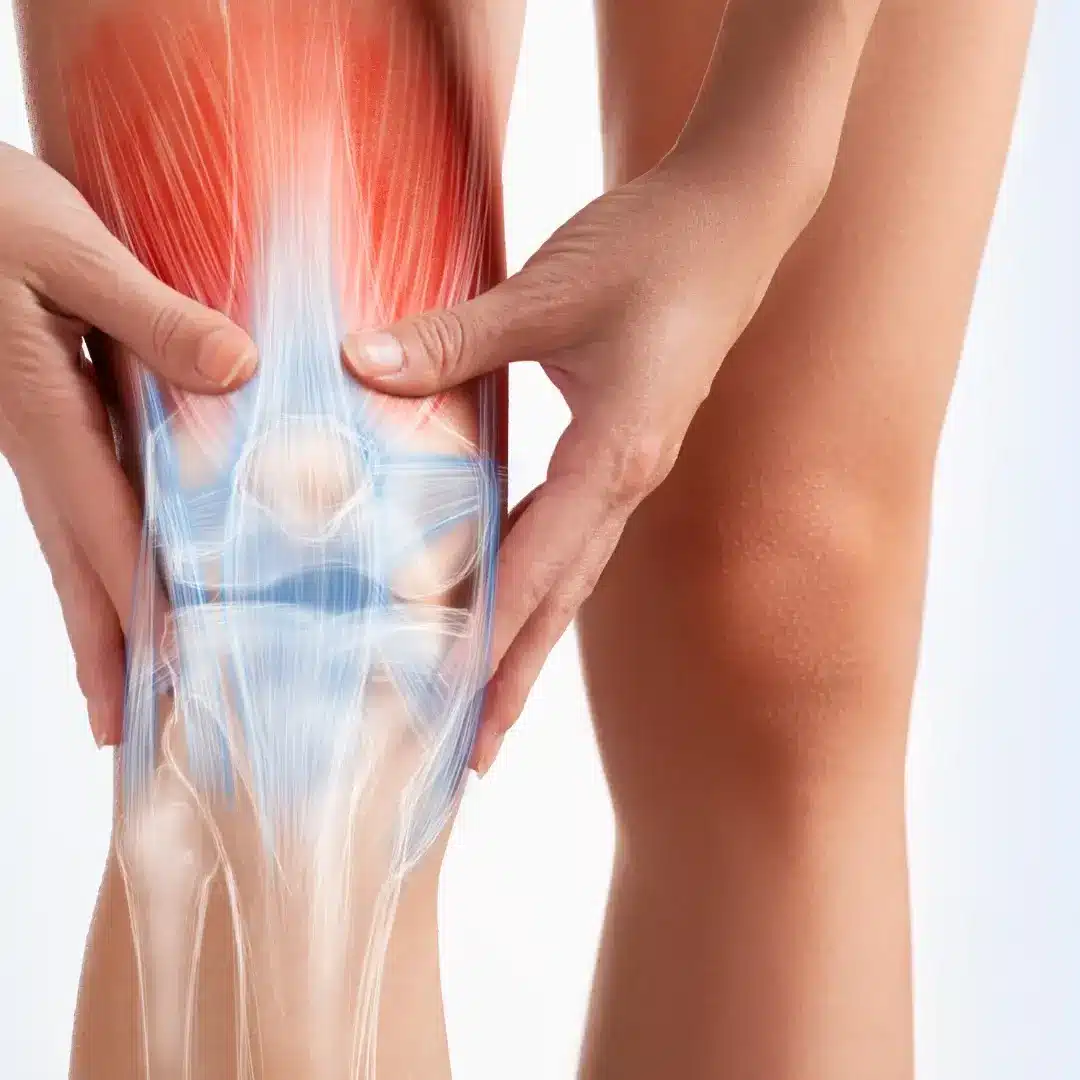

Overview:
An MCL tear, or medial collateral ligament tear, is a prevalent knee injury involving damage to the ligament on the inner side of the knee joint. The MCL plays a vital role in stabilising the knee and preventing excessive lateral movement, particularly against forces applied from the outside of the knee.
Anatomy:
The medial collateral ligament (MCL) is a strong band of tissue situated on the inner aspect of the knee joint. It connects the femur (thigh bone) to the tibia (shin bone) and provides crucial stability to the knee, especially during activities that involve side-to-side movements.
Causes:
MCL tears commonly result from:
- Sports Injuries: Participation in sports that involve rapid changes in direction, pivoting, or direct blows to the knee, such as football, soccer, or skiing, can lead to MCL tears.
- Trauma: Motor vehicle accidents, falls, or other traumatic incidents can cause sudden, excessive stress on the knee, resulting in MCL injury.
- Overuse: Repetitive strain on the knee joint due to activities like squatting, kneeling, or lifting heavy objects may contribute to MCL tears over time.
Symptoms:
Signs and symptoms of an MCL tear may include:
- Pain along the inner aspect of the knee joint.
- Swelling and tenderness, often accompanied by bruising around the knee.
- Difficulty bearing weight on the affected leg, with instability during walking or standing.
- A feeling of “giving way” or buckling of the knee, particularly when moving laterally.
Treatment:
Treatment for an MCL tear depends on the severity of the injury:
- Conservative Treatment: Mild MCL tears may heal with rest, ice, compression, and elevation (RICE therapy), along with the use of a knee brace for support. Exercise rehabilitation exercises help strengthen the knee and improve range of motion.
- Medication and injection-based options: These sit outside a chiropractor’s scope of practice. If pain is limiting your sleep or stopping you starting rehabilitation, that is worth discussing with your GP rather than self-prescribing long term.
Three exercises for an MCL tear
These three were put together by our practitioners as a starting point. They are general exercises, not a personalised program.
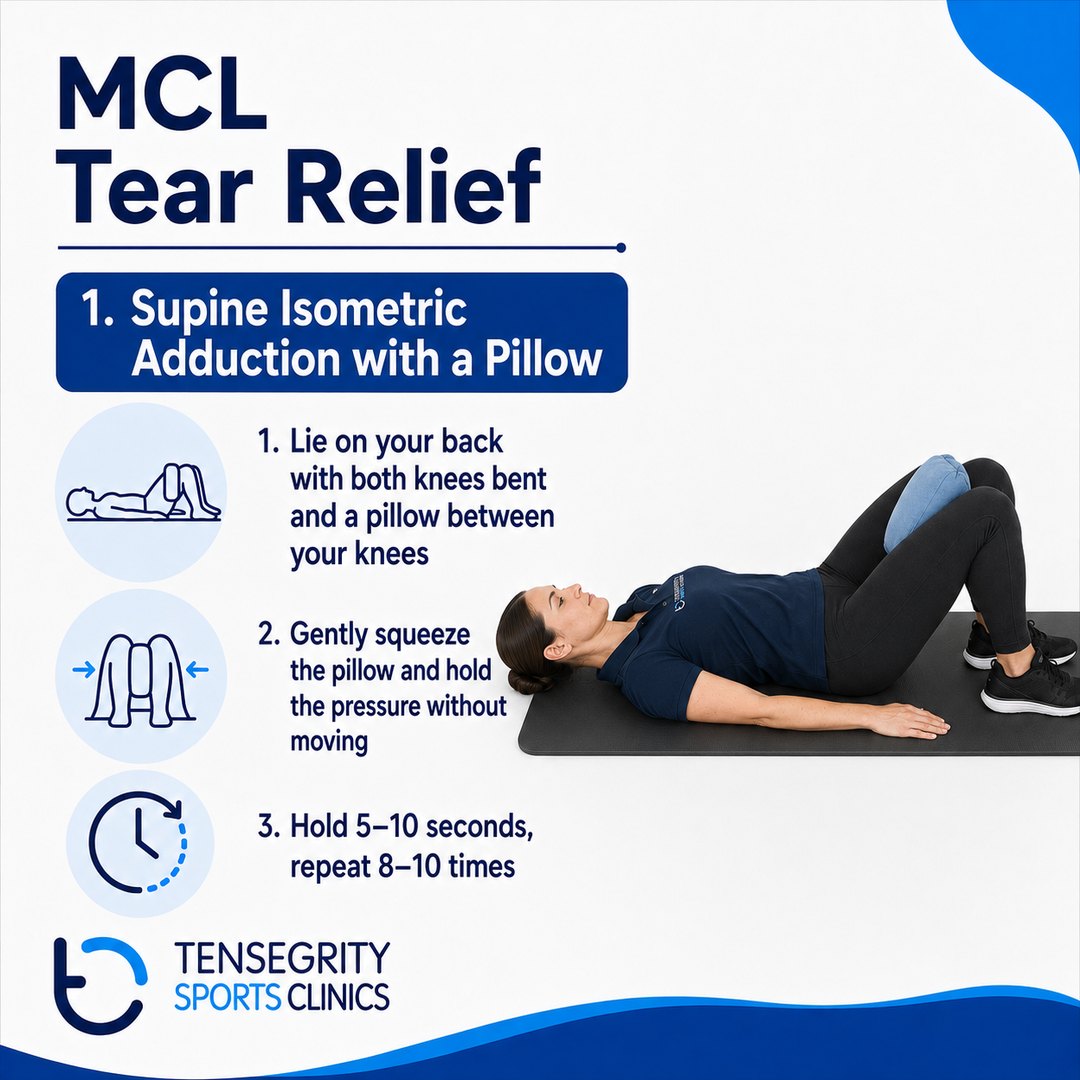
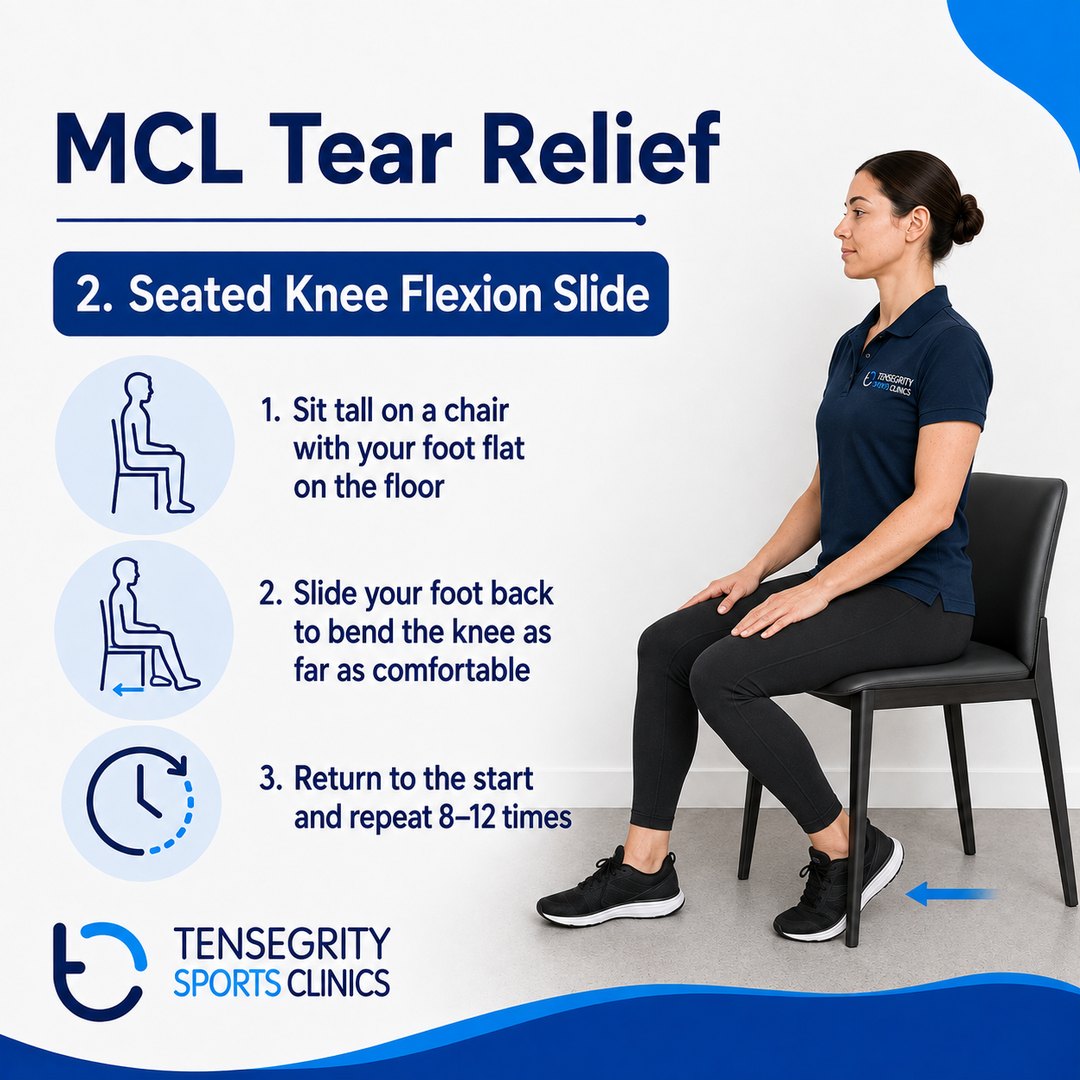
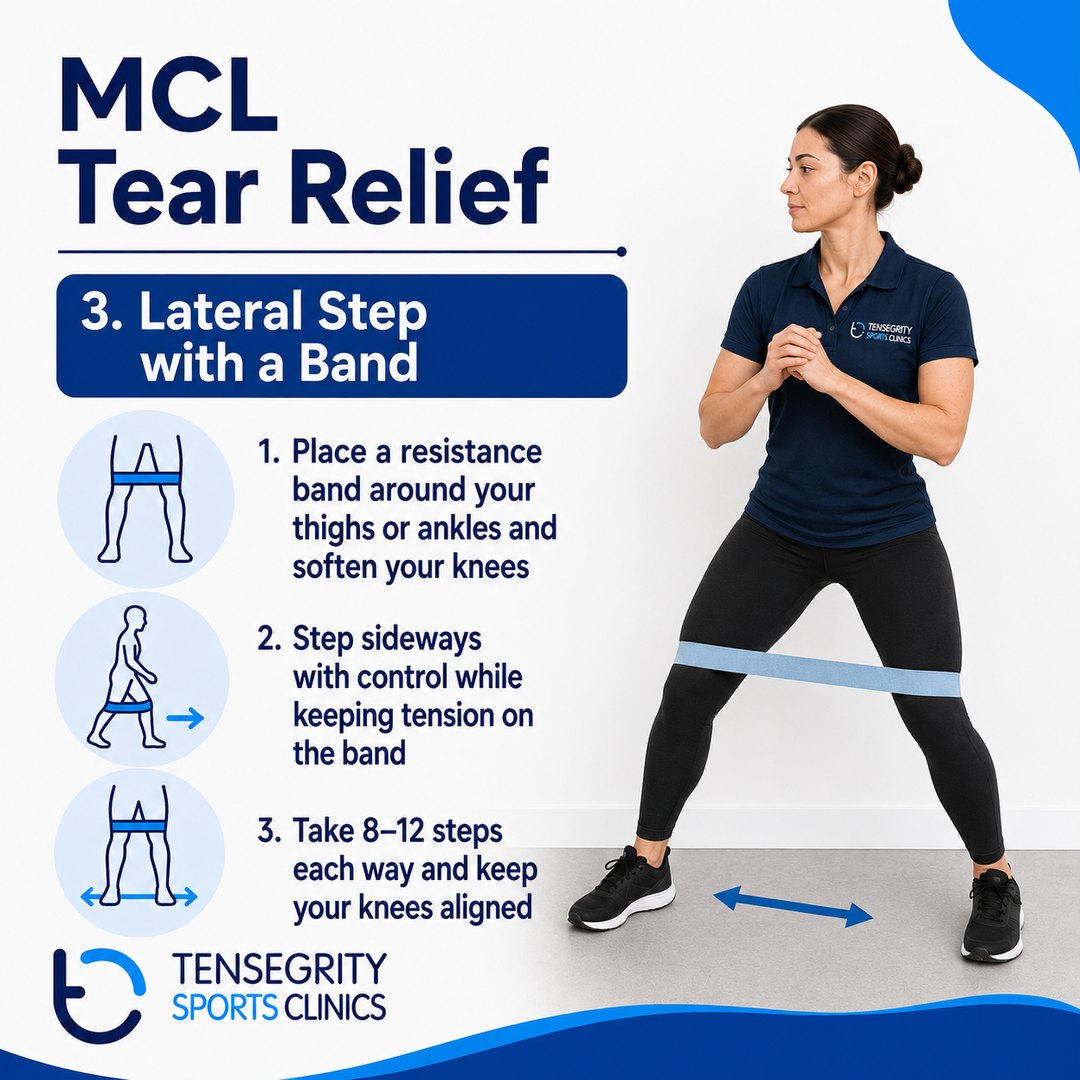
If the knee is not settling, or it still feels unstable on side to side movement, book an assessment so the loading can be matched to what the ligament can currently handle.
What our practitioners recommend:
These are the items our practitioners most often suggest for an MCL tear between appointments. They support your rehabilitation. They do not replace assessment, and what suits you depends on your presentation.
- Wobble board. For the balance and control work that follows once the ligament has settled.
- Forearm crutches. Only if your practitioner has advised offloading the knee while walking.
- Reusable gel ice pack. For icing over the inner knee in the early stage.
As an Amazon Associate I earn from qualifying purchases. We may earn a commission on these links. Our recommendations are based on clinical judgement and are not influenced by commission.
Prevention:
To reduce the risk of MCL tears:
- Warm up properly before physical activity, including stretching exercises.
- Wear appropriate protective gear during sports activities, such as knee braces or padding.
- Maintain overall knee strength and flexibility through regular exercise and conditioning.
- Practise proper techniques and body mechanics during sports and daily activities to minimise the risk of injury.
Outlook/Prognosis:
Most individuals with mild to moderate MCL tears recover well with conservative treatment and rehabilitation. However, severe tears or combined ligament injuries may require more extensive intervention, and the recovery process may be longer. With appropriate medical care and adherence to rehabilitation protocols, many individuals can regain full function and return to their previous level of activity. If you suspect an MCL tear or experience persistent knee pain or instability, consult a healthcare professional for evaluation and appropriate management.