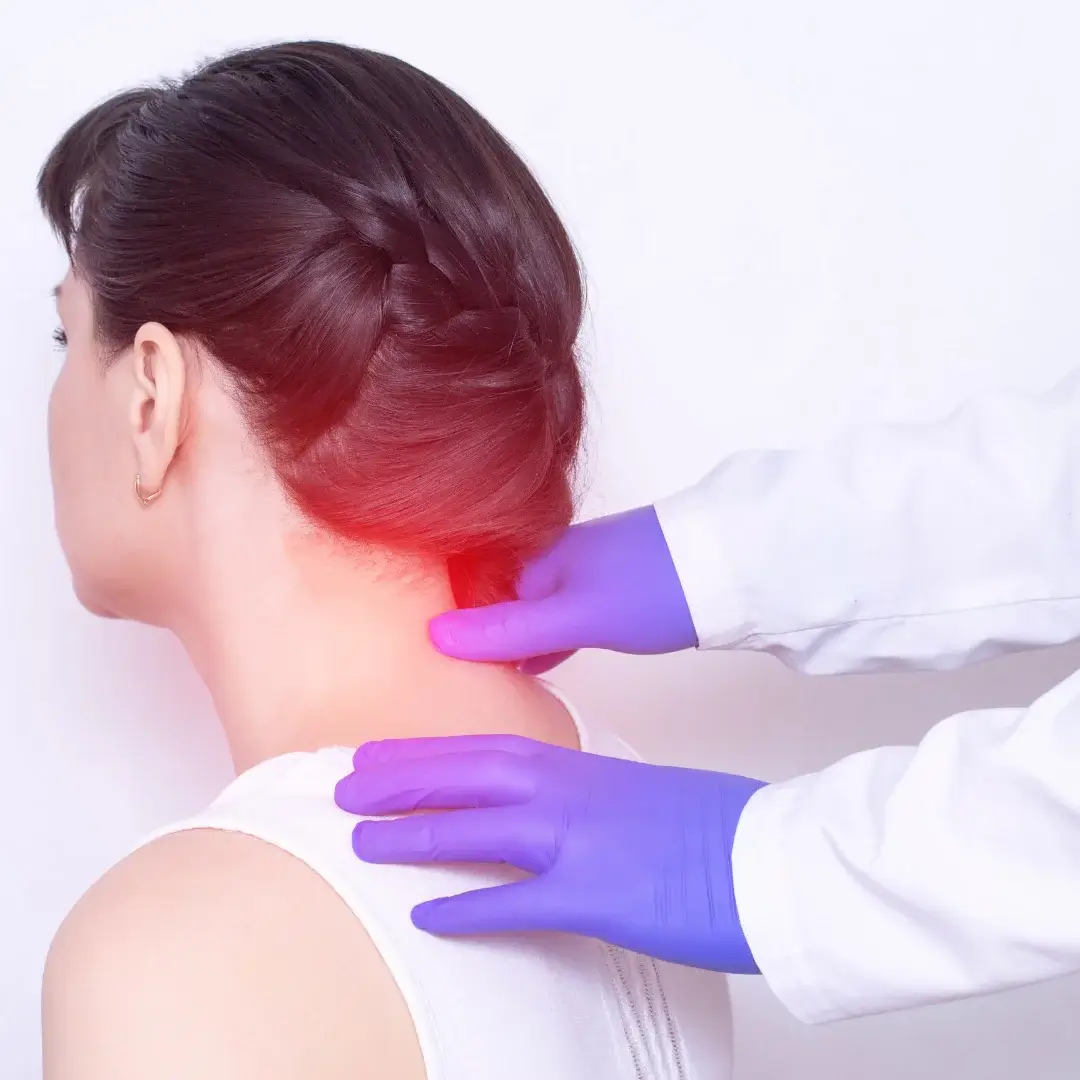

Neck pain interrupts more than most people expect. It follows you into work, into sleep, into driving and into training, and it often brings headaches with it.
At Tensegrity Sports Clinics, our team takes an evidence-based approach, starting with a thorough assessment to find what is driving your pain, then building a treatment plan and the strategies to keep it from coming back.
Overview:
Most neck pain is mechanical. The joints, discs and muscles of the cervical spine share load, and when that sharing changes, the tissue carrying more than its share becomes painful. Posture gets blamed more often than it deserves. How long you hold a position usually matters more than the position itself.
The neck also refers pain well beyond itself. Headaches, shoulder blade pain, and symptoms travelling into the arm can all originate in the cervical spine, which is why the assessment looks wider than the sore spot.
Anatomy:
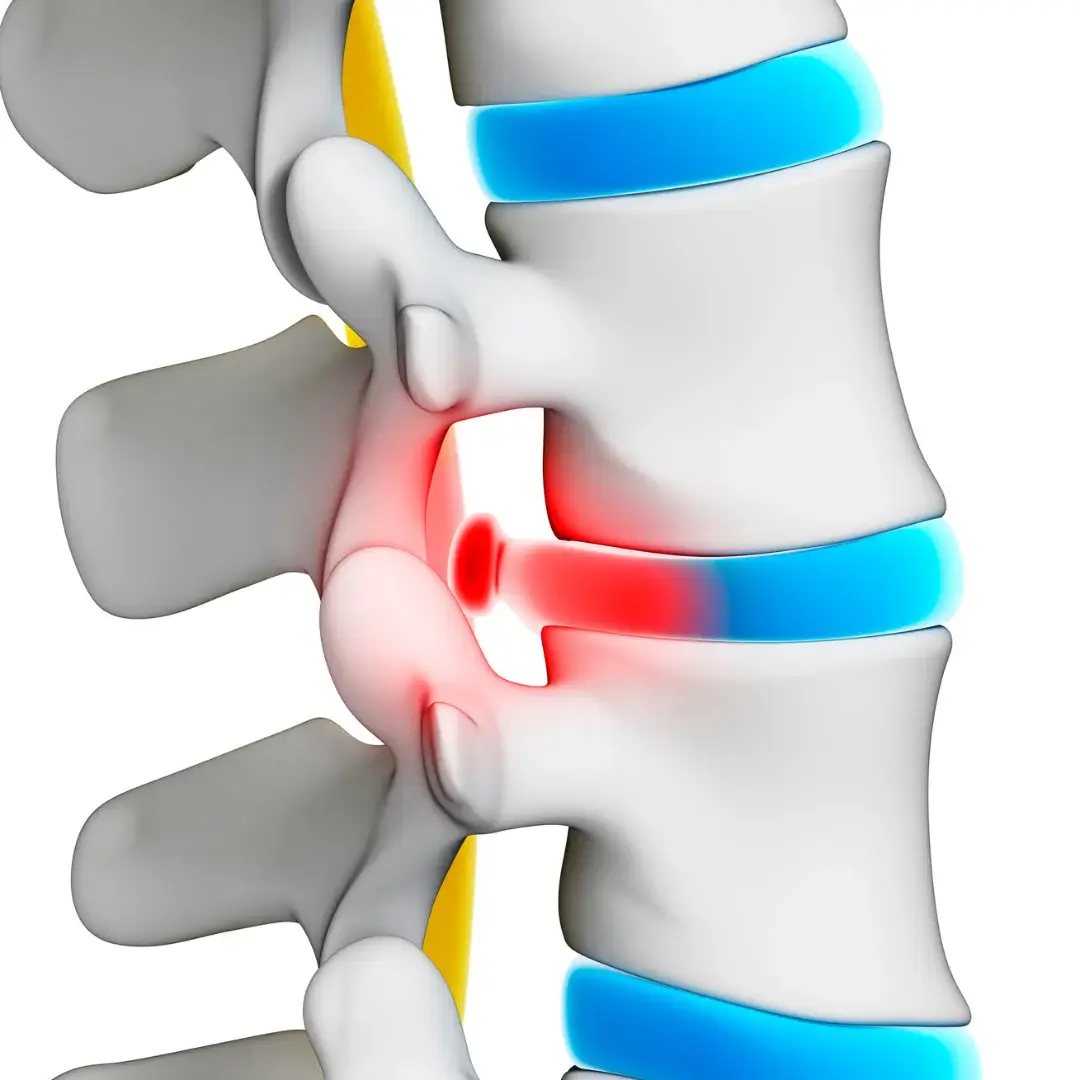
The cervical spine is seven vertebrae carrying the weight of your head, roughly five kilograms, through a large range of movement. Discs sit between the lower levels, facet joints guide rotation and side bending, and the top two segments are built almost entirely for turning.
Nerve roots exit at each level and travel into the shoulder, arm and hand. The deep neck flexors at the front and the deep extensors at the back provide fine control, while the larger muscles of the neck and shoulder girdle handle load. When the deep control fades, the larger muscles take over and fatigue, which is what most people feel as tightness.
Causes:
Neck pain is a symptom, not a diagnosis. These are the presentations we see most often.
Neck sprain. Ligaments and joint capsules loaded beyond what they tolerate, often after an awkward movement, a fall, or waking with the neck locked. Usually painful at end of range and settles well with graded movement.
Neck stiffness and tightness. Restricted movement with a constant ache through the neck and upper shoulders. Commonly load-related rather than structural, and very responsive to movement and strength work.
Whiplash. Rapid acceleration and deceleration of the head, most often in a car accident or contact sport. Symptoms can include neck pain, headache, dizziness and difficulty concentrating, and often build over the first 24 to 72 hours.
Cervicogenic headache. Headache driven by the neck rather than the head. Typically one-sided, starting at the base of the skull and spreading forward, and provoked by neck positions or movements.
Pinched nerve. A cervical nerve root irritated where it exits the spine, producing pain, pins and needles or weakness travelling into the shoulder, arm or hand. Where you feel it tells us which level is involved.
Herniated cervical disc. The outer wall of a disc bulges and can irritate a nearby nerve root. Often worse with looking up or holding the head in one position, and may be felt in the neck alone or referred into the arm.
Text neck. Load-related neck pain associated with sustained forward head positions at a phone or screen. The fix is rarely a perfect posture, it is more movement, better endurance and shorter stretches in one position.
Posture-related pain. Discomfort through the neck and upper back that builds through the day and eases with movement. Usually a capacity problem rather than a structural one.
Symptoms:
- Pain or stiffness through the neck, on one side or both
- Reduced ability to turn the head, check blind spots or look up
- Headache starting at the base of the skull
- Pain across the upper shoulders or between the shoulder blades
- Pins and needles, numbness or weakness travelling into the arm or hand
- Symptoms that build through a working day and ease with movement
Diagnosis and Tests:
A first appointment is one full hour, and most of it is assessment.
We take a history first: how it began, what provokes it, whether it travels, how it behaves overnight, and whether there were any headaches, dizziness or visual changes. We also ask what you have stopped doing, because that is what the plan is built around.
Then we assess movement through the cervical spine, the thoracic spine and the shoulder girdle, because the neck rarely works alone. Neurological testing follows where symptoms travel into the arm, checking strength, reflexes and sensation to identify which level is involved.
Most neck pain is assessed and managed without imaging. Where there has been significant trauma, where symptoms are not responding as expected, or where the neurological findings warrant it, we will refer you for a scan or for medical review and tell you why.
Treatment:
Treatment is chosen to match the assessment findings. Depending on what we find, it may include:
- Joint mobilisation and manipulation, at the cervical and thoracic spine, to restore movement where it has been lost
- Soft tissue therapy and remedial massage, through the neck, upper shoulders and muscles around the shoulder blade
- Dry needling, for myofascial trigger points contributing to the pain or the headache
- Neural mobilisation, where symptoms travel into the arm, to improve how the nerve tolerates load and length
- Cold laser therapy, used to support tissue healing and pain modulation
- Exercise rehabilitation, focused on deep neck control, shoulder girdle strength and thoracic movement
- Medication and injection-based options. These sit outside a chiropractor’s scope of practice. If pain is limiting your sleep or stopping you starting rehabilitation, that is worth discussing with your GP rather than self-prescribing long term.
Hands-on treatment is designed to make movement more comfortable so that loading can start sooner. The loading is what makes the change hold.
Rehabilitation:
Neck rehabilitation is mostly about endurance rather than raw strength. The deep neck flexors and the muscles around the shoulder blade need to hold a position for hours, not seconds, so the programs are built around low load and high repetition, progressed over weeks.
Early work restores comfortable movement and starts gentle activation. From there it builds neck and shoulder girdle endurance, thoracic mobility, and finally the specific demands of your work or sport, whether that is a long day at a screen, overhead lifting or contact sport.
How long does it take? Uncomplicated neck pain often settles over a few weeks. Nerve-related symptoms and whiplash generally take longer, and both can improve in fits and starts. Your practitioner will give you a realistic range at the first visit rather than a fixed promise.
What our practitioners recommend:
These are the items our practitioners most often suggest for neck pain between appointments. They support your rehabilitation. They do not replace assessment, and what suits you depends on your presentation.
- Contoured cervical pillow. Sleeping position is one of the most common daily contributors to neck pain, and pillow height is the usual starting point.
- Cervical traction device. Used for short daily sessions as part of a program. Not everyone is suited to it, so ask first.
- Neck and shoulder relaxer. A power free neck and shoulder relaxer used for short sessions at home.
As an Amazon Associate I earn from qualifying purchases. We may earn a commission on these links. Our recommendations are based on clinical judgement and are not influenced by commission.
Prevention:
- Break up long periods in one position. Movement matters more than the perfect chair.
- Build neck and shoulder girdle endurance. Strength work is protective, and it is the part most people skip.
- Keep the thoracic spine moving. When the upper back stiffens, the neck does more of the work.
- Set the screen at eye height and bring the phone up rather than dropping the head down.
- Finish your rehabilitation. Stopping when the pain goes, rather than when the capacity is back, is the most common reason it returns.
Outlook/Prognosis:
Most neck pain improves, and most people do not need imaging or injections to get there. Recurrence is far less likely when rehabilitation is completed rather than stopped at the point the pain eases.
Recovery is rarely a straight line, and a flare does not mean the plan has failed. What matters is the direction over weeks rather than day to day. Where symptoms are not responding as expected, we will say so and refer rather than continuing unchanged.
When to seek help sooner:
Seek medical assessment promptly if you have any of the following alongside neck pain:
- Neck pain following a significant accident, fall or head knock
- Progressive weakness, numbness or clumsiness in the arms or hands
- Problems with balance or walking, or changes in bladder or bowel control
- Severe headache unlike any you have had before, or with visual changes or slurred speech
- Fever, unexplained weight loss, or pain that is constant and unrelated to movement
Common questions:
Do I need a referral? No. You can book directly online.
Do I need a scan first? Usually not. Most neck pain is assessed and managed without imaging. Your practitioner will tell you if yours is a case where a scan changes the plan.
Is neck manipulation safe? Your practitioner will screen for the small number of situations where it is not appropriate, and will explain what they are doing and why. If you would rather not have your neck manipulated, say so. There are effective alternatives and the plan will be built around them.
Can I claim on private health? HICAPS on-the-spot claiming is available at all seven clinics for eligible health funds. Rebates depend on your level of cover.
Book at your nearest clinic
Booking online takes under a minute. No referral needed, and HICAPS on-the-spot claiming is available at every clinic for eligible health funds.
- Book Wahroonga. Chiropractic and remedial massage.
- Book St Leonards. Chiropractic and physiotherapy.
- Book Bella Vista. Women’s and children’s care, remedial massage.
- Book Macquarie Park. Multilingual consultations available.
- Book Sydney CBD. Early and lunchtime appointments.
- Book Brookvale. Inside Sky PT gym.
- Book Roseville. Satellite location.