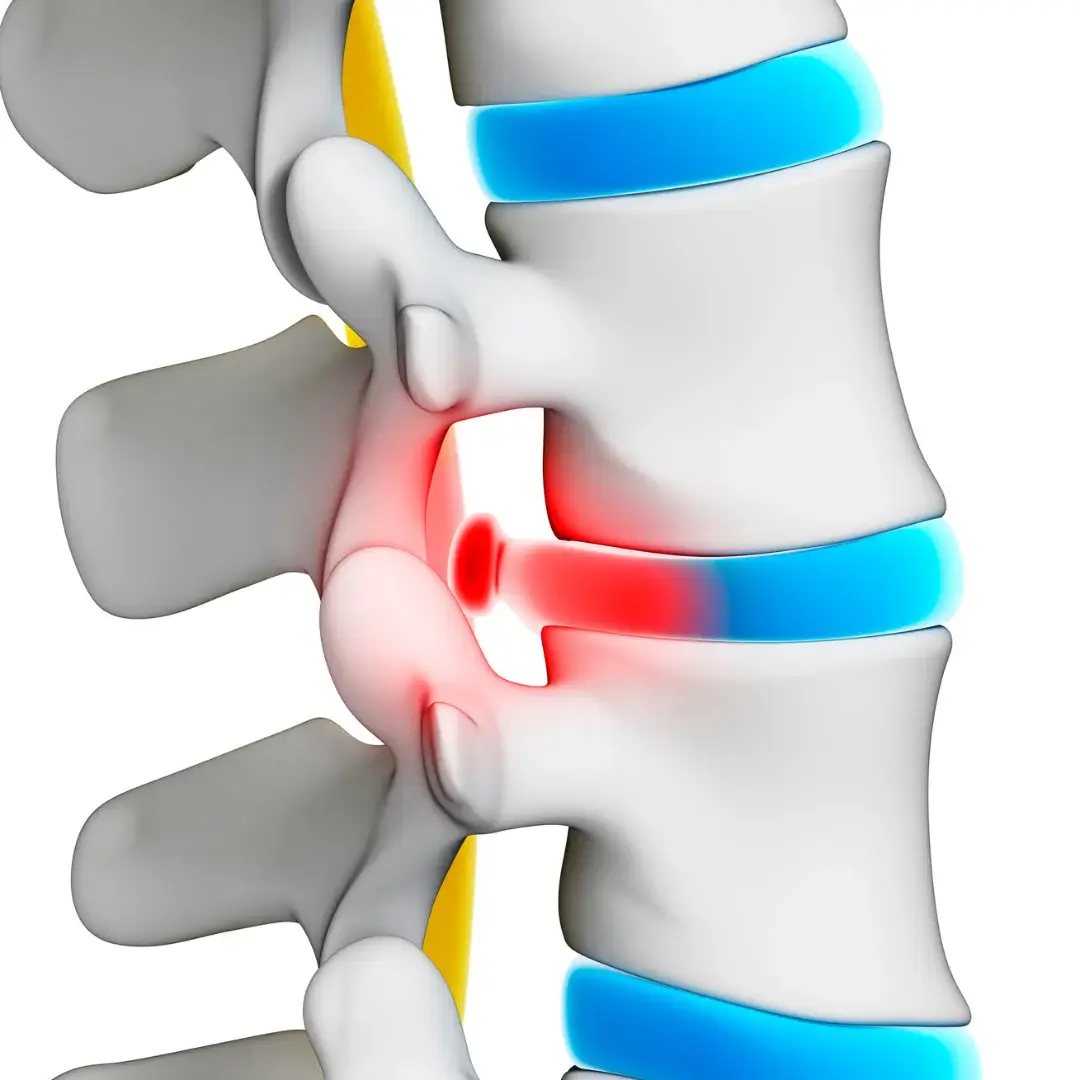

Overview:
A herniated cervical disc, commonly known as a slipped disc or ruptured disc, occurs when the soft inner core of a cervical intervertebral disc protrudes through the tough outer layer, often pressing on nearby nerves or spinal cord. This can lead to neck pain, radiating arm pain, numbness, tingling, and weakness in the upper extremities.
Anatomy:
The cervical spine consists of seven vertebrae separated by intervertebral discs, which act as shock absorbers and facilitate movement. A herniated disc typically occurs when the gel-like nucleus pulposus ruptures through a tear in the annulus fibrosus, causing compression of spinal nerves or the spinal cord.
Causes:
Herniated cervical discs can result from various factors, including:
- Degenerative changes: Age-related wear and tear of the discs, leading to disc dehydration, weakening, and susceptibility to herniation.
- Trauma or injury: Sudden impact or repetitive stress on the cervical spine, such as whiplash injuries or heavy lifting, can cause disc herniation.
- Poor posture: Prolonged sitting, slouching, or forward head posture can increase pressure on the cervical discs and contribute to disc herniation.
- Genetics: Inherited factors may predispose individuals to disc degeneration and herniation.
Symptoms:
Common symptoms of a herniated cervical disc may include:
- Neck pain, often aggravated by movement or certain positions.
- Radicular pain: Sharp, shooting pain that radiates from the neck into one or both arms.
- Numbness, tingling, or weakness in the arms or hands, indicating nerve compression.
- Muscle spasms or stiffness in the neck or upper back, as the body attempts to protect the injured area.
Diagnosis and Tests:
Diagnosis of a herniated cervical disc involves a comprehensive evaluation by a healthcare provider, including a medical history, physical examination, and diagnostic tests. Imaging studies such as X-rays, MRI, or CT scans may be used to visualise the cervical spine and identify disc herniation, nerve compression, or other structural abnormalities.
Treatment:
Treatment options for a herniated cervical disc may include:
- Exercise rehabilitation: Stretching exercises, manual therapy, and postural training can help reduce muscle tension, improve spinal alignment, and enhance mobility.
- Medication and injection-based options. These sit outside a chiropractor’s scope of practice. If pain is limiting your sleep or stopping you starting rehabilitation, that is worth discussing with your GP rather than self-prescribing long term.
Three exercises for a herniated cervical disc
These three were put together by our practitioners as a starting point. They are general exercises, not a personalised program. Stop if any of them increase the symptoms travelling down your arm.
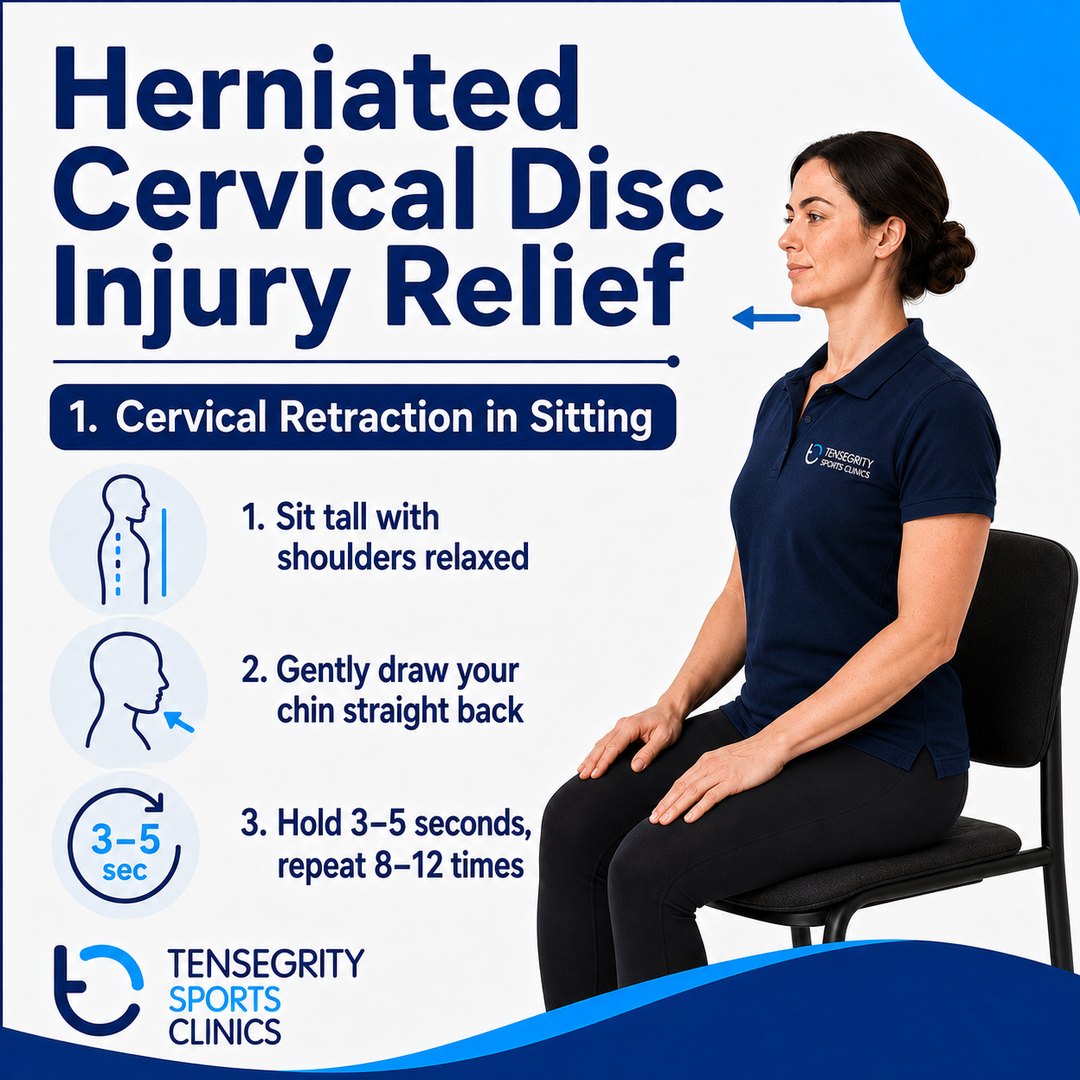
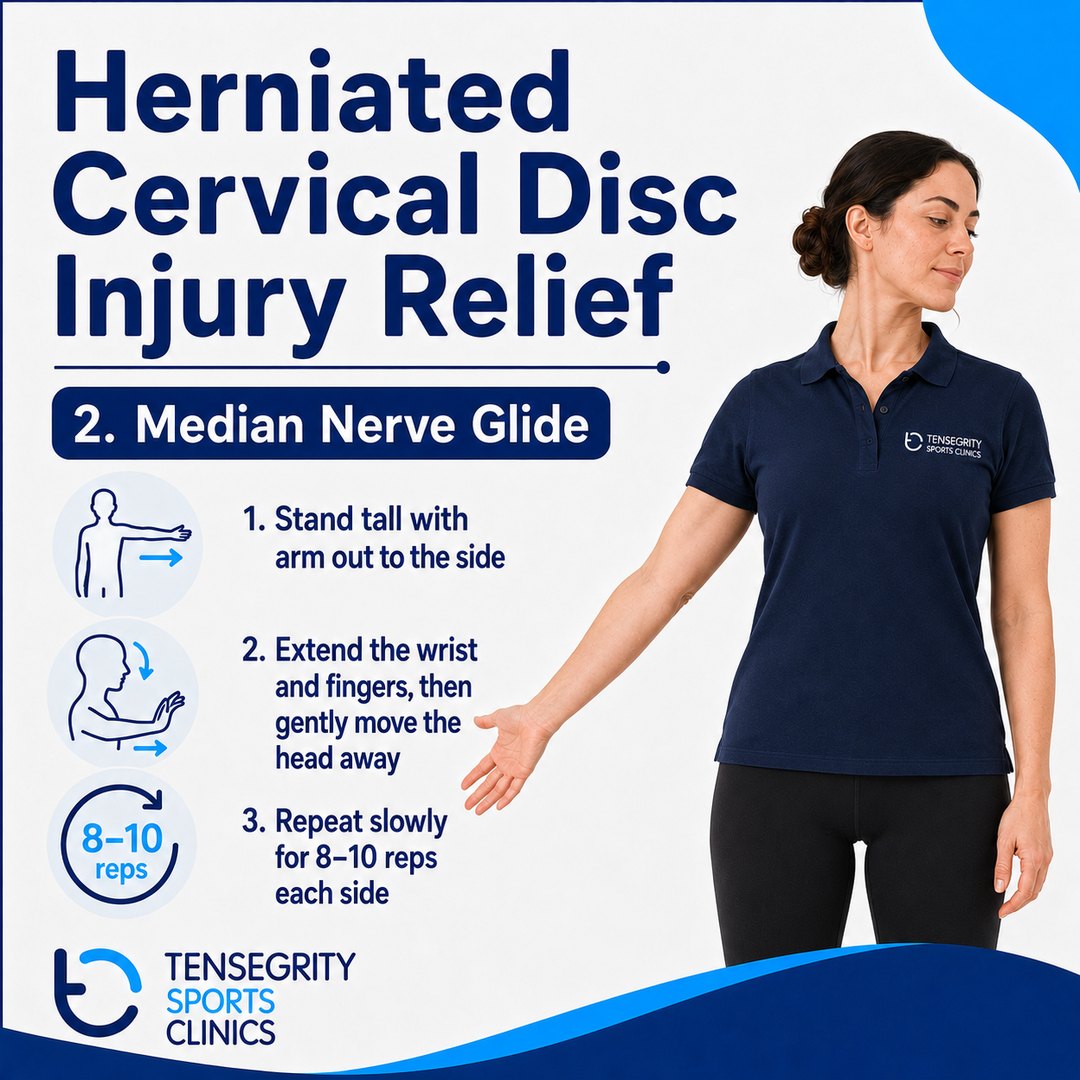
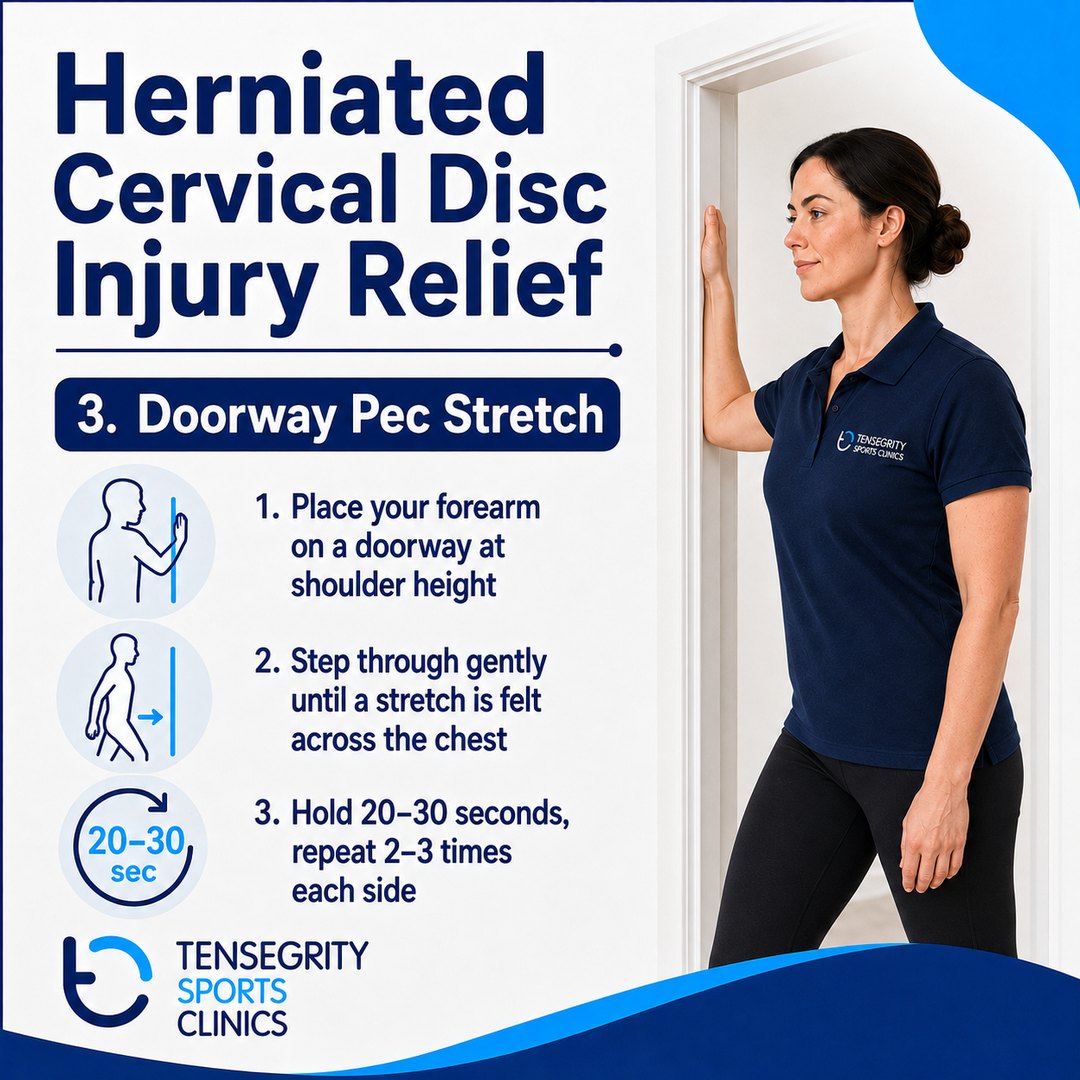
If the arm symptoms are not settling, or the pain is limiting your work or daily activity, book an assessment so the loading can be matched to what your neck can currently handle.
What our practitioners recommend:
These are the items our practitioners most often suggest for a cervical disc herniation between appointments. They support your rehabilitation. They do not replace assessment, and what suits you depends on your presentation.
- Contoured cervical pillow. Pillow height is one of the more useful adjustments where symptoms are worse overnight or on waking.
As an Amazon Associate I earn from qualifying purchases. We may earn a commission on these links. Our recommendations are based on clinical judgement and are not influenced by commission.
Prevention:
Preventive measures for herniated cervical discs may include:
- Maintaining good posture and ergonomic practices during daily activities, particularly when sitting, standing, or using electronic devices.
- Avoiding activities that exacerbate symptoms, such as prolonged sitting, repetitive neck movements, or heavy lifting.
- Practising neck strengthening and stretching exercises to improve muscle support and flexibility and reduce the risk of disc herniation.
Outlook / Prognosis:
The outlook for a herniated cervical disc depends on various factors, including the severity of symptoms, underlying cause, and response to treatment. With appropriate management, most individuals can experience significant improvement in pain and function over time.
Living With:
Individuals living with a herniated cervical disc should work closely with healthcare providers to develop a personalised treatment plan tailored to their specific needs and goals. By following recommended therapies, practising good posture, and making lifestyle modifications, individuals can effectively manage symptoms, prevent recurrence, and maintain optimal cervical spine health and function. Regular follow-up appointments and ongoing monitoring are essential for long-term symptom control and management of a herniated cervical disc.