
Overview:
The wrist and hand are the most intricate part of the upper limb. Between them they hold twenty seven bones, more than thirty joints and over thirty muscles and tendons, and almost everything you do in a day passes through them.
That complexity is why problems here are so noticeable. A wrist that cannot take weight, a grip that gives way or a finger that will not straighten changes how you work, train, cook and drive almost immediately.
We see these presentations across the network, in desk based workers, in trades, in racquet and climbing sports, in weightlifters, and in new parents whose wrists are carrying an unfamiliar load many times a day.
Anatomy:
Eight small carpal bones sit between the two forearm bones and the long bones of the hand, arranged in two rows. They glide across each other rather than hinge, which is what gives the wrist its range in several directions at once.
Almost no muscle sits in the hand for gripping power. The muscles that close your hand sit in the forearm and pull through long tendons that cross the wrist inside tight sheaths and under a broad ligament at the front. This is why forearm problems present at the hand, and why elbow and wrist complaints so often travel together.
The median nerve passes through the carpal tunnel at the front of the wrist alongside those tendons. It is a confined space, which explains why swelling or sustained pressure there produces such specific symptoms in the thumb, index and middle fingers.
Causes:
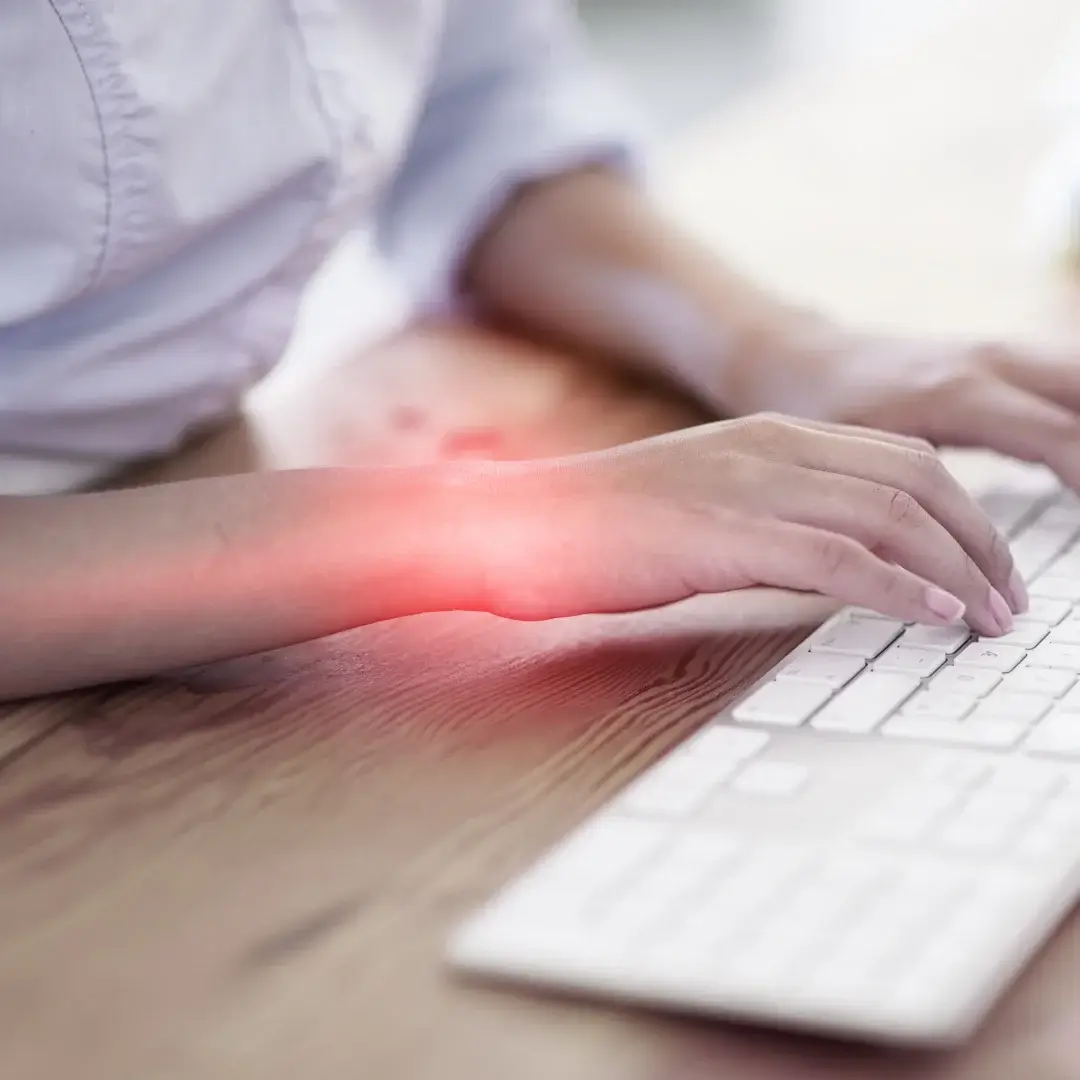
Repetition and sustained position account for most of what we see. Long hours at a keyboard and mouse, gripping tools, holding a racquet, or carrying a baby in the same position all load the same structures many thousands of times.
Acute injuries are the other main group, usually a fall onto an outstretched hand. That mechanism can produce anything from a straightforward sprain to a fracture, which is why a fall onto the hand is worth assessing rather than waiting out.
Related presentations we see and treat:
Carpal tunnel syndrome. Compression of the median nerve at the wrist, producing numbness and tingling in the thumb, index and middle fingers that is often worse at night. Night splinting and changes to the desk set up are among the most commonly used measures.
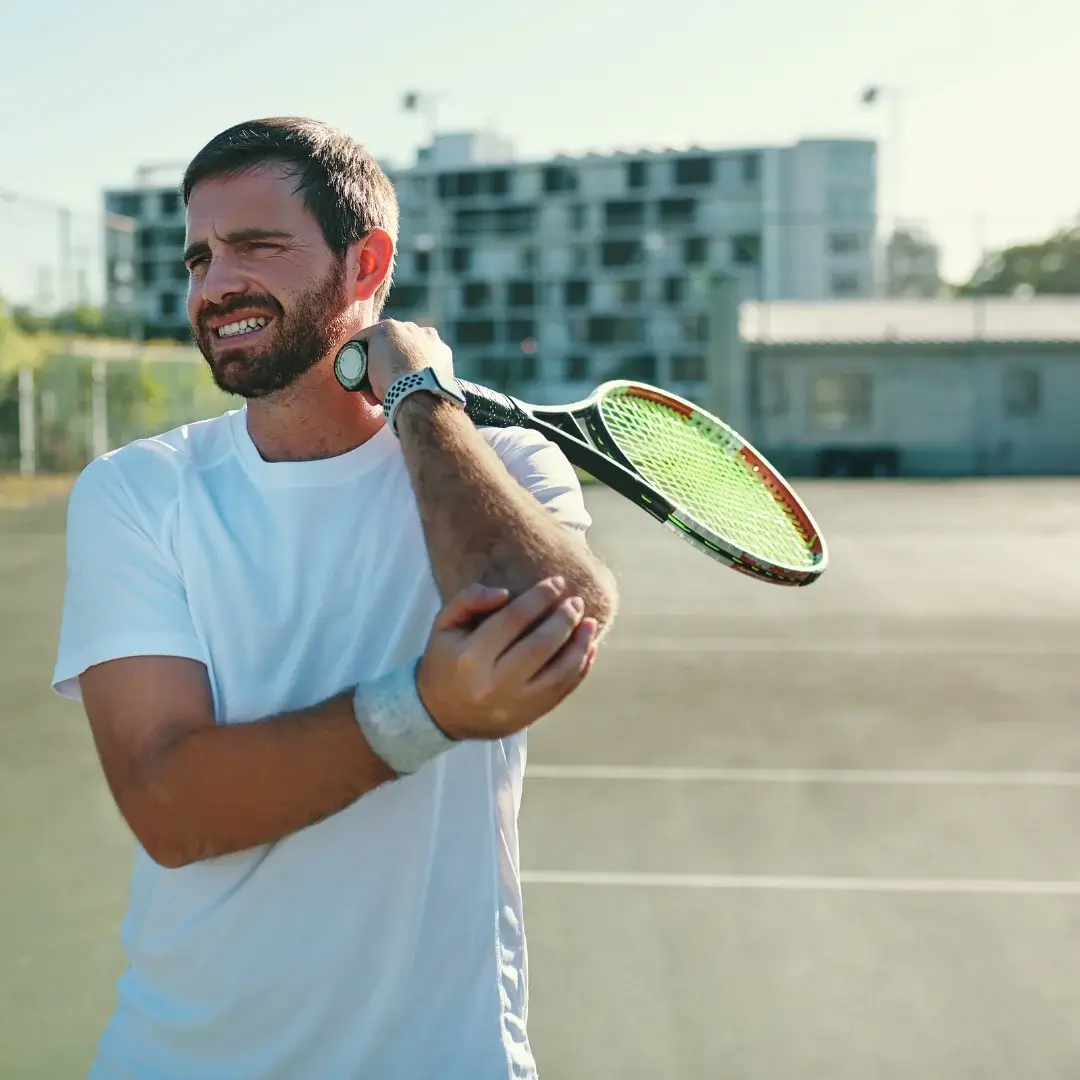
Tennis elbow. Pain on the outside of the elbow from overload of the wrist extensor tendons. Despite the name, most cases we see come from desk work and manual tasks rather than tennis.
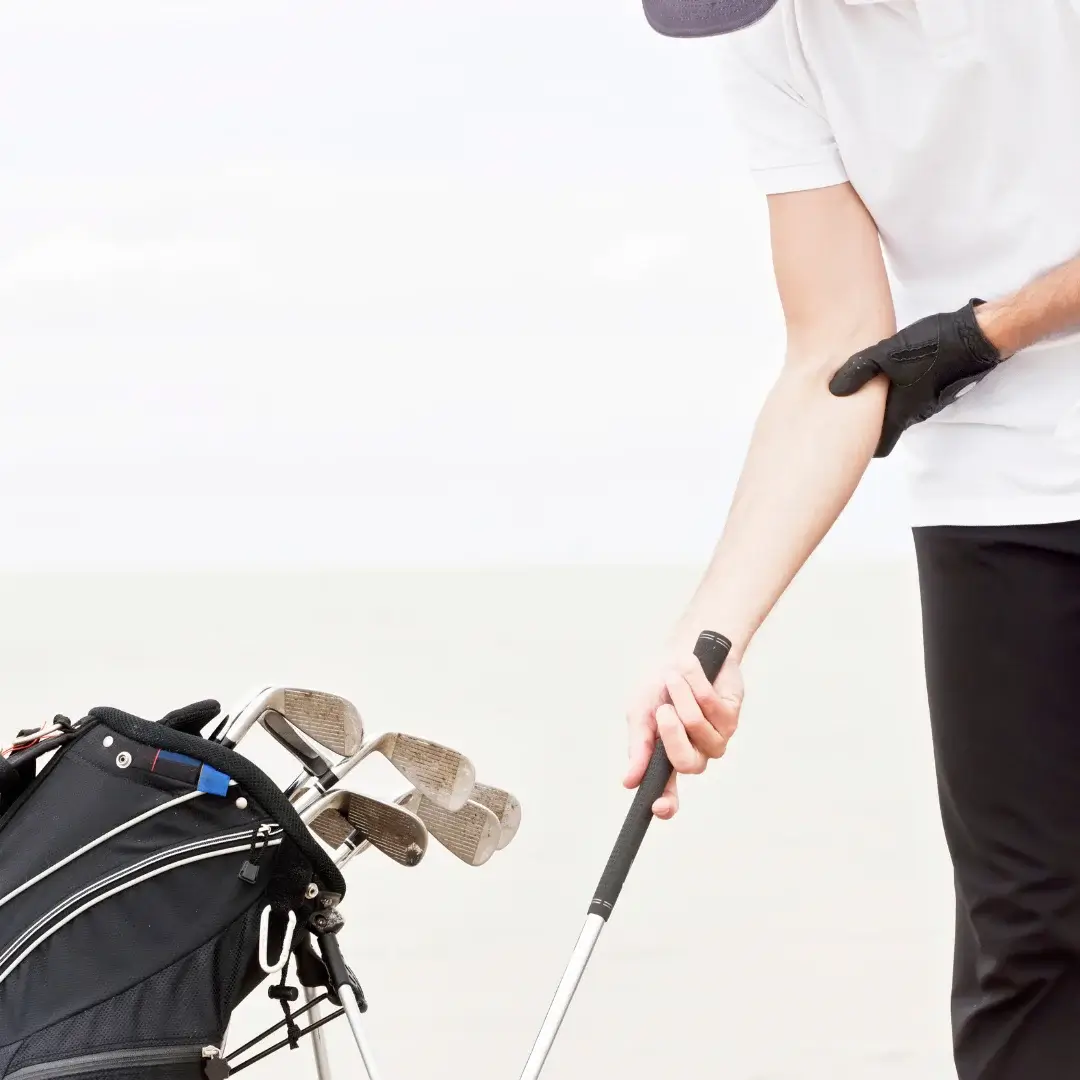
Golfer’s elbow. The same problem on the inside of the elbow, affecting the wrist flexor tendons. Loading the tendon in a graded way is the core of treatment for both versions.
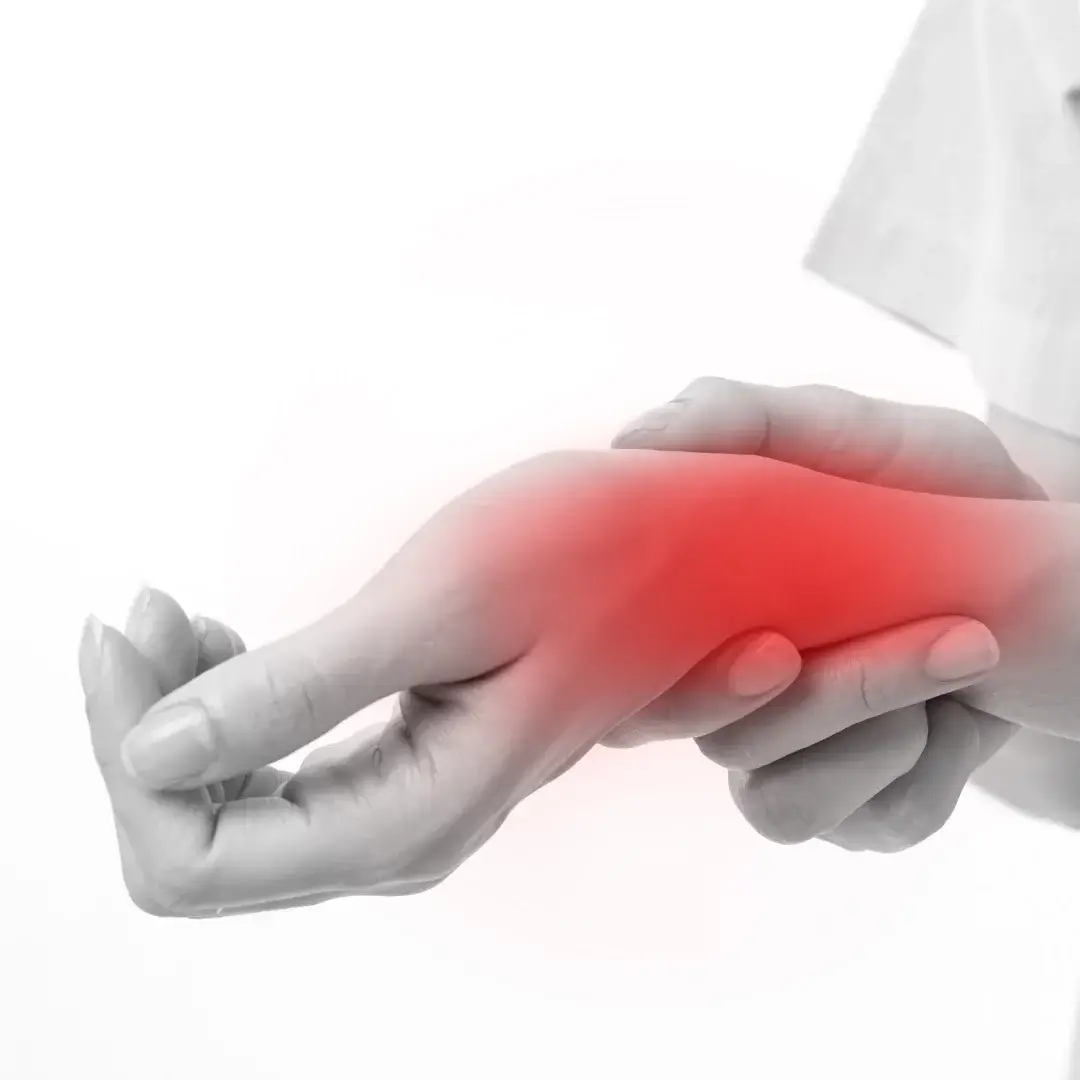
Wrist sprain. Ligament injury, most often after a fall onto an outstretched hand. Assessment matters here because the symptoms of a sprain and a small fracture can look similar in the first days.
Contributing factors include a mouse and keyboard set up that holds the wrist extended, a rapid increase in gripping volume in the gym, reduced shoulder and thoracic movement that changes how the arm is used, and returning to full load too quickly after a previous injury.
Symptoms:
Pain with gripping, weight bearing through the hand, or turning a door handle or key are the most commonly reported. Many people first notice it as difficulty opening a jar or holding a coffee cup.
Numbness and tingling point towards nerve involvement rather than joint or tendon, and the pattern of which fingers are affected is genuinely informative during assessment. Night symptoms that wake you and are relieved by shaking the hand are a recognisable pattern.
Swelling, reduced range, clicking, catching or a finger that locks are all worth reporting. So is a grip that gives way without warning, which people often mention only when asked.
Diagnosis and Tests:
Assessment starts with the history, because the mechanism tells us a great deal. A fall onto an outstretched hand, a gradual build over months of desk work and a sudden onset while lifting all lead somewhere different.
We test range, grip, tendon loading and nerve function, and we assess the elbow, shoulder and neck as well. Symptoms felt in the hand are not always generated there.
Imaging is considered where a fracture is possible, particularly after a fall onto the hand, where symptoms are not settling as expected, or where nerve symptoms are persistent or progressive. Some wrist fractures are notoriously difficult to see early, so we err on the side of assessing properly.
Treatment:
Treatment depends on the structure involved, which is why the assessment comes first. Tendon problems respond to graded loading. Nerve problems respond to reducing the pressure and changing the positions that sustain it. Joint and ligament problems need a period of protection followed by a rebuild.
Hands on care may include joint mobilisation at the wrist and elbow, soft tissue work through the forearm, and dry needling where indicated. Bracing and splinting are used selectively and for defined periods rather than continuously.
Where the desk is the driver, the desk is part of the treatment. Changing mouse and keyboard position often does more than anything else available for a desk based presentation.
Rehabilitation:
Graded loading is the core of tendon rehabilitation, and it is the part people most often stop too early. For tennis and golfer’s elbow the eccentric loading protocol has the strongest evidence behind it of anything in this area.
For wrist and hand injuries the progression usually runs from range of motion, to isometric holds, to grip strengthening, to loaded and rotational work that resembles what you need to return to.
Programs are set to your presentation and reviewed as you progress. Tendons in particular respond to consistent loading over weeks rather than to intensity in any single session.
What our practitioners recommend:
These are the items our practitioners most often suggest for wrist and hand injuries between appointments. They support your rehabilitation. They do not replace assessment, and what suits you depends on your presentation.
- Finger splint set. A set of finger splints covering the common sizes. Your practitioner will tell you which finger and which position.
- Finger strengthener. For individual finger and thumb strengthening.
- Grip strengthener. For general grip strengthening across most hand rehabilitation programs.
As an Amazon Associate I earn from qualifying purchases. We may earn a commission on these links. Our recommendations are based on clinical judgement and are not influenced by commission.
Prevention:
Set the desk up so the wrist sits in a neutral position rather than extended. Keep the mouse close, and consider a vertical mouse if you spend most of the day on one.
Build gripping volume gradually, whether that is in the gym, on a racquet or on the tools. Most tendon problems we see follow a jump in load rather than the load itself.
Take short breaks from sustained gripping and typing, and keep forearm and grip strength going once symptoms settle rather than stopping the moment it feels better.
Outlook/Prognosis:
Most wrist and hand presentations respond well to conservative care. Sprains and straightforward overuse problems often settle within weeks.
Tendon presentations take longer, commonly several months of consistent loading, and that timeframe is normal rather than a sign that something is wrong. Setting the expectation early tends to improve how people stick with the program.
Nerve presentations vary. Many improve with conservative management and changes to load and positioning. Where symptoms are severe, persistent or progressive, we refer for further assessment.
When to seek help sooner:
- An obvious deformity, or inability to move or use the hand after an injury.
- A fall onto an outstretched hand with pain at the base of the thumb. Some fractures here are hard to see on early imaging and need proper assessment.
- Numbness or weakness that is constant, worsening, or causing you to drop things.
- A finger that locks, catches or will not straighten.
- Redness, heat and swelling with fever, or a wound that is not healing.
- Symptoms that are not settling after several weeks of sensible self management.
Common questions:
Is it carpal tunnel? Not always. Numbness in the hand has several possible sources, including the neck and the elbow. Which fingers are affected and when symptoms occur helps narrow it down during assessment.
Do I need a brace? Sometimes, for defined periods and specific activities. Night splinting is one of the more commonly used measures for carpal tunnel. Continuous wear is rarely the right answer because the muscles need to work.
How long will tennis elbow take? Longer than most people expect, commonly several months of consistent loading. It is a tendon problem, and tendons adapt slowly.
Can I keep training? Usually yes, with modification. Complete rest tends to leave tendons less able to handle load when you return.
Do I need a referral? No. You can book directly, and HICAPS claiming is available on the spot for eligible health funds.
Book at your nearest clinic
Booking online takes under a minute. No referral needed, and HICAPS on-the-spot claiming is available at every clinic for eligible health funds.
- Book Wahroonga. Chiropractic and remedial massage.
- Book St Leonards. Chiropractic and physiotherapy.
- Book Bella Vista. Women’s and children’s care, remedial massage.
- Book Macquarie Park. Multilingual consultations available.
- Book Sydney CBD. Early and lunchtime appointments.
- Book Brookvale. Inside Sky PT gym.
- Book Willoughby. Satellite location.
Every practitioner is university-qualified and AHPRA-registered. Between them, our team has delivered more than 195,000 treatments.