
Caring for Sydney since 2012 · 17,500+ patients · ★ 5.0 from 163 Google reviews · North Shore Local Business Awards Winner · Australian Small Business Champion Finalist
Book at Wahroonga · Bella Vista · Macquarie Park · Brookvale
Your first visit
- Initial assessment: 60 minutes, $175. A thorough assessment, a clear explanation of what is going on, and your first treatment in the same visit.
- HICAPS on the spot for eligible health funds. No GP referral needed.
- Treated at all seven clinics: Wahroonga · St Leonards · Bella Vista · Macquarie Park · Sydney CBD · Brookvale · Roseville
Prefer to call? 1300 903 929, Monday to Friday 7:30am to 7:30pm, Saturday 7:30am to 3:00pm.
Overview:
Tennis elbow, clinically known as lateral epicondylitis, is a common condition characterised by pain and tenderness on the outer aspect of the elbow. Despite its name, tennis elbow can affect individuals engaged in a variety of activities that involve repetitive gripping or wrist extension motions, such as typing, painting, or using hand tools. This condition typically develops gradually over time and may progressively worsen without intervention.
Anatomy:
The elbow joint consists of three bones: the humerus (upper arm bone), radius, and ulna. Lateral epicondylitis specifically involves the tendons that attach to the lateral epicondyle, a bony prominence on the outer side of the elbow. These tendons connect the muscles of the forearm to the lateral epicondyle and play a crucial role in wrist and hand movements.
Causes:
Tennis elbow often results from repetitive stress or overuse of the forearm muscles, leading to microscopic tears and degeneration of the tendon fibres. Common contributing factors include:
- Repetitive Arm Movements: Activities that involve repetitive gripping, lifting, or wrist extension motions, such as tennis, golf, or manual labour, can strain the tendons around the elbow joint.
- Improper Technique: Incorrect technique or equipment usage during sports or occupational activities may increase the risk of developing tennis elbow.
- Age and Degeneration: The risk of developing tennis elbow increases with age as tendons become less flexible and more prone to injury.
- Muscle Weakness or Imbalance: Weakness or imbalances in the muscles of the forearm and shoulder can alter biomechanics and predispose individuals to overuse injuries.
Symptoms:
Signs and symptoms of tennis elbow may include:
- Pain and tenderness on the outer aspect of the elbow, particularly with gripping or lifting objects.
- Weakness or difficulty performing activities that require forearm strength, such as shaking hands or turning a doorknob.
- Stiffness or restricted range of motion in the elbow joint.
- Pain that radiates down the forearm or into the wrist.
- Worsening symptoms with repetitive arm movements or activities that stress the affected tendon.
Treatment:
Treatment for tennis elbow aims to alleviate pain, reduce inflammation, and promote healing of the affected tendon:
- Rest and Activity Modification: Avoid activities that exacerbate symptoms and modify grip techniques or equipment usage to reduce strain on the elbow joint.
- Ice Therapy: Apply ice packs to the affected area for 15-20 minutes several times a day to reduce pain and swelling.
- Bracing or Splinting: Wearing a brace or splint around the forearm can provide support and limit excessive wrist extension during activities.
- Exercise rehabilitation: your practitioner can prescribe specific exercises to stretch and strengthen the forearm muscles, improve flexibility, and correct muscle imbalances contributing to tennis elbow.
- Shockwave therapy: extracorporeal shockwave is used as an adjunct in persistent tennis elbow, alongside the loading program rather than instead of it. It is available at every Tensegrity clinic except Willoughby. Your practitioner will tell you whether it suits your presentation.
- Medication and injection-based options. These sit outside a chiropractor’s scope of practice. Injection therapies are sometimes used for persistent tendon pain and the evidence for them is mixed, so it is a discussion to have with your GP rather than a default step. If pain is stopping you starting the loading program, that conversation is worth having early.
Three exercises for tennis elbow
These three were put together by our practitioners as a starting point. They are general exercises, not a personalised program. Tendons respond to load, so some discomfort during the exercise is expected. Sharp pain is not.
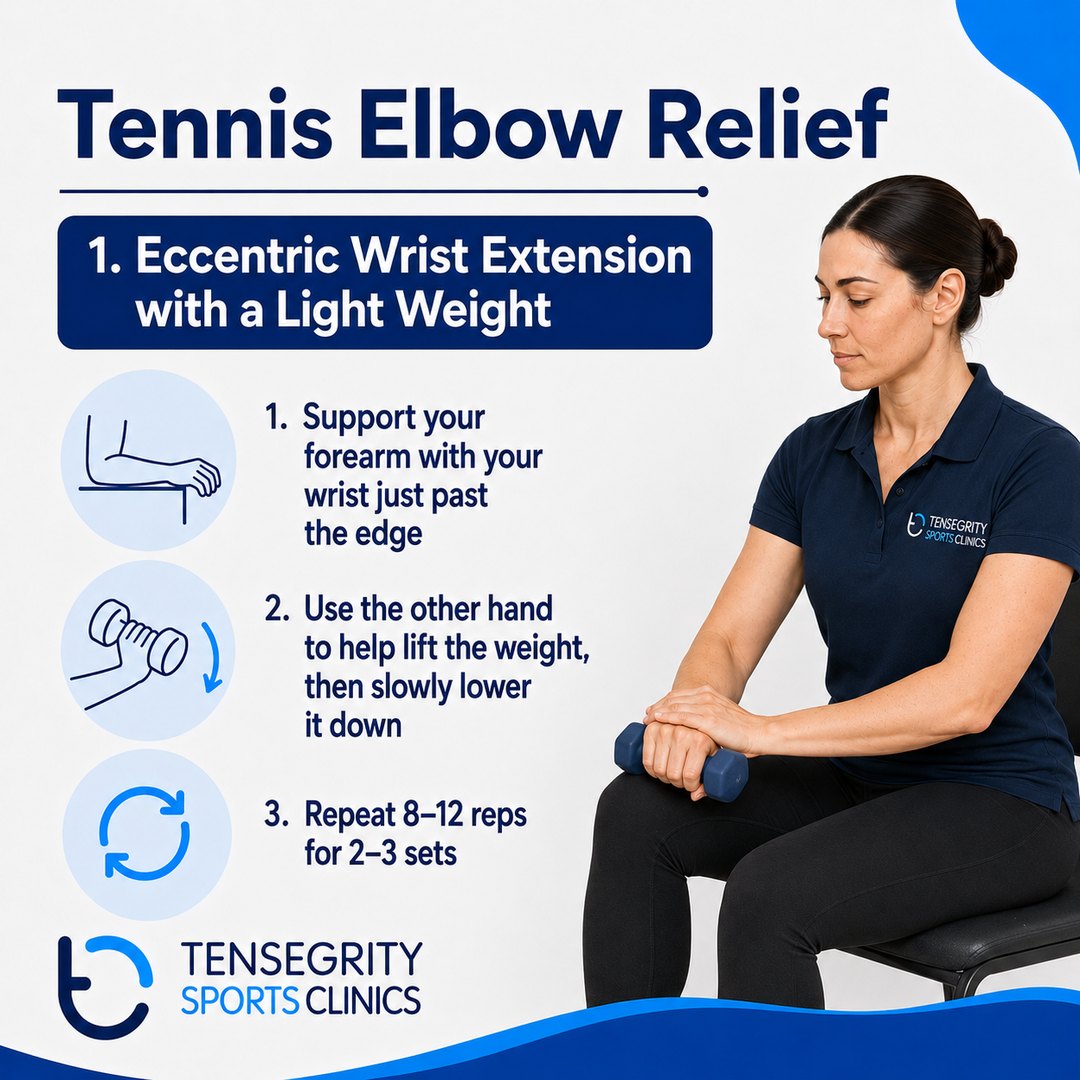
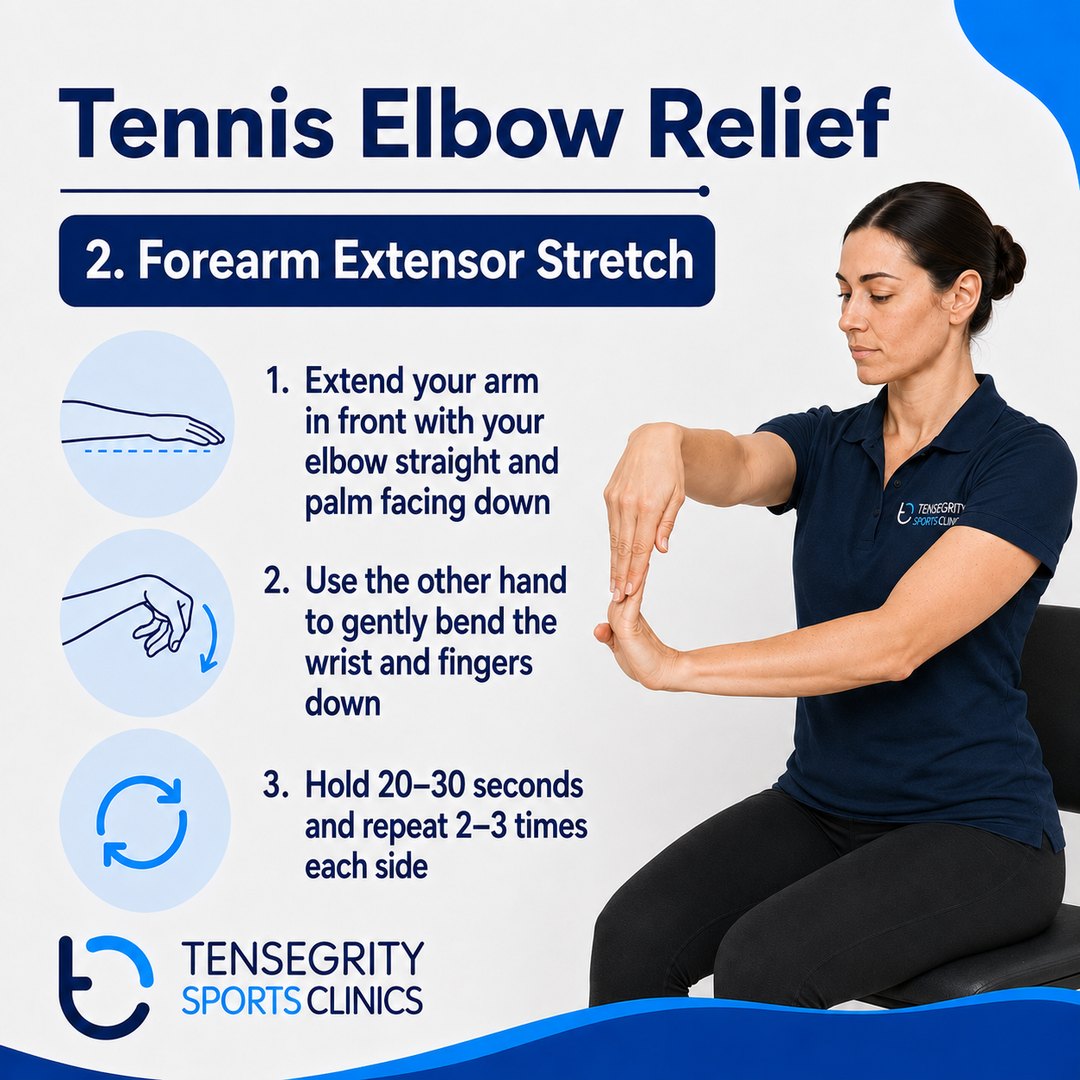
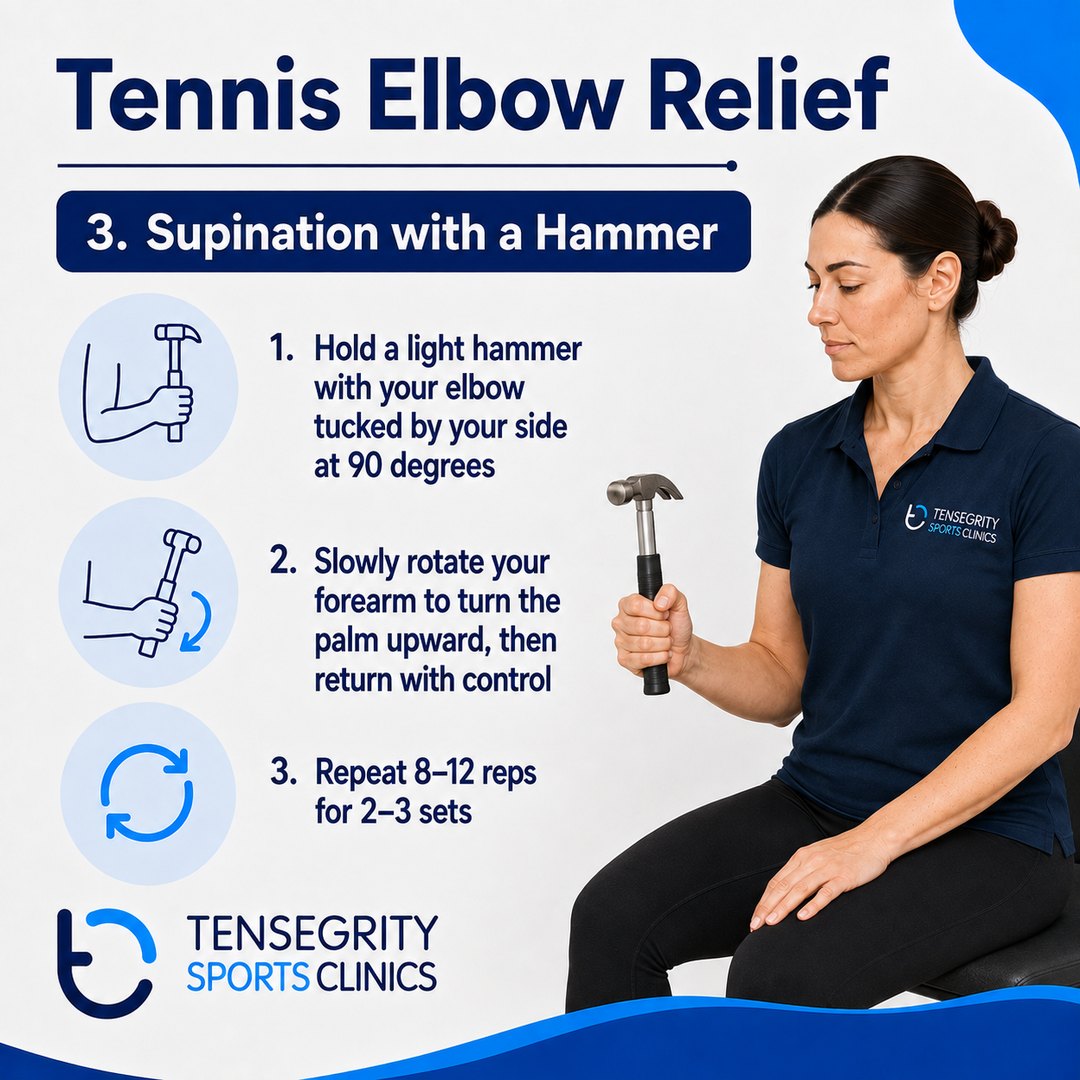
If the elbow is not settling, or gripping and lifting are still limited after a few weeks of loading, book an assessment so the program can be matched to what the tendon can currently handle.
Prevention:
To prevent tennis elbow and reduce the risk of recurrence, consider the following preventive measures:
- Warm up before engaging in physical activities and perform stretching exercises to prepare the muscles and tendons for activity.
- Use proper technique and equipment when participating in sports or occupational tasks that involve repetitive arm movements.
- Take regular breaks during repetitive activities to allow the muscles to rest and recover.
- Incorporate strength training exercises for the forearm and shoulder muscles to improve overall muscle strength and endurance.
- Use ergonomic tools and equipment with proper grip size and handle design to minimise stress on the elbow joint.
When it just isn’t getting better
Some pain settles on its own. Some keeps coming back — after rest, after stretching, after everything you’ve already tried. That’s the pain we see every week. Our first job isn’t treatment — it’s finding out why it hasn’t settled. A thorough assessment, an honest explanation, and a clear plan, so you know exactly what’s going on and what to do next.
Already seen someone about this? Bring your scans and your story — we’re happy to be your second opinion.
Outlook/Prognosis:
With appropriate treatment and modifications to activity levels, the outlook for individuals with tennis elbow is generally favourable. Most individuals experience significant improvement in symptoms with conservative measures such as rest, exercise rehabilitation, and activity modification. However, it may take several weeks to months for symptoms to fully resolve, and adherence to preventive strategies is essential to prevent recurrence. If symptoms persist or worsen despite conservative treatment, book a review with your practitioner, or see your GP.
Every practitioner is university-qualified and AHPRA-registered. Between them, our team has delivered more than 195,000 treatments.