
Your first visit
- Initial assessment: 60 minutes, $175. A thorough assessment, a clear explanation of what is going on, and your first treatment in the same visit.
- HICAPS on the spot for eligible health funds. No GP referral needed.
- Treated at all seven clinics: Wahroonga · St Leonards · Bella Vista · Macquarie Park · Sydney CBD · Brookvale · Roseville
Prefer to call? 1300 903 929, Monday to Friday 7:30am to 7:30pm, Saturday 7:30am to 3:00pm.
The shoulder trades stability for range. It moves further than any other joint in the body, and it relies on muscle control rather than bony architecture to stay where it should be. That is what makes it so useful, and why it is so often the joint that stops you.
At Tensegrity Sports Clinics, our team takes an evidence-based approach, starting with a thorough assessment to find what is driving your pain, then building a treatment plan and the strategies to keep it from coming back.
Overview:
Most shoulder pain is load-related. The rotator cuff and the muscles controlling the shoulder blade have to manage what you ask of the arm, and when demand outpaces capacity, the tissue carrying the most load becomes painful. That is why the answer is rarely rest alone.
Where you feel it and what provokes it usually points to the structure. Pain reaching overhead, pain lying on it at night, pain at the top of the shoulder, and a shoulder that feels like it might give way are different problems with different plans.
Anatomy:
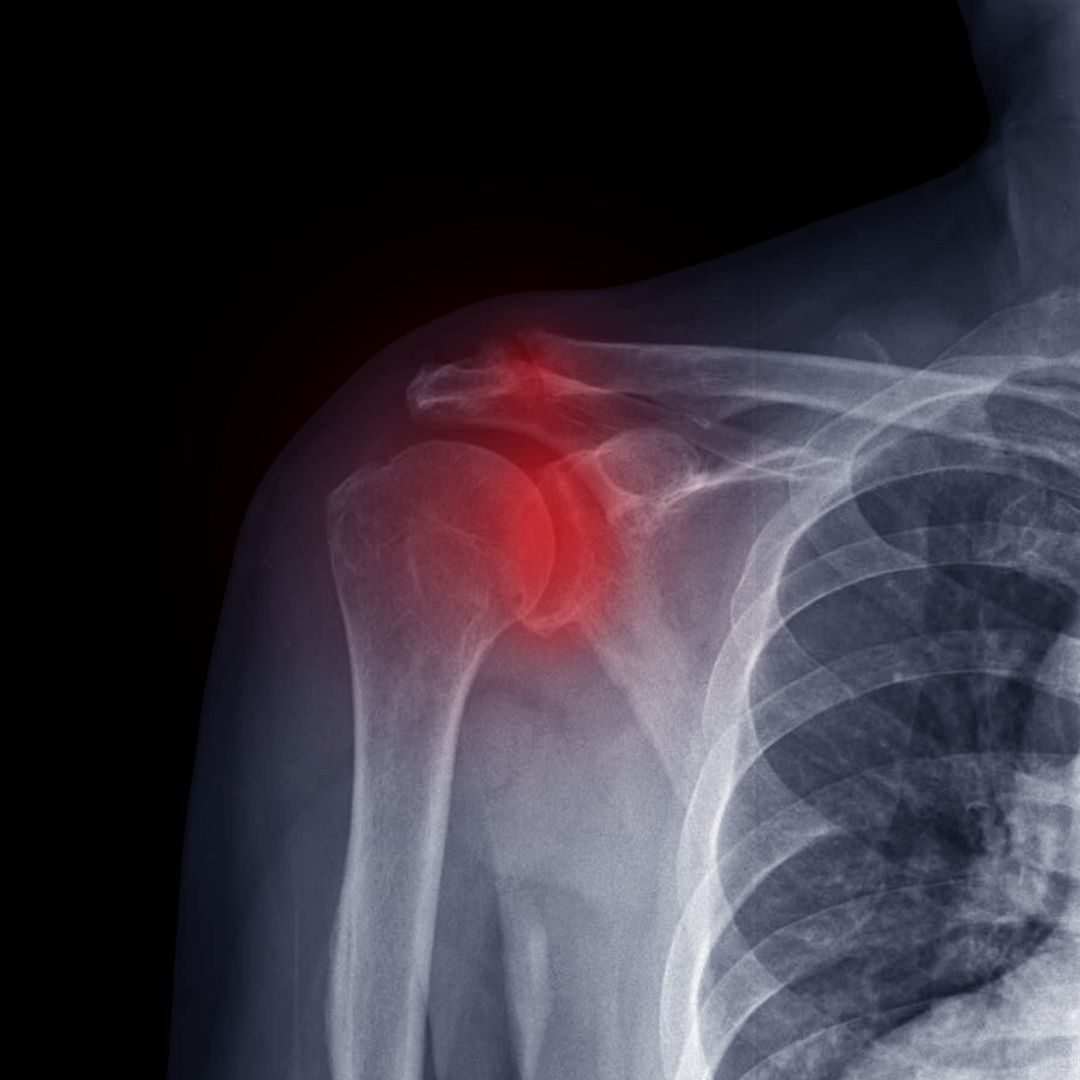
The shoulder is really four joints working together. The glenohumeral joint is the ball and socket, a shallow socket deepened by the labrum. The acromioclavicular joint sits at the top where the collarbone meets the shoulder blade. The scapulothoracic joint is the shoulder blade gliding on the ribcage, and the sternoclavicular joint anchors the collarbone to the breastbone.
Four rotator cuff muscles hold the ball centred in the socket while the larger muscles move the arm. Bursae sit between tendon and bone to reduce friction. When the shoulder blade does not move well, the cuff and the bursa take more load than they should, which is where a lot of shoulder pain begins.
Causes:
Shoulder pain is a symptom, not a diagnosis. These are the presentations we see most often.
Rotator cuff tendinopathy. The most common source of shoulder pain. Tendon loaded beyond its current capacity, usually after a change in training, work or activity. Painful with overhead movement and often at night.
Rotator cuff tear. A partial or full tear of one of the cuff tendons, either traumatic or degenerative. Weakness with specific movements is more telling than the pain itself, and plenty of tears are managed well without surgery.
Shoulder impingement. Pain as the arm is raised, typically through a mid-range arc. Usually a control and capacity problem rather than a true structural pinch.
Frozen shoulder. Progressive stiffness and pain with a real loss of range, particularly rotating the arm outward. Runs a long course through freezing, frozen and thawing stages, and the plan changes with the stage.
Shoulder bursitis. Irritation of the bursa between the cuff tendon and the bone above it. Often sits alongside tendon pain rather than existing on its own.
Shoulder arthritis. Age-related change in the joint surfaces, with stiffness that is worst in the morning and eases with movement. Responds better to strength work than most people expect.
Calcific tendinopathy. Calcium deposits within a cuff tendon. Can be silent for years, then flare sharply and severely. Shockwave therapy is often part of the plan.
Biceps tendinopathy. Pain at the front of the shoulder, often with overhead or lifting work. Frequently sits alongside cuff or labral involvement.
Shoulder instability and dislocation. The joint moving further than it should, ranging from a sense of looseness to a full dislocation. Rehabilitation focuses on control through the cuff and shoulder blade.
AC joint injury. Pain localised to the top of the shoulder, usually after a fall onto the shoulder or a direct knock. Reaching across the body is typically the painful movement.
Symptoms:
- Pain reaching overhead, behind your back, or across your body
- Pain lying on that side at night, one of the most common complaints we hear
- Weakness lifting or holding the arm out
- Clicking, catching, or a sense the shoulder might give way
- Loss of range, particularly rotating the arm outward
- Pain localised to the very top of the shoulder
Diagnosis and Tests:
A first appointment is one full hour, and most of it is assessment.
We take a history first: how it started, what provokes it, whether it wakes you, whether there was a fall or a dislocation, and what you have stopped doing because of it.
Then we assess movement through the shoulder, the shoulder blade and the thoracic spine, because the cuff can only work as well as the blade underneath it allows. Orthopaedic testing follows to differentiate cuff, bursa, labrum, AC joint and instability, along with strength testing to find where capacity has dropped.
Most shoulder pain is assessed and managed without imaging. Where there has been a significant injury, where weakness suggests a substantial tear, or where symptoms are not responding as expected, we will refer you for a scan or for orthopaedic review and tell you why.
Treatment:
Treatment is chosen to match the assessment findings. Depending on what we find, it may include:
- Joint mobilisation and manipulation, at the shoulder, shoulder blade and thoracic spine, to restore movement where it has been lost
- Soft tissue therapy and remedial massage, through the rotator cuff, the muscles around the shoulder blade and the chest
- Dry needling, for myofascial trigger points contributing to the pain
- Cold laser therapy, used to support tissue healing and pain modulation
- Shockwave therapy, particularly useful in calcific and persistent cuff tendinopathy, used alongside the loading program rather than instead of it. Available at every Tensegrity clinic except Roseville.
- Exercise rehabilitation, progressive loading of the rotator cuff and shoulder blade muscles. This is the part that makes the change hold.
- Medication and injection-based options. These sit outside a chiropractor’s scope of practice. If pain is limiting your sleep or stopping you starting rehabilitation, that is worth discussing with your GP rather than self-prescribing long term.
Rehabilitation:
Shoulders respond to progressive load. Early work is about settling the most irritable symptoms while keeping the joint moving, because a shoulder that stops moving stiffens quickly and loses capacity fast.
From there the work is strength, starting with isometrics, then controlled range, then loaded movement, then the specific demands of what you are returning to. Overhead athletes need controlled overhead work then speed. Physical work needs lifting, carrying and overhead demands reproduced before you go back to them.
How long does it take? Cuff tendinopathy commonly changes over eight to twelve weeks with consistent loading. Frozen shoulder runs a much longer course and is measured in months, sometimes more than a year. Your practitioner will give you a realistic range at the first visit rather than a fixed promise.
Prevention:
- Build overhead volume gradually. Most shoulder pain follows a change in load, not a single movement.
- Strength train the rotator cuff and the muscles around the shoulder blade, not just the big pressing muscles.
- Keep the thoracic spine moving. A stiff upper back forces the shoulder to find range it does not have.
- Balance pushing with pulling in your training.
- Finish your rehabilitation. Stopping when the pain goes, rather than when the strength is back, is the most common reason it returns.
Outlook/Prognosis:
Most shoulder pain improves with loading and time, and most people do not need surgery to get there. Even substantial rotator cuff tears are frequently managed well with rehabilitation, and the decision is made on function and demand rather than on the scan alone.
Recovery is rarely a straight line, and a flare does not mean the plan has failed. What matters is the direction over weeks. Where symptoms are not responding as expected, we will say so and refer rather than continuing unchanged.
When to seek help sooner:
Seek assessment promptly if you have any of the following:
- A shoulder that has dislocated, or one that feels like it is about to
- Marked weakness lifting the arm, particularly after a fall or a heavy pull
- An obvious change in the shape or contour of the shoulder
- Numbness, pins and needles or coldness in the arm or hand
- Redness and heat with fever, which needs medical review the same day
Common questions:
Do I need a referral? No. You can book directly online.
Do I need a scan first? Usually not. Cuff changes appear on scans in plenty of people with no pain at all, which is why the assessment matters more. Your practitioner will tell you if yours is a case where a scan changes the plan.
Why does it hurt most at night? Lying on the shoulder compresses the tendon and bursa, and there is nothing else competing for your attention. Night pain is very common with cuff problems and it usually improves as loading tolerance improves.
Can I claim on private health? HICAPS on-the-spot claiming is available at all seven clinics for eligible health funds. Rebates depend on your level of cover.
Book at your nearest clinic
Booking online takes under a minute. No referral needed, and HICAPS on-the-spot claiming is available at every clinic for eligible health funds.
- Book Wahroonga. Chiropractic and remedial massage.
- Book St Leonards. Chiropractic and physiotherapy.
- Book Bella Vista. Women’s and children’s care, remedial massage.
- Book Macquarie Park. Multilingual consultations available.
- Book Sydney CBD. Early and lunchtime appointments.
- Book Brookvale. Inside Sky PT gym.
- Book Roseville. Satellite location.