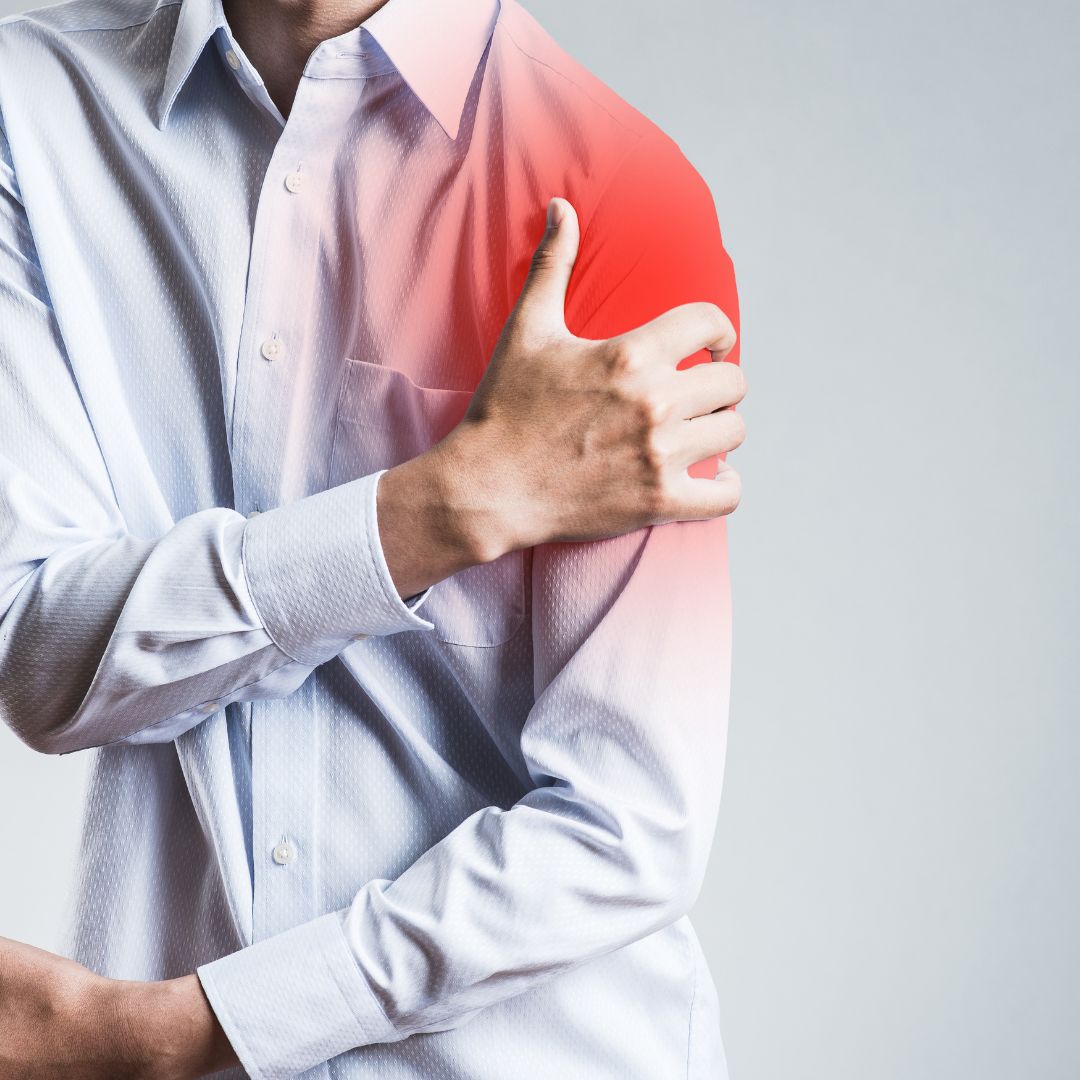

Overview:
Shoulder instability is when the ball of the shoulder does not stay securely centred in the socket during movement. It runs from a feeling that the shoulder is loose or about to give way, through to partial or complete dislocation.
A shoulder dislocation is when the head of the humerus is forced completely out of the socket. A subluxation is a partial dislocation, where the joint moves out of position temporarily without fully separating.
Instability can follow a single traumatic injury, a tackle or a fall, or build gradually in people with naturally mobile joints or a lot of repeated overhead loading. Once a shoulder has dislocated, particularly in a younger athlete, the risk of it happening again goes up. That is why rehabilitation still matters after the pain has settled. This page sits under our wider shoulder pain information.
Anatomy:
The shoulder, or glenohumeral joint, is a ball and socket joint. The humeral head is the rounded top of the upper arm bone. The glenoid is the relatively shallow socket on the shoulder blade. A ring of fibrocartilage called the labrum deepens that socket, and a joint capsule and ligaments limit excessive movement.
Four rotator cuff muscles stabilise the joint dynamically, and the muscles controlling the shoulder blade coordinate the whole arm. The shoulder trades stability for range. That huge range is what lets you reach and throw, and it is also why the joint leans so heavily on the muscles, labrum, capsule and ligaments to stay where it should.
Anterior instability is the most common traumatic form, where the humeral head moves forwards, usually with the arm away from the body and rotated out. Posterior instability is less common and can follow particular forces, seizures or repetitive loading. Multidirectional instability involves several directions rather than one traumatic event, and is often associated with hypermobility.
Causes:
- Sporting collisions: rugby, AFL and other contact sports can force the shoulder out of position.
- Falls: landing heavily on the arm or shoulder.
- Overhead sport: repetitive throwing, swimming or racquet sports in susceptible people.
- A previous dislocation: one of the strongest predictors of recurrent instability.
- Labral injury: a dislocation can damage the labrum and reduce the passive stability of the joint.
- Ligament or capsule injury: the supporting tissues can stretch or tear with trauma.
- Joint hypermobility: some people naturally have more joint movement and are more susceptible.
- Reduced shoulder strength: when the cuff and scapular muscles are short on capacity, dynamic control of the joint suffers.
Age matters too. Younger people, particularly athletes, carry a higher risk of recurrence after a traumatic dislocation.
Symptoms:
What you feel depends on whether the shoulder has just dislocated or whether instability has built over time.
- After an acute dislocation: sudden severe pain, visible deformity, an inability or extreme difficulty moving the arm, a sensation that the shoulder has popped out, muscle spasm, swelling, or numbness and tingling in the arm or hand.
- A loose feeling: a sense that the shoulder is not sitting where it should.
- Apprehension: feeling the shoulder may slip out in certain positions, and avoiding those positions.
- Recurrent subluxations or dislocations: it keeps happening, sometimes with less force each time.
- Pain with overhead activity: and reduced confidence using the arm.
- Clicking, clunking or catching: through particular movements.
- Weakness or difficulty throwing: the arm does not feel reliable.
A suspected shoulder dislocation needs prompt medical assessment. Do not repeatedly try to move or force the shoulder back into position yourself.
Diagnosis:
After an acute dislocation, medical assessment looks at the position of the shoulder, circulation to the arm, sensation and nerve function, and whether there is an associated fracture or other injury. X-rays are commonly used to confirm the direction of the dislocation and check for fractures.
- Shoulder range of motion: once the joint has been reduced and the acute phase settles.
- Rotator cuff strength: tested individually to find what is holding and what is not.
- Shoulder blade control: how the scapula moves and whether it gives the joint a stable base.
- Joint stability testing: assessing the direction and degree of instability.
- Neurological function: the axillary nerve in particular can be affected during a dislocation.
- Apprehension testing: which positions produce that feeling the shoulder may go again.
- Functional requirements: what your work and sport actually ask of the shoulder.
MRI or CT may be recommended where significant labral, bone, rotator cuff or other structural injury is suspected. A traumatic dislocation can damage other structures: a Bankart lesion is injury to the labrum at the front and lower part of the socket, a Hill-Sachs lesion is an indentation of the humeral head where it has hit the edge of the glenoid, and rotator cuff tears and fractures can occur alongside, particularly in older adults. That is a large part of why an acute dislocation needs proper assessment.
Treatment:
Treatment depends on whether this is an acute dislocation, recurrent instability or multidirectional instability.
- Reduction: an acutely dislocated shoulder generally needs the humeral head returned to the socket, performed by an appropriately trained healthcare professional.
- Early rehabilitation: managing pain, gradually restoring movement, preventing unnecessary stiffness, starting appropriate muscle activation and rebuilding confidence using the arm. How much movement is allowed early depends on the injury and any structural damage.
- Rotator cuff strengthening: external rotation, internal rotation, elevation and cuff endurance, because the cuff is what stabilises the joint dynamically.
- Scapular strengthening: serratus anterior, trapezius, rhomboids and the rest, giving the arm a stable base to work from.
- Proprioception and control work: joint position awareness, stability under load, reaction to unexpected movement, and confidence in the positions that feel vulnerable.
- Progressive strengthening: rows, pressing, pulling, overhead work, weight-bearing shoulder exercises, then plyometrics and sport-specific drills.
- Review and progression: reassessed against function rather than repeated unchanged.
Not everyone who dislocates a shoulder needs surgery. Whether non-surgical rehabilitation is appropriate depends on age, activity level, how many dislocations there have been, the direction of instability, structural damage and the response to rehabilitation. Surgical stabilisation may be considered with recurrent dislocations, persistent instability despite rehabilitation, significant labral or bone injury, high-risk sporting demands or significant functional limitation. That conversation belongs with an orthopaedic surgeon.
Rehabilitation:
Getting back to sport after a dislocation takes more than waiting for the pain to go. The shoulder needs range, rotator cuff strength, endurance, scapular strength, power, proprioception and confidence in the positions that feel vulnerable, plus contact tolerance or overhead capacity depending on the sport. For contact athletes, rehabilitation should eventually prepare the shoulder for tackling, falling and unpredictable force. For overhead athletes, it should progress through a throwing, serving or swimming program.
How long does it take? Recovery varies a lot with the severity of the injury and the associated tissue damage. After an uncomplicated first-time dislocation, everyday function often starts improving over about four to six weeks. Fuller rehabilitation commonly needs eight to twelve weeks or longer. Returning to demanding contact or overhead sport may take around three to six months, depending on strength, stability and associated injuries. After surgical stabilisation, return to unrestricted sport often takes several months, commonly four to six months or longer, depending on the procedure and the sport.
Recovery is judged on function, not the calendar. Going back to competition simply because the pain has gone is one of the more common reasons instability returns.
Three exercises for shoulder instability
These three were put together by our practitioners as a starting point. They are general exercises, not a personalised program.
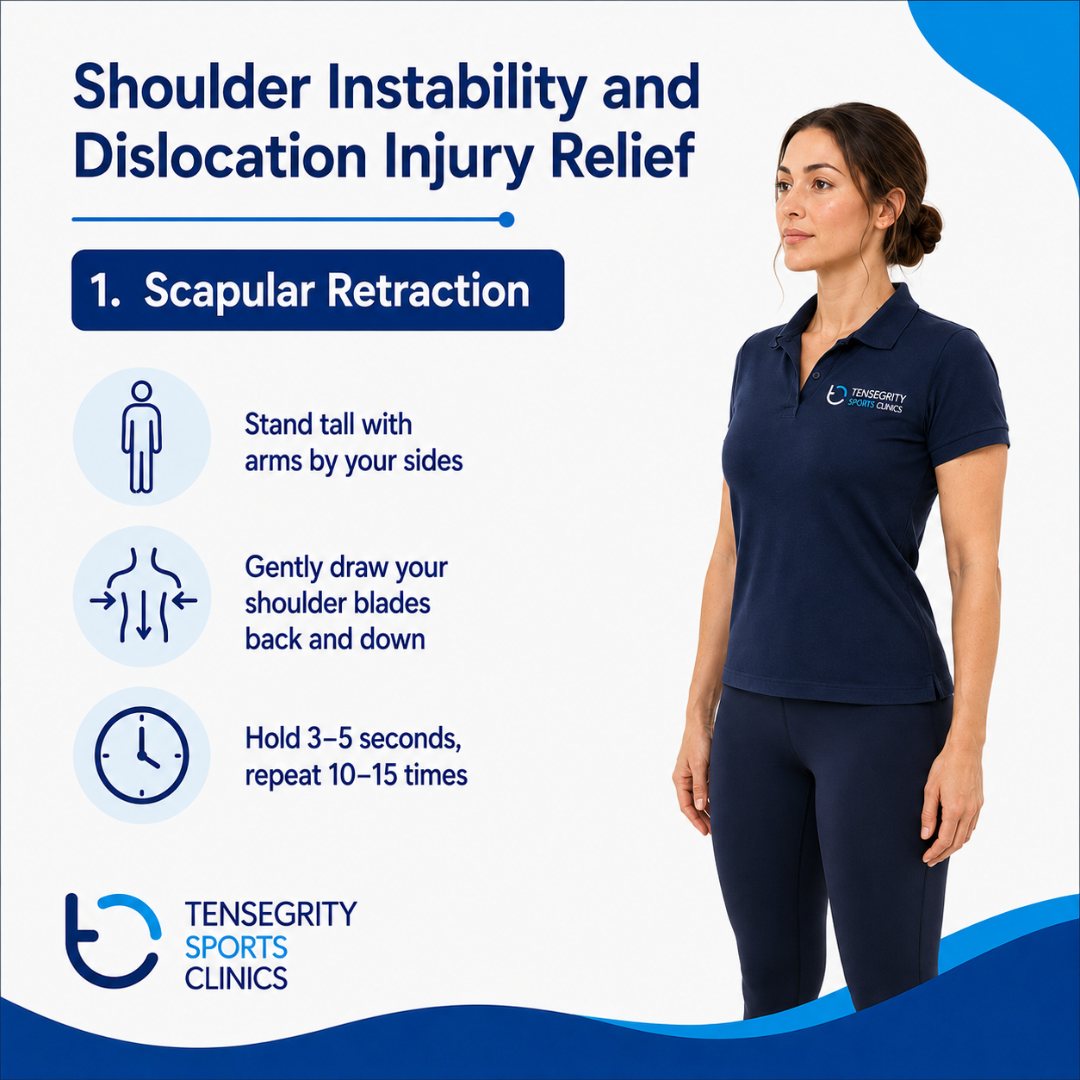
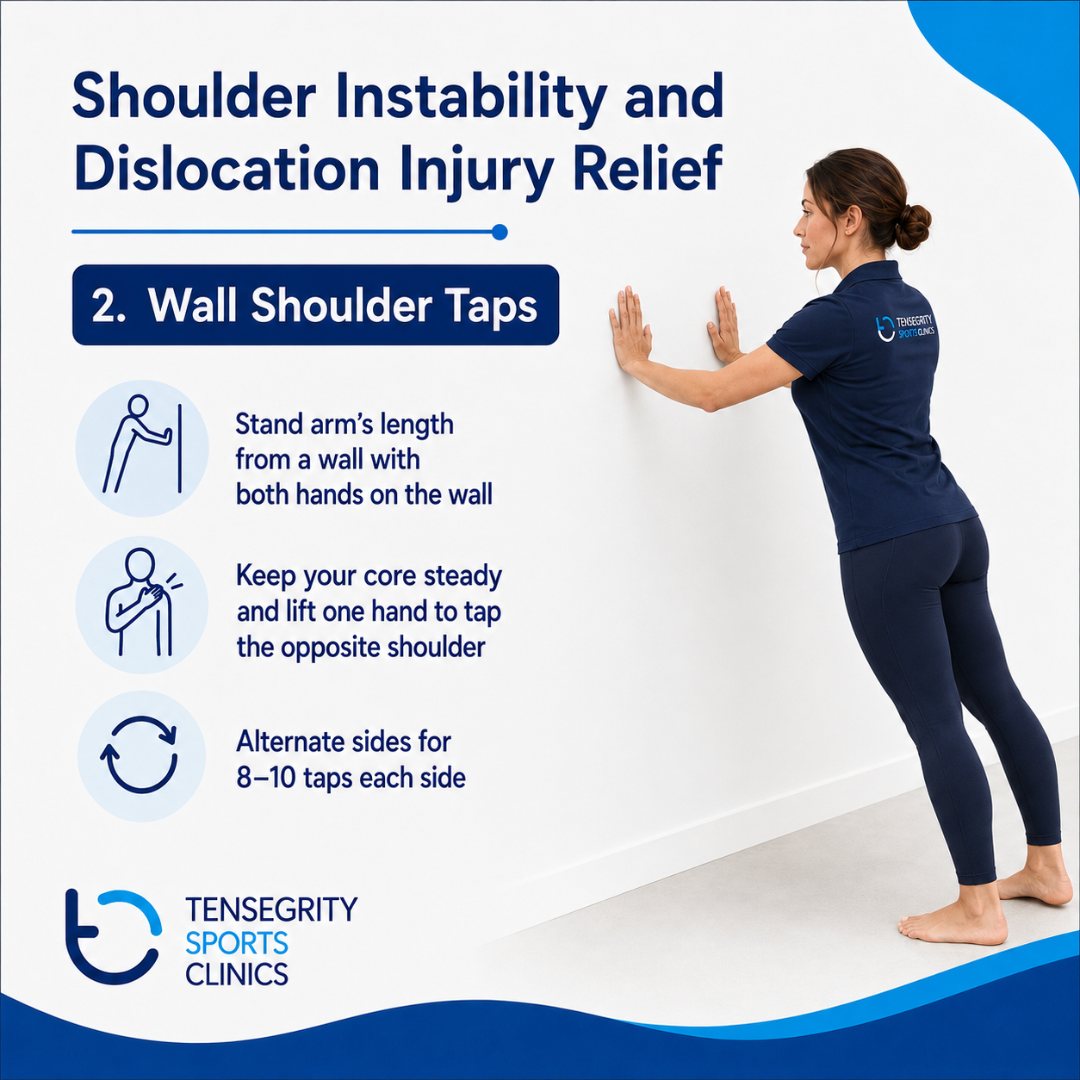
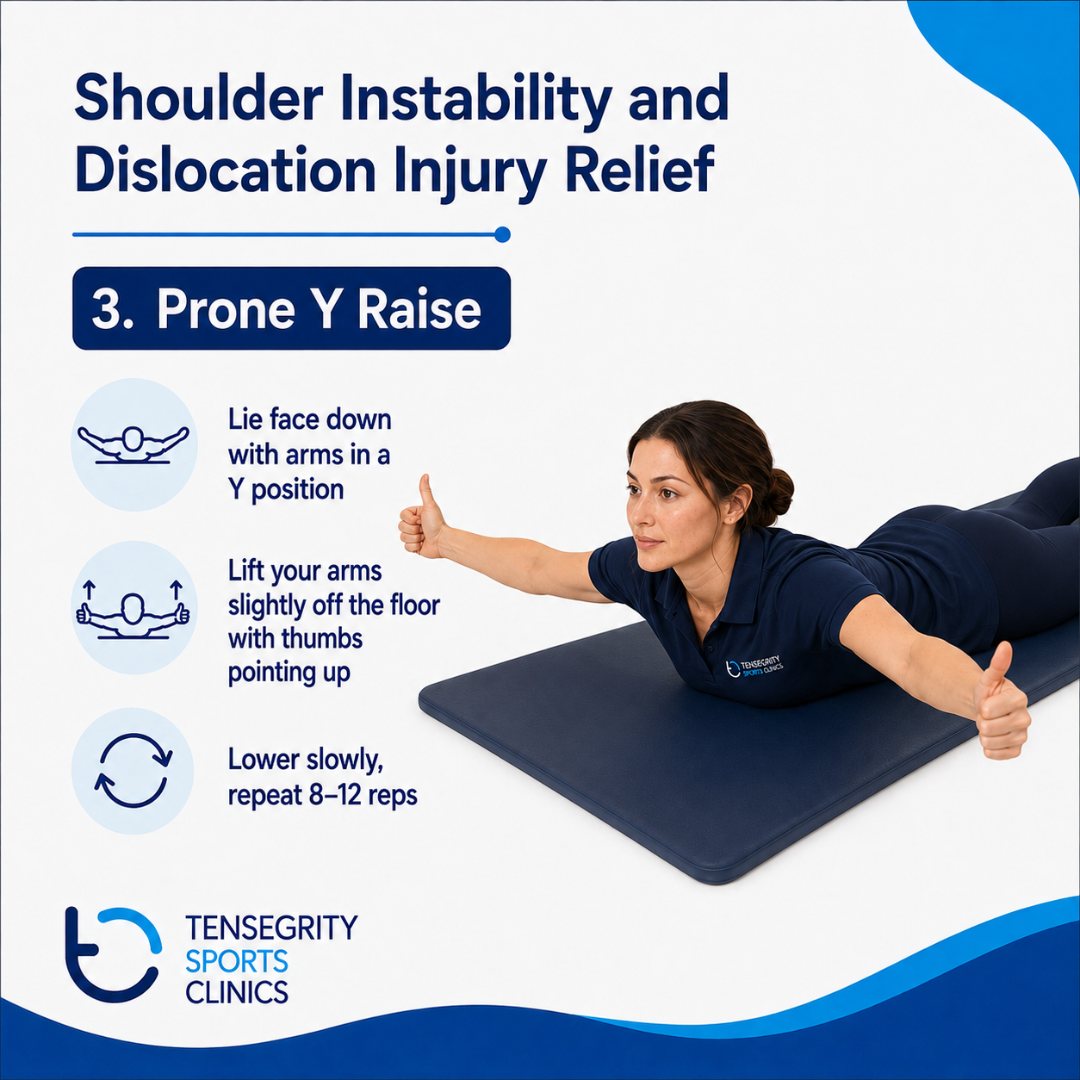
These suit the strengthening phase, not the days straight after a dislocation. If your shoulder has dislocated, get assessed first so the starting point matches the injury.
Prevention:
- Finish rehabilitation after the first dislocation: the single biggest factor in whether it happens again.
- Maintain rotator cuff strength: ongoing, not just during rehabilitation.
- Maintain shoulder blade strength and control: so the joint has a stable base.
- Build strength through different ranges: not only the comfortable middle of the range.
- Include proprioception and stability work: strength alone does not restore control.
- Prepare progressively for contact sport: and keep shoulder conditioning going through the season.
- Do not return on pain alone: function and confidence are the test, not the absence of pain.
A previous dislocation remains a significant risk factor, so none of this eliminates the possibility of another episode.
Outlook:
Many people recover well after a shoulder dislocation and return to normal work, exercise and sport. Recurrent instability does happen, particularly in younger people in contact or overhead sports, which is why rehabilitation focuses on strength, stability, confidence and the ability to tolerate sport-specific load rather than pain alone. Repeated dislocations or subluxations are worth getting assessed rather than managing episode by episode.
It is normal to feel apprehensive about certain movements even after the injury has healed. Gradually exposing the shoulder to more demanding movement through structured rehabilitation rebuilds both the physical stability and the confidence. The long-term goal is not permanent protection, it is enough strength, control and resilience to handle everyday life, work, the gym and sport.
Seek prompt medical attention if: you believe your shoulder has dislocated, the shoulder looks visibly deformed, you cannot move your arm after an injury, you have significant numbness or weakness, your hand becomes pale, cold or discoloured, you have severe pain after a fall or collision, or you suspect a fracture.
A dislocated shoulder should not be repeatedly manipulated or forced back into position without appropriate medical assessment.