
Caring for Sydney since 2012 · 17,500+ patients · ★ 5.0 from 163 Google reviews · North Shore Local Business Awards Winner · Australian Small Business Champion Finalist
Book at Wahroonga · Bella Vista · Macquarie Park · Brookvale
Back pain is an incredibly common experience, affecting millions of people every year. Whether it is a sudden injury, chronic ache, or radiating pain, it can significantly impact your life.
At Tensegrity Sports Clinics, we know how much back pain can get in the way of what you want to be doing. Our team takes an evidence-based approach, starting with a thorough assessment to find what is driving your pain, then building a treatment plan and the strategies to keep it from coming back.
Overview:
Most lower back pain is mechanical. Something has changed in the way your spine, hips and surrounding muscles share load, and the tissue carrying more than its share becomes painful. Working out which structure is involved, and why it became overloaded, is what shapes the treatment.
Two distinctions matter for how we approach it. Acute pain has started within the last six weeks, often after a specific movement or a period of unusual load. Persistent pain has been present, or keeps returning, over three months or longer, and usually has more than one contributing factor.
Anatomy:
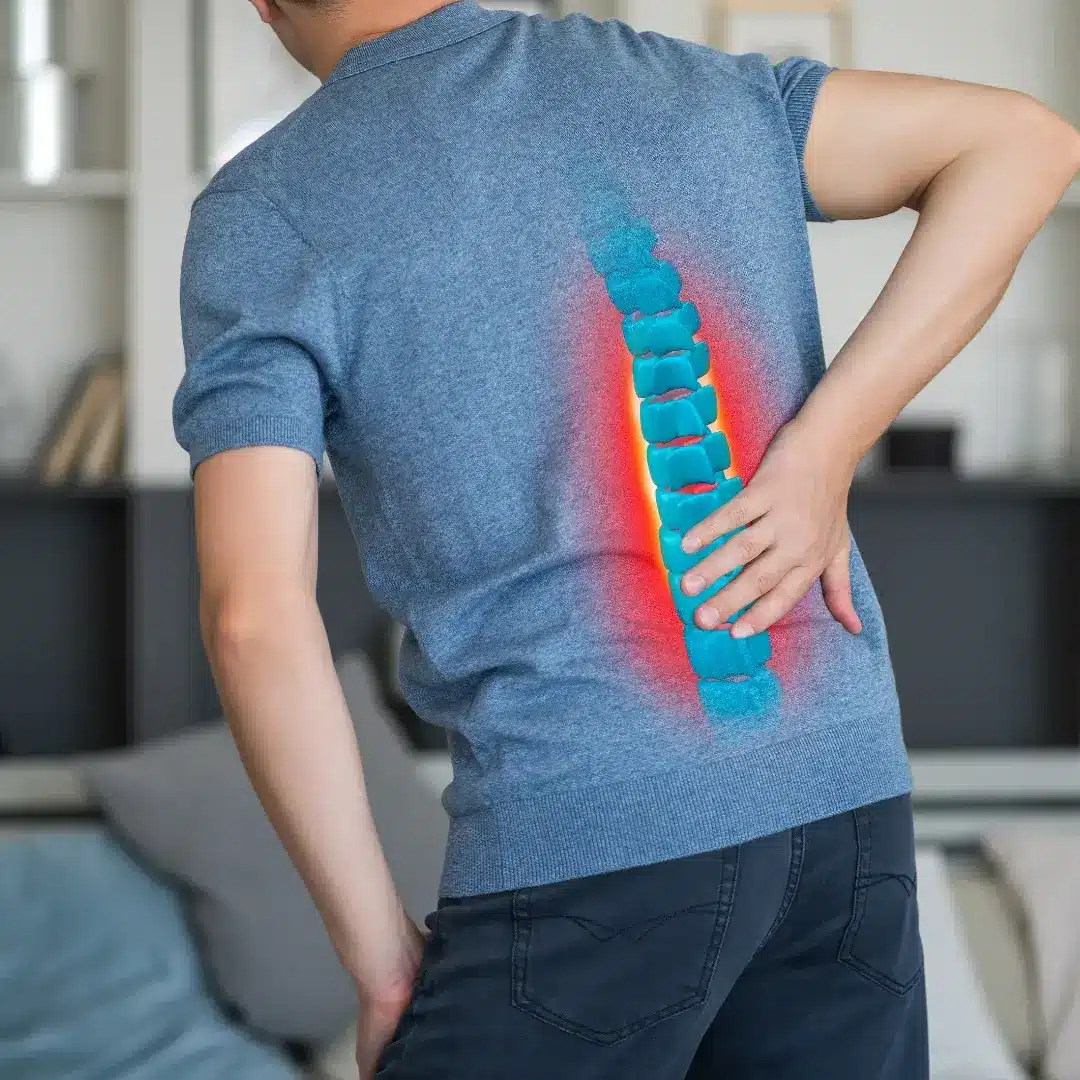
The lower back, or lumbar spine, is five vertebrae stacked above the pelvis. Between them sit intervertebral discs that absorb and distribute load. Small facet joints at the back of each level guide how you bend and rotate. Around all of it, the deep stabilising muscles, the larger muscles of the trunk and hips, and the connective tissue running through your back control how force travels between your upper body and your legs.
Pain can come from any of those structures. It can also be referred, which means the tissue producing the pain is not where you feel it. A tight, painful spot beside the spine is often the place that is compensating, not the place that started the problem. This is why an assessment that only presses on the sore area can miss the driver.
Causes:
Lower back pain is a symptom, not a diagnosis. These are the presentations we see most often, each with its own assessment findings and its own approach.
Back strain. The muscles and connective tissue of the lower back are loaded beyond what they are currently conditioned for. Common after a heavy lift, an awkward movement, a jump in training volume, or a long period of sitting followed by sudden activity. Pain is usually local, worse with movement, and eases with gentle activity.
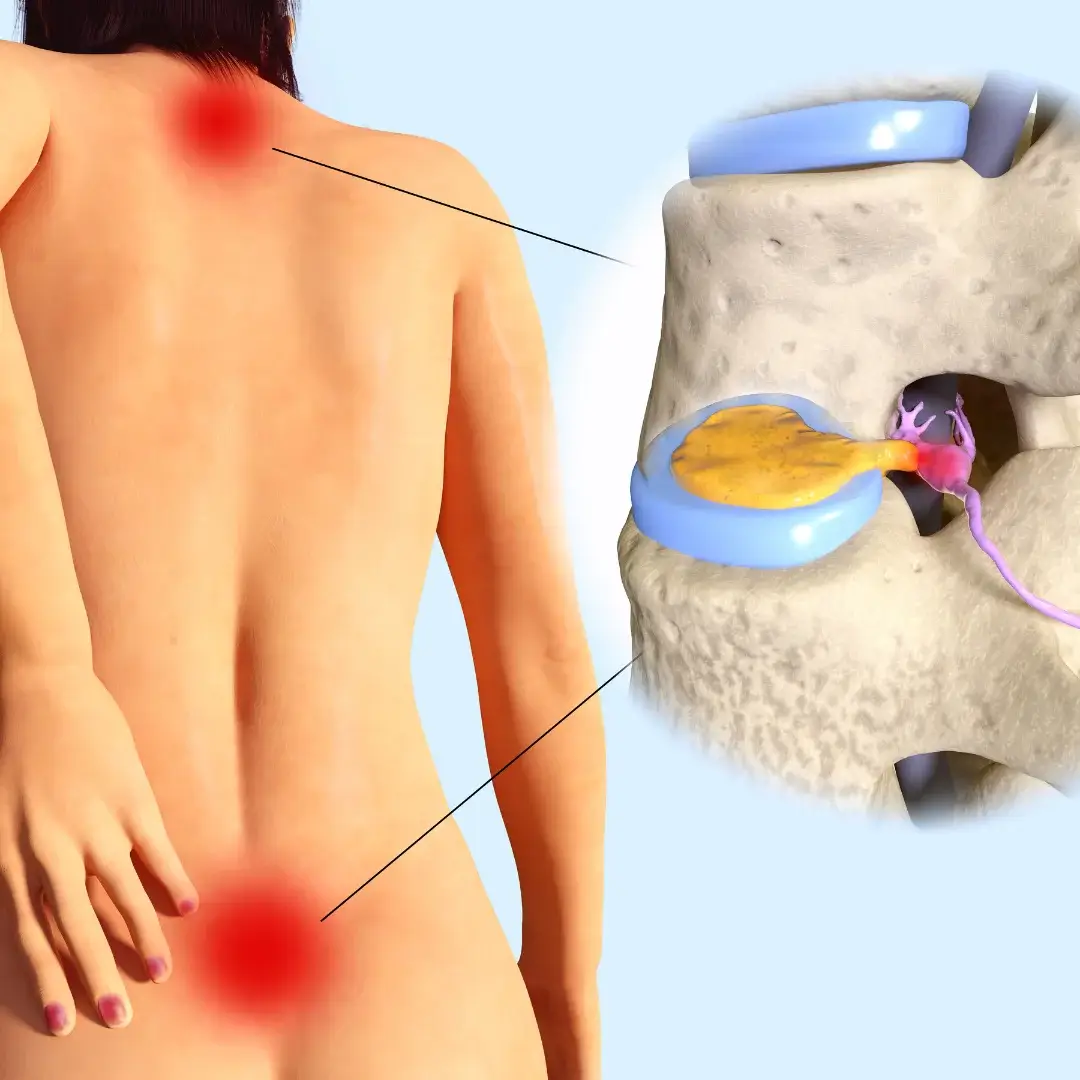
Disc protrusion. The outer wall of an intervertebral disc bulges under load and can irritate nearby tissue, including the nerve root. Often worse with sitting, bending forward and coughing. May be felt in the back alone, or referred into the buttock or leg.
Sciatica. Irritation or compression along the path of the sciatic nerve, producing pain, pins and needles or weakness that travels into the buttock, the back of the thigh and sometimes below the knee. Sciatica describes a pattern of symptoms, so the assessment has to find what is irritating the nerve.
Spinal arthritis. Age-related change in the facet joints and discs. Common in people over forty and often present on imaging without causing symptoms at all. When it does contribute, stiffness in the morning and after sitting is typical, easing once you get moving.
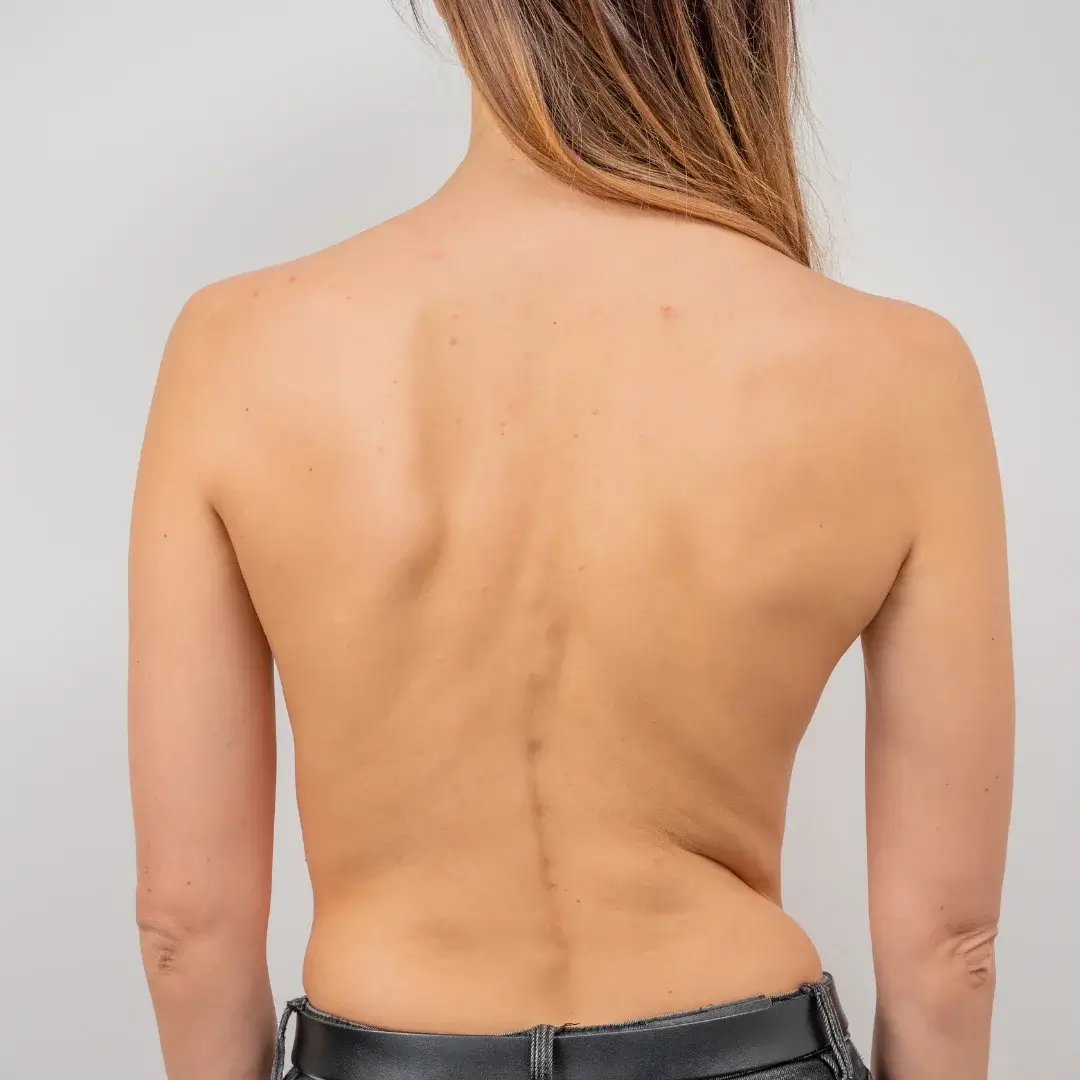
Scoliosis-related pain. A sideways curve in the spine changes how load is distributed. Many people with scoliosis have no pain. Where pain is present, treatment targets the areas carrying the most load and the movement patterns around them.
Piriformis syndrome. The sciatic nerve is irritated where it passes through the buttock, often related to prolonged sitting or a change in training load. Symptoms can look like sciatica but the driver sits in the hip rather than the spine.
Symptoms:
- Pain across the lower back, on one side or both
- Stiffness first thing in the morning or after sitting
- Pain that travels into the buttock, thigh or below the knee
- Pins and needles, or a sense the leg is weak or unreliable
- Pain that is worse with a specific movement, such as bending, sitting or standing
- Difficulty with everyday movements like getting out of the car or lifting from the floor
Diagnosis and Tests:
A first appointment is one full hour, and most of it is assessment.
We start with history. When it began, what you were doing, what makes it worse, what settles it, whether it travels, and how it behaves overnight and first thing in the morning. We also ask what you have stopped doing because of it, because that is what the plan is built around.
Then we assess movement. We look at how your spine, hips, pelvis and thoracic spine move and share load, not just where it hurts. Orthopaedic and neurological testing follows where the history points that way, including strength, reflexes and sensation if your symptoms travel into the leg.
You will leave the first appointment with a clear explanation of what we found, what we think is driving it, and what the plan looks like. Where imaging or a medical referral is the right next step, we will tell you that too. Most mechanical lower back pain is assessed and managed without a scan.
Treatment:
Treatment is chosen to match the assessment findings, not applied to everyone the same way. Depending on what we find, it may include:
- Joint manipulation and mobilisation, to restore movement at stiff segments in the lumbar spine, pelvis and thoracic spine
- Soft tissue therapy and remedial massage, for the muscles and fascia that have been compensating
- Dry needling, for myofascial trigger points contributing to the pain
- Cold laser therapy, used to support tissue healing and pain modulation
- Shockwave therapy, where a persistent tendon or attachment-point problem is part of the picture, used alongside a loading program rather than instead of it. Available at every Tensegrity clinic except Willoughby.
- Exercise rehabilitation, built into the plan from early on
- Medication and injection-based options. These sit outside a chiropractor’s scope of practice. If pain is limiting your sleep or stopping you starting rehabilitation, that is worth discussing with your GP or pharmacist rather than self-prescribing long term.
Hands-on treatment is designed to make movement more comfortable so that loading can start sooner. The loading is what makes the change hold.
Book an assessment. No referral needed, HICAPS on the spot claiming at every clinic.
Rehabilitation:
Rest was once the standard advice for lower back pain. Current evidence points the other way. Staying as active as your symptoms reasonably allow, and returning to normal movement early, is associated with better outcomes than extended rest.
Early rehabilitation is usually about restoring comfortable movement and getting the deep stabilising muscles working again. From there it progresses to loading the hips, trunk and legs properly, then to the specific demands of your sport, your job or whatever you have stopped doing.
How long does it take? Timeframes vary with what is driving the pain, how long it has been there, and what you need to return to. Acute mechanical back pain often settles over a few weeks. Persistent presentations take longer and involve more than one contributing factor. Your practitioner will give you a realistic range at the first visit rather than a fixed promise.
What our practitioners recommend:
These are the items our practitioners most often suggest for lower back pain between appointments. They support your rehabilitation. They do not replace assessment, and what suits you depends on your presentation.
- Lumbar support belt. Short term use only, and generally for specific activities rather than all day. Your practitioner will tell you which applies to you.
- Swiss ball. Used for core and trunk control work, and as an alternative sitting position for short periods.
- Microwavable heat pack. Heat is commonly used before movement when the back is stiff rather than acutely irritable.
- Ergonomic office chair. Sitting set up is one of the biggest daily contributors to back pain for desk based workers.
As an Amazon Associate I earn from qualifying purchases. We may earn a commission on these links. Our recommendations are based on clinical judgement and are not influenced by commission.
Prevention:
- Build load gradually. Most flare-ups follow a jump in volume or intensity rather than a single wrong movement.
- Keep the hips and thoracic spine moving. When they stiffen, the lower back takes on more of the work.
- Strength train. Well-loaded trunk, hip and leg musculature is one of the more consistent protective factors.
- Break up long periods of sitting. Position matters less than how long you hold it.
- Finish your rehabilitation. Stopping when the pain goes, rather than when the capacity is back, is the most common reason it returns.
Outlook/Prognosis:
Most lower back pain improves. Acute episodes commonly settle within a few weeks, and recurrence is far less likely when rehabilitation is completed rather than stopped at the point the pain eases.
Recovery is rarely a straight line. Good days and flare-ups both happen, and a flare does not mean the plan has failed. What matters is the direction over weeks rather than day to day. Where symptoms are not responding as expected, we will say so and refer for imaging or medical review rather than continuing unchanged.
When to seek help sooner:
Book in promptly, or see a medical practitioner, if you have any of the following alongside back pain:
- Numbness around the groin, inner thighs or saddle area
- Loss of bladder or bowel control
- Progressive weakness in one or both legs
- Back pain following a significant fall or accident
- Unexplained weight loss, fever, or pain that is constant and unrelated to movement
- Night pain that does not change with position
These are uncommon, but they change the pathway and are worth acting on early.
When it just isn’t getting better
Some pain settles on its own. Some keeps coming back — after rest, after stretching, after everything you’ve already tried. That’s the pain we see every week. Our first job isn’t treatment — it’s finding out why it hasn’t settled. A thorough assessment, an honest explanation, and a clear plan, so you know exactly what’s going on and what to do next.
Already seen someone about this? Bring your scans and your story — we’re happy to be your second opinion.
Common questions:
Do I need a referral to see a chiropractor? No. You can book directly online.
Do I need a scan first? Usually not. Imaging is useful in specific circumstances and your practitioner will tell you if yours is one of them. Most mechanical lower back pain is assessed and managed without it.
Can I claim on private health? HICAPS on-the-spot claiming is available at all seven clinics for eligible health funds. Rebates depend on your level of cover.
Should I keep training? Usually yes, with modification. Your practitioner will tell you what to keep, what to scale back and what to leave out for now.
Book at your nearest clinic
Booking online takes under a minute. No referral needed, and HICAPS on-the-spot claiming is available at every clinic for eligible health funds.
- Book Wahroonga. Chiropractic and remedial massage.
- Book St Leonards. Chiropractic and physiotherapy.
- Book Bella Vista. Women’s and children’s care, remedial massage.
- Book Macquarie Park. Multilingual consultations available.
- Book Sydney CBD. Early and lunchtime appointments.
- Book Brookvale. Inside Sky PT gym.
- Book Willoughby. Satellite location.
Every practitioner is university-qualified and AHPRA-registered. Between them, our team has delivered more than 195,000 treatments.