
Overview:
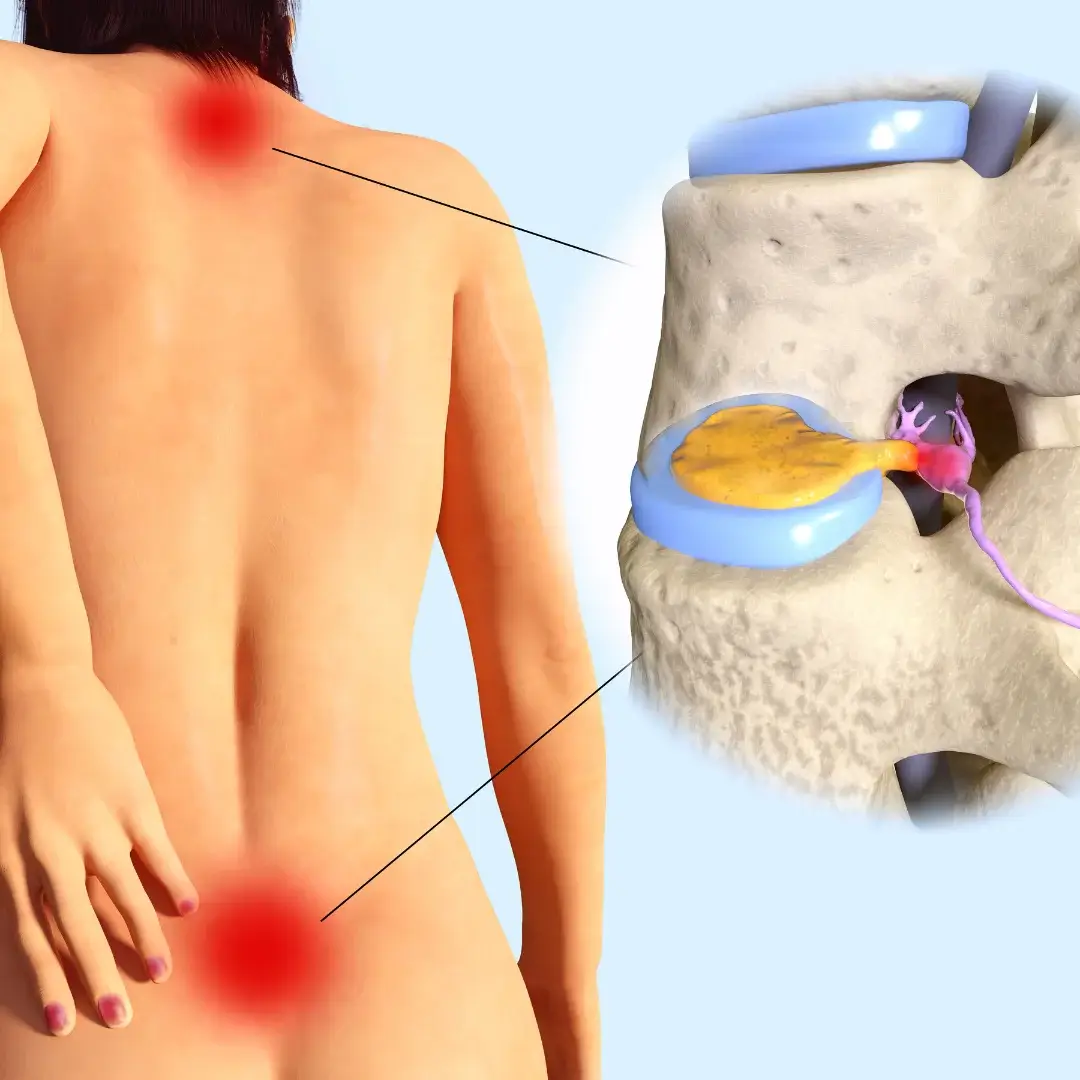
Disc protrusion, also known as a bulging disc, occurs when the soft inner material of an intervertebral disc pushes outward against the tough outer layer, potentially causing compression on nearby nerves. This condition can lead to pain, numbness, or weakness in the affected area.
Anatomy:
Intervertebral discs serve as cushions between the vertebrae of the spine, composed of a tough outer layer (annulus fibrosus) and a gel-like inner core (nucleus pulposus). Disc protrusion occurs when the nucleus pulposus bulges outwards through small tears or weaknesses in the annulus fibrosus.
Causes:
Factors contributing to disc protrusion include age-related degeneration, repetitive spinal stress, improper lifting techniques, or sudden trauma. These factors weaken the annulus fibrosus, increasing the risk of disc bulging or protrusion.
Symptoms:
Common symptoms of disc protrusion include:
- Localised back or neck pain.
- Radiating pain into the arms or legs.
- Numbness or tingling sensations.
- Muscle weakness or decreased reflexes.
Diagnosis and Tests:
Diagnosis involves a physical examination, medical history review, and diagnostic imaging such as MRI or CT scans to visualise the extent of disc protrusion and assess nerve compression.
Treatment:
Treatment options for disc protrusion may include:
- Activity modification. Staying as active as symptoms reasonably allow, while temporarily reducing the positions and loads that provoke the pain. Extended rest is not recommended and is associated with slower recovery.
- Manual therapy. Joint mobilisation and soft tissue work through the lumbar spine, pelvis and hips, to improve comfort and movement so loading can start sooner.
- Neural mobilisation. Where symptoms travel into the leg, graded movement to improve how the nerve tolerates load and length.
- Exercise rehabilitation. Graded loading of the trunk, hips and legs, progressed as symptoms settle. This is the part that makes the change hold.
- Cold laser therapy. Used to support tissue healing and pain modulation.
- Medication and injection-based options. These sit outside a chiropractor’s scope of practice. If pain is limiting your sleep or stopping you starting rehabilitation, that is worth discussing with your GP or pharmacist rather than self-prescribing long term.
- Surgical review. A small number of presentations, usually those with progressive weakness or symptoms that are not responding as expected, are appropriately assessed by a spinal surgeon. We will tell you if we think that applies to you, and refer you.
Three exercises for disc protrusion
These three were put together by our practitioners as a starting point. They are general exercises, not a personalised program. Stop if any of them increase the symptoms travelling down your leg.
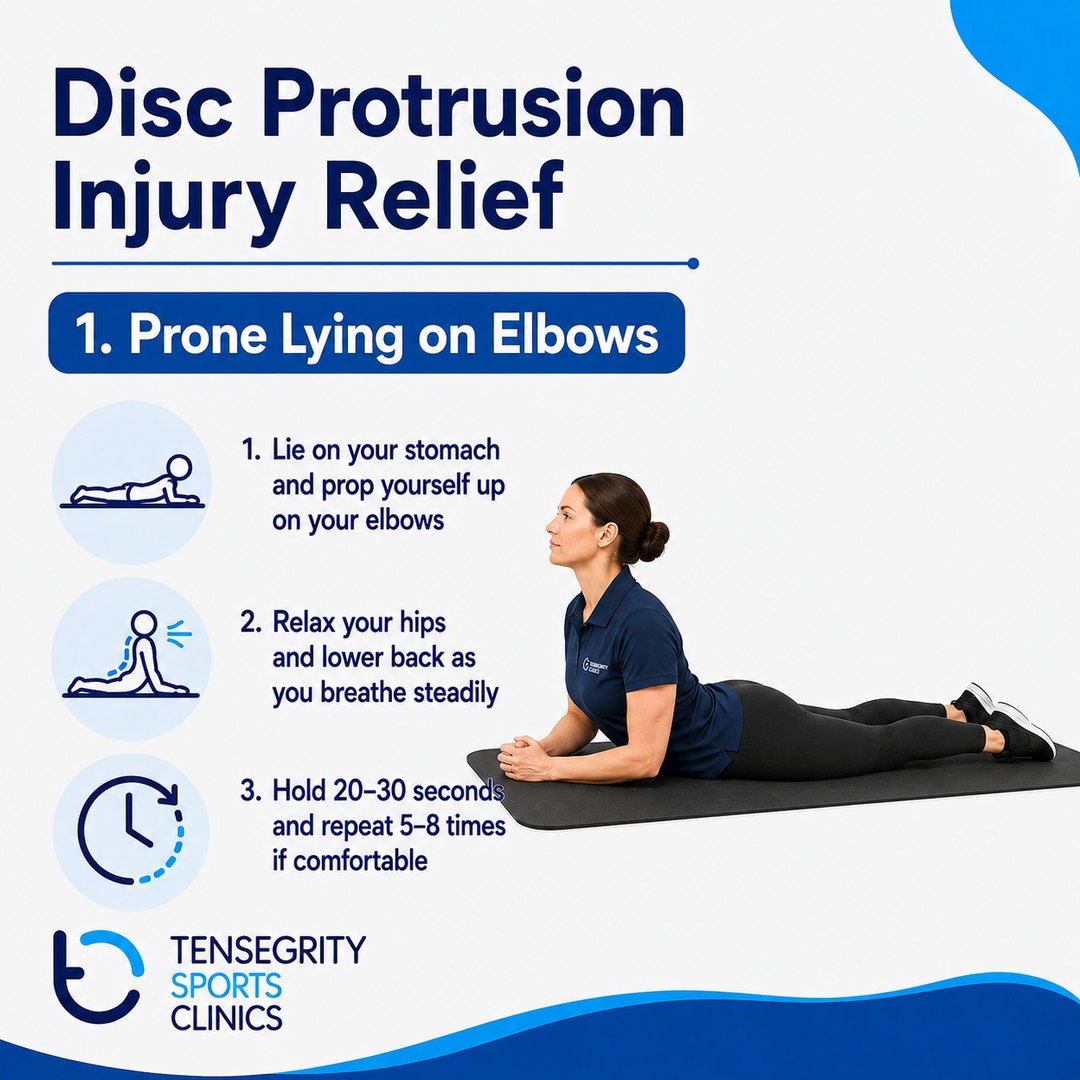
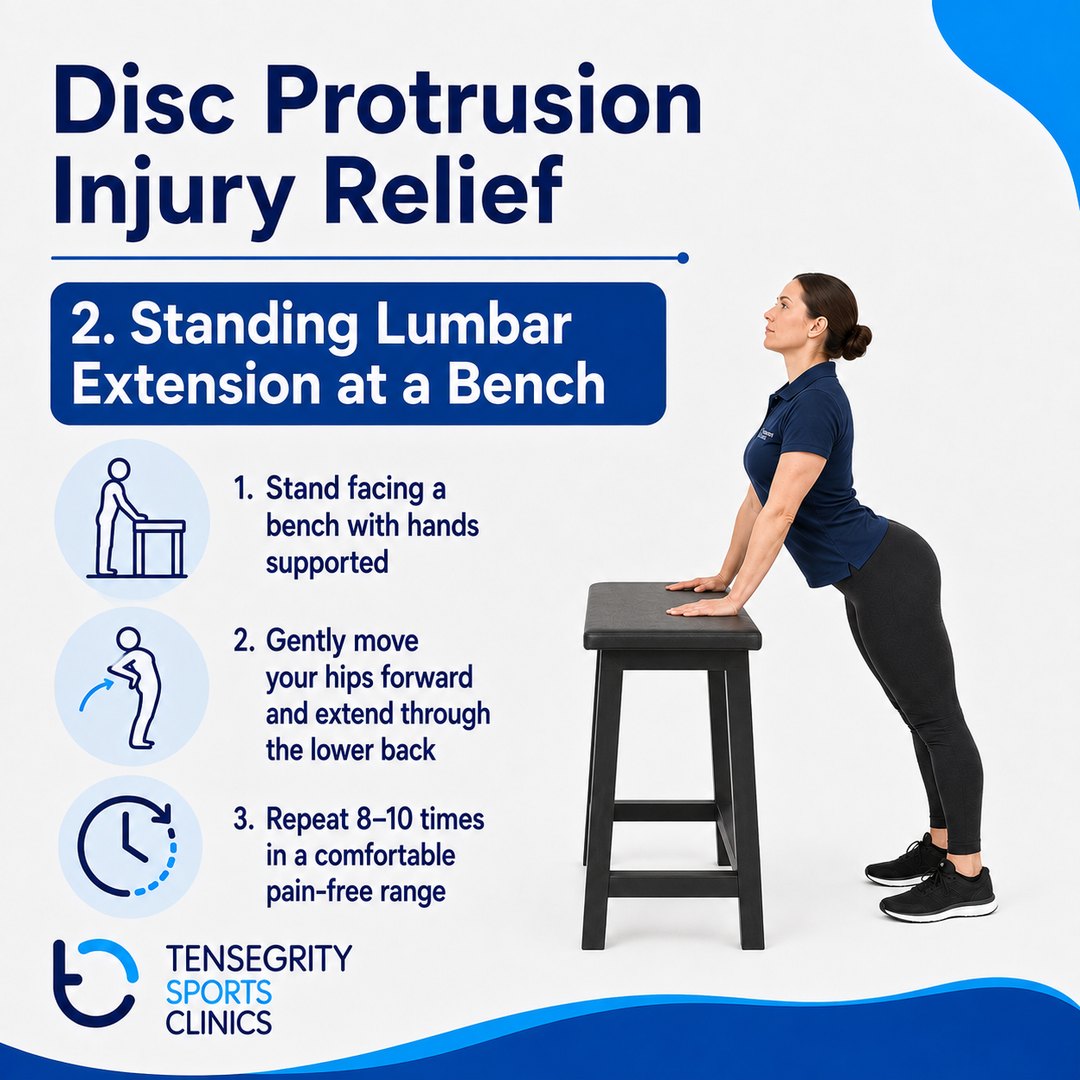
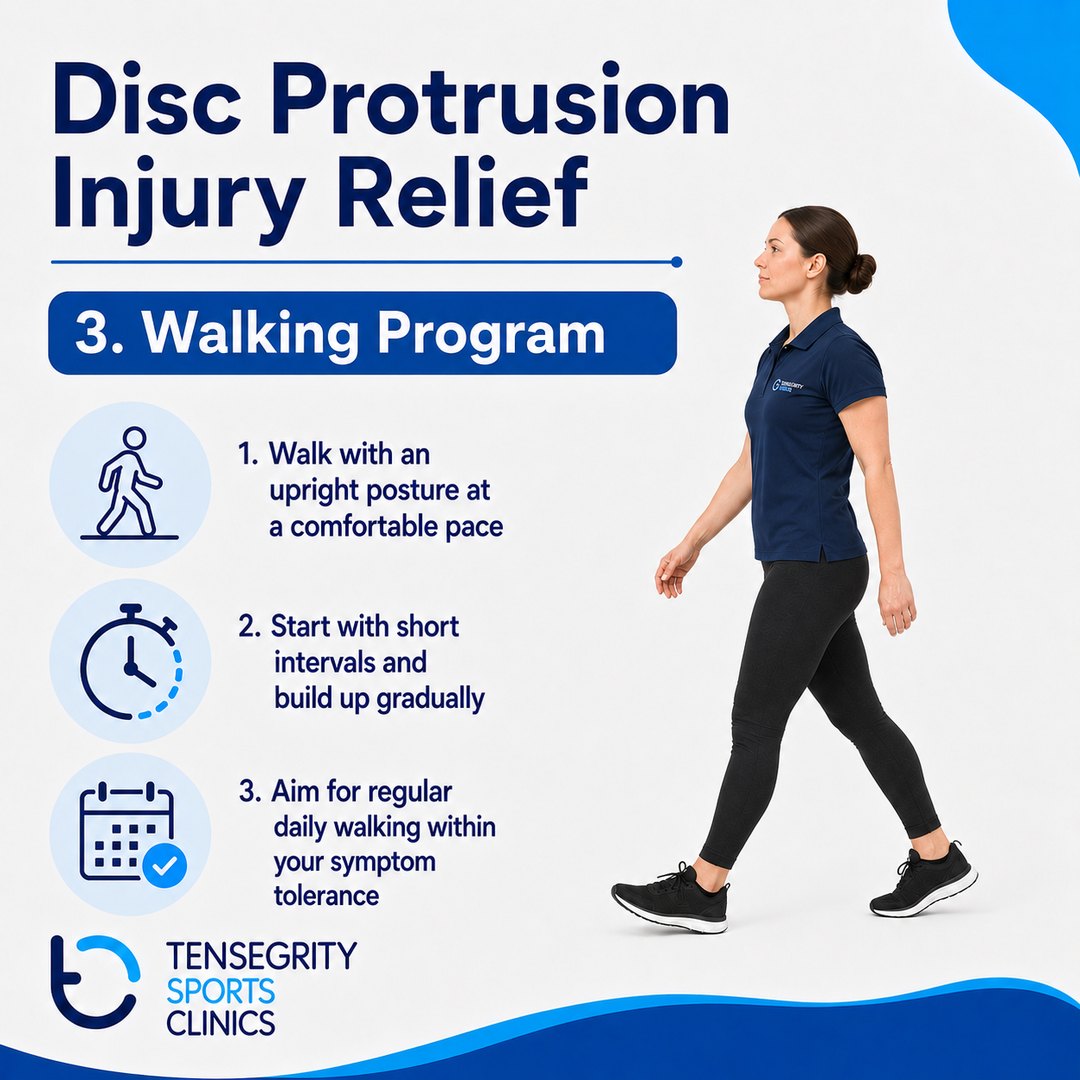
If the back is not settling, or the pain is limiting your training or daily activity, book an assessment so the loading can be matched to what your back can currently handle.
What our practitioners recommend:
These are the items our practitioners most often suggest for a disc protrusion between appointments. They support your rehabilitation. They do not replace assessment, and what suits you depends on your presentation.
- Lumbar support belt. Short term support for specific activities during the more irritable stage. Your practitioner will advise when and for how long.
- Ergonomic office chair. Prolonged sitting is one of the more provocative positions for a disc presentation, so the chair matters.
As an Amazon Associate I earn from qualifying purchases. We may earn a commission on these links. Our recommendations are based on clinical judgement and are not influenced by commission.
Prevention:
Preventive strategies include maintaining proper posture, practising safe lifting techniques, engaging in regular exercise to strengthen core muscles, and avoiding activities that place excessive strain on the spine.
Outlook / Prognosis:
With appropriate treatment and lifestyle modifications, many individuals experience significant improvement in symptoms associated with disc protrusion. However, long-term management may be necessary to prevent recurrence and maintain spinal health.
Living With:
Individuals with disc protrusion should work closely with healthcare providers to develop a tailored treatment plan that addresses their specific needs and goals. Adhering to recommended therapies and adopting preventive measures can help manage symptoms and improve overall quality of life.