
Overview:
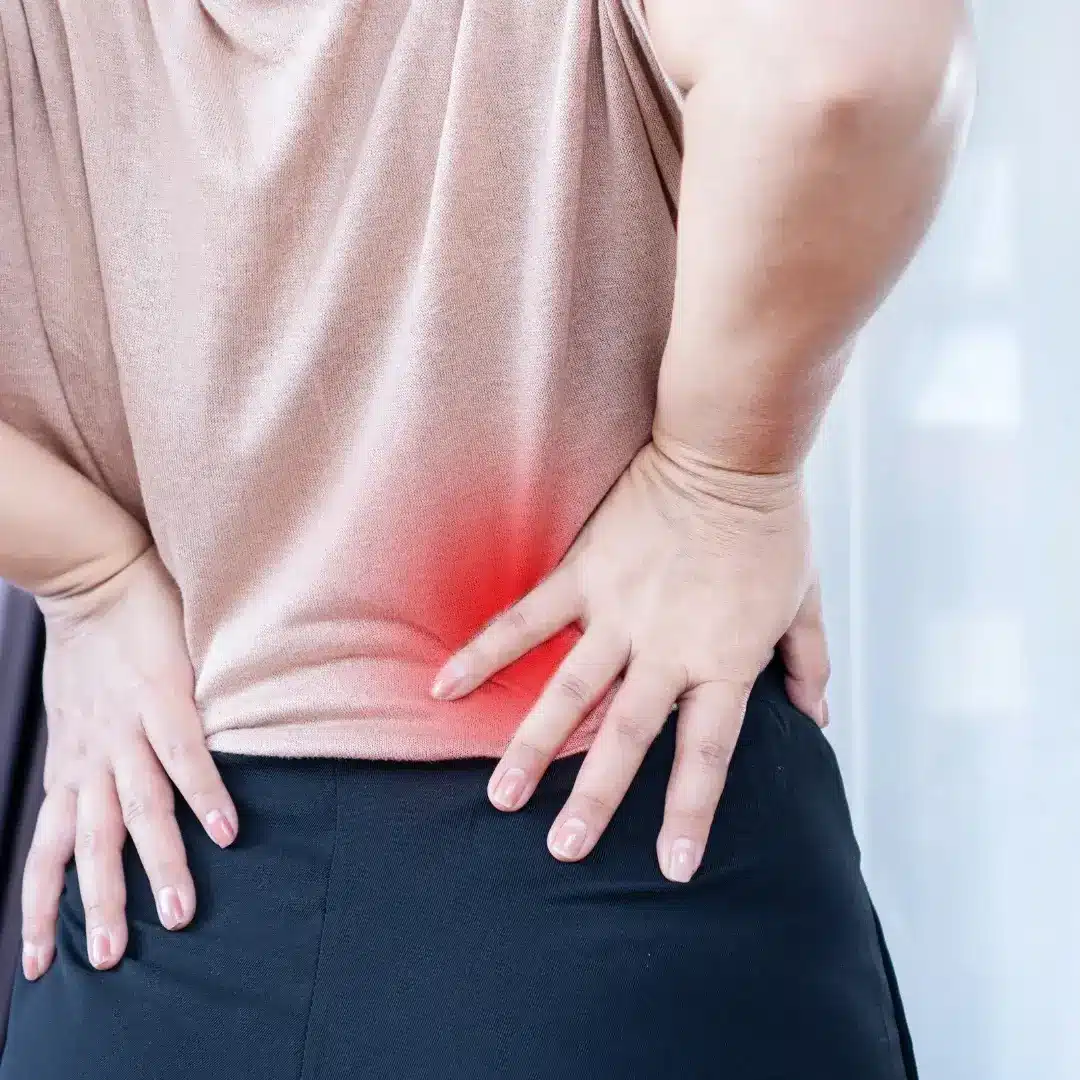
Back strain refers to an injury involving overstretching or tearing of muscles or tendons in the back, leading to pain and discomfort. It commonly occurs due to sudden or repetitive movements, heavy lifting, or poor body mechanics, resulting in strain on the muscles supporting the spine.
Anatomy:
The back consists of a complex network of muscles, ligaments, and tendons that provide support and stability to the spine. Back strain typically affects the muscles in the lower back (lumbar region) but can also occur in the mid-back (thoracic region) or upper back (cervical region).
Causes:
Causes of back strain may include:
- Lifting heavy objects with improper technique.
- Twisting or bending the back awkwardly during activities.
- Sudden movements or impacts that strain the back muscles.
- Prolonged sitting or standing in poor posture.
- Weakness or imbalance of the muscles supporting the spine.
Symptoms:
Common symptoms of back strain include:
- Localised pain or stiffness in the affected area.
- Muscle spasms or tightness in the back.
- Difficulty moving or bending the spine.
- Pain that worsens with movement or activity.
- Tenderness to touch over the strained muscles.
Diagnosis and Tests:
Diagnosis of back strain is typically based on medical history, physical examination, and assessment of symptoms. Diagnostic tests such as X-rays or MRI may be ordered to rule out other potential causes of back pain, such as fractures or herniated discs.
Treatment:
Treatment options for back strain may include:
- Rest and activity modification to avoid aggravating the injury.
- Application of ice or heat therapy to reduce pain and inflammation.
- Gentle stretching and strengthening exercises prescribed by your practitioner.
- Manual therapy techniques such as massage or chiropractic adjustments to relieve muscle tension.
- Medication and injection-based options. These sit outside a chiropractor’s scope of practice. If pain is limiting your sleep or stopping you starting rehabilitation, that is worth discussing with your GP or pharmacist rather than self-prescribing long term.
Three exercises for back strain
These three were put together by our practitioners as a starting point. They are general exercises, not a personalised program.
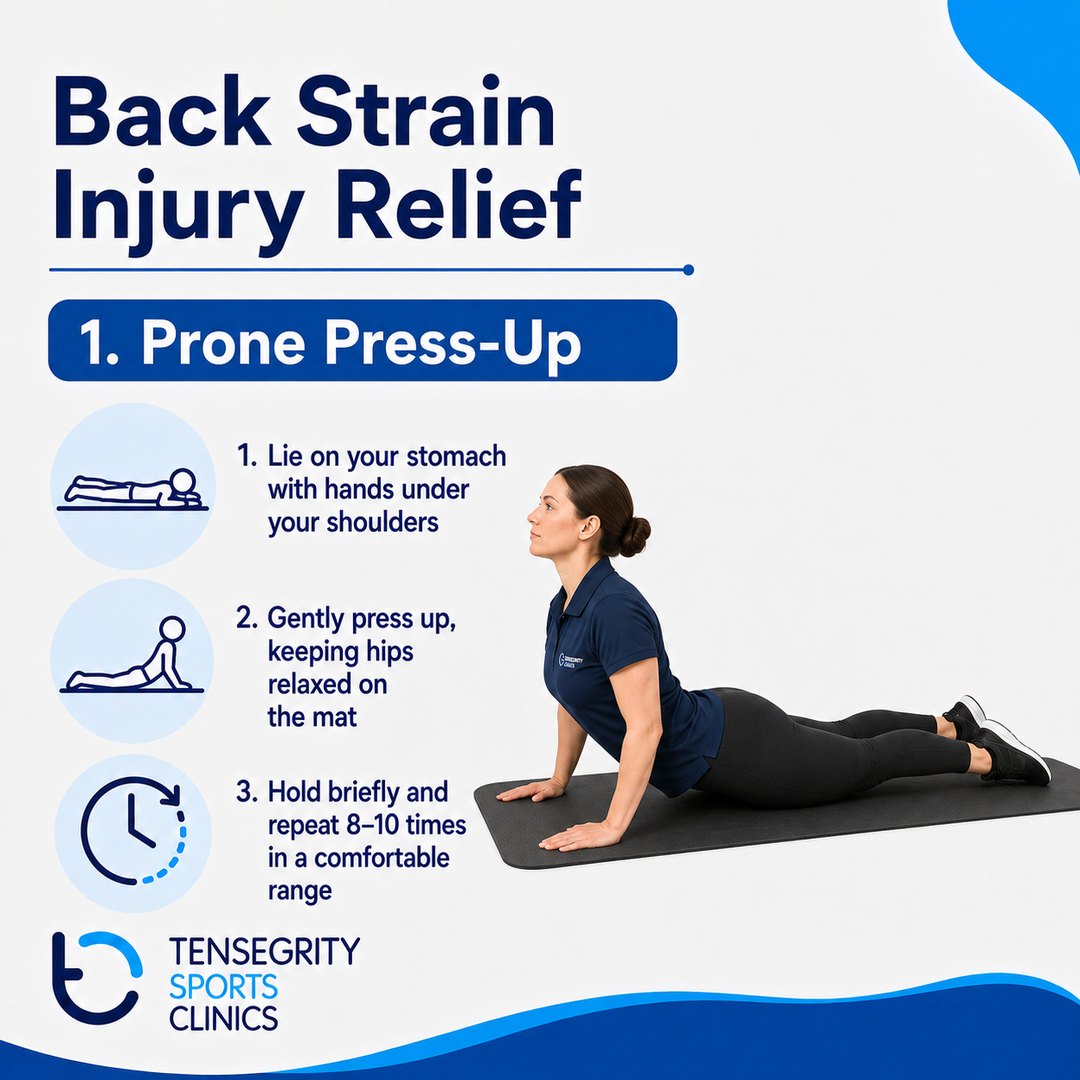
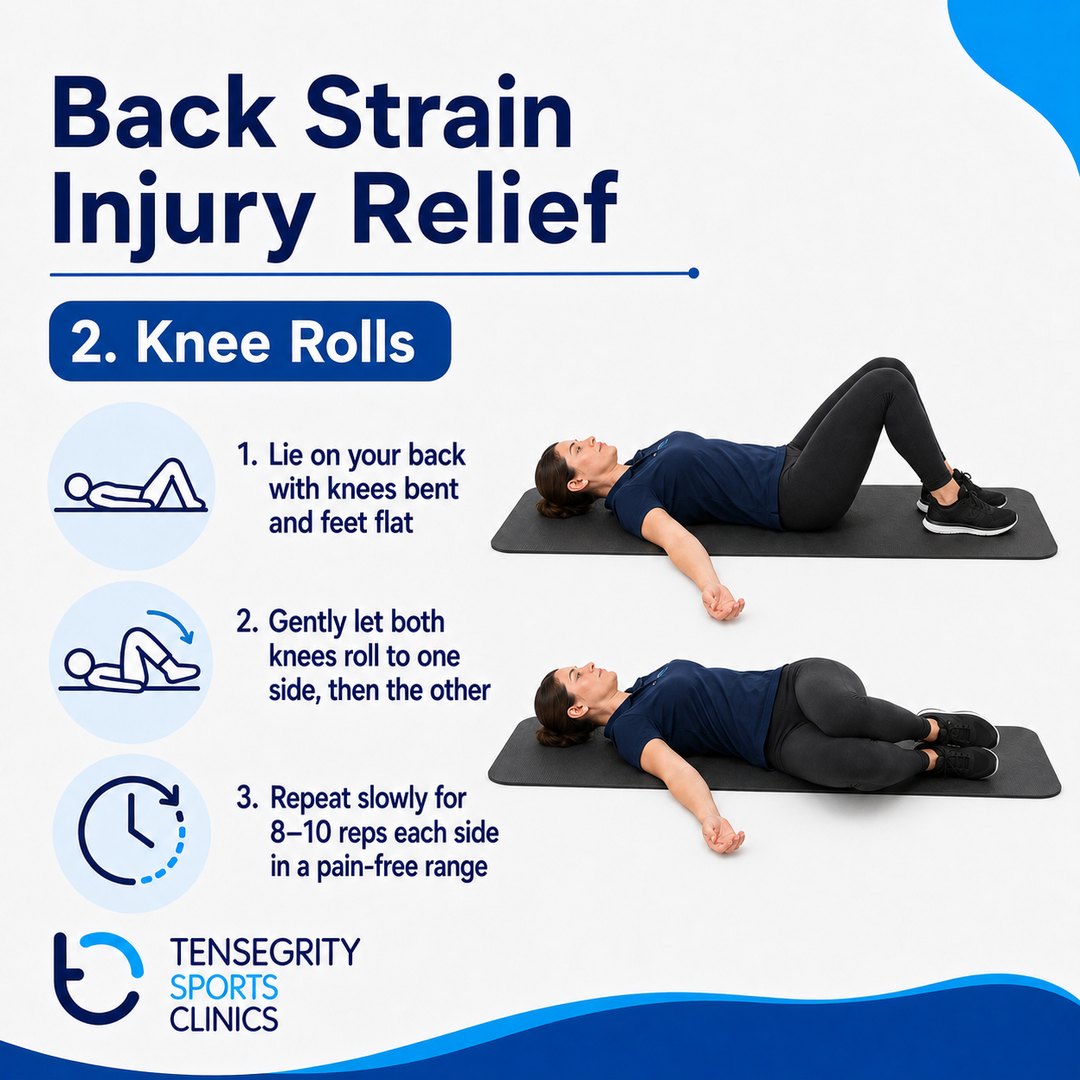
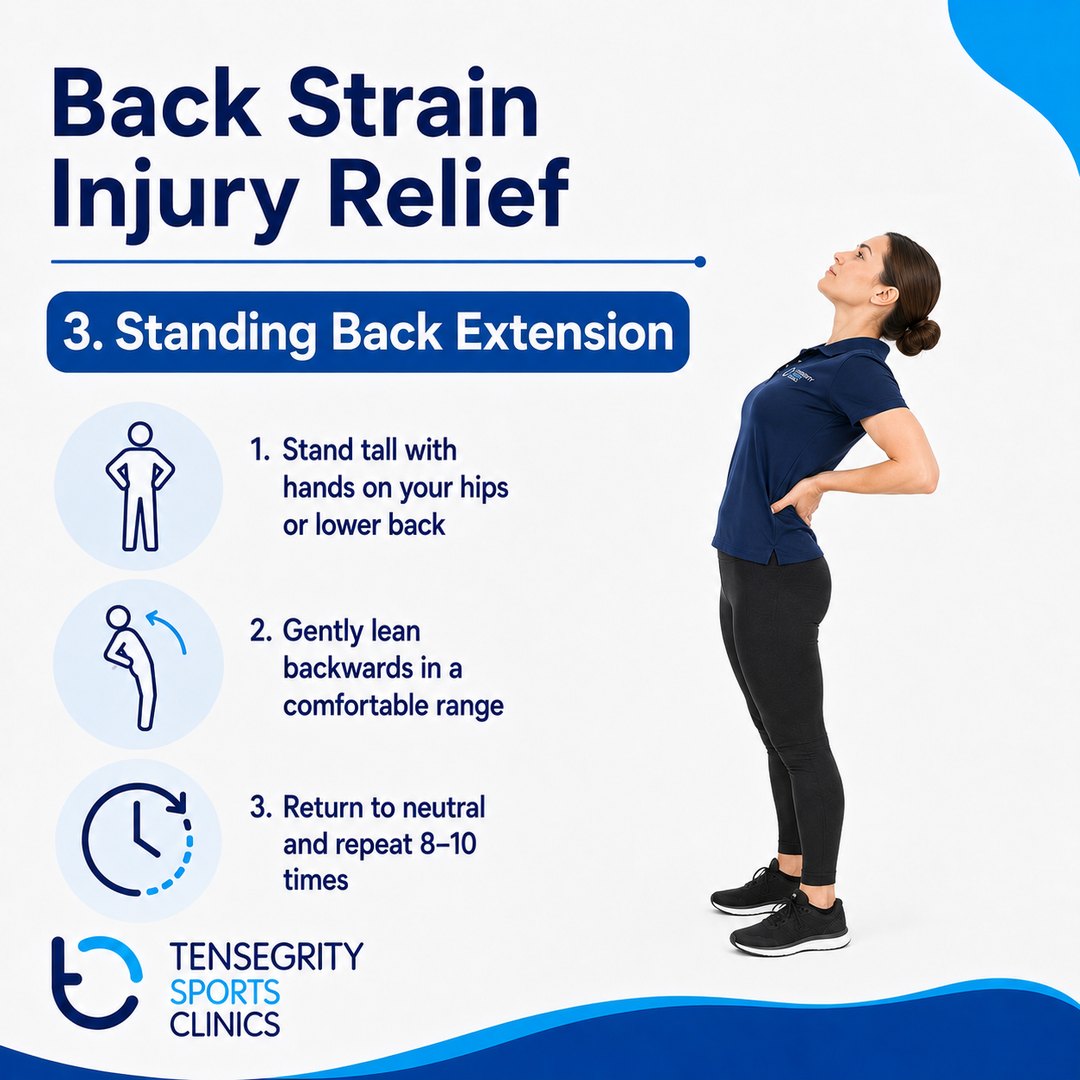
If the back is not settling, or the pain is limiting your training or daily activity, book an assessment so the loading can be matched to what your back can currently handle.
What our practitioners recommend:
These are the items our practitioners most often suggest for a back strain between appointments. They support your rehabilitation. They do not replace assessment, and what suits you depends on your presentation.
- Microwavable heat pack. Heat is commonly used once the first days have passed and the muscle is guarding rather than acutely inflamed.
- Reusable gel ice pack. For the early stage when the area is still irritable.
- Lumbar support belt. Short term support during specific activities only, not continuous wear.
As an Amazon Associate I earn from qualifying purchases. We may earn a commission on these links. Our recommendations are based on clinical judgement and are not influenced by commission.
Prevention:
Preventive measures for back strain include:
- Using proper lifting techniques, such as bending at the knees and keeping the back straight.
- Avoiding sudden or jerky movements that strain the back muscles.
- Maintaining good posture while sitting, standing, and walking.
- Strengthening the core muscles through regular exercise and conditioning.
- Taking frequent breaks and stretching during prolonged periods of sitting or standing.
Outlook / Prognosis:
The prognosis for back strain is generally favourable with appropriate treatment and rest. Most cases of mild to moderate back strain resolve within a few days to weeks with conservative measures. However, severe or recurrent episodes may require further evaluation and intervention by a healthcare provider.
Living With:
Individuals recovering from back strain should gradually resume normal activities and exercises as tolerated, avoiding activities that exacerbate symptoms. It is essential to listen to the body’s signals and seek medical attention if symptoms persist or worsen despite conservative measures. With proper care and preventive strategies, individuals can reduce the risk of future back strain injuries and maintain spinal health.