
Overview:
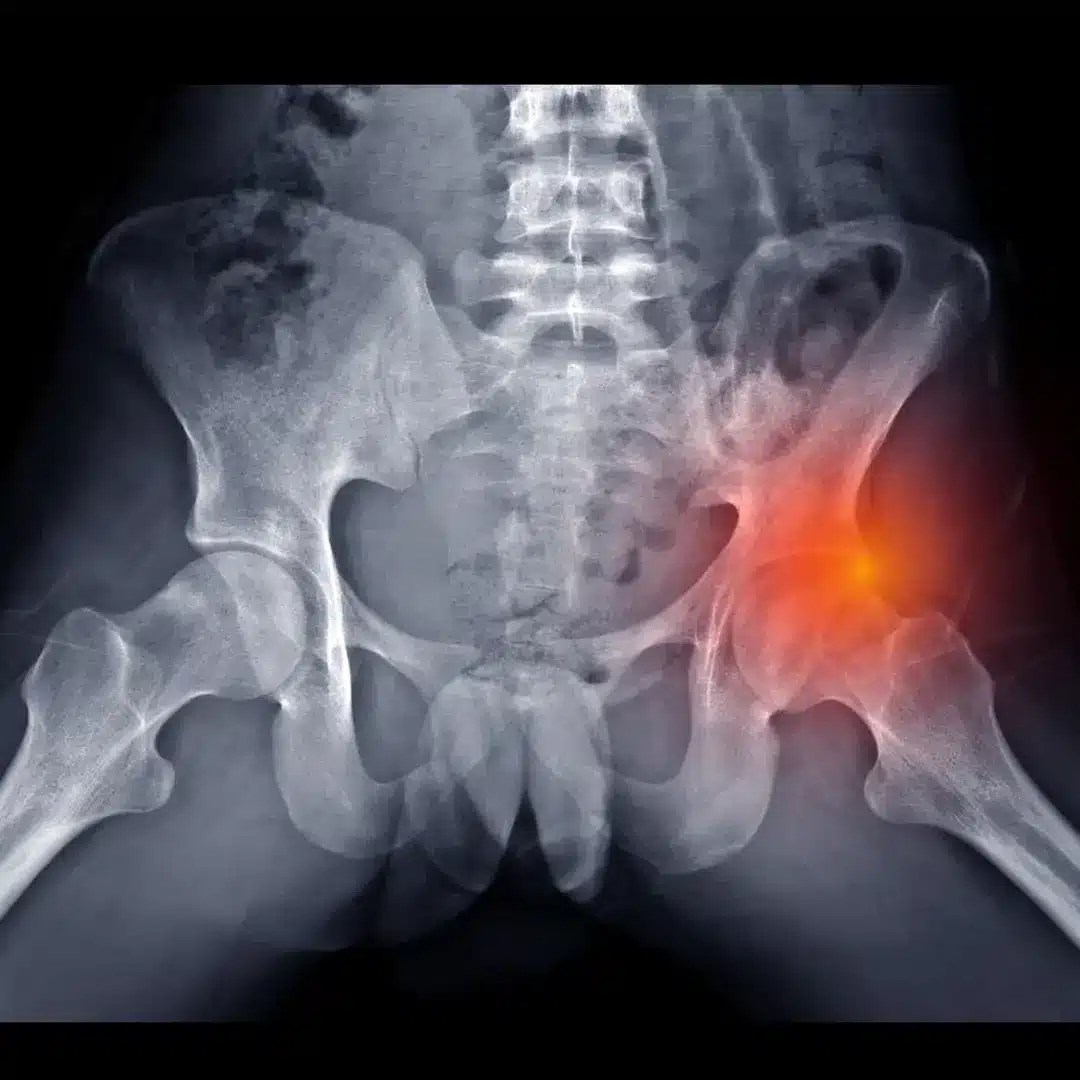
Piriformis syndrome is a neuromuscular condition characterised by pain and discomfort in the buttocks, often radiating down the leg. This condition occurs when the piriformis muscle, located deep in the buttocks, compresses or irritates the sciatic nerve, leading to symptoms similar to those of sciatica.
Anatomy:
The piriformis muscle is a small, pear-shaped muscle located deep within the buttock region, running from the sacrum (base of the spine) to the outer hip joint. Its primary function is to assist in hip rotation and stability. The sciatic nerve, the longest nerve in the body, runs beneath or sometimes through the piriformis muscle on its path down the leg.
Causes:
Piriformis syndrome can develop due to various factors, including:
- Piriformis Muscle Tightness: Tightness or spasms in the piriformis muscle can lead to compression or irritation of the sciatic nerve.
- Muscle Imbalances: Weakness or dysfunction in surrounding muscles, such as the gluteal muscles or hip rotators, may contribute to abnormal movement patterns and increased strain on the piriformis muscle.
- Anatomical Variations: Anatomical variations, such as a narrow sciatic foramen (the opening through which the sciatic nerve exits the pelvis), can predispose individuals to piriformis syndrome by reducing the space available for the sciatic nerve to pass.
- Trauma or Injury: Direct trauma to the buttock region or repetitive activities that involve excessive hip rotation or flexion can result in inflammation and irritation of the piriformis muscle and adjacent structures.
- Sitting for Prolonged Periods: Prolonged sitting, particularly on hard surfaces or in a position that places pressure on the buttocks, can exacerbate symptoms by compressing the sciatic nerve against the piriformis muscle.
Symptoms:
Common signs and symptoms of piriformis syndrome may include:
- Pain: Deep, aching pain in the buttock region, often radiating down the back of the thigh and calf (resembling sciatica).
- Tenderness: Increased sensitivity and tenderness over the piriformis muscle, especially with palpation or pressure.
- Numbness and Tingling: Sensations of numbness, tingling, or pins and needles in the buttocks, thigh, or leg, reflecting irritation of the sciatic nerve.
- Muscle Weakness: Weakness or difficulty with activities such as walking, climbing stairs, or standing from a seated position, due to compromised nerve function.
- Aggravating Factors: Symptoms may worsen with prolonged sitting, climbing stairs, running, or activities that involve hip rotation or flexion.
Diagnosis:
Diagnosis of piriformis syndrome involves a comprehensive evaluation of symptoms, medical history, and physical examination. Additional diagnostic tests, such as imaging studies (MRI or ultrasound) or electromyography (EMG), may be ordered to rule out other potential causes of buttock and leg pain, such as lumbar disc herniation or sciatic nerve entrapment.
Treatment:
Treatment for piriformis syndrome focuses on relieving pain, reducing inflammation, and restoring normal muscle function:
- Rest and Activity Modification: Temporary avoidance of activities that exacerbate symptoms, such as prolonged sitting or activities that involve repetitive hip flexion, allows for tissue healing and symptom relief.
- Ice Therapy: Applying ice packs to the affected area for 15-20 minutes several times a day helps reduce pain and inflammation.
- Stretching Exercises: Gentle stretching exercises targeting the piriformis muscle and surrounding hip muscles can help alleviate tightness and improve flexibility. Examples include the piriformis stretch, figure-four stretch, and hip flexor stretches.
- Strengthening Exercises: Strengthening exercises focusing on the gluteal muscles, hip abductors, and hip external rotators help improve muscle balance and stability, reducing strain on the piriformis muscle.
- Manual Therapy: Techniques such as massage therapy, myofascial release, or trigger point therapy may help alleviate muscle tension and improve tissue mobility.
- Heat Therapy: Applying heat packs or engaging in warm-up activities before stretching or exercise can help relax tight muscles and enhance flexibility.
- Biomechanical Evaluation: Assessment of lower limb alignment, gait mechanics, and ergonomic factors may help identify contributing factors and guide treatment strategies to prevent recurrence.
- Medication and injection-based options. These sit outside a chiropractor’s scope of practice. If pain is limiting your sleep or stopping you starting rehabilitation, that is worth discussing with your GP or pharmacist rather than self-prescribing long term.
Three exercises for piriformis syndrome
These three were put together by our practitioners as a starting point. They are general exercises, not a personalised program. Stop if any of them increase the symptoms travelling down your leg.
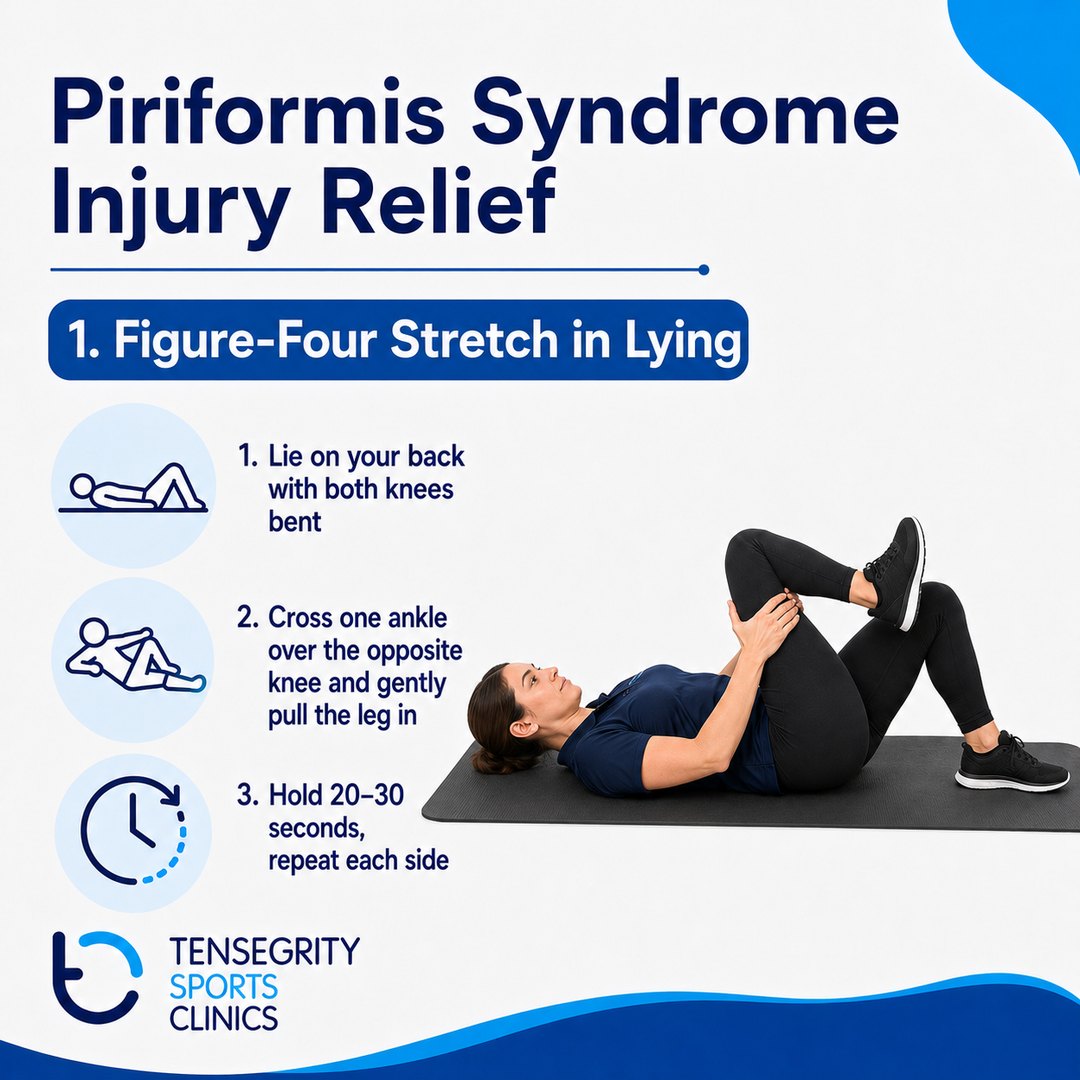

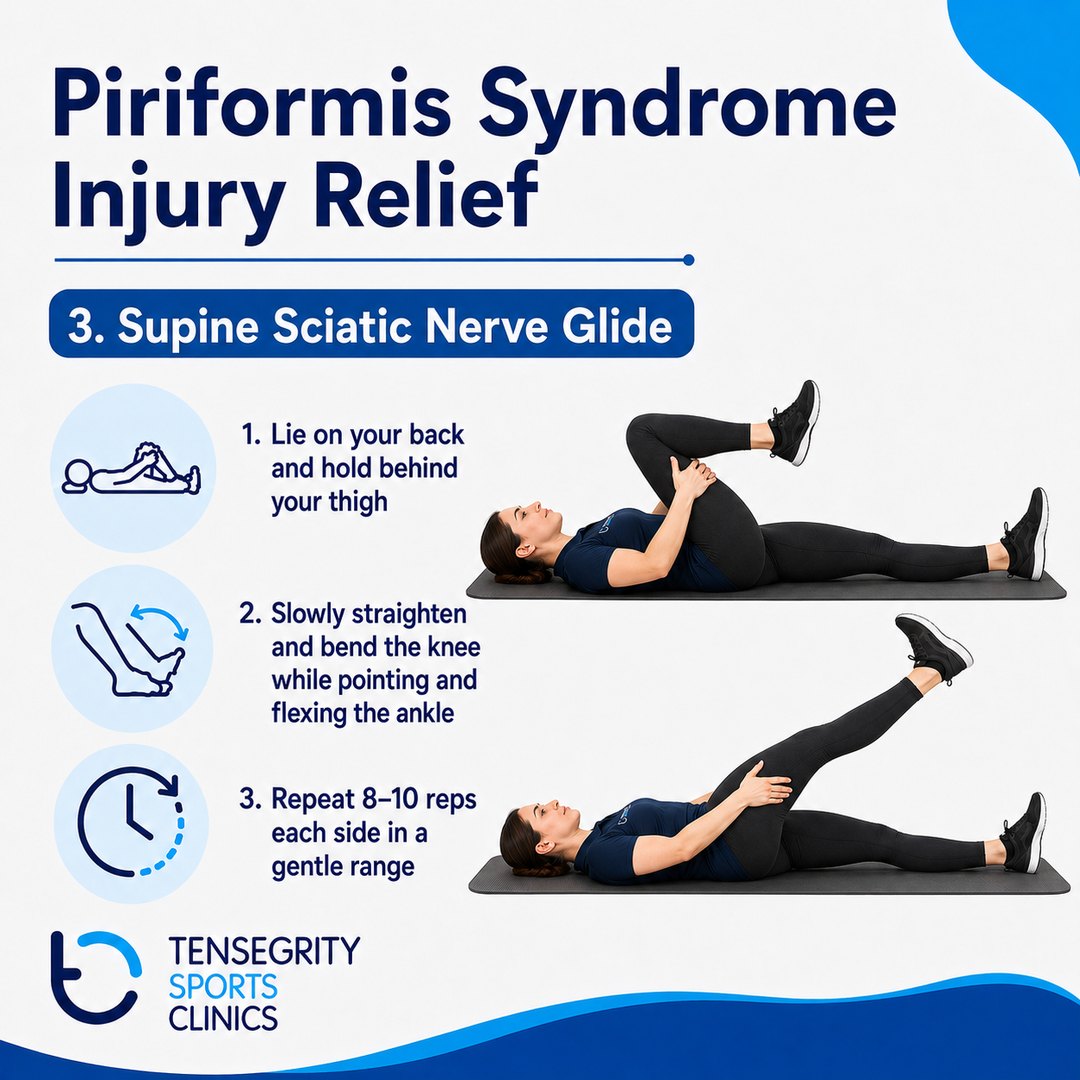
If the buttock and leg pain is not settling, or the pain is limiting your training or daily activity, book an assessment so the loading can be matched to what your hip can currently handle.
What our practitioners recommend:
These are the items our practitioners most often suggest for piriformis syndrome between appointments. They support your rehabilitation. They do not replace assessment, and what suits you depends on your presentation.
- Spikey massage ball. Used for self massage into the deep glute, which is the technique most often shown in clinic for this.
- Foam roller. For broader soft tissue work through the glutes and lateral hip.
- Latex loop bands, pack of 5. For the hip strengthening that sits behind the symptom management.
As an Amazon Associate I earn from qualifying purchases. We may earn a commission on these links. Our recommendations are based on clinical judgement and are not influenced by commission.
Outlook/Prognosis:
The prognosis for piriformis syndrome is generally favourable with appropriate treatment and rehabilitation. Most individuals experience significant improvement in symptoms within a few weeks to months with conservative measures. However, adherence to rehabilitation exercises, modification of activity levels, and addressing underlying biomechanical factors are essential for preventing recurrent episodes and optimising long-term musculoskeletal health. If symptoms persist or worsen despite conservative treatments, further evaluation by a healthcare provider may be necessary to explore alternative treatment options and rule out other potential causes of buttock and leg pain.