

Overview:
Shoulder arthritis, also known as glenohumeral arthritis, is a degenerative joint condition characterised by the progressive breakdown of cartilage in the shoulder joint. This can lead to pain, stiffness, and reduced range of motion in the affected shoulder, impacting daily activities and quality of life.
Anatomy:
The shoulder joint, or glenohumeral joint, is a ball-and-socket joint where the head of the humerus (upper arm bone) articulates with the glenoid cavity of the scapula (shoulder blade). Articular cartilage covers the surfaces of these bones, providing smooth, low-friction movement within the joint.
Causes:
Several factors can contribute to the development of shoulder arthritis, including:
- Degenerative changes: Wear and tear on the shoulder joint over time, often associated with ageing or repetitive overhead activities, can lead to the breakdown of cartilage.
- Inflammatory conditions: Certain inflammatory disorders, such as rheumatoid arthritis or psoriatic arthritis, can affect the shoulder joint and accelerate cartilage deterioration.
- Trauma: Previous shoulder injuries, fractures, or dislocations may disrupt the normal anatomy of the joint, increasing the risk of arthritis.
- Genetic predisposition: Some individuals may have a genetic predisposition to developing arthritis, with family history playing a role in the onset and severity of the condition.
Symptoms:
Common symptoms of shoulder arthritis may include:
- Persistent shoulder pain, which may worsen with activity or at night.
- Stiffness and reduced range of motion in the shoulder joint, making it challenging to perform overhead movements or reach behind the back.
- Swelling or tenderness around the shoulder joint.
- Grinding or clicking sensations (crepitus) during shoulder movement.
- Muscle weakness or atrophy in the shoulder and upper arm.
Diagnosis:
Diagnosing shoulder arthritis typically involves:
- Medical history: Discussion of symptoms, previous shoulder injuries, medical conditions, and family history of arthritis.
- Physical examination: Evaluation of shoulder range of motion, strength, stability, and signs of inflammation or deformity.
- Imaging studies: X-rays, MRI, or CT scans may be ordered to assess the extent of joint damage, evaluate bone and cartilage integrity, and rule out other shoulder conditions.
Treatment:
Treatment options for shoulder arthritis aim to relieve pain, improve shoulder function, and preserve joint mobility. Common approaches include:
- Medication and injection-based options. These sit outside a chiropractor’s scope of practice. If pain is limiting your sleep or stopping you starting rehabilitation, that is worth discussing with your GP rather than self-prescribing long term.
Three exercises for shoulder arthritis
These three were put together by our practitioners as a starting point. They are general exercises, not a personalised program.
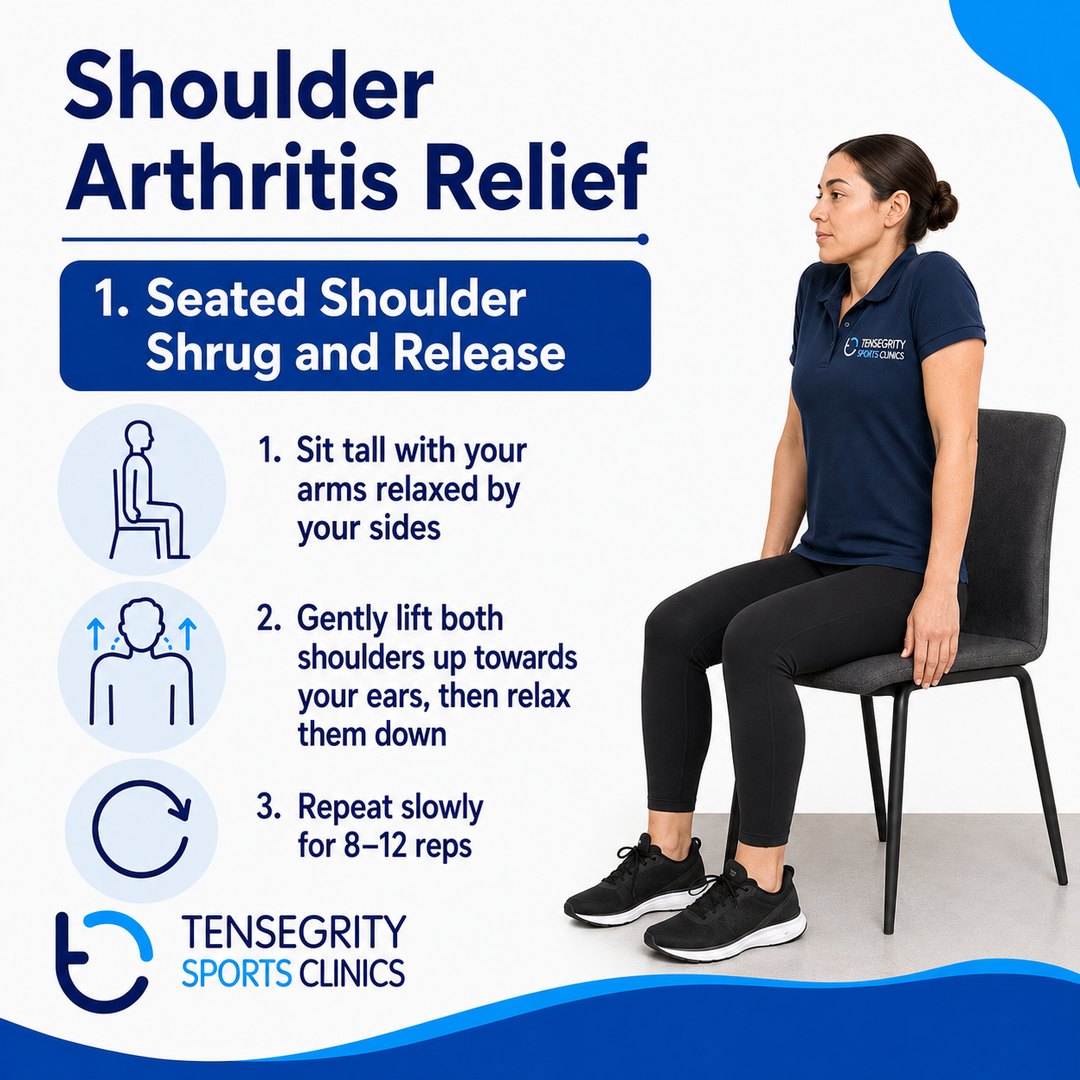
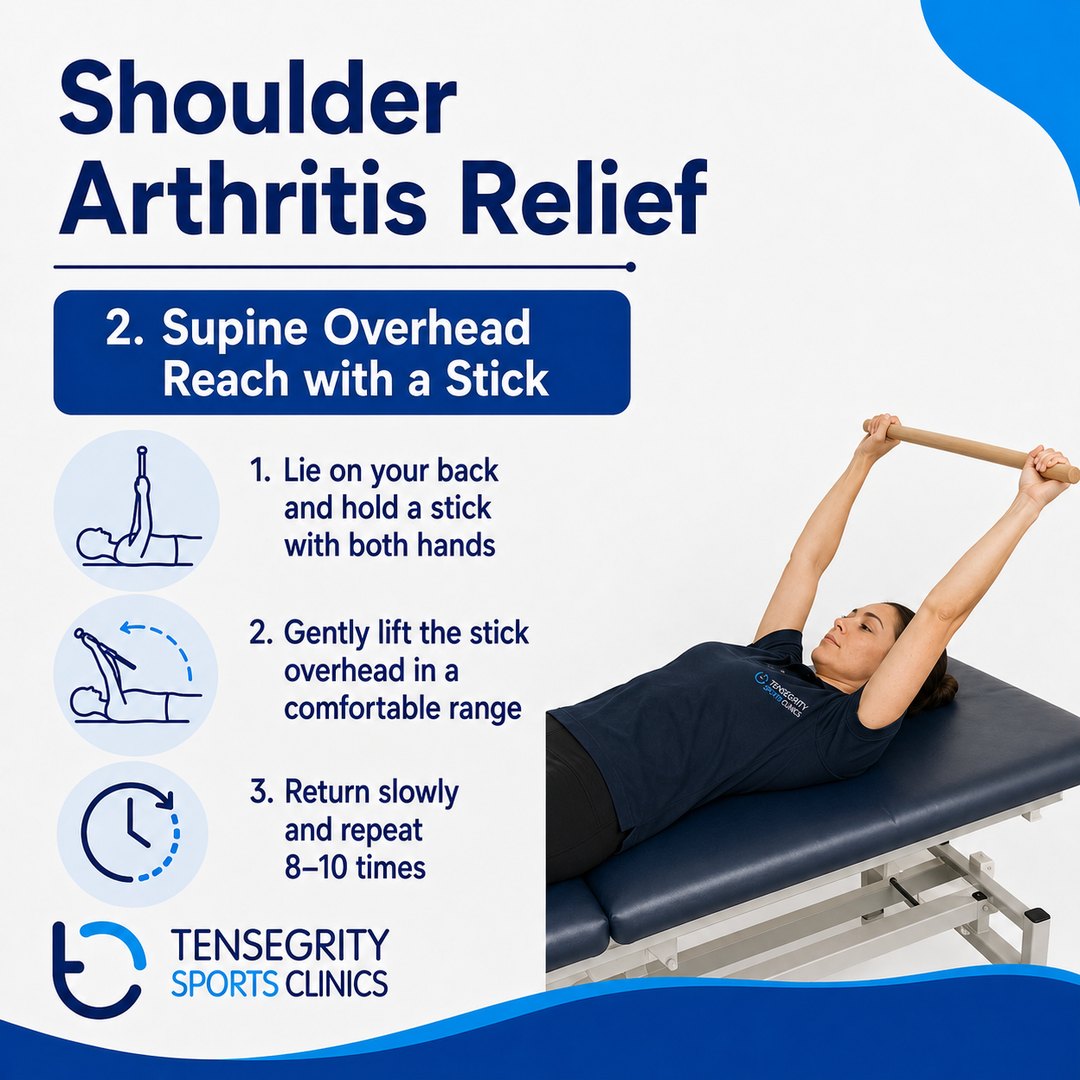
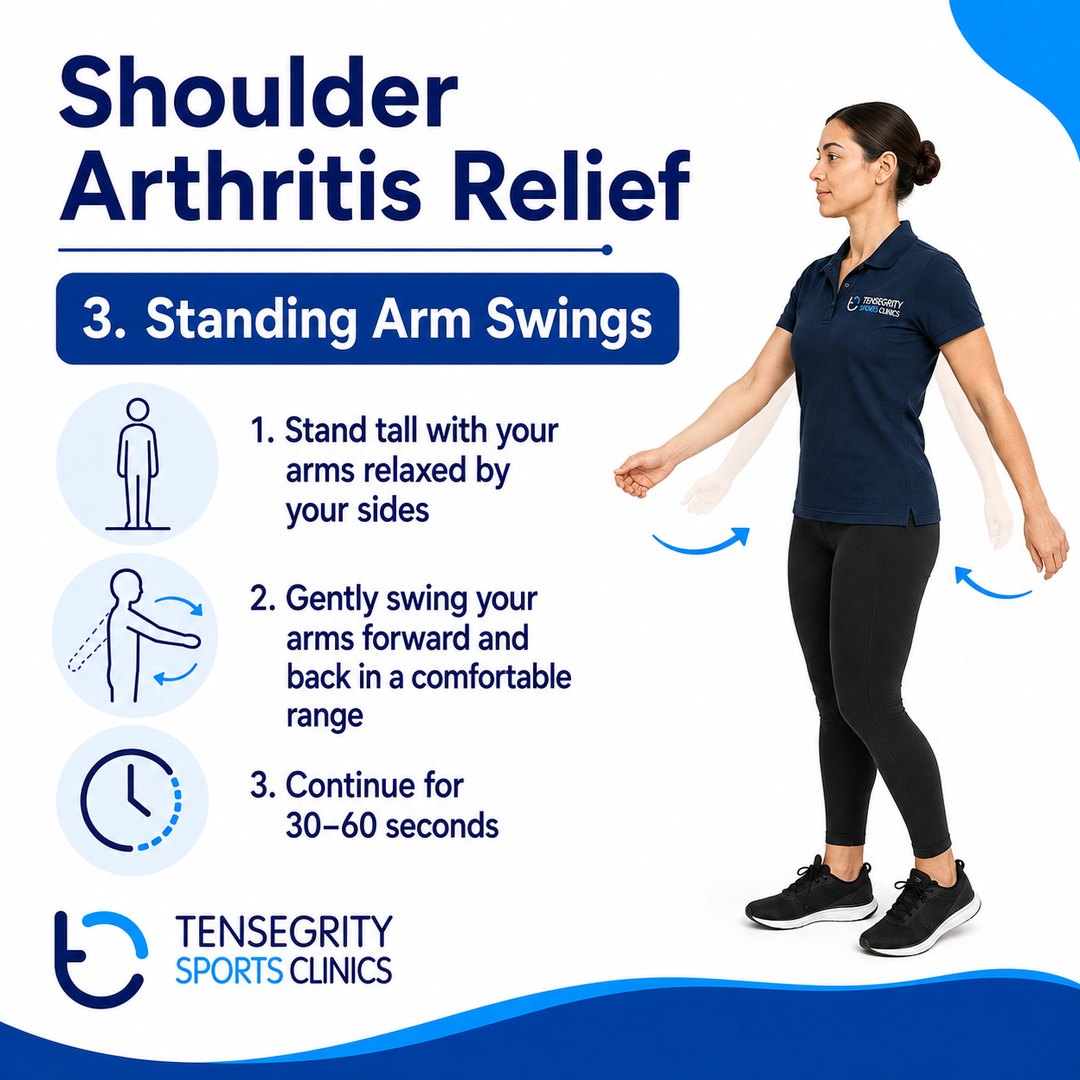
If the shoulder is not settling, or stiffness is limiting your daily activity, book an assessment so the loading can be matched to what your shoulder can currently handle.
What our practitioners recommend:
These are the items our practitioners most often suggest for shoulder arthritis between appointments. They support your rehabilitation. They do not replace assessment, and what suits you depends on your presentation.
- Microwavable heat pack. Heat is commonly used before movement, particularly for morning stiffness.
- Shoulder brace. Sometimes used for comfort during specific activities. Not for continuous wear.
As an Amazon Associate I earn from qualifying purchases. We may earn a commission on these links. Our recommendations are based on clinical judgement and are not influenced by commission.
Prevention:
While some risk factors for shoulder arthritis, such as ageing and genetic predisposition, cannot be modified, certain preventive measures may help reduce the risk of developing the condition or slow its progression:
- Maintaining a healthy weight to reduce stress on the shoulder joint.
- Practising proper shoulder mechanics and avoiding repetitive overhead activities that may exacerbate joint wear and tear.
- Engaging in regular exercise programs that focus on shoulder strengthening, flexibility, and range of motion.
Outlook:
The outlook for individuals with shoulder arthritis varies depending on the severity of joint damage, the effectiveness of treatment interventions, and individual factors such as age and overall health. While shoulder arthritis is a chronic condition, appropriate management strategies can help alleviate symptoms, preserve joint function, and improve quality of life for many individuals. It is essential to work closely with healthcare professionals to develop a tailored treatment plan and optimise long-term outcomes.