

Overview:
A rotator cuff tear is a common shoulder injury involving a partial or complete tear of one or more of the muscles and tendons comprising the rotator cuff. These tears can result from acute trauma or degenerative changes and often lead to pain, weakness, and limited shoulder function.
Anatomy:
The rotator cuff is a group of four muscles and their associated tendons that stabilise the shoulder joint and facilitate movement. These muscles include the supraspinatus, infraspinatus, teres minor, and subscapularis. The tendons of the rotator cuff attach the muscles to the humerus (upper arm bone) and help hold the head of the humerus securely within the shoulder socket.
Causes:
Rotator cuff tears can occur due to various factors, including:
- Trauma: Sudden injuries, such as falls, direct blows, or lifting heavy objects, can cause acute tears in the rotator cuff tendons.
- Degenerative changes: Chronic wear and tear on the rotator cuff tendons over time, often associated with repetitive overhead activities or ageing, can weaken the tendon tissue and predispose it to tearing.
- Overuse: Engaging in repetitive shoulder movements or activities that place excessive strain on the rotator cuff, such as throwing or overhead lifting, can contribute to tendon degeneration and tears.
- Poor posture: Rounded shoulders or forward head posture can alter the biomechanics of the shoulder joint, increasing the risk of rotator cuff injuries.
Symptoms:
Common symptoms of a rotator cuff tear may include:
- Shoulder pain, which may worsen at night or with overhead activities.
- Weakness and decreased strength in the affected shoulder, particularly when lifting or reaching.
- Difficulty performing daily tasks, such as combing hair or reaching behind the back.
- Limited range of motion in the shoulder joint, especially with overhead or outward movements.
- Audible popping or clicking sensations in the shoulder during movement.
Diagnosis:
Diagnosing a rotator cuff tear typically involves:
- Medical history: Discussion of symptoms, previous shoulder injuries, and relevant medical conditions.
- Physical examination: Evaluation of shoulder range of motion, strength, and tenderness, along with specific tests to assess rotator cuff integrity.
- Imaging studies: X-rays may be ordered to rule out other shoulder conditions, while MRI or ultrasound scans can provide detailed images of the rotator cuff tendons to confirm the presence and extent of the tear.
Treatment:
Treatment options for a rotator cuff tear depend on various factors, including the size and severity of the tear, the individual’s symptoms and functional goals, and their overall health. Common approaches include:
- Conservative management: Rest, activity modification, and exercise rehabilitation exercises aimed at improving shoulder strength, flexibility, and stability.
- Medication and injection-based options. These sit outside a chiropractor’s scope of practice. If pain is limiting your sleep or stopping you starting rehabilitation, that is worth discussing with your GP rather than self-prescribing long term.
Three exercises for a rotator cuff tear
These three were put together by our practitioners as a starting point. They are general exercises, not a personalised program. Stop if any of them cause sharp pain.
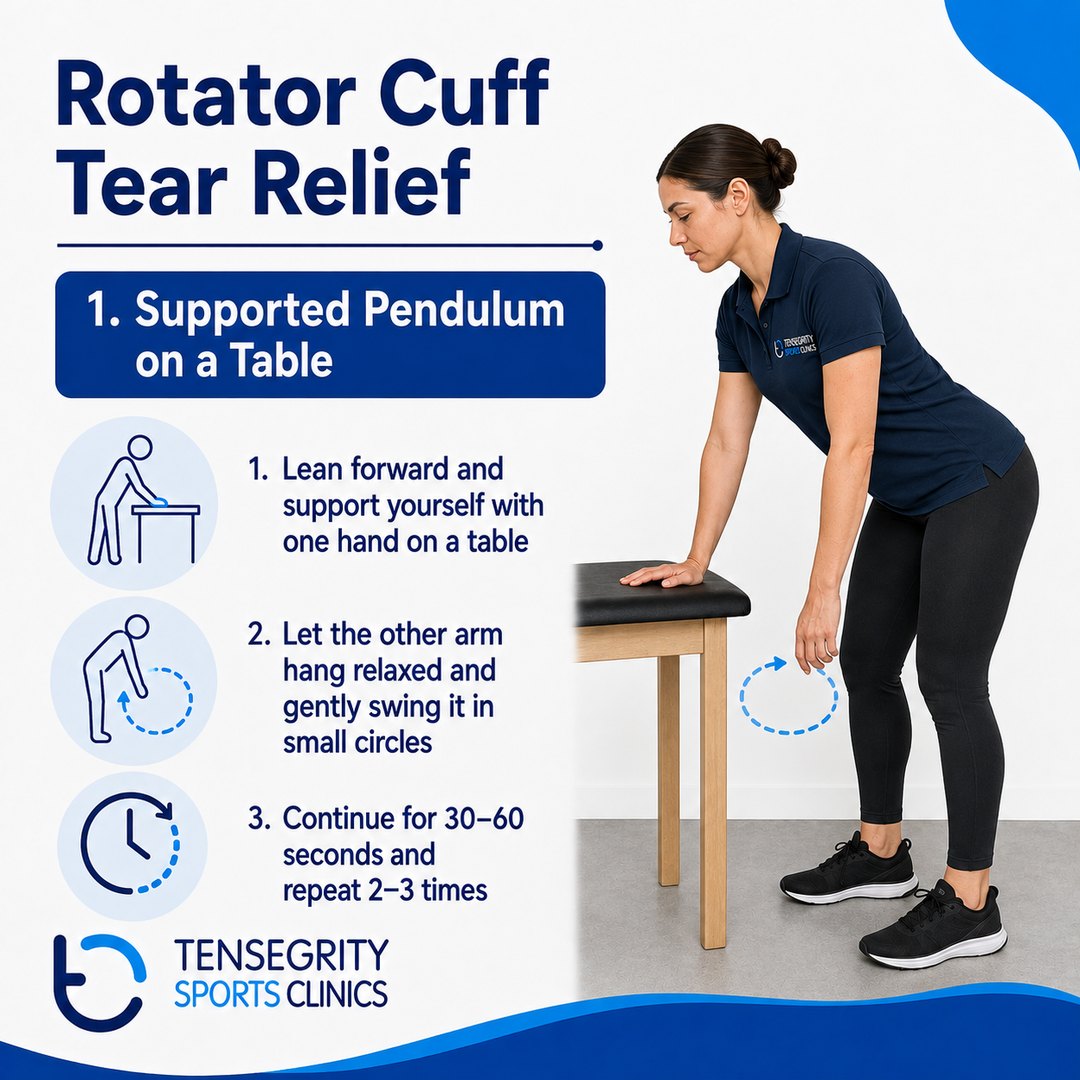
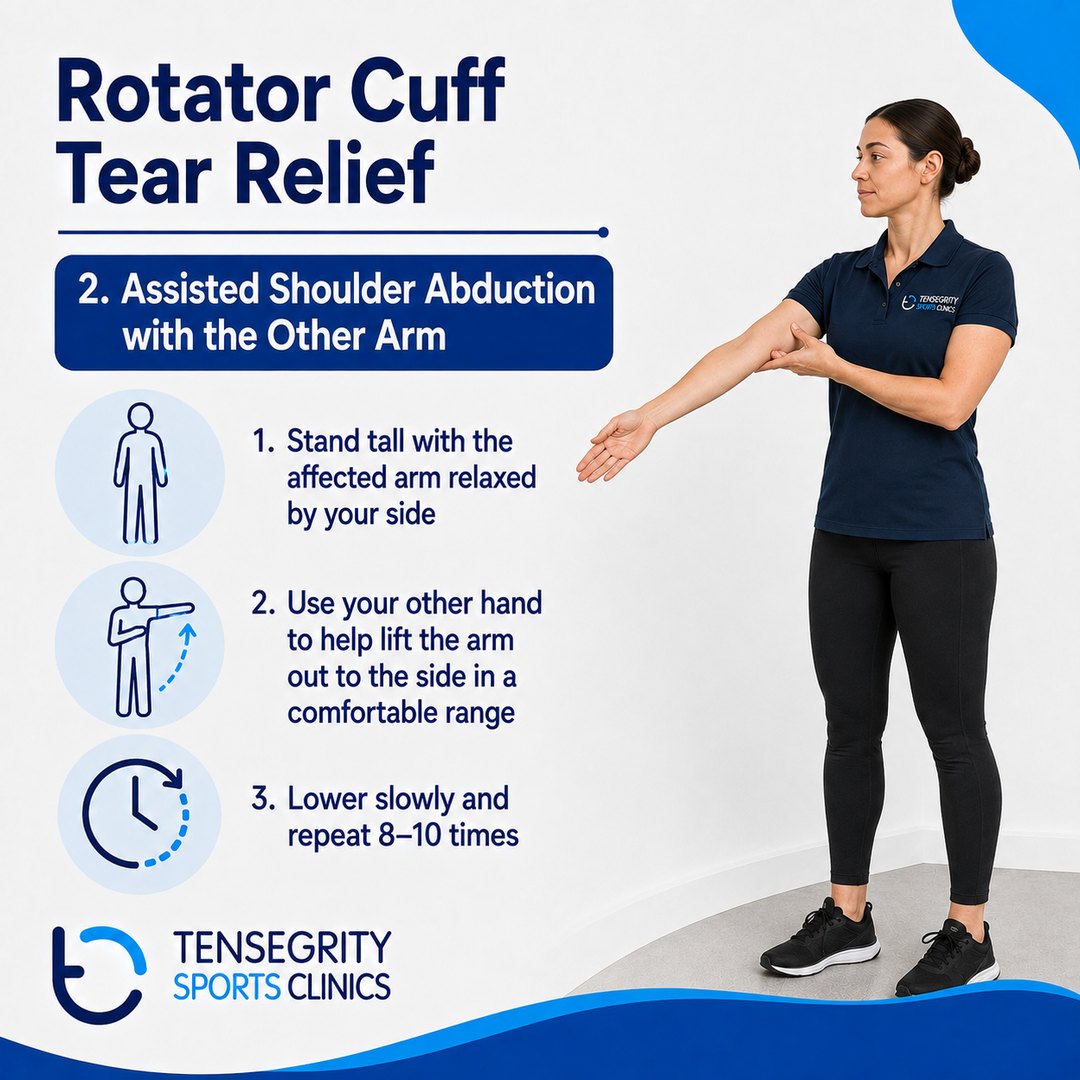
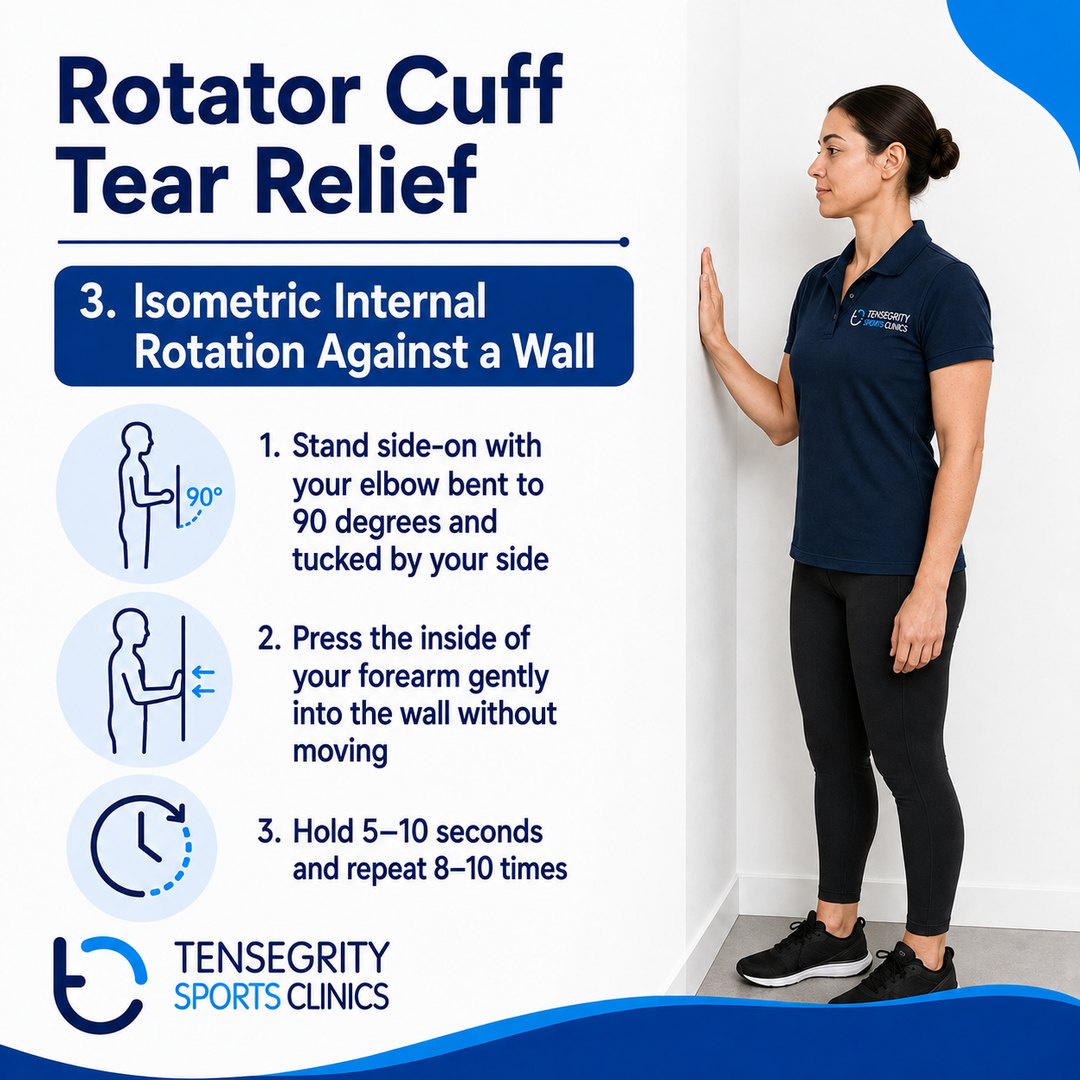
If the shoulder is not settling, or the pain is limiting your training, work or sleep, book an assessment so the loading can be matched to what your shoulder can currently handle.
What our practitioners recommend:
These are the items our practitioners most often suggest for a rotator cuff tear between appointments. They support your rehabilitation. They do not replace assessment, and what suits you depends on your presentation.
- Shoulder brace. Only if your practitioner has advised supporting or offloading the shoulder in the early stage.
- Resistance bands, pack of 5. Graded rotator cuff loading is the core of the rehabilitation, and a set of bands covers the full progression.
- Latex loop bands, pack of 5. For the scapular control work that sits alongside the cuff loading.
As an Amazon Associate I earn from qualifying purchases. We may earn a commission on these links. Our recommendations are based on clinical judgement and are not influenced by commission.
Prevention:
Preventing rotator cuff tears involves:
- Practising proper shoulder mechanics: Using correct lifting techniques, avoiding overexertion, and maintaining good posture can help reduce strain on the rotator cuff tendons.
- Gradual progression of activities: Gradually increasing the intensity and duration of shoulder exercises or activities to avoid sudden overload on the rotator cuff muscles.
- Regular shoulder conditioning: Incorporating specific exercises to strengthen the rotator cuff muscles and surrounding shoulder stabilisers can improve shoulder function and resilience to injury.
Outlook:
With appropriate treatment and rehabilitation, many individuals with rotator cuff tears experience significant improvement in symptoms and functional outcomes. However, the recovery process may vary depending on the extent of the tear, the chosen treatment approach, and individual factors such as age and overall health. It is essential to follow the guidance of healthcare professionals and adhere to prescribed rehabilitation programs to optimise outcomes and prevent recurrence.