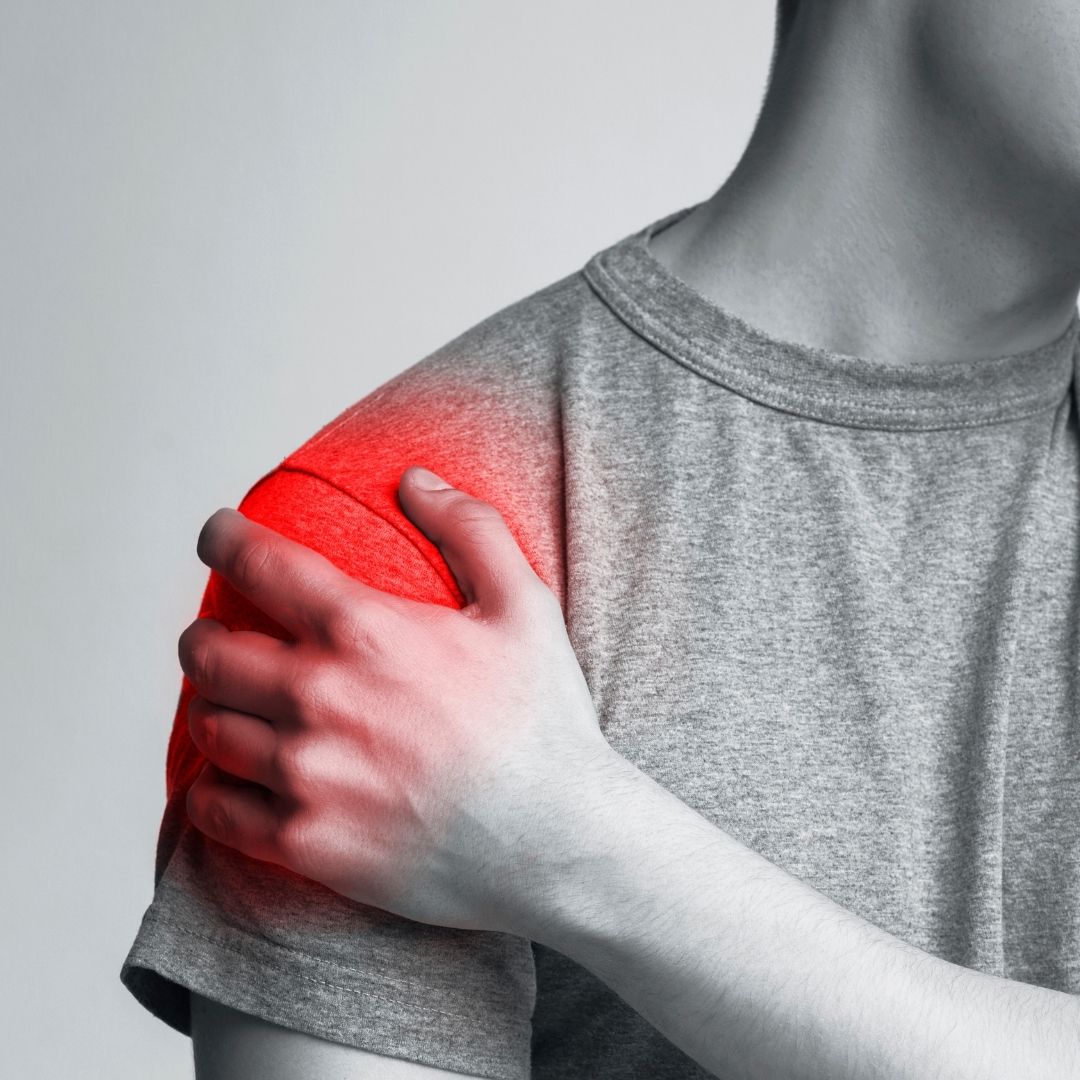

Overview:
The labrum is a rim of cartilage around the shoulder socket that deepens it and helps keep the ball centred. A SLAP tear is an injury to the top part of that rim, where the biceps tendon anchors into it. SLAP stands for superior labrum anterior to posterior, describing the direction the tear runs.
These injuries turn up in two quite different groups. Overhead athletes such as swimmers, throwers and racquet players develop them gradually through repeated loading. Everyone else tends to sustain them suddenly, through a fall onto an outstretched hand or a heavy pull on the arm. Labral changes are also common with age and often cause no symptoms at all.
Anatomy:
The shoulder is a shallow ball and socket joint, built for range rather than stability. The labrum adds depth to the socket and provides an attachment point for the joint capsule and ligaments.
The long head of the biceps tendon attaches directly into the top of the labrum, which is why biceps loading and labral injury are connected, and why pain is sometimes felt at the front of the shoulder rather than deep inside it. Stability at this joint depends far more on the rotator cuff and the shoulder blade muscles than on the labrum alone, which is why rehabilitation focuses there.
Causes:
The two mechanisms are quite distinct and point to different management.
- Falling onto an outstretched hand: A common traumatic mechanism, compressing the joint.
- A sudden pull on the arm: Catching yourself, or having the arm yanked while holding something.
- Repeated overhead loading: Throwing, serving, swimming and overhead pressing, accumulating over seasons.
- Shoulder dislocation: Often involves labral injury as part of the event.
- Heavy lifting with the arm away from the body.
- Age-related change: Labral fraying is common from the forties onward and frequently causes no symptoms.
Symptoms:
Symptoms are often vague, which is part of why these take a while to identify.
- Deep pain inside the shoulder, often hard to point to precisely.
- Clicking, catching or a popping sensation with overhead movement.
- Pain with overhead activity, particularly at the point of maximum reach.
- A sense of the shoulder not feeling secure, especially in the cocked throwing position.
- Loss of power or accuracy in throwing or serving, sometimes before pain becomes the main complaint.
- Pain lying on the affected side.
Diagnosis and Tests:
No single test is reliable on its own, so findings are considered together and alongside imaging where needed.
- History: The mechanism matters most. A single traumatic event and a gradual overhead pattern lead in different directions.
- Clinical tests: A group of tests including O’Brien’s and the crank test. Each has limited accuracy alone, so the pattern across several is what counts.
- Rotator cuff and shoulder blade assessment: Because control problems here often drive the symptoms and are what treatment targets.
- Range of motion: Particularly internal rotation in overhead athletes, which is commonly reduced.
- Instability testing: To assess how the shoulder behaves under load.
- Imaging: MR arthrogram is the most accurate investigation where the diagnosis will change management. Labral changes appear on scans in many people without symptoms, so imaging is interpreted alongside the examination rather than on its own.
Management and Treatment:
Most SLAP tears are managed without surgery, and rehabilitation is the appropriate first step for the large majority.
- Activity modification: Reducing the specific overhead loads that provoke it while keeping the shoulder moving.
- Rotator cuff strengthening: Restoring the muscles that centre the ball in the socket, which is where most of the benefit comes from.
- Shoulder blade control: Improving how the shoulder blade moves and positions itself, since poor control increases demand on the joint.
- Restoring range of motion: Particularly internal rotation in overhead athletes.
- Graded return to overhead loading: Rebuilding tolerance in stages, with throwing or serving programs progressed by response rather than by calendar.
- Surgical opinion: Considered for younger patients with a clear traumatic tear, for those with genuine instability, or where a full rehabilitation program has not produced change. That decision sits with an orthopaedic surgeon, and management differs considerably by age and by tear type.
- Medication and injection-based options: These sit outside a chiropractor’s scope of practice. If pain is limiting your sleep or stopping you starting rehabilitation, that is worth discussing with your GP rather than self-prescribing long term.
Three exercises for a shoulder labral tear
These three were put together by our practitioners as a starting point. They are general exercises, not a personalised program.
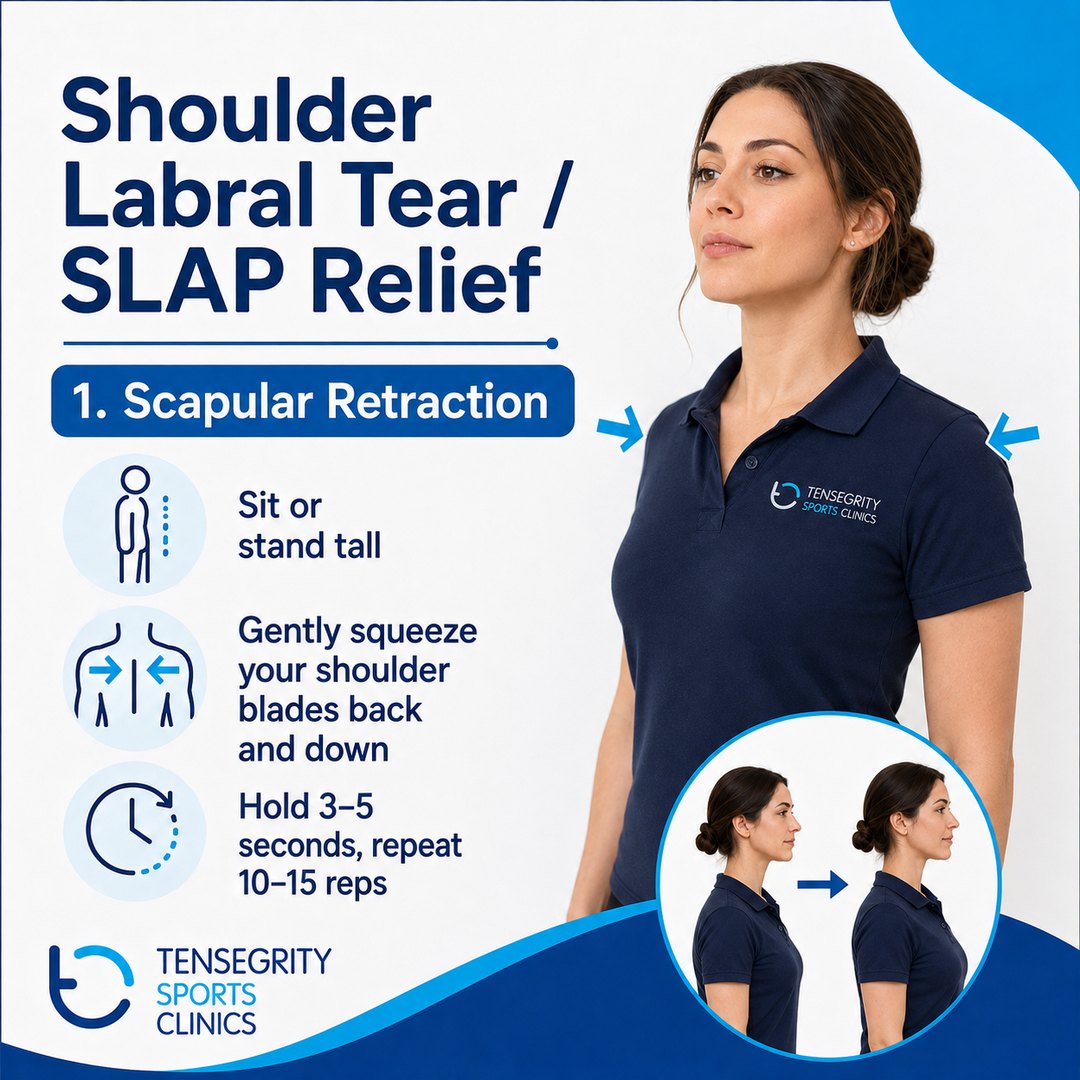
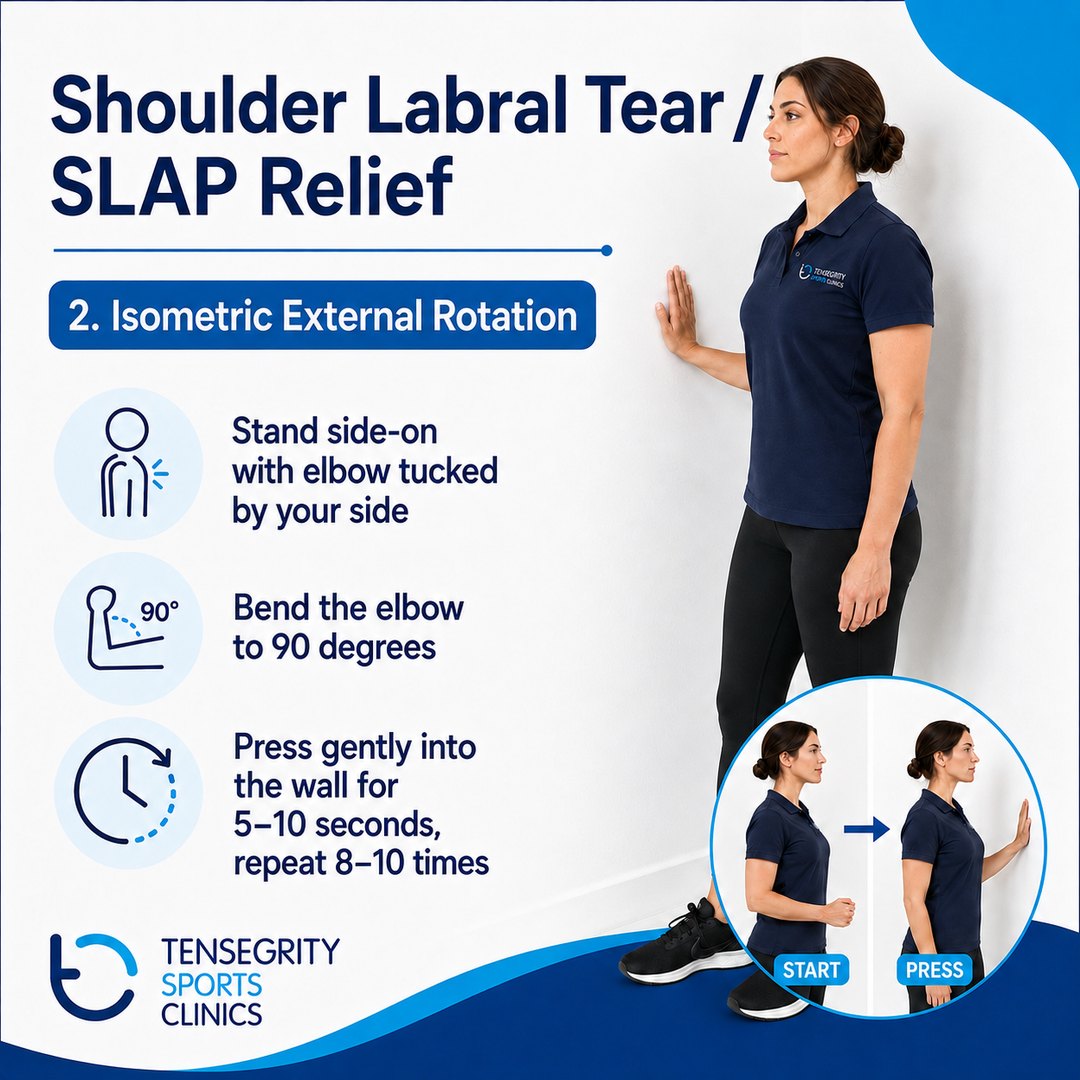
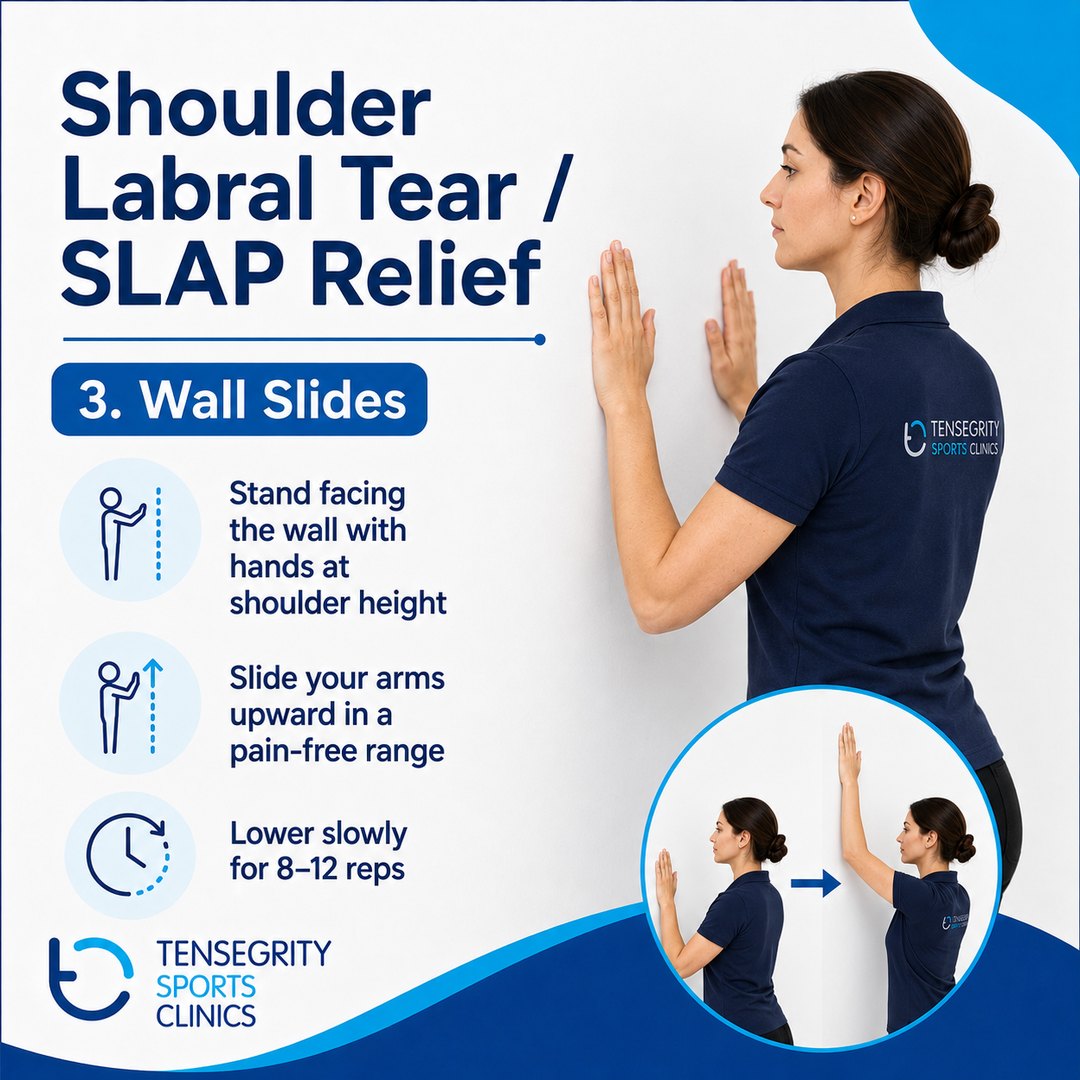
If the shoulder is catching, feels insecure overhead, or has lost power in throwing or serving, book an assessment so the loading can be matched to what the shoulder can currently handle.
Prevention:
Prevention is mainly about managing overhead load and keeping the supporting muscles strong.
- Build throwing and serving volume gradually, particularly at the start of a season.
- Keep rotator cuff and shoulder blade strength work in your routine year round.
- Maintain internal rotation range if you play an overhead sport.
- Rest properly between throwing sessions rather than training through shoulder fatigue.
- Rehabilitate a shoulder dislocation fully, as labral injury is common alongside it.
Outlook / Prognosis:
Most people improve with rehabilitation over three to four months, and a large share of overhead athletes return to their previous level without surgery. Improvement often comes from better rotator cuff and shoulder blade function rather than from the labrum itself changing.
Where surgery is chosen, recovery takes considerably longer, commonly six to nine months before return to overhead sport, and outcomes vary by age and tear type. Because labral changes are common on imaging in people with no symptoms, a scan finding alone is not a reason to operate.