
Overview:
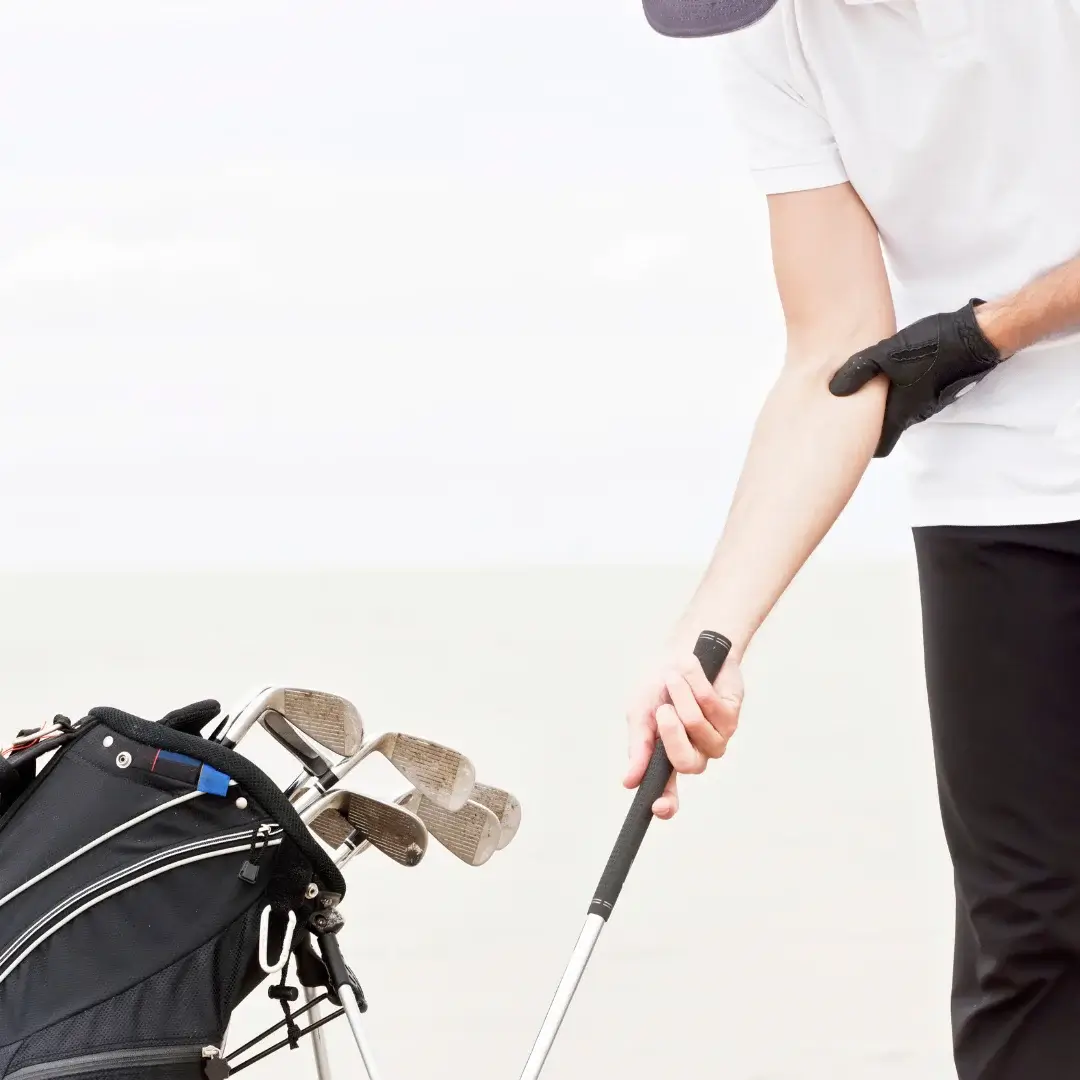
Golfer’s elbow, medically known as medial epicondylitis, is a condition characterised by pain and inflammation on the inner side of the elbow. Despite its name, this condition can affect anyone who performs repetitive wrist and hand motions, not just golfers. It commonly occurs due to overuse or repetitive stress on the tendons that attach to the bony bump on the inner side of the elbow (medial epicondyle), leading to microtears and irritation.
Anatomy:
The elbow joint consists of three bones: the humerus (upper arm bone), radius, and ulna (forearm bones). Tendons are strong bands of tissue that connect muscles to bones and facilitate movement. In a golfer’s elbow, the tendons of the forearm muscles become inflamed at their attachment site on the medial epicondyle of the humerus.
Causes:
Golfer’s elbow often develops as a result of repetitive wrist flexion, gripping, or lifting activities, such as:
- Golfing (especially during the swinging motion).
- Racquet sports (e.g., tennis, squash).
- Weightlifting.
- Carpentry or gardening.
- Typing or using a computer mouse.
- Painting or plumbing work.
Activities that involve forceful or repetitive wrist and hand movements can strain the tendons and lead to medial epicondylitis.
Symptoms:
The primary symptom of golfer’s elbow is pain and tenderness on the inner side of the elbow, which may:
- Develop gradually over time.
- Worsen with gripping, lifting, or bending the wrist.
- Radiate down the forearm.
- Intensify when shaking hands or squeezing objects.
Other associated symptoms may include stiffness, weakness, and difficulty performing everyday activities that involve grasping or twisting motions.
Diagnosis:
Diagnosis of golfer’s elbow typically involves a thorough medical history and physical examination. Your healthcare provider may perform specific tests to assess pain, strength, and range of motion in the affected arm. Imaging studies such as X-rays or MRI may be ordered to rule out other conditions or assess the extent of soft tissue damage.
Treatment:
Treatment for golfer’s elbow aims to relieve pain, reduce inflammation, and promote healing of the affected tendons:
- Rest: Avoid activities that exacerbate symptoms and allow adequate time for the injured tendons to heal.
- Ice Therapy: Apply ice packs to the affected area for 15-20 minutes several times a day to reduce pain and swelling.
- Compression: Use a compression bandage or elbow strap to provide support and minimise strain on the tendons.
- Elevation: Elevate the affected arm above heart level to reduce swelling and improve circulation.
- Exercise rehabilitation: A structured rehabilitation program may include stretching and strengthening exercises to improve flexibility, muscle strength, and joint stability. Modalities such as ultrasound or therapeutic ultrasound may also be used to promote tissue healing.
- Bracing: Wearing a splint or brace may help offload the affected tendons and provide support during activities that aggravate symptoms.
- Shockwave therapy: extracorporeal shockwave is used as an adjunct in persistent golfer’s elbow, alongside the loading program rather than instead of it. It is available at every Tensegrity clinic except Willoughby. Your practitioner will tell you whether it suits your presentation.
- Medication and injection-based options. These sit outside a chiropractor’s scope of practice. Injection therapies are sometimes used for persistent tendon pain and the evidence for them is mixed, so it is a discussion to have with your GP rather than a default step. If pain is stopping you starting the loading program, that conversation is worth having early.
Three exercises for golfer’s elbow
These three were put together by our practitioners as a starting point. They are general exercises, not a personalised program. Tendons respond to load, so some discomfort during the exercise is expected. Sharp pain is not.
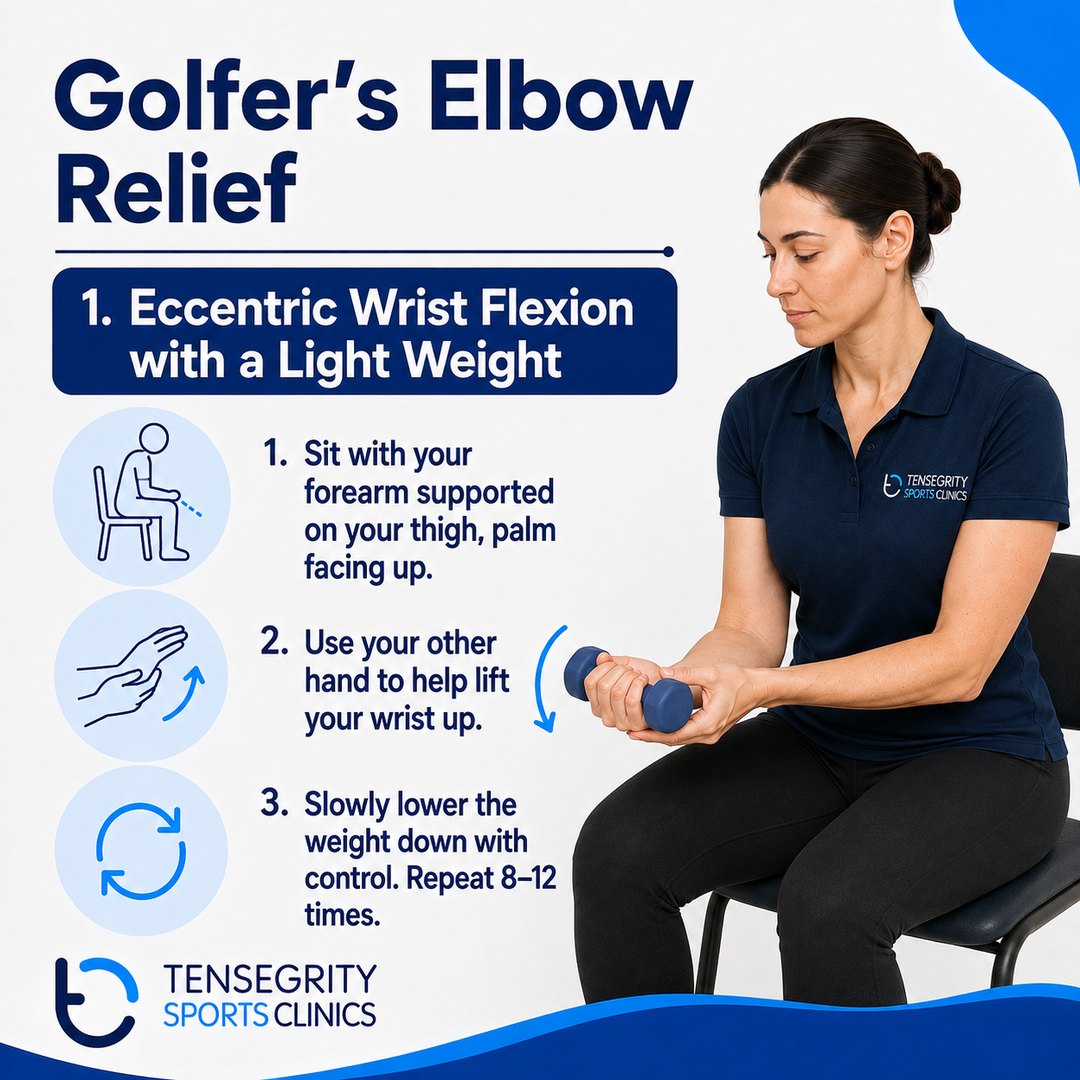
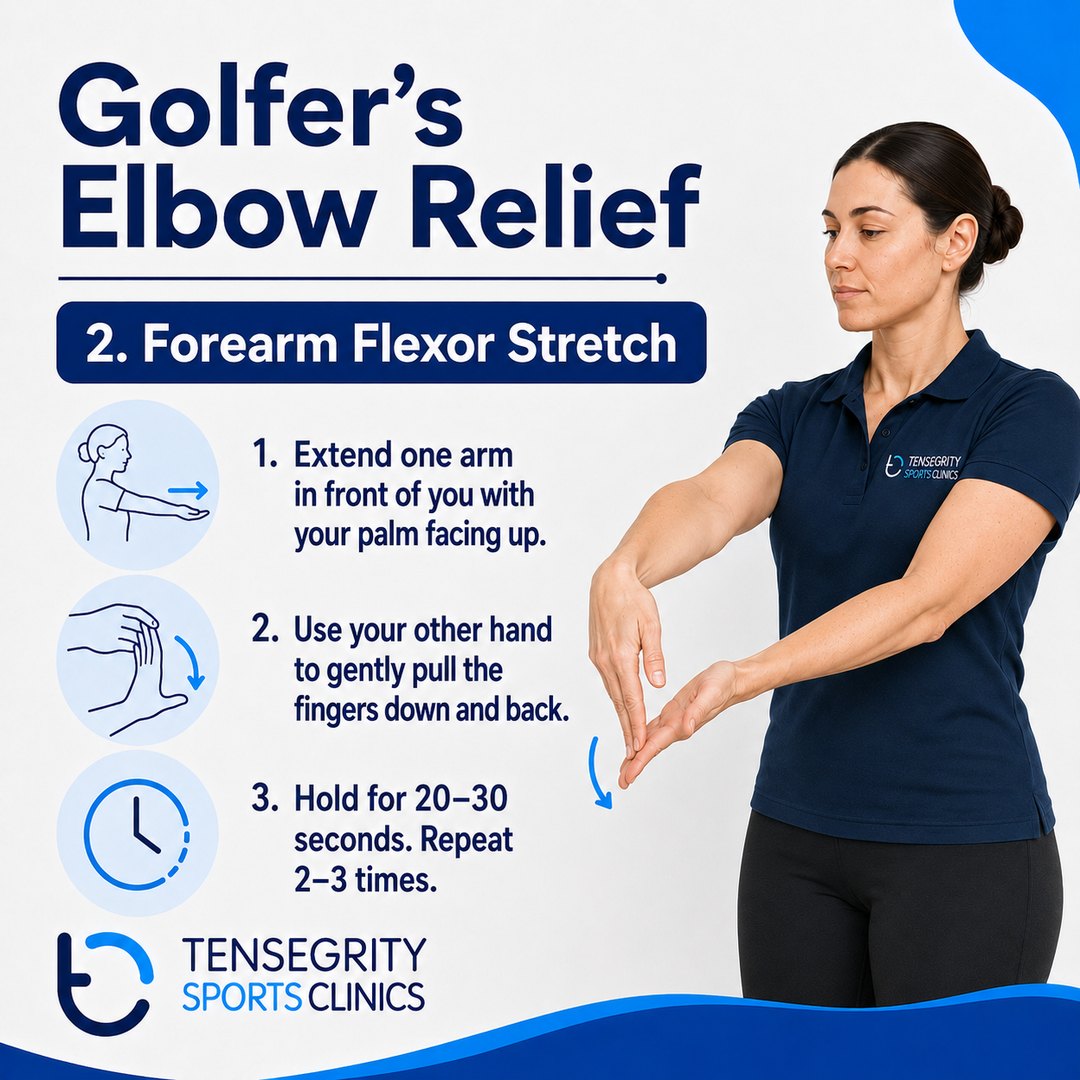
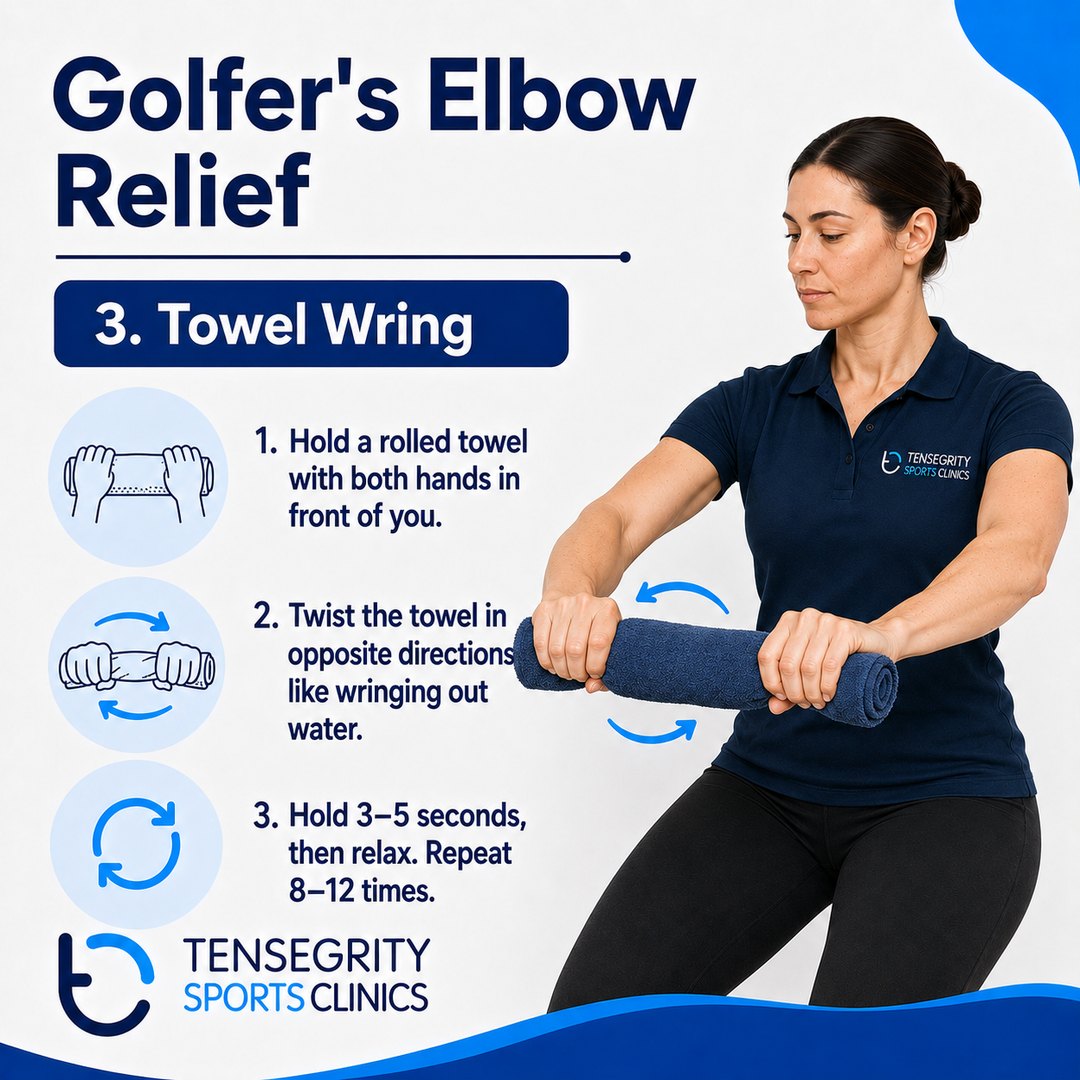
If the elbow is not settling, or gripping and lifting are still limited after a few weeks of loading, book an assessment so the program can be matched to what the tendon can currently handle.
What our practitioners recommend:
These are the items our practitioners most often suggest for golfer’s elbow between appointments. They support your rehabilitation. They do not replace assessment, and what suits you depends on your presentation.
- Flex bar. Used for the eccentric wrist flexor loading protocol, run in the opposite direction to the tennis elbow version.
- Elbow strap. A counterforce strap for aggravating activities only.
- Elbow sleeve. An alternative to the strap for comfort during activity.
As an Amazon Associate I earn from qualifying purchases. We may earn a commission on these links. Our recommendations are based on clinical judgement and are not influenced by commission.
Prevention:
To prevent golfer’s elbow and reduce the risk of recurrence, consider the following preventive measures:
- Proper Technique: Maintain proper form and technique during sports and activities that involve repetitive wrist and hand movements. Seek instruction from a qualified coach or trainer to ensure correct biomechanics.
- Warm-Up and Stretching: Engage in a thorough warm-up routine before physical activity to prepare the muscles and tendons for exertion. Perform dynamic stretching exercises to improve flexibility and range of motion.
- Gradual Progression: Gradually increase the intensity, duration, and frequency of physical activity or sports participation to allow the body to adapt and minimise the risk of overuse injuries.
- Equipment Modification: Use properly fitted sports equipment and ergonomic tools to minimise stress on the tendons and joints. Consider using equipment with larger grips or vibration-dampening features to reduce strain.
- Rest and Recovery: Allow adequate rest and recovery time between training sessions or periods of activity to prevent overuse and tissue fatigue. Incorporate rest days into your exercise routine to allow the body to repair and regenerate.
- Cross-Training: Incorporate a variety of activities into your fitness regimen to prevent overuse injuries and promote overall musculoskeletal health. Include low-impact exercises such as swimming, cycling, or yoga to balance out high-impact activities.
Outlook/Prognosis:
With appropriate treatment and adherence to rehabilitation protocols, most individuals with golfer’s elbow experience significant improvement in symptoms and functional recovery within several weeks to months. However, the prognosis may vary depending on the severity of the injury, underlying contributing factors, and adherence to treatment recommendations. If symptoms persist or keep returning, book a review with your practitioner, or see your GP. Early intervention, comprehensive rehabilitation, and preventive strategies are essential for optimal outcomes and long-term joint health.