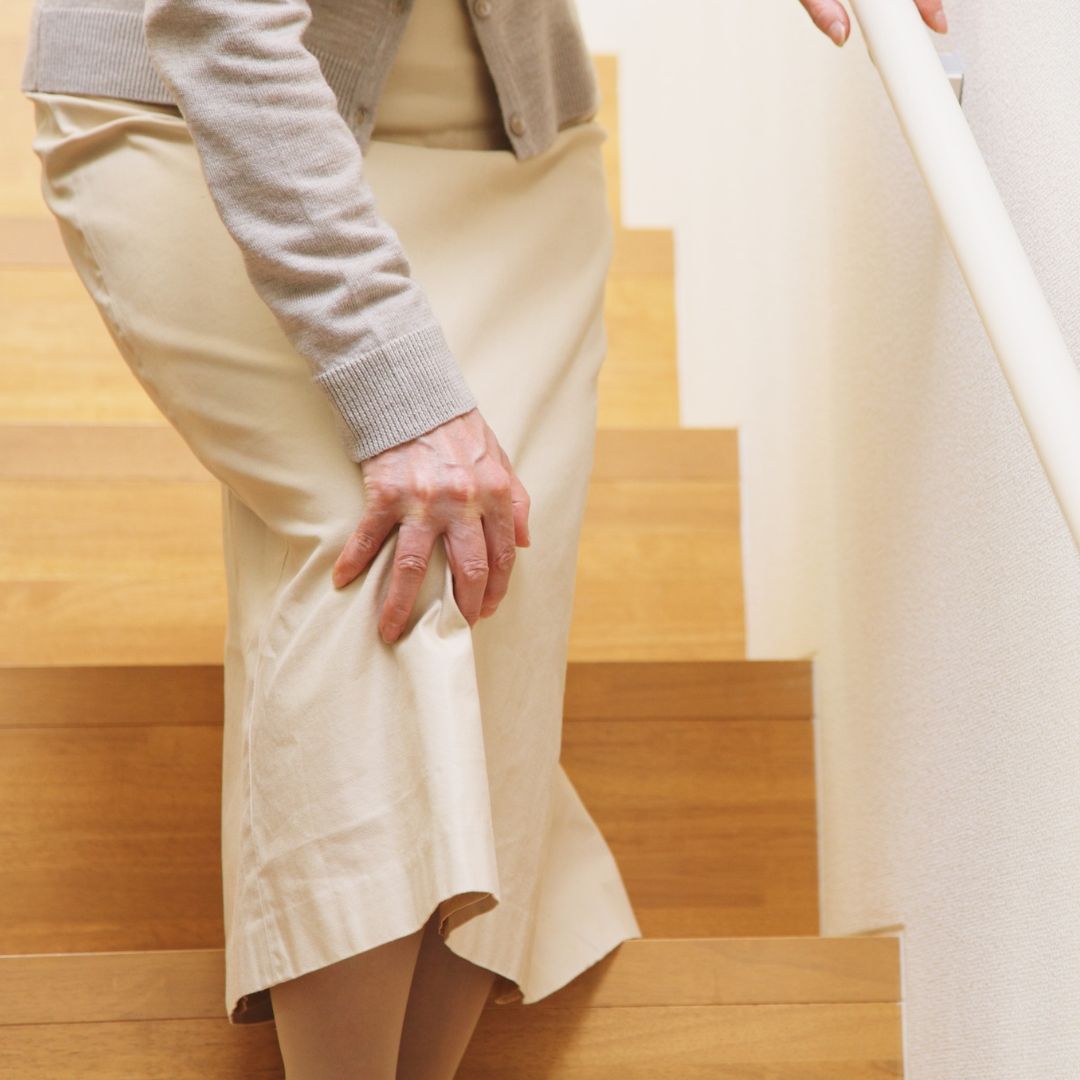

Overview:
Knee osteoarthritis is a common joint condition causing pain, stiffness and reduced mobility. It involves changes across the whole joint, including the articular cartilage, the bone underneath, the joint lining and the muscles and tissues around it.
It becomes more common with age, but it is not simply the knee wearing out. Plenty of people have osteoarthritic changes on an X-ray with no significant pain, while others have symptoms that substantially affect walking, exercise, work and everyday life. The scan and the experience often do not match.
Knee osteoarthritis cannot currently be reversed, but symptoms and function can improve a great deal. Exercise, strength training, weight management where appropriate, education and activity modification are the core of long-term management. If you have been told there is nothing to do but wait for a replacement, that is worth a second conversation. This page sits under our wider knee pain information.
Anatomy:
The knee is a large weight-bearing joint formed mainly by three bones: the femur, the tibia and the patella. The ends of the femur and tibia are covered in smooth articular cartilage that lets them move against each other with minimal friction. Two menisci spread load and absorb force, ligaments provide stability, and the quadriceps, hamstrings and calf control movement.
In osteoarthritis, changes happen throughout the joint. Articular cartilage can thin or wear, the bone underneath changes, bone spurs called osteophytes can form, the menisci change, the joint lining can become inflamed, and the muscles around the knee lose strength. Those structural changes do not always line up with how much pain someone has.
Causes:
Knee osteoarthritis usually develops from a combination of biological, mechanical and lifestyle factors rather than one cause:
- Age: it becomes increasingly common as people get older.
- Previous knee injury: ACL tears, meniscal injuries and fractures all raise the likelihood of osteoarthritis later.
- Previous knee surgery: certain injuries requiring surgery carry an increased long-term risk.
- Body weight: higher body weight increases mechanical load through the knee and can also influence the inflammatory processes involved.
- Muscle weakness: reduced quadriceps and lower limb strength affects the knee’s ability to tolerate everyday load.
- Genetics: a family history can increase susceptibility.
- Joint anatomy and alignment: individual differences change how force is distributed through the knee.
- Occupational loading: long-term frequent kneeling, squatting or heavy lifting may increase risk.
A history of significant sporting knee injuries can contribute, but appropriate physical activity itself remains important for joint and general health. Being active is not what causes this.
Symptoms:
Symptoms vary a lot between people and fluctuate over time:
- Pain walking or exercising: and often worse on longer distances.
- Pain on stairs: going down is frequently worse than going up.
- Pain squatting or getting out of a chair: loaded bending is a common trigger.
- Stiffness after sitting still: and morning stiffness that eases once the knee gets moving.
- Reduced movement and swelling: with tenderness around the joint.
- Crepitus: grinding, clicking or crunching. Noise on its own is not damage.
- Reduced strength and confidence: the leg feels weaker and less reliable.
Symptoms often come in flare-ups, with periods where the knee feels considerably better in between. A flare does not mean the arthritis has suddenly worsened.
Diagnosis:
Knee osteoarthritis can usually be diagnosed from your symptoms, history and a physical examination.
- Location and behaviour of the pain: what brings it on and what settles it.
- Knee range of motion: and whether full straightening is available.
- Joint swelling: and where it sits.
- Quadriceps and lower limb strength: measured rather than estimated.
- Walking ability: distance, pace and what happens afterwards.
- Balance and single-leg control: which drives confidence on stairs and uneven ground.
- Functional movements: squatting, sit to stand, and the activities that aggravate it.
Do you need an X-ray or MRI? Not always. Where imaging is clinically appropriate, weight-bearing X-rays are commonly used to assess joint space narrowing, osteophytes, changes to the bone and overall alignment. MRI is generally reserved for when another condition is suspected or more detail is needed. The severity of arthritis on imaging does not always match the severity of pain, so decisions are based on symptoms, function, your goals and overall health rather than the scan alone.
Treatment:
Treatment aims to reduce pain, improve strength and mobility, maintain independence and keep you doing the things that matter to you.
- Exercise rehabilitation: the single most important treatment. Quadriceps, hamstring, calf, hip and gluteal strengthening, balance work, functional exercises like squats and step-ups, and walking or cardiovascular exercise.
- Progressive strength training: building the knee’s ability to tolerate everyday load. Resting an arthritic knee leads to further weakness and less function, which is why loading it properly matters.
- Staying physically active: walking, cycling, swimming, water-based exercise, strength training or modified gym work. The best exercise is the one you will actually do consistently and can progress.
- Weight management where appropriate: for people above their healthy weight range, even modest reductions decrease the cumulative load through the knee. Best combined with exercise rather than used instead of it.
- Activity modification during flares: temporarily reducing walking distance, deep squatting, repeated stairs, high-impact exercise or heavy lower body training, then building back up. Not complete rest.
- Manual therapy: useful for short-term relief and associated mobility restrictions. It does not improve the underlying capacity of the knee, so it sits alongside the exercise program.
- Review and progression: the dose of exercise is adjusted against symptoms, strength and your goals rather than repeated unchanged.
Some temporary discomfort when starting exercise, particularly after a long period of not exercising, is normal and does not automatically mean the knee is being damaged. Pain-relieving or anti-inflammatory medication may be appropriate and should be discussed with your GP or pharmacist rather than self-prescribed long term. Corticosteroid injections may give temporary relief in selected cases, particularly during a significant inflammatory flare, and the benefits and risks are a conversation with your doctor.
Our structured option. If you want this supervised rather than self-directed, the Knee Osteoarthritis Program runs at our St Leonards clinic with Krystal Lam, physiotherapist. It is a 12-week one to one program built around progressive loading, with a full initial assessment and weekly supervised sessions plus take-home exercises.
Surgery. Most people diagnosed with knee osteoarthritis do not immediately require it. Total or partial knee replacement may be considered where osteoarthritis is advanced and pain is severe or persistent, everyday activities are significantly restricted, quality of life is substantially affected, and appropriate non-surgical treatment has not given enough improvement. An orthopaedic surgeon assesses that against symptoms, function, imaging and overall health.
Rehabilitation:
How long does it take? Unlike a muscle strain or a ligament sprain, knee osteoarthritis does not have a healing timeframe, because it is a long-term joint condition. The goal is not to cure the structural changes, it is to improve pain, strength, mobility and function.
Some people notice improvement within four to six weeks of starting an appropriate exercise program. More meaningful gains in strength and physical function commonly develop over about eight to twelve weeks of consistent rehabilitation. Greater improvements often keep coming over three to six months and beyond, particularly where someone is rebuilding substantial strength or returning to a higher level of activity. Long-term exercise is what maintains those gains.
Managing a flare-up. Temporarily reduce the activities that are clearly aggravating it, keep comfortable movement going, modify exercise intensity rather than stopping altogether, and rebuild gradually as symptoms settle. If swelling or pain is severe, unusual or persistent, get it assessed.
If you would rather have the loading progressed for you than work it out alone, the Knee Osteoarthritis Program at St Leonards is built for exactly this stage. Book an assessment at St Leonards.
Three exercises for knee osteoarthritis
These three were put together by our practitioners as a starting point. They are general exercises, not a personalised program.
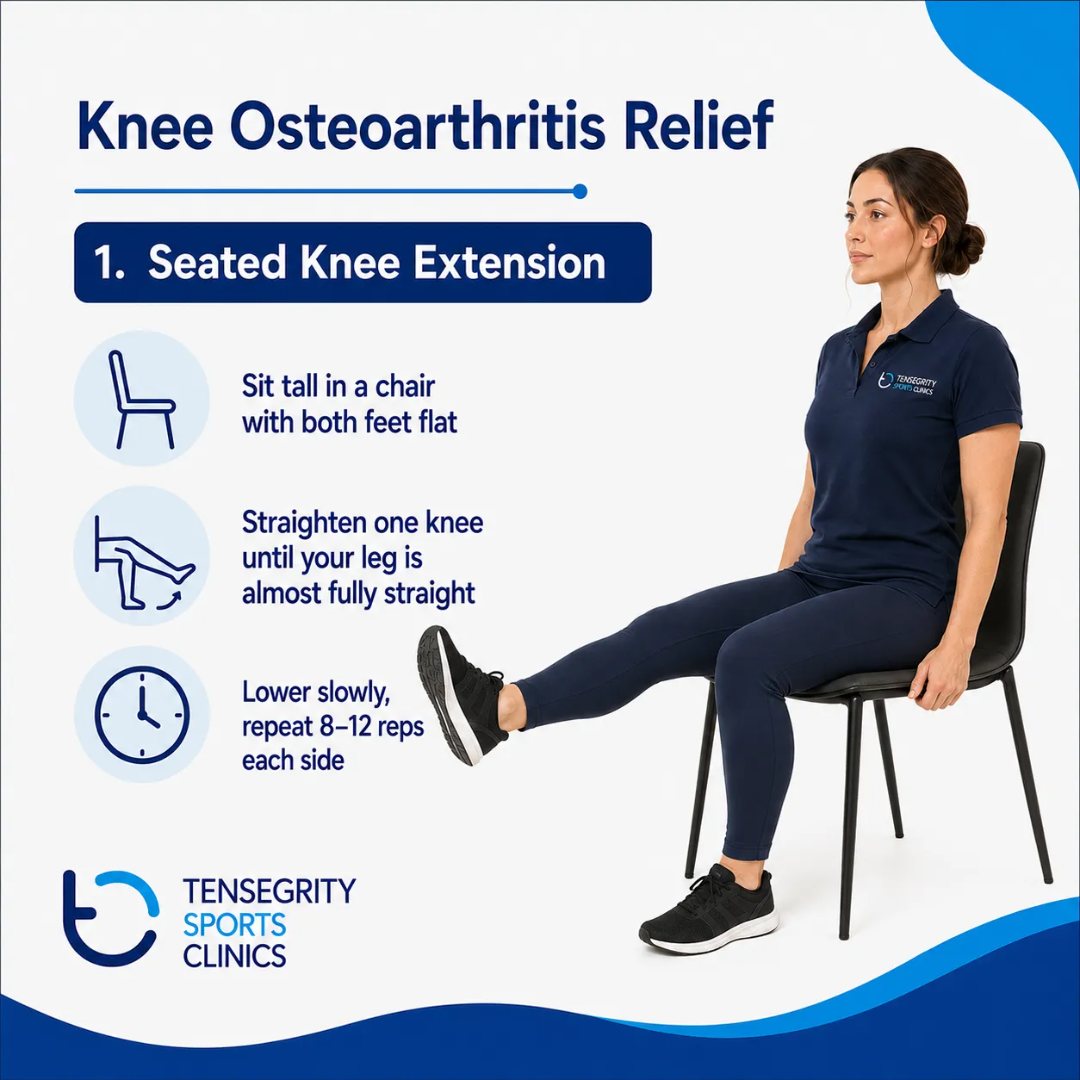
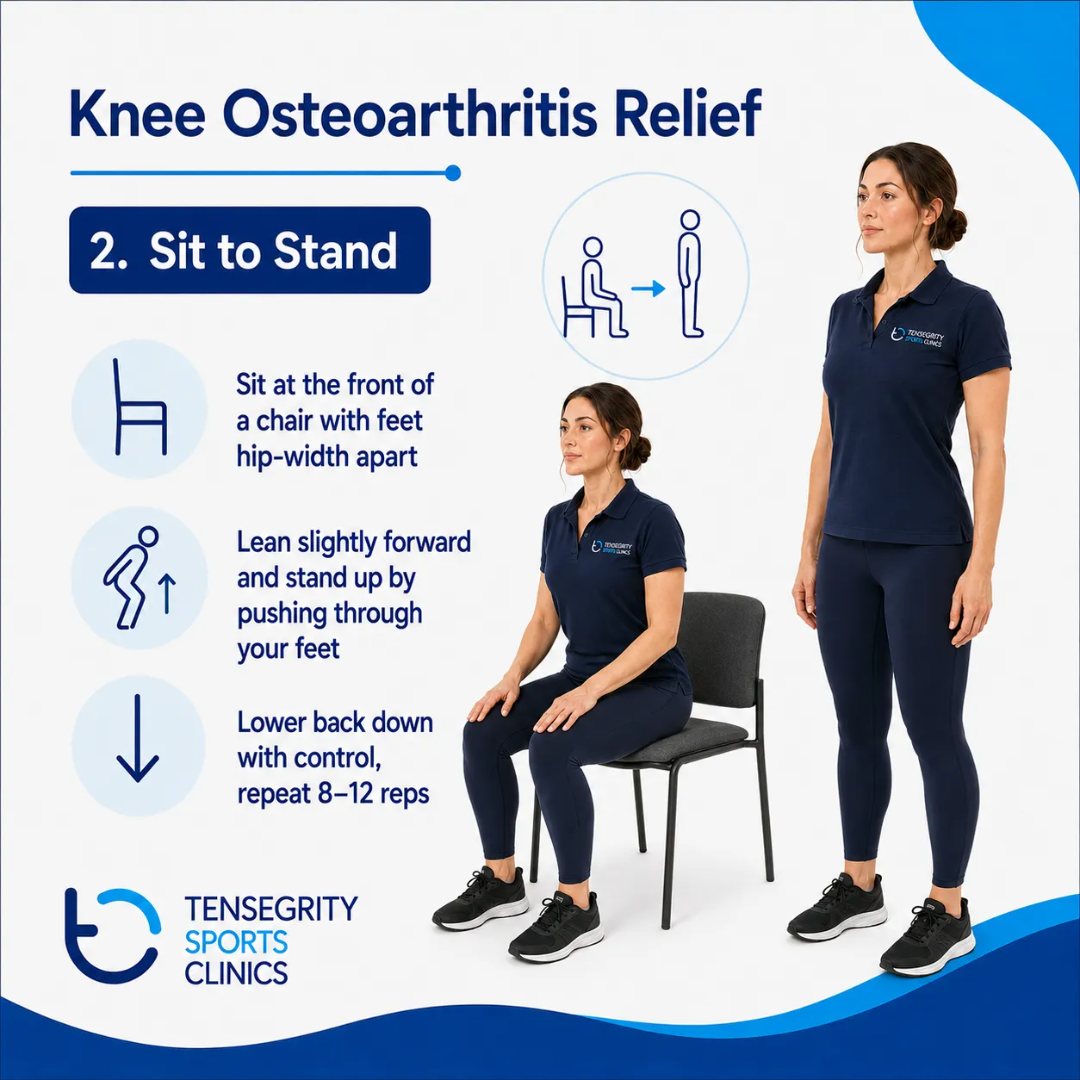
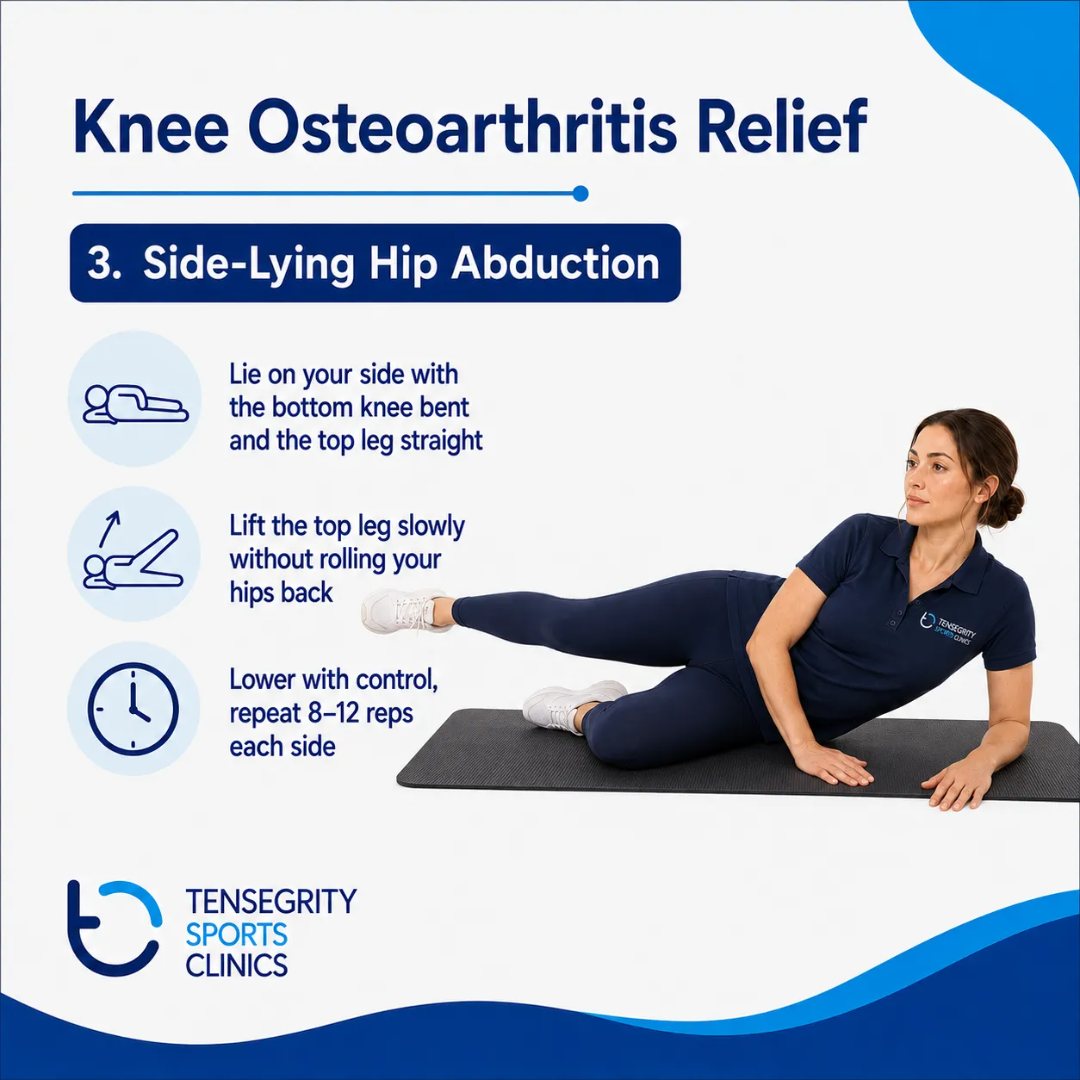
Some discomfort when you start is normal and does not mean damage. If pain climbs sharply or stays up the next day, book an assessment so the dose can be matched to your knee.
Prevention:
It may not be possible to prevent knee osteoarthritis entirely, particularly where age, genetics or previous significant injury are involved. These help maintain knee health and function:
- Stay regularly physically active: prolonged inactivity is its own risk.
- Strengthen the quadriceps and lower limb: the most protective single factor.
- Maintain a healthy body weight where appropriate: load through the knee adds up over years.
- Manage significant knee injuries properly: finish the rehabilitation rather than stopping at pain-free.
- Progress exercise and sporting loads gradually: rather than in jumps.
- Maintain cardiovascular fitness: and keep strength training as you get older.
- Address pain and loss of function early: before they start restricting what you do.
Outlook:
A diagnosis of knee osteoarthritis does not automatically mean the knee will keep deteriorating or that a replacement is inevitable. Symptoms fluctuate, and many people manage it successfully for years through exercise, strength training and activity management. Imaging findings alone do not determine what you can and cannot do.
With appropriate management, many people with knee osteoarthritis keep walking, exercising, travelling, working, playing recreational sport, going to the gym and doing the things they enjoy.
The most important principle is to keep moving. Fear of damaging an arthritic knee leads people to quietly reduce activity, which over time means weaker muscles, less fitness and more difficulty with everyday tasks. A well-designed exercise and strengthening program builds the knee’s capacity rather than just avoiding what hurts.
Get assessed if you have: persistent or worsening knee pain, significant unexplained swelling, difficulty bearing weight, knee pain after significant trauma, repeated giving way, true locking where the knee physically cannot straighten or bend, or a significant deterioration in mobility or everyday function.
A hot, red and significantly swollen knee, particularly with a fever, needs prompt medical assessment. That can indicate another condition requiring urgent investigation.