
Overview:
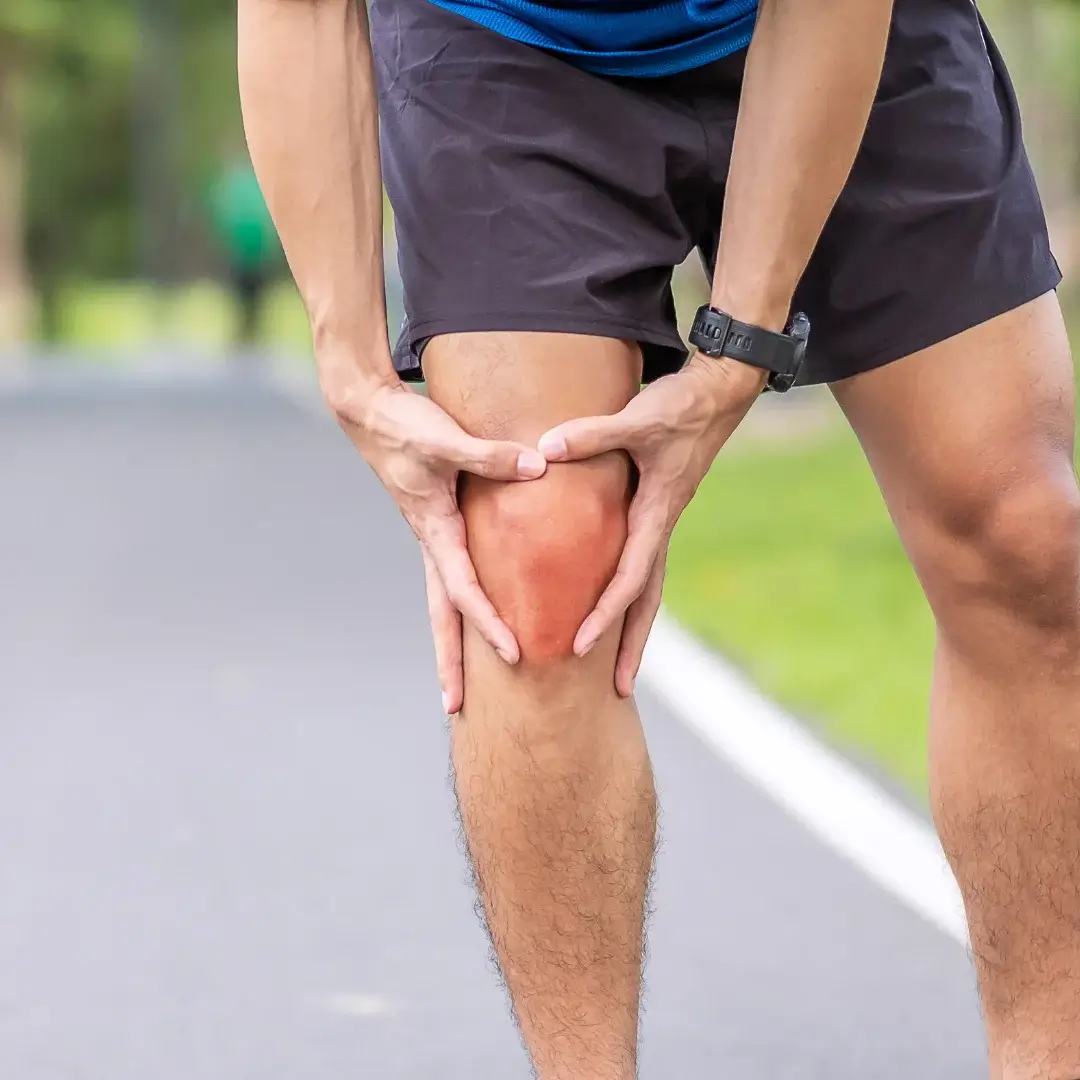
Runner’s knee, clinically known as patellofemoral pain syndrome (PFPS), is a common condition characterised by pain around or behind the kneecap (patella). This condition often affects individuals who engage in activities that involve repetitive knee motion, such as running, jumping, or cycling. Runner’s knee typically results from irritation of the soft tissues surrounding the patella, leading to discomfort during physical activity and may progressively worsen without intervention.
Anatomy:
The patella, or kneecap, sits in front of the knee joint and moves within a groove at the end of the femur (thigh bone) when the knee bends and straightens. The patellar tendon connects the patella to the tibia (shinbone), allowing for proper movement and stability of the knee joint. Runner’s knee occurs when the patella does not track smoothly within the femoral groove, causing excessive pressure and friction on the surrounding tissues.
Causes:
Several factors may contribute to the development of runner’s knee, including:
- Overuse: Engaging in repetitive activities that strain the knee joint, such as running long distances or climbing stairs, can lead to irritation and inflammation of the patellofemoral joint.
- Muscle Weakness or Imbalances: Weakness or tightness in the muscles surrounding the knee, particularly the quadriceps and hip abductors, may alter patellar alignment and contribute to excessive stress on the joint.
- Biomechanical Factors: Abnormalities in foot mechanics, such as overpronation (excessive inward rolling of the foot), may alter lower limb alignment and increase the risk of developing a runner’s knee.
- Poor Running Technique: Inadequate running form, such as overstriding or landing with a heel strike, can increase impact forces on the knees and exacerbate symptoms.
- Previous Injuries: Prior knee injuries or trauma, such as ligament sprains or meniscal tears, may predispose individuals to developing patellofemoral pain syndrome.
Symptoms:
Signs and symptoms of runner’s knee may include:
- Dull, aching pain around or behind the patella, typically worsened by activities such as running, squatting, or sitting with bent knees for prolonged periods.
- Swelling or tenderness around the kneecap.
- Crepitus or grinding sensation when bending or straightening the knee.
- Pain with stairs, inclines, or prolonged periods of sitting.
- Instability or feeling of the knee “giving way” during physical activity.
Treatment:
Treatment for runner’s knee aims to alleviate pain, reduce inflammation, and address underlying biomechanical factors contributing to the condition:
- Rest and Activity Modification: Avoid high-impact activities that exacerbate symptoms and incorporate low-impact exercises such as swimming or cycling to maintain cardiovascular fitness.
- Ice Therapy: Applying ice packs to the affected knee for 15-20 minutes several times a day can help reduce pain and swelling.
- NSAIDs: Over-the-counter nonsteroidal anti-inflammatory drugs (NSAIDs) such as ibuprofen or naproxen may provide temporary relief from pain and inflammation.
- Exercise rehabilitation: your practitioner can prescribe specific exercises to strengthen the quadriceps and hip muscles, improve flexibility, and correct biomechanical issues contributing to runner’s knee.
- Orthotics or Shoe Inserts: Custom or over-the-counter shoe inserts may help correct foot mechanics and reduce excessive pronation, thereby alleviating stress on the knee joint.
- Patellar Taping or Bracing: Taping or bracing the patella can provide additional support and help realign the patellar tracking during physical activity.
- Medical Injection Therapies: In cases of severe pain and inflammation, a healthcare provider may administer an injection into the knee joint to reduce swelling and alleviate symptoms.
- Surgery: Surgical intervention for runner’s knee is typically reserved for cases that do not respond to conservative treatment and may involve procedures to realign the patella or repair damaged cartilage.
Rehabilitation:
Patellofemoral pain settles with load management and strength, not rest alone. Early on the aim is to cut back the movements that spike the pain, usually deep knee bend, stairs and hills, while keeping you moving. From there the work shifts to building strength through the hip and thigh, because the knee is rarely the only thing driving the problem.
How long does it take? Most people notice meaningful change over about six to twelve weeks with consistent strengthening. Longer-standing cases take more time, and the pain often improves in steps rather than in a straight line.
Getting back to running. Volume comes back before intensity. A typical progression is comfortable walking, then hip and quadriceps strengthening, then short easy runs on flat ground, then longer runs, then hills and faster work. Going straight back to your old weekly distance because the knee feels better on the day is the most common reason it returns.
Three exercises for runner’s knee
These three were put together by our practitioners as a starting point. They are general exercises, not a personalised program.
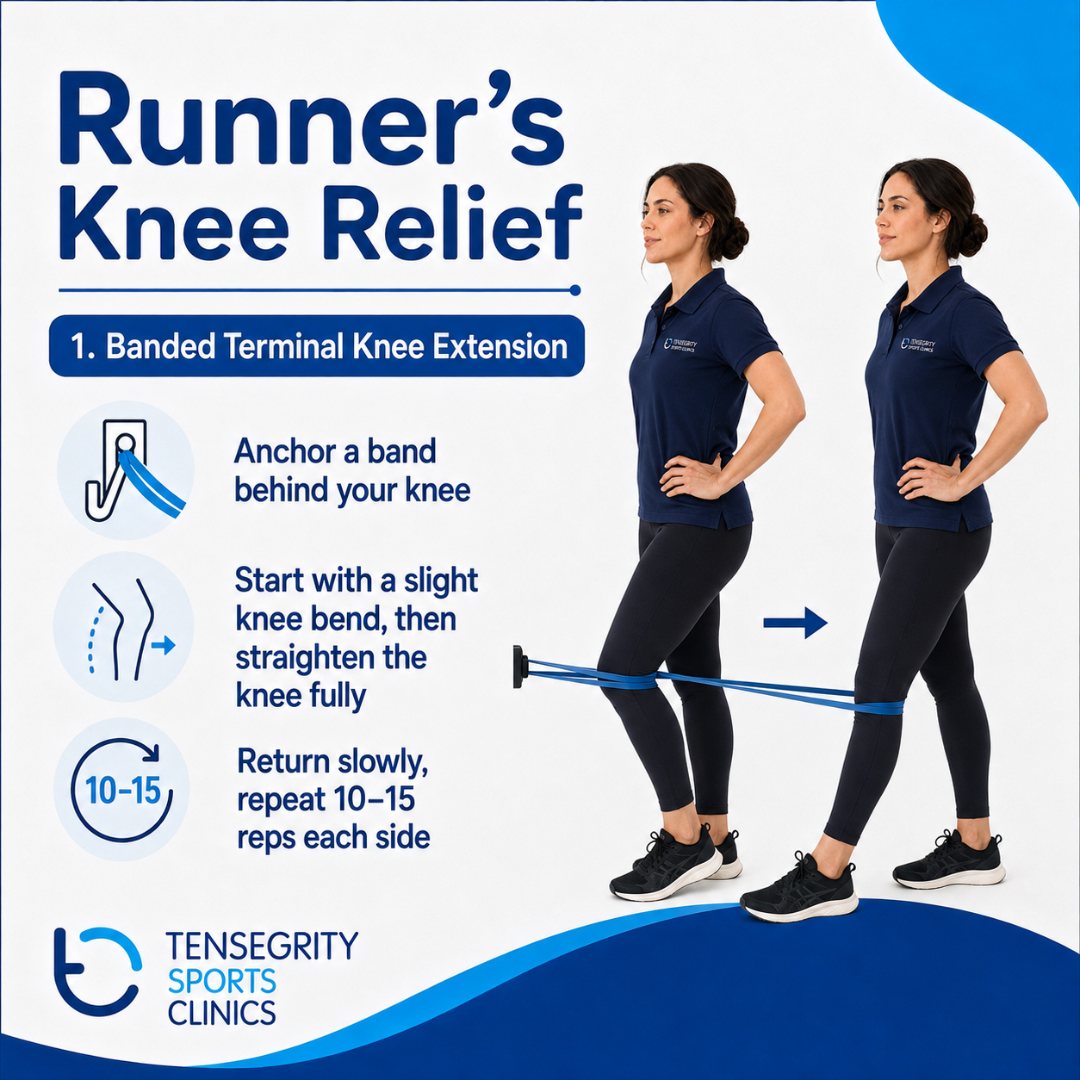
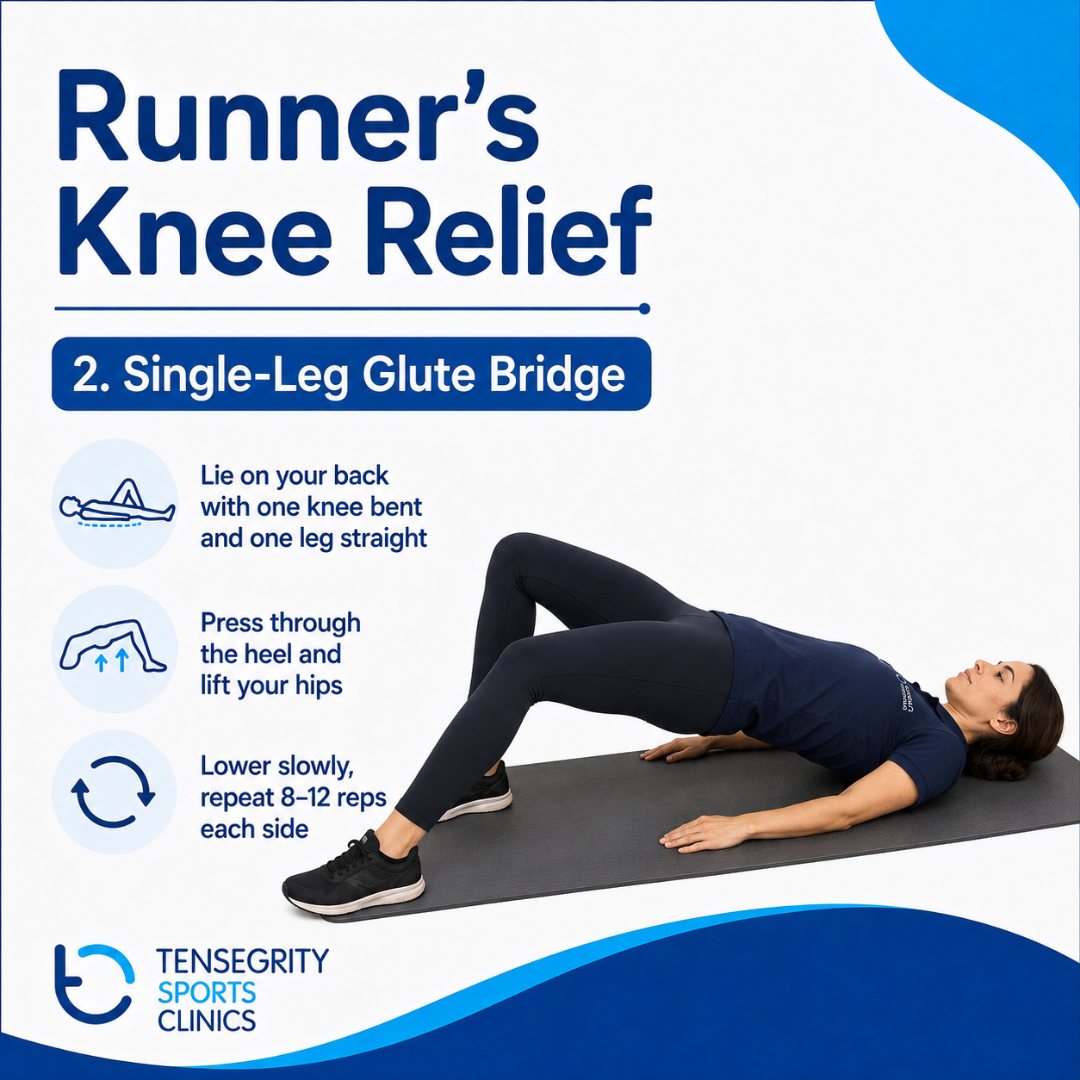
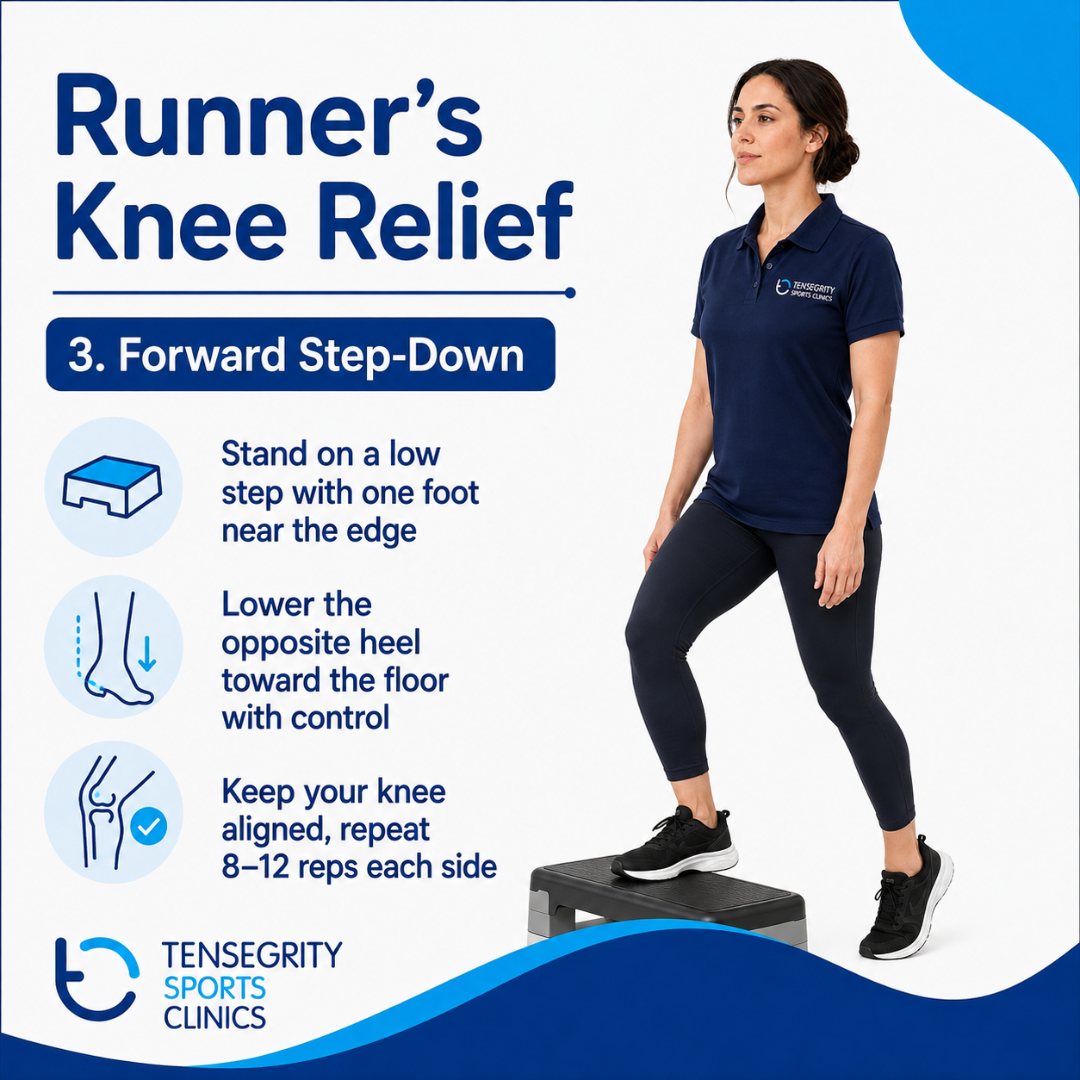
Some discomfort during these is acceptable. Sharp pain, swelling, or pain that climbs over the following day means the load is too high for now. If it is not settling, book an assessment so the program can be matched to your knee.
What our practitioners recommend:
These are the items our practitioners most often suggest for patellofemoral pain syndrome between appointments. They support your rehabilitation. They do not replace assessment, and what suits you depends on your presentation.
- Latex loop bands, pack of 5. Hip and glute loading is the mainstay of patellofemoral rehabilitation, and looped bands are how most of those exercises are progressed.
- Fabric loop bands, pack of 3. Fabric loops sit higher on the thigh without rolling, which suits side lying and standing glute work.
As an Amazon Associate I earn from qualifying purchases. We may earn a commission on these links. Our recommendations are based on clinical judgement and are not influenced by commission.
Prevention:
To prevent runner’s knee and reduce the risk of recurrence, consider the following preventive measures:
- Gradually increase training intensity and mileage to avoid overuse injuries.
- Incorporate strength training exercises for the quadriceps, hamstrings, and hip muscles to improve lower limb stability and reduce stress on the knees.
- Wear supportive footwear appropriate for your foot type and gait mechanics.
- Warm up before exercise and stretch regularly to maintain flexibility and prevent muscle imbalances.
- Listen to your body and address any early signs of pain or discomfort to prevent progression to more severe injuries.
Outlook/Prognosis:
With appropriate treatment and modifications to activity levels, the outlook for individuals with runner’s knee is generally favourable. Most individuals experience significant improvement in symptoms with conservative measures such as rest, exercise rehabilitation, and activity modification. However, it may take several weeks to months for symptoms to fully resolve, and adherence to preventive strategies is essential to prevent recurrence. If symptoms persist or worsen despite conservative treatment, consult a healthcare provider for further evaluation and management.