
Overview:
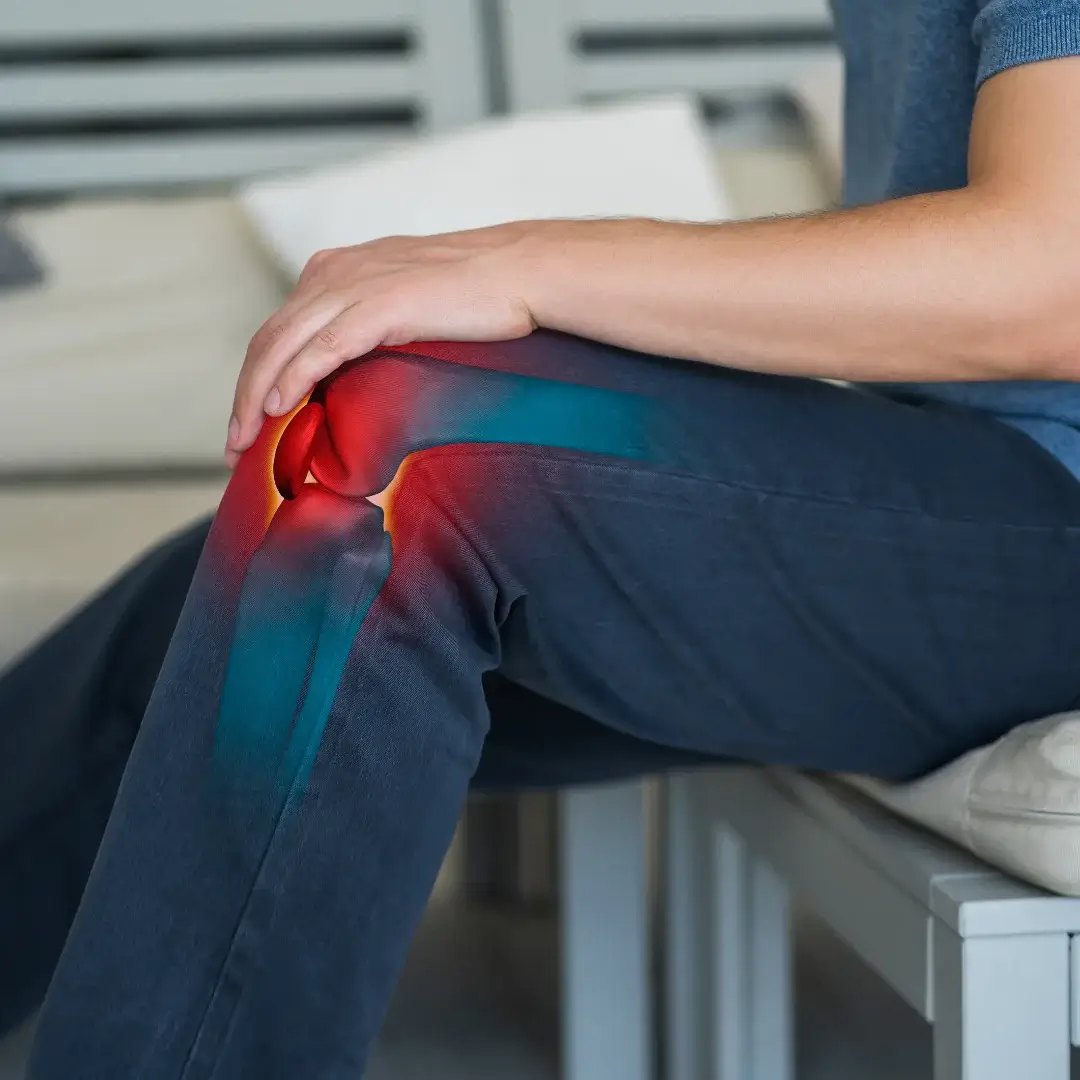
Knee bursitis is a condition characterised by inflammation of the bursae, small fluid-filled sacs located around the knee joint. These bursae serve as cushions between bones, tendons, and muscles, reducing friction during movement. When inflamed, knee bursae can cause pain, swelling, and limited mobility.
Anatomy:
The knee contains several bursae, including the prepatellar, infrapatellar, and pes anserine bursa, which facilitate smooth movement of tendons and ligaments over bones. Bursae can become irritated or inflamed due to repetitive movements, direct trauma, or infection, leading to knee bursitis.
Causes:
Common causes of knee bursitis include:
- Repetitive Stress: Activities that involve frequent kneeling or prolonged pressure on the knees, such as gardening, flooring work, or certain sports, can irritate the bursae and contribute to inflammation.
- Trauma: Direct blows or injuries to the knee, such as falls or impact during sports, can damage the bursae and result in bursitis.
- Infection: Bacterial or fungal infections can lead to infectious bursitis, causing pain, swelling, and sometimes fever.
Symptoms:
Signs and symptoms of knee bursitis may include:
- Pain or tenderness around the affected area.
- Swelling or a visible lump over the knee joint.
- Warmth and redness over the bursa.
- Limited range of motion or stiffness in the knee.
- Discomfort worsened by kneeling, squatting, or prolonged activity.
Treatment:
Treatment for knee bursitis aims to reduce inflammation, alleviate pain, and restore normal knee function:
- Rest and Activity Modification: Avoid activities that aggravate symptoms, such as kneeling or squatting, and allow the affected knee to rest.
- Ice Therapy: Applying ice packs to the affected area several times a day can help reduce swelling and pain.
- Nonsteroidal Anti-Inflammatory Drugs (NSAIDs): Over-the-counter medications like ibuprofen or naproxen can help relieve pain and inflammation.
- Compression and Elevation: Using compression bandages and elevating the leg when resting can help reduce swelling.
- Exercise rehabilitation: Gentle stretching and strengthening exercises prescribed by your practitioner can improve knee mobility and strength.
- Aspiration and Injection: In severe cases, a healthcare provider may aspirate fluid from the bursa to alleviate pressure and inject corticosteroids for pain relief and inflammation reduction.
- Antibiotics: If knee bursitis is caused by an infection, antibiotics or antifungal medications may be necessary to treat the underlying infection.
Rehabilitation:
Knee bursitis settles when the irritation stops and the surrounding muscles take more of the load. Early on the aim is to cut out the kneeling, direct pressure and repeated deep bending that keep flaring the bursa. From there the work moves to restoring full movement and building strength through the quadriceps and hamstrings, so the knee tolerates everyday tasks without the bursa taking the brunt.
How long does it take? Most cases settle over two to six weeks once the aggravating load is removed. Longer-standing cases take more time, and swelling often lags behind the pain, so the knee can feel better while it still looks puffy.
Getting back to kneeling work. If your job or sport involves kneeling, the return is gradual and usually needs padding. Build tolerance in short blocks rather than going straight back to a full day on the knees.
Three exercises for knee bursitis
These three were put together by our practitioners as a starting point. They are general exercises, not a personalised program.
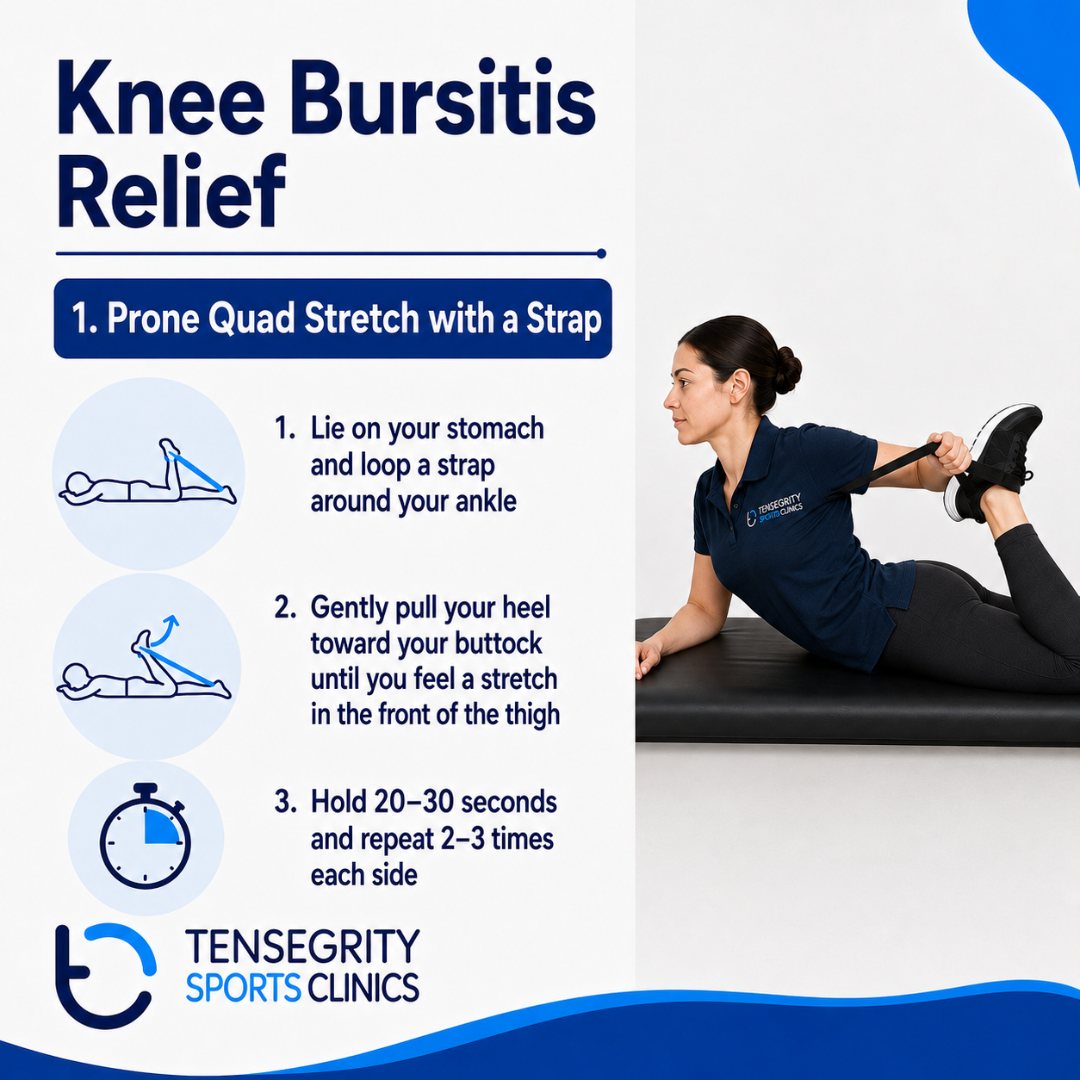
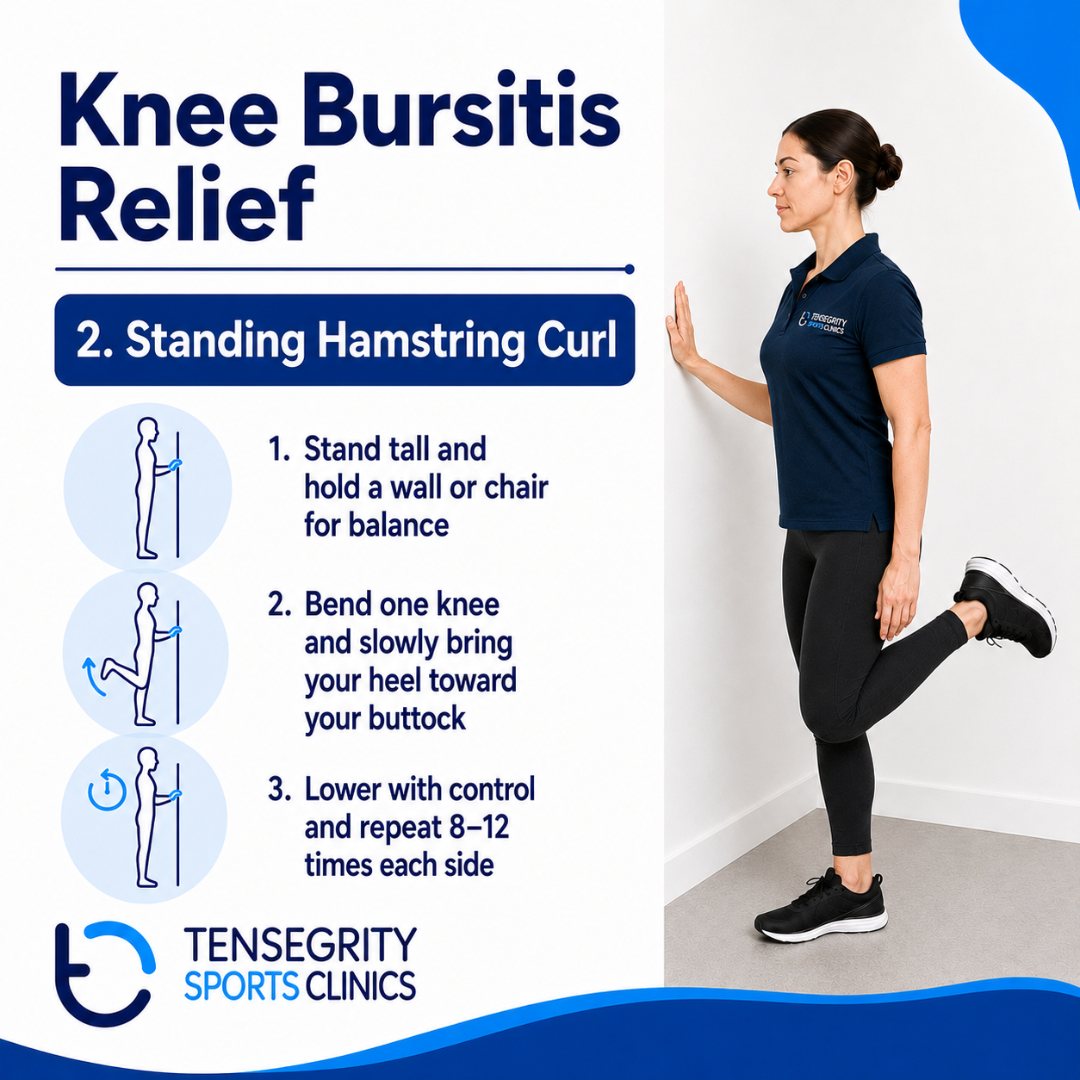
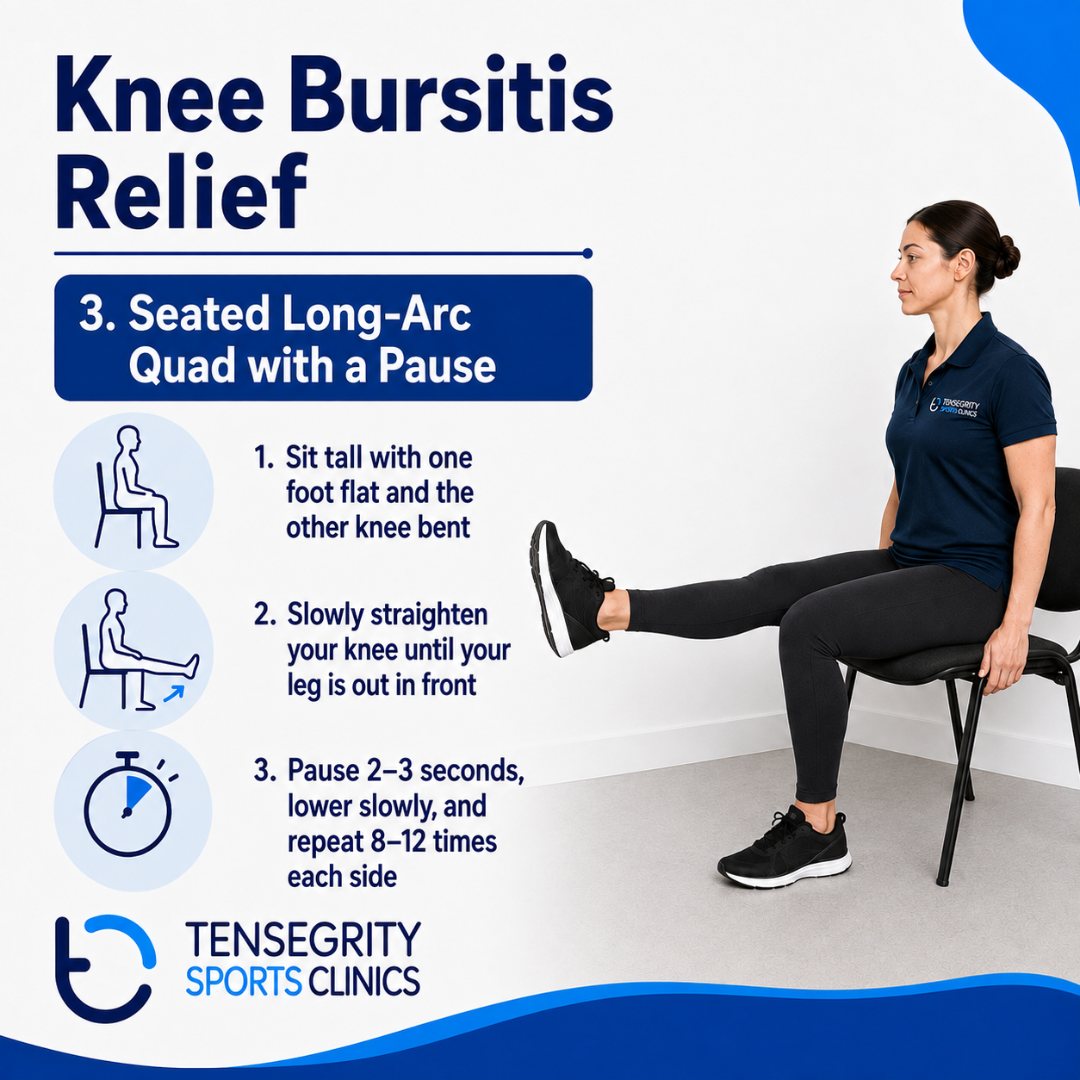
Mild discomfort during these is acceptable. Sharp pain, increasing swelling, or a knee that is hot and red means stop and get it assessed, since an infected bursa needs different management.
What our practitioners recommend:
These are the items our practitioners most often suggest for knee bursitis between appointments. They support your rehabilitation. They do not replace assessment, and what suits you depends on your presentation.
- Reusable gel ice pack. Icing over the bursa is commonly used while the area is irritable.
- Latex loop bands, pack of 5. For the hip and quadriceps loading that follows once the irritation has settled.
As an Amazon Associate I earn from qualifying purchases. We may earn a commission on these links. Our recommendations are based on clinical judgement and are not influenced by commission.
Prevention:
To prevent knee bursitis, consider the following measures:
- Use knee pads or cushions when kneeling for extended periods.
- Maintain proper posture and body mechanics during activities to reduce stress on the knees.
- Gradually increase the intensity and duration of physical activity to avoid overuse injuries.
- Wear appropriate footwear and protective gear during sports or activities that involve impact or repetitive movements.
Outlook/Prognosis:
With appropriate treatment and self-care measures, most cases of knee bursitis resolve within a few weeks. However, recurrent or chronic bursitis may require further evaluation and management by a healthcare professional. In severe or persistent cases, surgical intervention to remove the inflamed bursa may be necessary. If you experience persistent knee pain, swelling, or limited mobility, consult a healthcare provider for proper diagnosis and treatment.