
Overview:
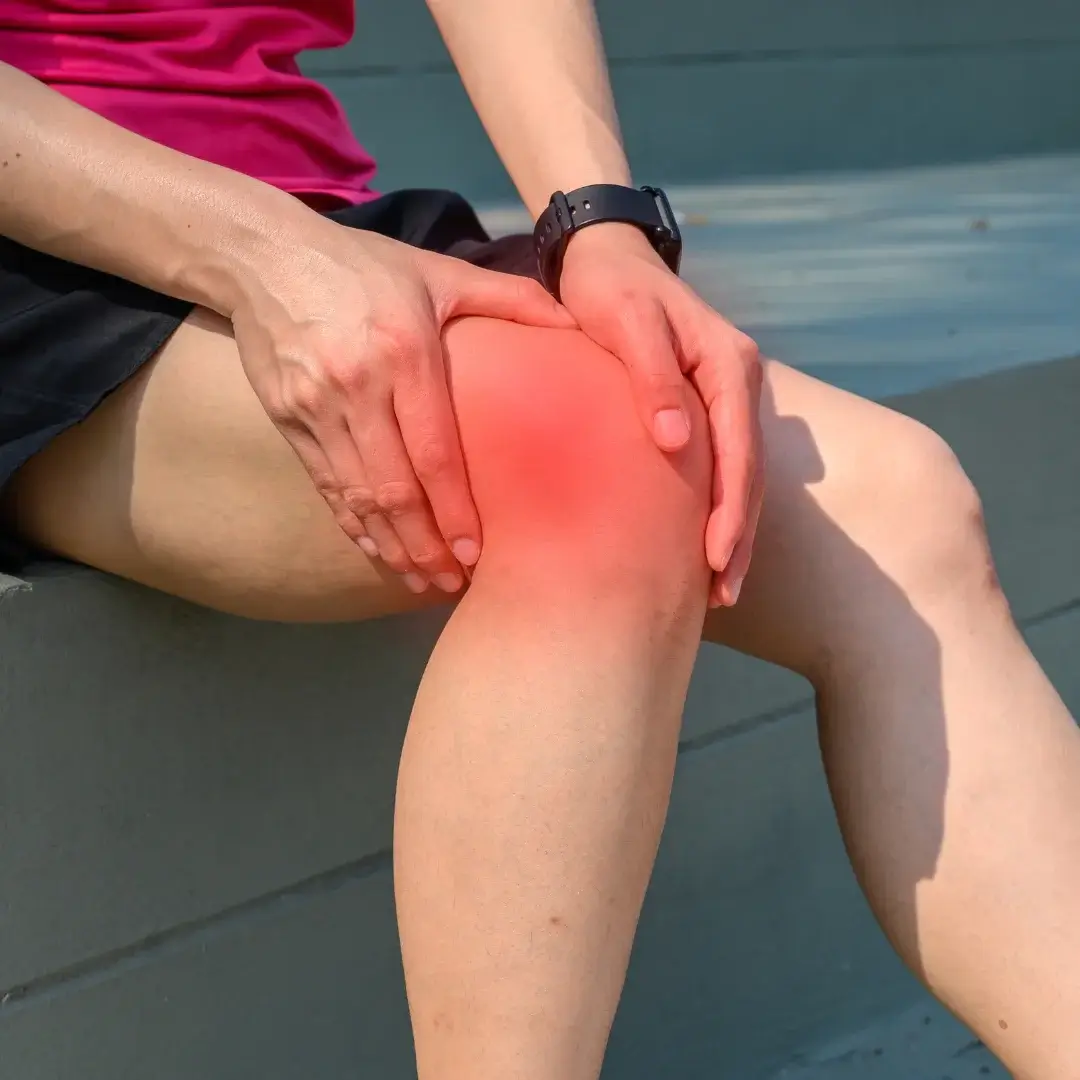
Iliotibial band syndrome (ITBS) is a common overuse injury characterised by pain and inflammation on the outer side of the knee. This condition occurs when the iliotibial band, a thick band of connective tissue that runs along the outside of the thigh from the hip to the knee, becomes tight or irritated, leading to friction and discomfort during repetitive activities such as running or cycling.
Anatomy:
The iliotibial band (ITB) is a thick, fibrous band of tissue that extends from the pelvis (ilium) down the side of the thigh and attaches to the tibia (shinbone) just below the knee joint. It plays a crucial role in stabilising the knee during movement, particularly during activities that involve bending and straightening the leg, such as running, walking, or cycling.
Causes:
ITBS typically develops due to repetitive friction and irritation of the iliotibial band against the bony prominence on the outside of the knee. Common factors contributing to ITBS include:
- Overuse: Engaging in activities that require repetitive bending and straightening of the knee, such as long-distance running, cycling, or hiking, can lead to excessive stress and strain on the ITB.
- Muscle Imbalances: Weakness or tightness in the muscles surrounding the hip and knee, such as the gluteal muscles or quadriceps, can alter biomechanics and increase the risk of ITBS.
- Biomechanical Issues: Abnormalities in lower limb alignment, such as excessive foot pronation (rolling inward) or leg length discrepancies, may predispose individuals to ITBS by altering the distribution of forces on the knee joint.
- Training Errors: Sudden increases in training intensity, duration, or frequency without adequate rest or recovery time can overload the ITB and contribute to the development of ITBS.
- Poor Footwear: Wearing worn-out or improper footwear lacking sufficient support and cushioning during physical activity can exacerbate stress on the lower extremities and aggravate ITB irritation.
Symptoms:
Signs and symptoms of ITBS may include:
- Sharp or Burning Pain: Pain located on the outside of the knee that worsens with activity, particularly during repetitive motions such as running, cycling, or descending stairs.
- Swelling: Swelling or thickening of the tissues over the outside of the knee, indicating inflammation and irritation of the ITB.
- Tenderness: Increased sensitivity and tenderness to touch along the length of the ITB, especially near the knee joint.
- Snapping Sensation: Some individuals may experience a snapping or popping sensation over the outside of the knee with movement, particularly during bending and straightening of the leg.
- Stiffness: Stiffness or tightness in the hip or knee joint, limiting flexibility and range of motion during physical activity.
Diagnosis:
Diagnosis of ITBS is typically based on a thorough medical history, physical examination, and assessment of symptoms. Imaging tests such as X-rays or MRI scans may be ordered to rule out other potential causes of knee pain, such as meniscal tears or bursitis.
Treatment:
Treatment for ITBS aims to reduce pain and inflammation, correct underlying biomechanical issues, and gradually reintroduce activity:
- Rest and Activity Modification: Temporary cessation of activities that exacerbate symptoms, such as running or cycling, allows the ITB to heal and inflammation to subside. Gradual return to activity with reduced intensity and duration is recommended once symptoms improve.
- Ice Therapy: Applying ice packs to the affected area for 15-20 minutes several times a day can help alleviate pain and reduce inflammation.
- Stretching and Strengthening Exercises: Gentle stretching exercises targeting the ITB, hip abductors, and quadriceps muscles can improve flexibility and muscle balance. Strengthening exercises focusing on the hip abductors and gluteal muscles help stabilise the pelvis and reduce strain on the ITB.
- Foam Rolling: Using a foam roller to massage and release tension in the ITB and surrounding muscles can help improve flexibility and alleviate pain.
- Biomechanical Evaluation: Assessment of lower limb alignment and gait mechanics by your practitioner or sports medicine doctor can identify any underlying biomechanical issues contributing to ITBS. Custom orthotics or shoe modifications may be recommended to address foot pronation or leg length discrepancies.
- Medication and injection-based options: These sit outside a chiropractor’s scope of practice. If pain is limiting your sleep or stopping you starting rehabilitation, that is worth discussing with your GP rather than self-prescribing long term.
Three exercises for ITB syndrome
These three were put together by our practitioners as a starting point. They are general exercises, not a personalised program.
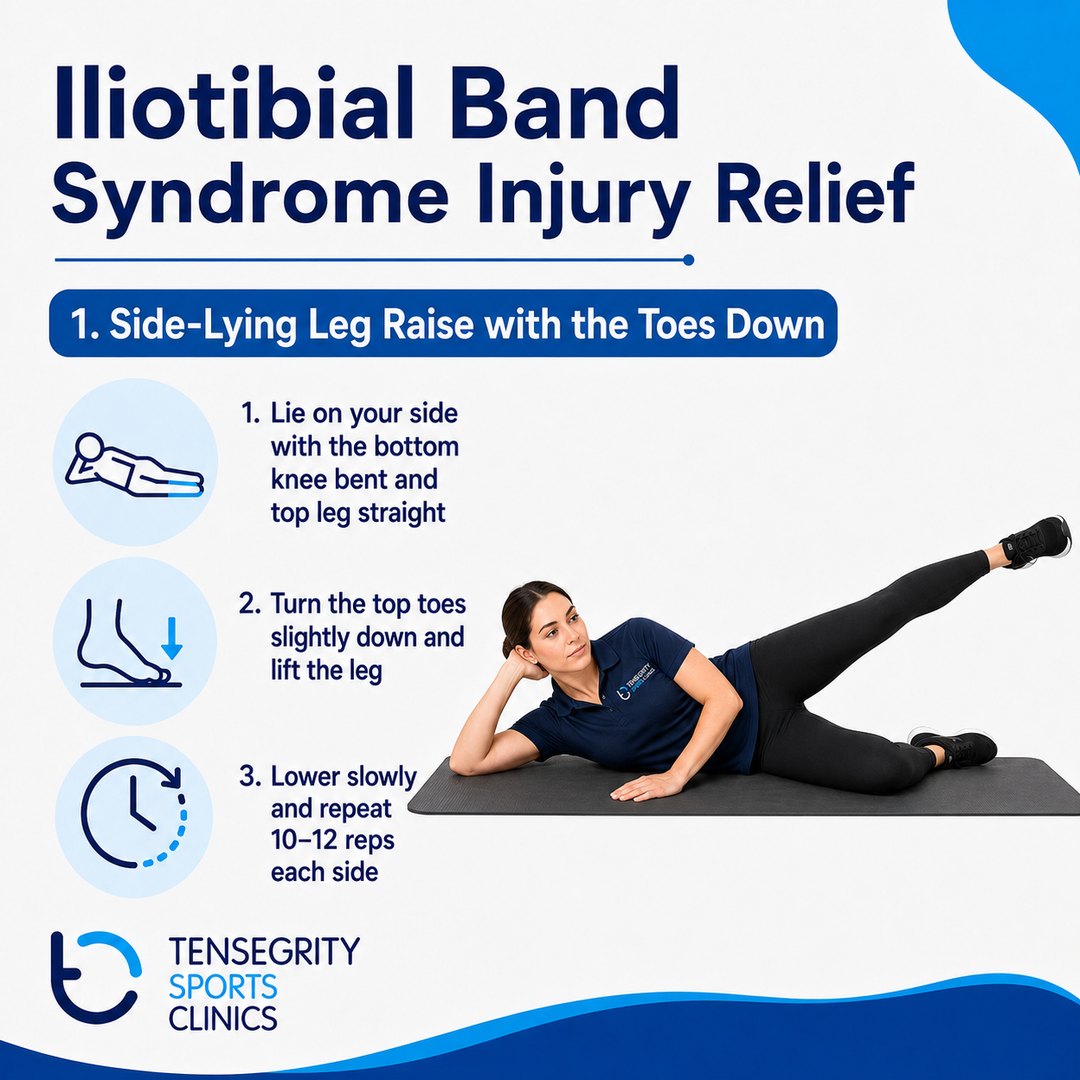
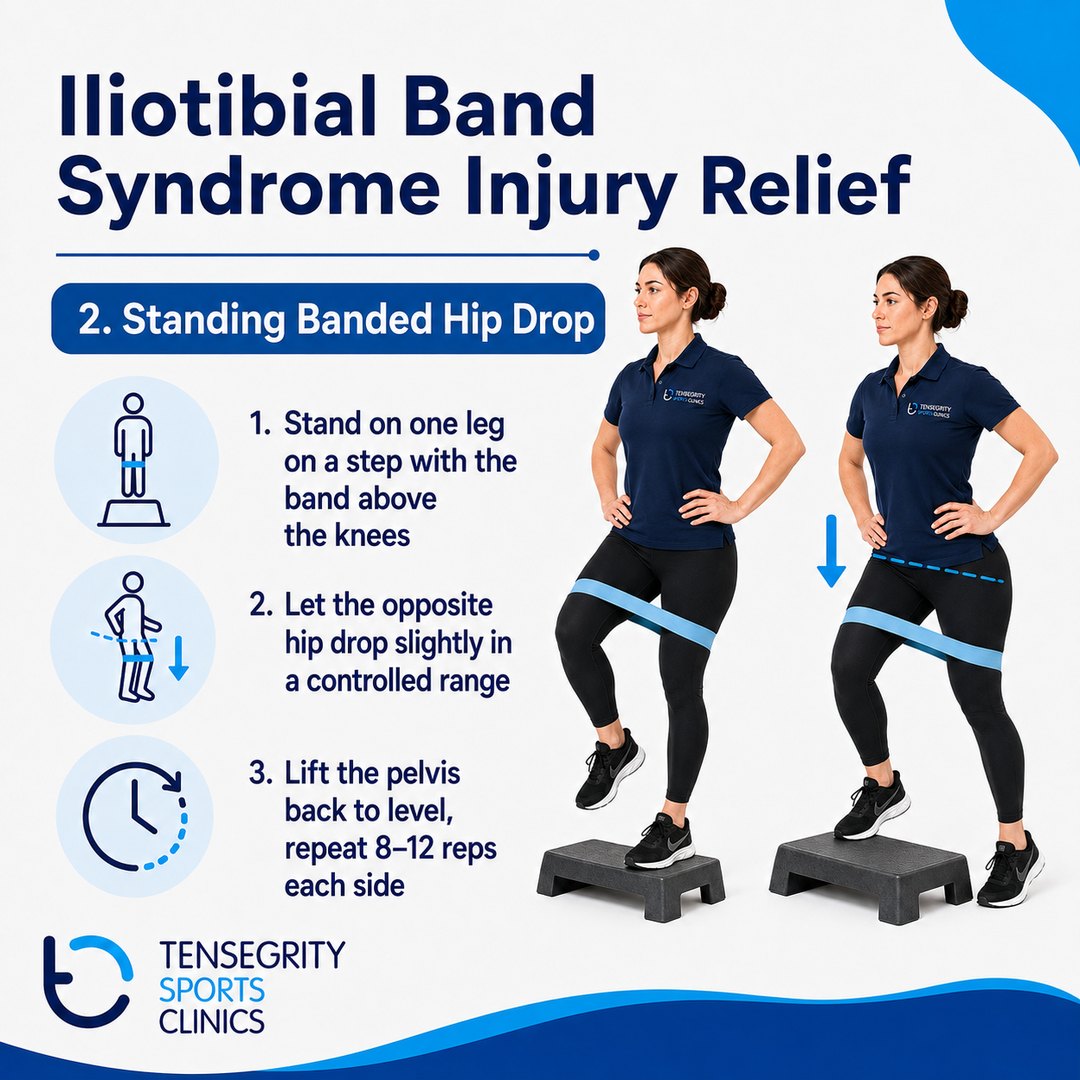
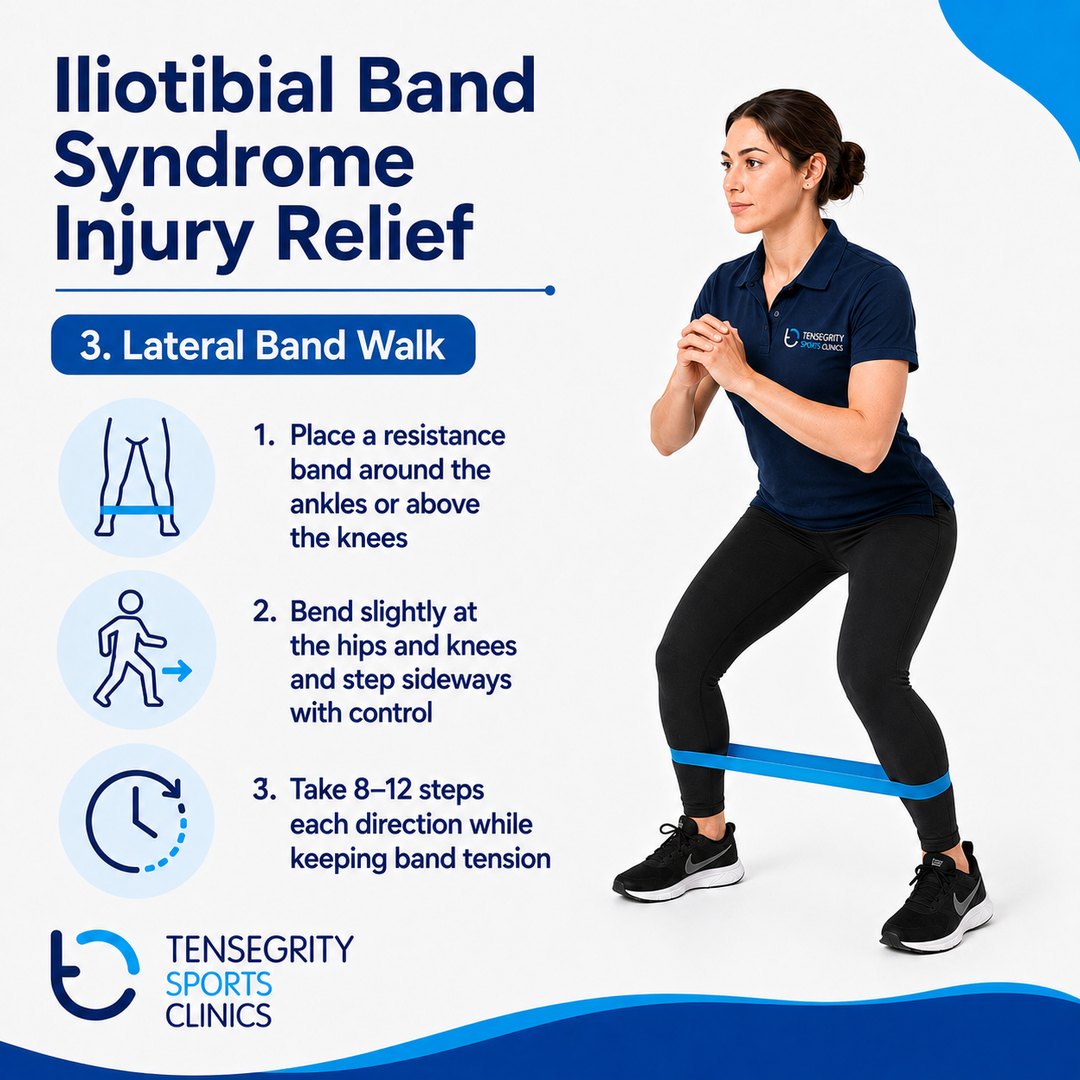
If the outside of the knee is not settling, or the pain returns at the same point in every run, book an assessment so the loading can be matched to what the leg can currently handle.
What our practitioners recommend:
These are the items our practitioners most often suggest for iliotibial band syndrome between appointments. They support your rehabilitation. They do not replace assessment, and what suits you depends on your presentation.
- Foam roller. For soft tissue work through the lateral thigh and glutes.
- Latex loop bands, pack of 5. Gluteus medius loading is the mainstay of ITB rehabilitation.
- Fabric loop bands, pack of 3. Fabric loops hold position better than latex for standing and side lying glute work.
As an Amazon Associate I earn from qualifying purchases. We may earn a commission on these links. Our recommendations are based on clinical judgement and are not influenced by commission.
Outlook/Prognosis:
The prognosis for ITBS is generally favourable with appropriate treatment and rehabilitation. Most individuals experience significant improvement in symptoms within a few weeks to months with conservative measures. However, adherence to rehabilitation exercises, modification of training regimens, and addressing underlying biomechanical issues are crucial for preventing recurrent ITBS and promoting long-term musculoskeletal health. If symptoms persist or worsen despite conservative treatments, further evaluation by a healthcare provider may be necessary to explore alternative treatment options and rule out other potential causes of knee pain.