
Overview:
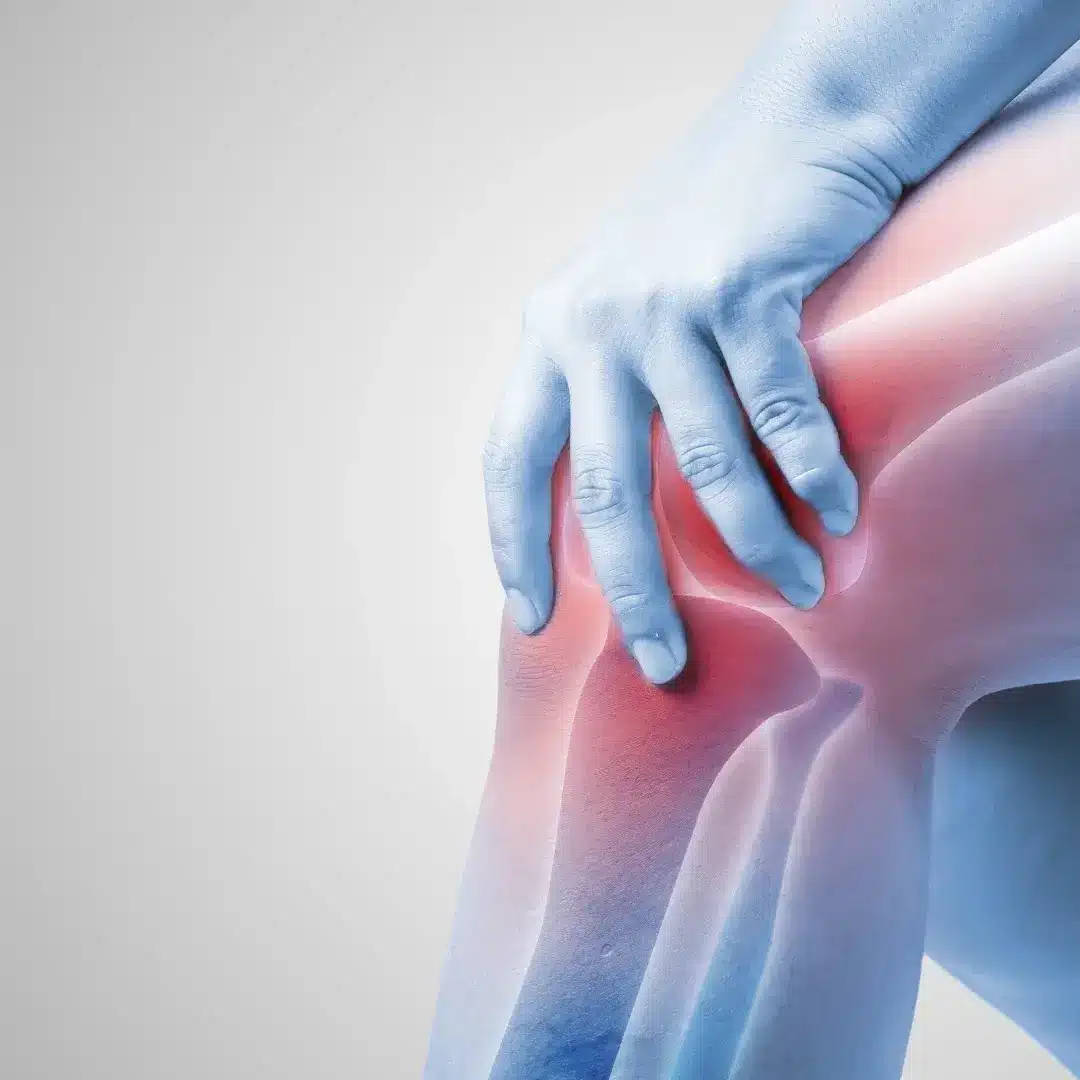
Osgood-Schlatter disease is a common condition among adolescents, especially those who are physically active. It involves inflammation of the patellar tendon at the point where it attaches to the tibia (shinbone), just below the kneecap. This condition typically affects growing children and adolescents, often during periods of rapid growth and increased physical activity.
Anatomy:
The patellar tendon connects the quadriceps muscles in the thigh to the tibia. During periods of growth spurts, the bones may grow faster than the surrounding muscles and tendons, leading to increased tension and stress on the patellar tendon. This can cause inflammation and pain at the tibial tuberosity, the bony prominence below the kneecap where the patellar tendon attaches.
Causes:
Osgood-Schlatter disease is primarily caused by repetitive stress and overuse of the patellar tendon, particularly during activities that involve running, jumping, or quick changes in direction. Factors that may contribute to the development of this condition include:
- Rapid Growth: During growth spurts, bones may lengthen more quickly than muscles and tendons, leading to increased tension on the patellar tendon.
- Intense Physical Activity: Participation in sports or activities that involve repetitive jumping, running, or squatting can strain the patellar tendon and exacerbate symptoms.
- Muscle Imbalances: Weakness or tightness in the quadriceps muscles or hamstrings may contribute to increased stress on the patellar tendon.
Symptoms:
Signs and symptoms of Osgood-Schlatter disease may include:
- Pain and tenderness over the tibial tuberosity (bony bump below the kneecap).
- Swelling or a noticeable bump at the front of the knee.
- Pain that worsens with physical activity, especially jumping or kneeling.
- Stiffness or limited range of motion in the knee.
- Pain that improves with rest but may return during activity.
Treatment:
Treatment for Osgood-Schlatter disease focuses on relieving pain, reducing inflammation, and modifying activities to decrease stress on the affected knee:
- Rest and Activity Modification: Avoid activities that exacerbate symptoms, such as running or jumping, and engage in low-impact exercises that do not strain the knee.
- Ice Therapy: Applying ice packs to the affected area several times a day can help reduce pain and swelling.
- Exercise rehabilitation: Gentle stretching and strengthening exercises prescribed by your practitioner can help improve flexibility and muscle balance around the knee.
- Patellar Tendon Strap: Using a patellar tendon strap or brace may help alleviate pain by providing support and reducing tension on the tendon during physical activity.
- Medication and injection-based options: These sit outside a chiropractor’s scope of practice. If pain is limiting your sleep or stopping you starting rehabilitation, that is worth discussing with your GP rather than self-prescribing long term.
Three exercises for Osgood-Schlatter disease
These three were put together by our practitioners as a starting point. They are general exercises, not a personalised program.
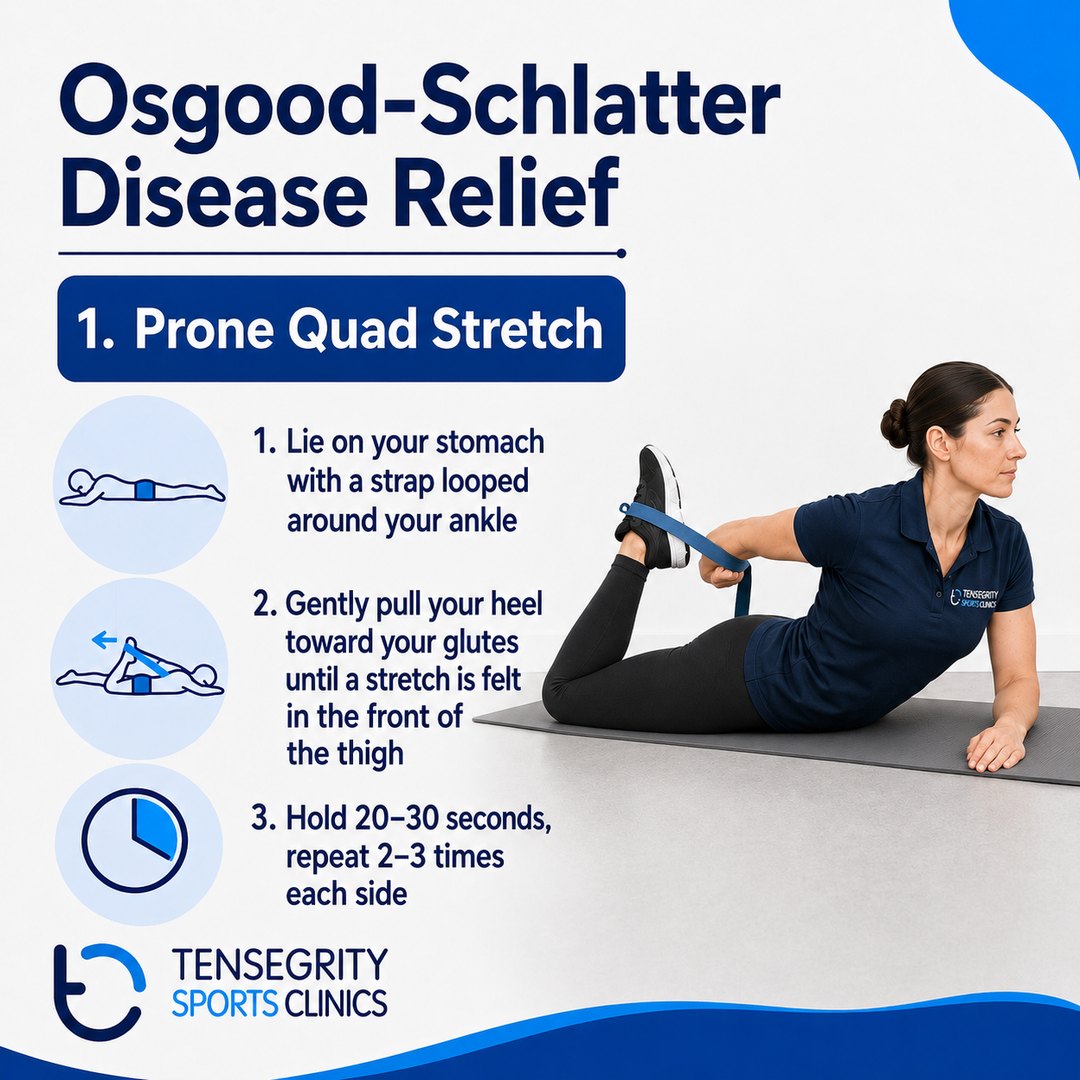
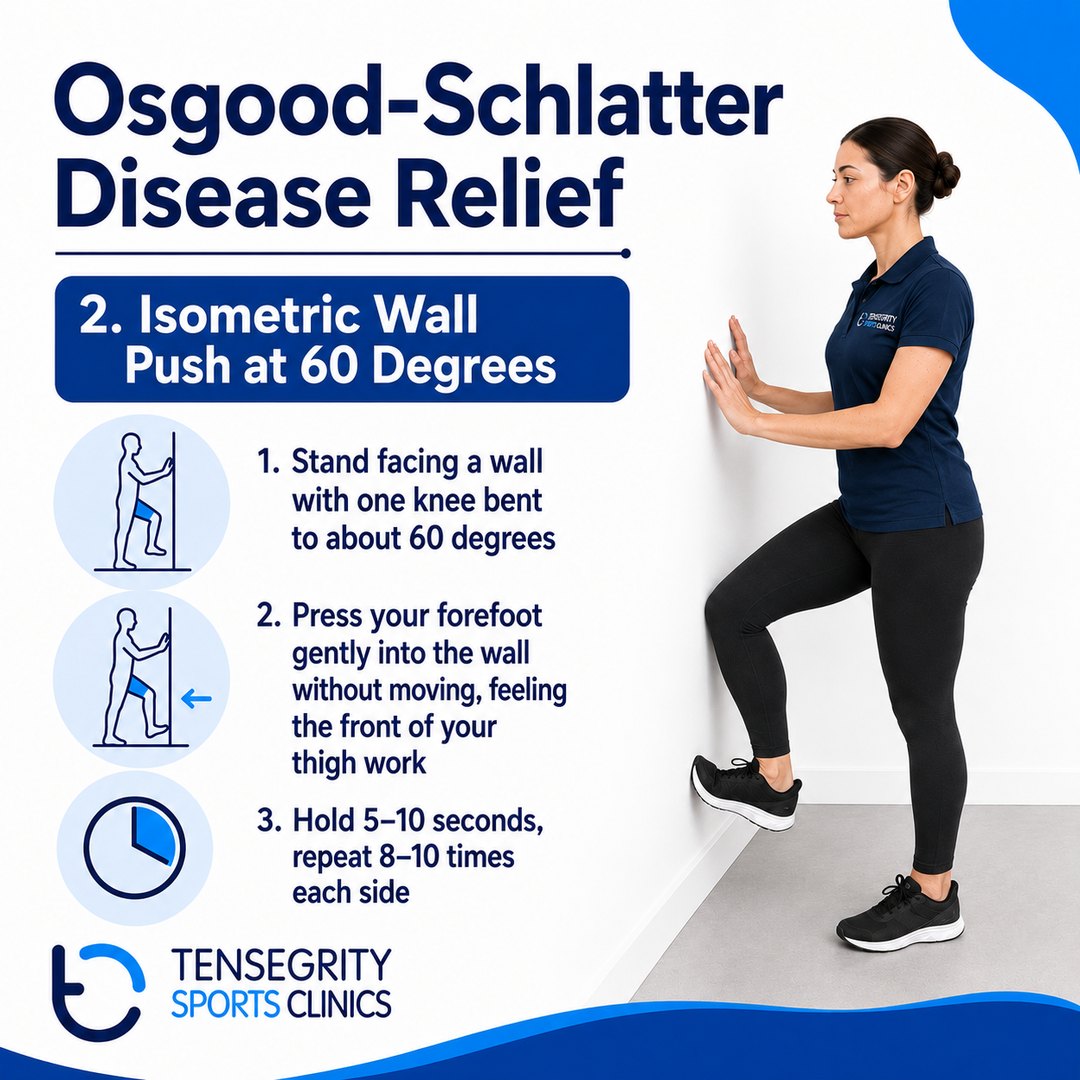
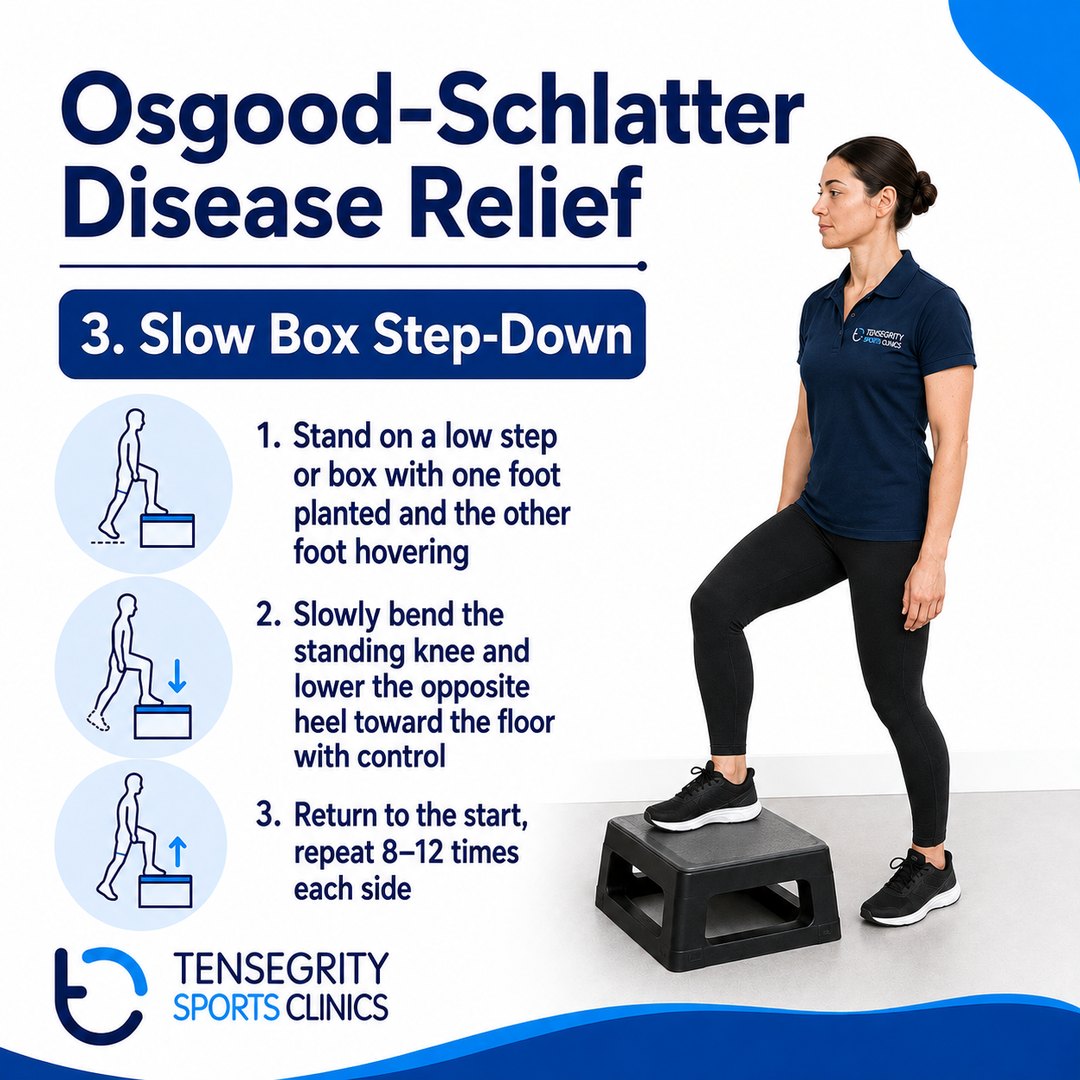
If the knee is not settling, or it is stopping training week after week, book an assessment so the loading can be matched to what the knee can currently handle.
Prevention:
To help prevent Osgood-Schlatter disease, consider the following preventive measures:
- Gradually increase the intensity and duration of physical activity to avoid sudden spikes in activity levels.
- Incorporate regular stretching and strengthening exercises for the quadriceps and hamstrings to maintain muscle balance and flexibility.
- Use proper techniques and equipment during sports and activities to minimise stress on the knees.
- Ensure adequate rest and recovery time between activities, especially during periods of rapid growth.
Outlook/Prognosis:
In most cases, Osgood-Schlatter disease resolves on its own once growth plate closure occurs and skeletal maturity is reached. However, symptoms may persist during adolescence and gradually improve over time with appropriate treatment and activity modification. With proper management, most individuals can return to their normal activities without long-term complications. If symptoms persist or worsen despite conservative treatment, consult a healthcare provider for further evaluation and management.