
Overview:
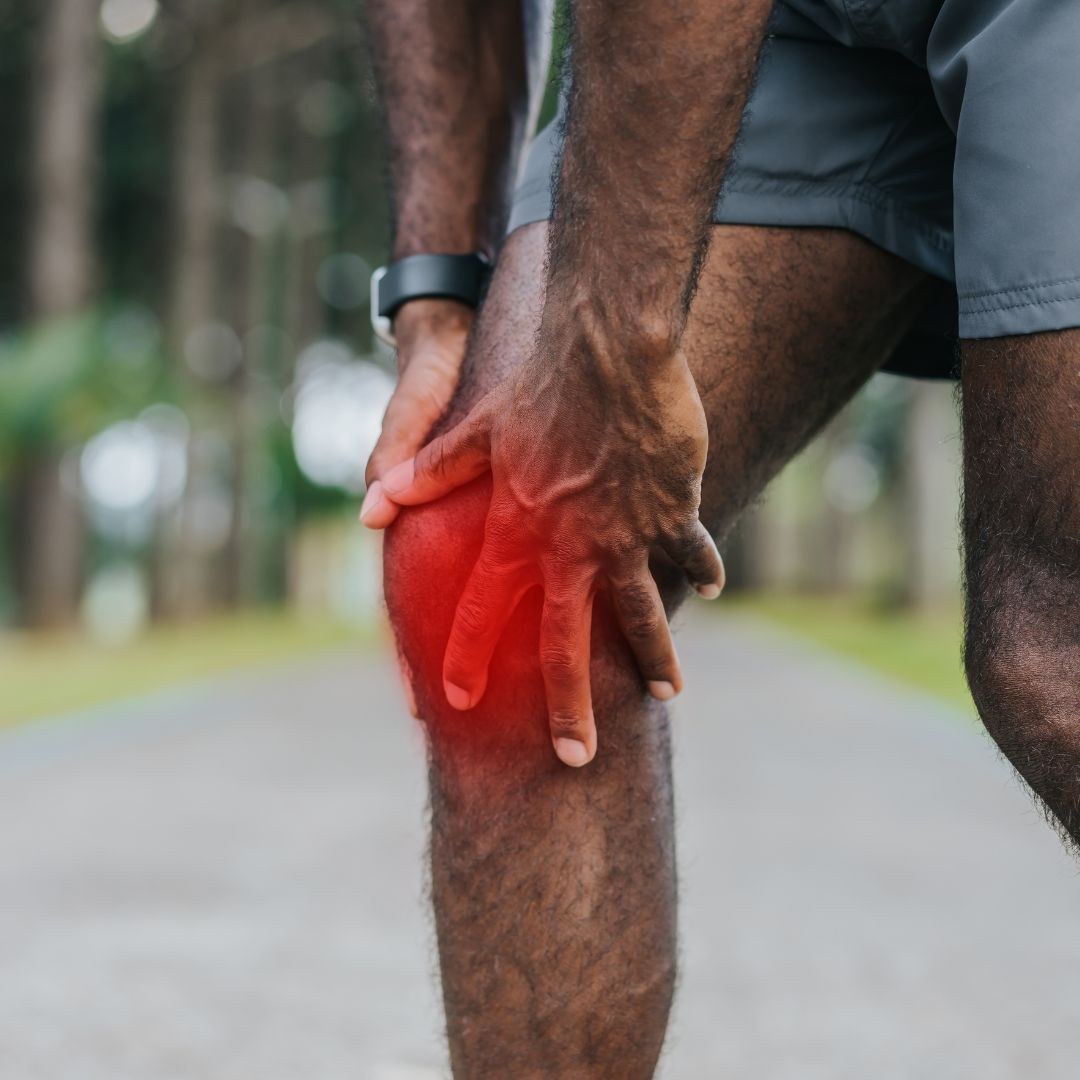
Patellar tendinopathy, better known as jumper’s knee, is an overuse injury of the patellar tendon at the front of the knee. The pain sits just below the kneecap and it turns up most in people who run, jump, accelerate hard or change direction often. Basketball, volleyball, netball, football, running and high-intensity gym training are the usual suspects.
The tendon gets sore when it is repeatedly loaded beyond what it can currently tolerate and recover from. Persistent patellar tendinopathy is not simply inflammation. It involves changes in the structure and function of the tendon itself, which is why it responds to loading rather than rest.
A lot of people arrive having already tried treatment elsewhere without a lasting answer, often after being told to rest, stretch or ice it. If that is you, you are not starting from scratch. You are starting with a thorough assessment of what the tendon can currently handle and what you are asking of it. This page sits under our wider knee pain information.
Anatomy:
The patellar tendon is a strong band of connective tissue at the front of the knee. It connects the bottom of the patella, your kneecap, to the tibial tuberosity at the top of the shin bone. Together with the quadriceps muscles and the quadriceps tendon it forms the knee’s extensor mechanism, which is what straightens your knee.
The tendon takes substantial force during running, jumping, landing, squatting, sprinting, changing direction and climbing stairs. During jumping and landing in particular it has to store and release large amounts of energy, over and over. That is the demand rehabilitation eventually has to rebuild.
Causes:
Patellar tendinopathy develops when repeated loading outruns the tendon’s ability to adapt. Common contributors:
- Rapid increases in training: a sudden jump in running, jumping or sporting volume overloads the tendon before it has adapted.
- High jumping volume: basketball, volleyball and netball load the patellar tendon repeatedly, week after week.
- Sprint and acceleration work: rapid acceleration and deceleration put significant force through the knee extensor mechanism.
- Not enough recovery: frequent high-load sessions without adequate recovery reduce the tendon’s ability to adapt.
- Reduced quadriceps capacity: when strength or endurance is short, the knee struggles to manage repeated loads.
- Lower limb strength deficits: reduced hip or calf strength changes how sporting loads are shared across the leg.
- Previous patellar tendon problems: a history of tendinopathy makes recurrence more likely.
- Changes in surface or footwear: a sudden change alters the forces going through the knee during running and jumping.
- Returning to sport too quickly: going straight back to high intensity after time off loads a tendon that has lost capacity.
Patellar tendinopathy is not caused by a tight tendon, and it is not simply inflammation. Persistent tendon pain comes down to the relationship between what the tendon can handle and what is being asked of it.
Symptoms:
The signature symptom is pain at the front of the knee, right at the lower edge of the kneecap.
- Localised pain: at the bottom edge of the kneecap, and you can usually point to it with one finger.
- Tenderness on pressing: the patellar tendon itself is sore to touch.
- Pain jumping or landing: often the first thing people notice.
- Pain running or sprinting: particularly with acceleration and changes of direction.
- Pain with squats and lunges: and often going down stairs more than up.
- Stiffness starting exercise: the knee feels tight and sore for the first few minutes.
- Pain after high-load activity: later that evening or the next morning rather than during.
The warm-up phenomenon. Tendons often hurt at the start of exercise, feel better once you are warm, then flare later that day or the next morning. That improvement during the session does not mean the tendon has healed. It is one of the reasons jumper’s knee gets pushed through for months before anyone looks at it properly.
Diagnosis:
Patellar tendinopathy is usually diagnosed from your history and a physical examination. Assessment includes:
- Where the pain sits: the exact location, and whether it is on the tendon or around the kneecap.
- Tendon tenderness: hands-on testing of the patellar tendon.
- Loading tests: squatting, single-leg squatting, and jumping and landing where appropriate.
- Strength testing: quadriceps, calf and hip strength measured rather than guessed.
- Mobility: knee and ankle range, because a stiff ankle changes how you land.
- Training history: your volume, your recent changes, and what happened in the weeks before it started.
- Sport-specific testing: functional tests that match the demands you actually need to return to.
Jumper’s knee or runner’s knee? Both cause pain at the front of the knee but they are different conditions. Patellar tendinopathy is localised in the tendon near the bottom of the kneecap. Patellofemoral pain syndrome, or runner’s knee, is felt around or behind the kneecap and relates to loading of the patellofemoral joint. Sorting out which one you have changes the plan, so it is worth getting assessed rather than guessing.
Ultrasound or MRI is occasionally used when the diagnosis is unclear or another condition is suspected. Tendon changes on imaging do not always match up with pain, and plenty of people have structural changes with no symptoms at all. Treatment is guided by your symptoms, function and physical capacity, not by a scan report alone.
Treatment:
The cornerstone of treatment is progressive tendon loading. Complete rest may settle symptoms for a while, but it also reduces tendon and muscle capacity, so the pain tends to come straight back when sport resumes.
- Load management: identifying which activities are exceeding what the tendon can currently handle, then temporarily adjusting jumping volume, sprinting, running distance, court training, deep or heavily loaded squatting, plyometrics and competition frequency. The aim is to reduce excessive load, not to stop moving.
- Isometric exercise: in the early stages, holding a contraction without moving the knee through a large range introduces load while symptoms are irritable. It helps some people manage pain while keeping quadriceps strength.
- Progressive strengthening: as symptoms settle, rehabilitation moves to heavier resistance work. Squats, leg press, split squats, step-ups, knee extension, calf and hip strengthening, with resistance, reps and range adjusted according to how the tendon responds.
- Heavy slow resistance training: progressive heavy resistance builds the capacity of the quadriceps and the patellar tendon. The point is not to stretch the tendon but to expose it to enough load to drive adaptation.
- Energy storage work: running, hopping, jumping, landing, bounding, acceleration, deceleration and changes of direction, added in stages, to prepare the tendon for the rapid loading of sport.
- Manual therapy: useful for associated joint stiffness or muscular restriction where it is clinically relevant. Passive treatment on its own will not restore the load capacity of the tendon, so it sits alongside the exercise rather than replacing it.
- Shockwave therapy: extracorporeal shockwave is used as an adjunct in persistent tendinopathy, alongside the loading program rather than instead of it. It is available at every Tensegrity clinic except Willoughby. Your practitioner will tell you whether it suits your presentation.
- Review and progression: the plan is reassessed as your capacity changes rather than repeated unchanged.
Anti-inflammatory medication is sometimes suggested for knee pain, but persistent patellar tendinopathy is not simply an inflammatory condition. Any medication is worth discussing with your doctor or pharmacist rather than relying on it as the main treatment.
Rehabilitation:
Rehabilitation for jumper’s knee is a staged build, not a set of stretches. Early on the work is about introducing load the tendon can tolerate while symptoms are irritable. From there strength goes up progressively, and only once that base is in place does the tendon get exposed to the fast, springy loading that sport demands. Skipping straight from basic rehabilitation back to full competition is the most common reason symptoms return.
How long does it take? Tendons adapt slowly, so this takes longer than most muscle injuries. Mild, recent symptoms often start improving within about six to eight weeks with load modification and rehabilitation. More established cases commonly need around three to six months of progressive work. Long-standing or severe presentations can take six to twelve months or longer, particularly for athletes returning to high-level jumping or running. How long depends on how long symptoms have been there, how irritable the tendon is, your sporting demands, your quadriceps strength, previous tendon injuries and how consistent you are with the program. Progress is judged on function and load tolerance, not on the calendar.
Getting back to sport. Return is gradual. You would generally need to show good tolerance to strength work, single-leg loading, hopping, jumping, landing, running and sprinting before sport-specific movement and then a progressive increase in training volume.
Three exercises for jumper’s knee
These three are a starting point for a knee that is irritable, put together by our practitioners. They introduce load to the quadriceps and patellar tendon without demanding the fast, high-force movement that usually aggravates the tendon. Start where you are comfortable, stop if pain climbs sharply during or after, and get assessed so the load can be progressed properly rather than guessed.
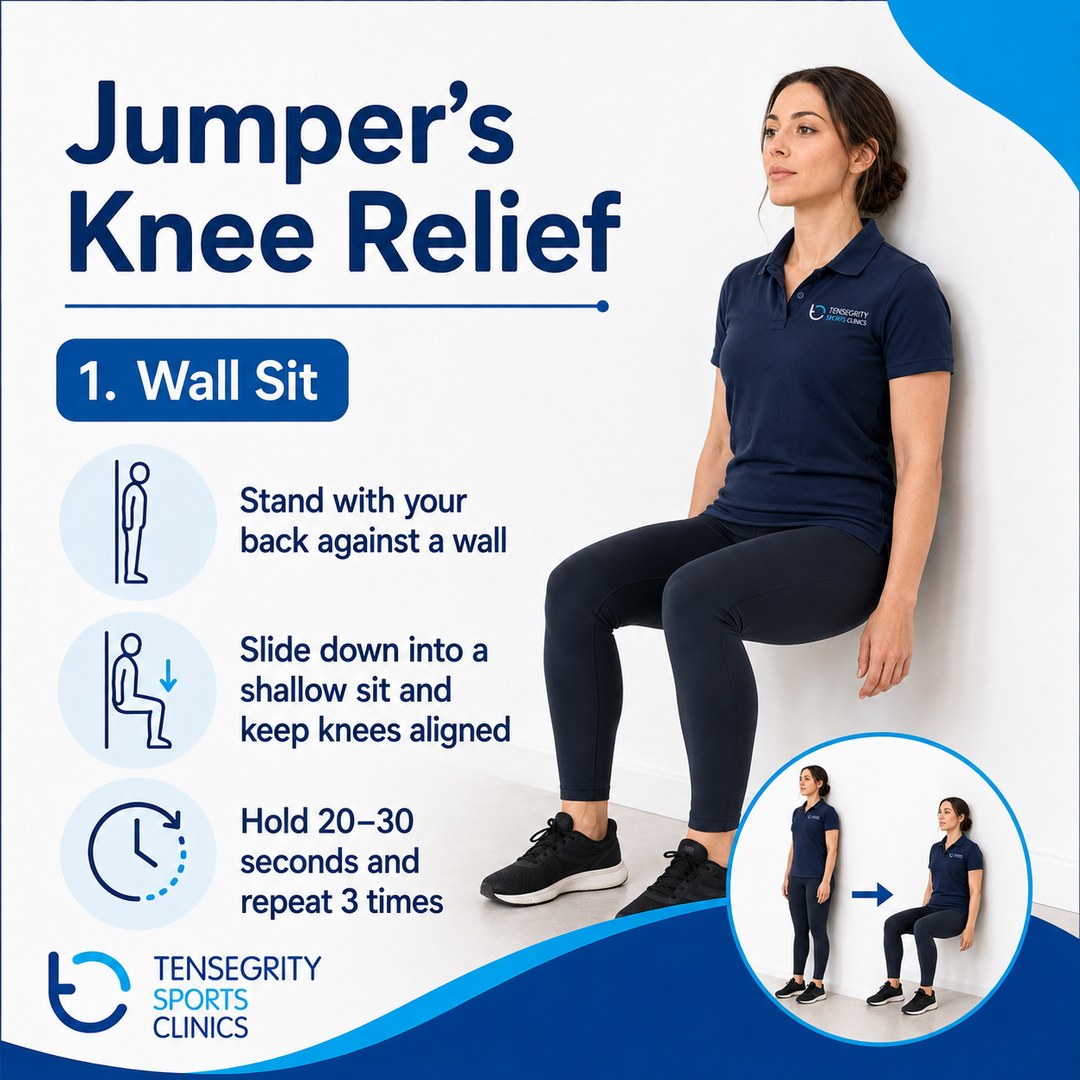
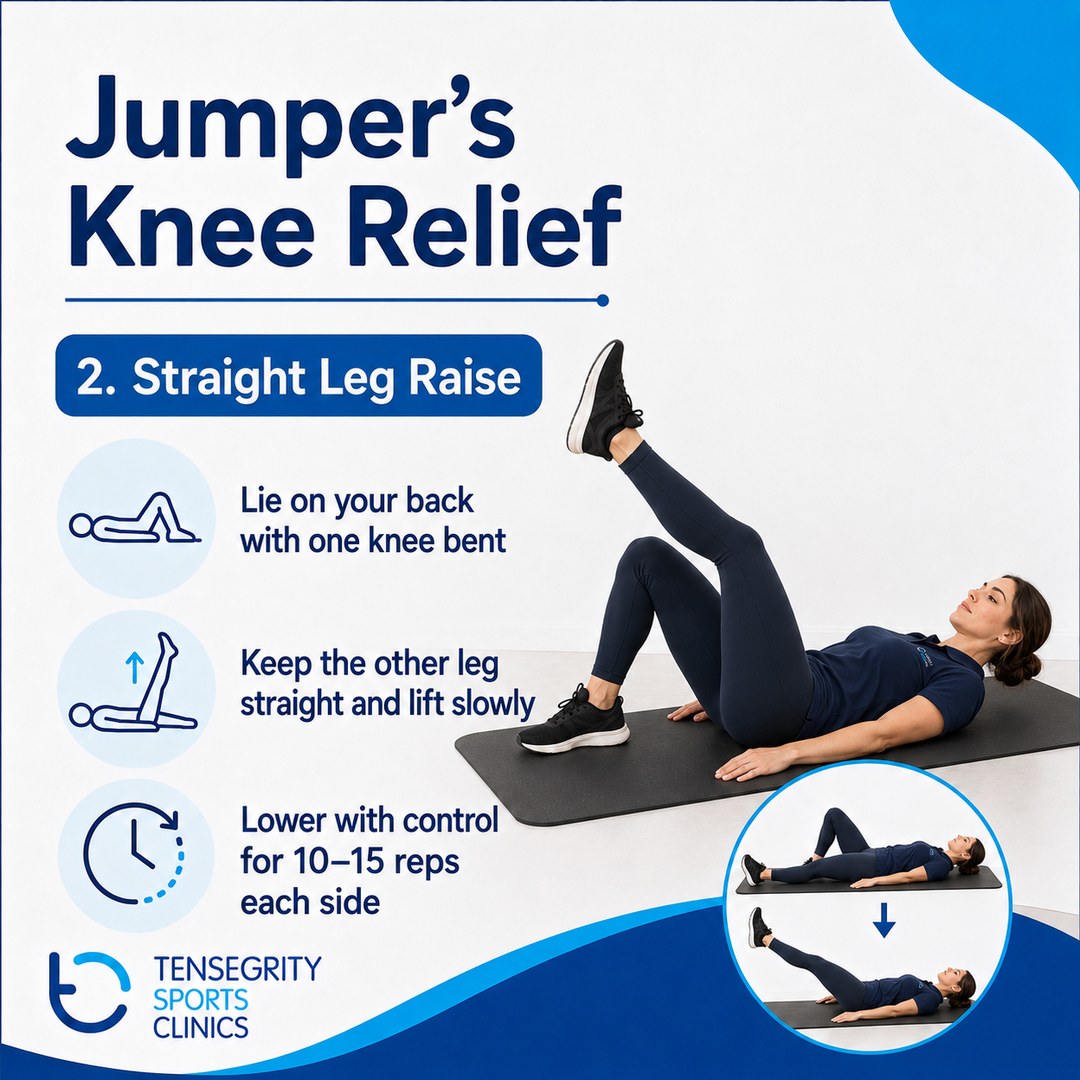
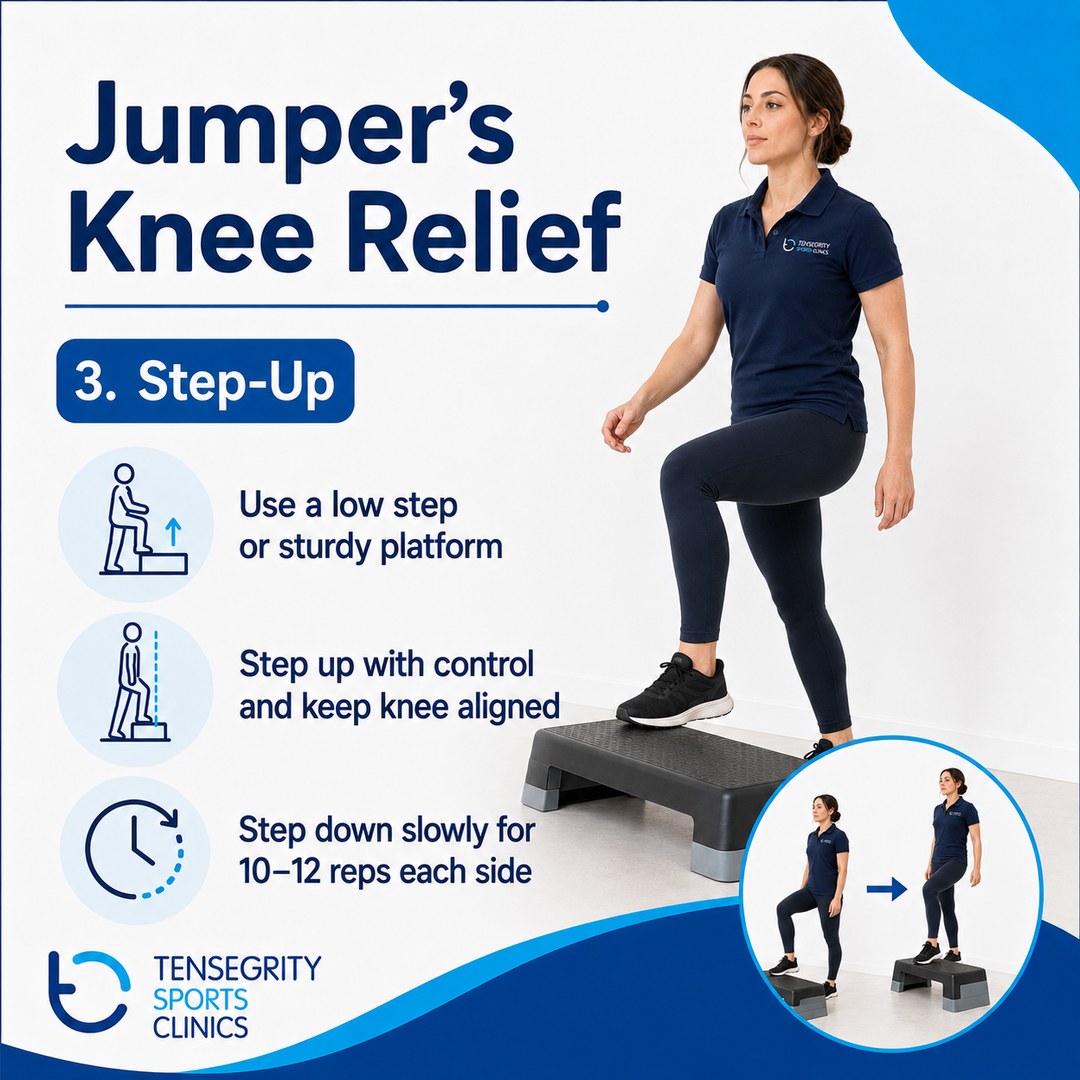
These are general exercises, not a personalised program. If your knee is not settling, or the pain is limiting your training, book an assessment so the loading can be matched to what your tendon can actually handle.
What our practitioners recommend:
These are the items our practitioners most often suggest for patellar tendinopathy between appointments. They support your rehabilitation. They do not replace assessment, and what suits you depends on your presentation.
- Slant board. The decline squat protocol is the standard loading exercise for patellar tendinopathy, and it needs a slant board.
- Latex loop bands, pack of 5. For the hip and quadriceps work that sits alongside the tendon loading.
As an Amazon Associate I earn from qualifying purchases. We may earn a commission on these links. Our recommendations are based on clinical judgement and are not influenced by commission.
Prevention:
- Build volume gradually: increase training in steps rather than jumping up after time off.
- Introduce jumping and sprinting progressively: these are the highest-load activities for this tendon.
- Maintain quadriceps strength: the single biggest protective factor for the patellar tendon.
- Keep hip and calf strength up: so the load is shared across the whole leg rather than concentrated at the knee.
- Keep lifting in season: resistance training through the season, not just pre-season.
- Allow recovery: space out high-load sessions rather than stacking them.
- Avoid intensity spikes: a sudden jump in intensity is a common trigger.
- Act on early tendon pain: it is far easier to settle before it starts limiting training.
Outlook:
Most people with patellar tendinopathy get back to their normal exercise and sport with appropriate rehabilitation. Tendinopathy tends to become persistent when symptoms are repeatedly aggravated without ever rebuilding the tendon’s capacity, which is why pain going away should not be treated as the end of rehabilitation. The tendon and the surrounding muscle need enough capacity for the demands of your sport, work and daily life.
You do not usually need to stop exercising. Rehabilitation is about finding the amount of load the tendon can tolerate and building that up over time. For runners and jumping athletes that may mean temporarily reducing jumping, sprinting or competition while continuing strength and cardiovascular work. The goal is a stronger, more load-tolerant tendon, not just a quiet one.
Get assessed sooner rather than later if: knee pain persists or is getting worse, pain is significantly limiting walking or everyday activity, there is substantial swelling, the knee gives way or locks, symptoms followed significant trauma, or symptoms are not improving despite backing off the aggravating activity.
A sudden inability to straighten the knee after an injury, especially following a tearing or popping sensation with marked weakness, needs prompt medical assessment. That can indicate a significant injury to the knee extensor mechanism.