
Overview:
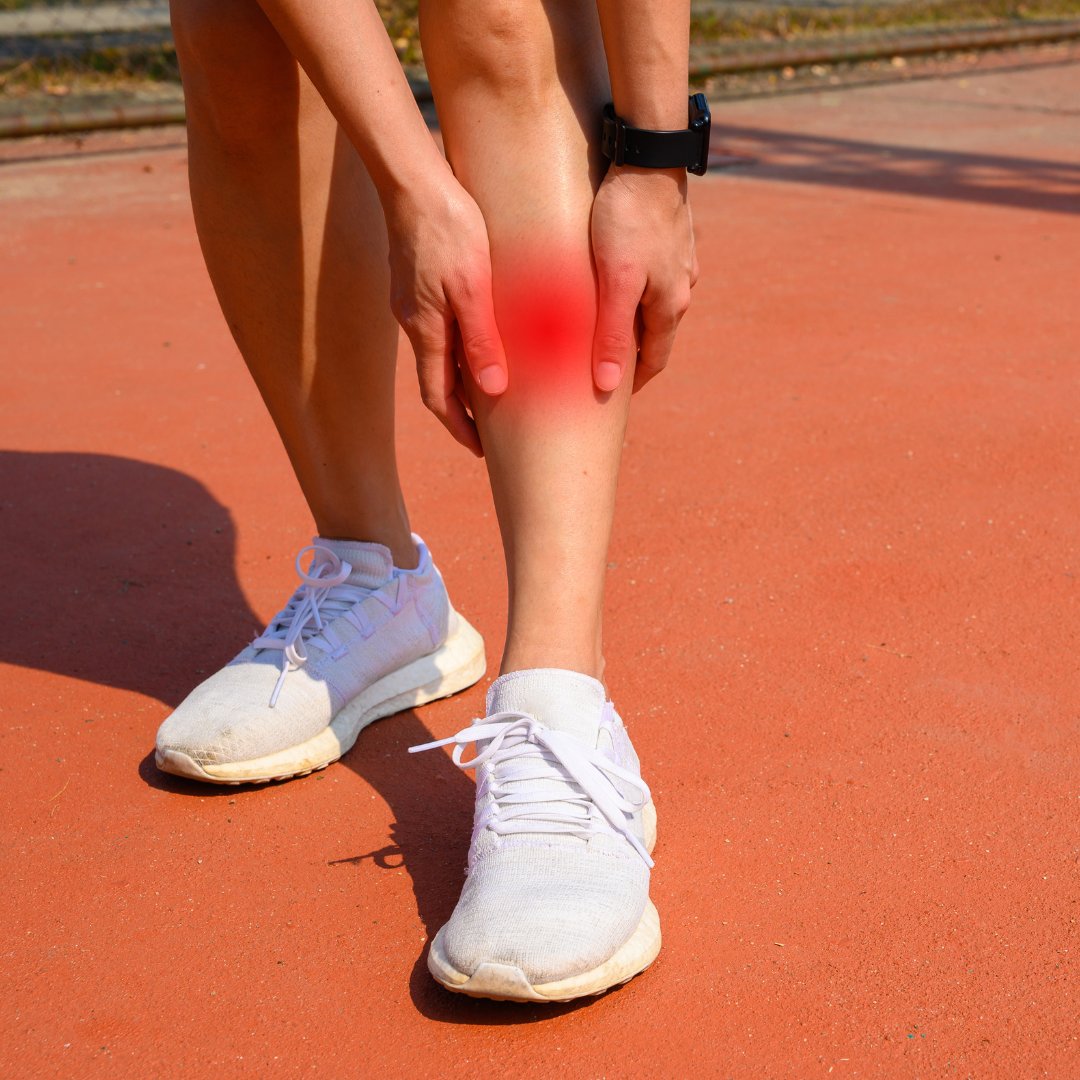
Shin splints, medically known as medial tibial stress syndrome (MTSS), are a common overuse injury that causes pain along the inner border of the shin bone (tibia). The condition is particularly common in runners, athletes and people who rapidly increase their walking, running or training load.
Shin splints develop when repeated loading of the lower leg exceeds the capacity of the bone and surrounding tissues to recover and adapt. Although symptoms can initially be mild, continuing to train through increasing shin pain may prolong recovery and, in some cases, raise concern for a tibial stress reaction or stress fracture.
Anatomy:
The tibia is the larger of the two bones in the lower leg and absorbs significant forces during walking, running and jumping. Muscles and connective tissues attach along the tibia and help control the foot, ankle and lower leg during movement, and repetitive loading can create increased stress within the tibia and surrounding tissues.
MTSS is now generally considered a bone-stress-related overuse condition, rather than simply inflammation of the muscles around the shin.
Causes:
Shin splints are usually associated with repeated loading combined with insufficient recovery. Contributing factors may include:
- Sudden increases in training load: Rapidly increasing running distance, speed, frequency or intensity can exceed the tibia’s ability to adapt.
- Running and jumping sports: Repetitive impact from running, basketball, netball, football and similar activities can increase tibial loading.
- Changes in training surface: Beginning hill training or increasing exercise on harder surfaces may contribute to symptoms.
- Reduced lower-limb strength: Reduced capacity in the calf, foot, hip or surrounding muscles may affect how forces are absorbed during activity.
- Running biomechanics: Certain movement patterns may increase loading through the tibia in some individuals.
- Footwear changes: Sudden changes in footwear or training in inappropriate or excessively worn shoes may contribute to increased loading.
- Previous injury: A history of MTSS or other lower-limb injuries may increase the risk of recurrence.
- Insufficient recovery: High training volumes without adequate recovery can prevent normal bone adaptation.
Symptoms:
Common symptoms include:
- Aching or tenderness along the inner side of the shin.
- Pain over a relatively broad area rather than one very specific point.
- Pain that develops during or after running, jumping or prolonged walking.
- Tenderness when pressing along the inside of the tibia.
- Symptoms that initially improve with rest but return when training resumes.
- Increasing pain during activity if the condition progresses.
Pain that becomes highly localised, occurs at rest or at night, or significantly worsens with weight-bearing should be assessed to exclude a stress fracture or other bone injury.
Diagnosis:
Diagnosis is generally based on the history of symptoms and a physical examination. Assessment may include:
- Symptom history: the location and distribution of shin tenderness, and how the pain behaves with activity and rest.
- Training review: recent changes in running or training load, training surfaces and footwear.
- Physical examination: walking and running mechanics, foot and ankle mobility, calf and lower-limb strength, and previous injury history.
- Imaging tests: not routinely required for straightforward shin splints. MRI or other imaging may be recommended where a tibial stress injury or stress fracture is suspected.
Treatment:
Treatment focuses on reducing excessive tibial loading while gradually rebuilding the capacity of the lower leg. Management may include:
- Training modification: Temporarily reducing running, jumping or other aggravating activities rather than repeatedly exercising through increasing pain.
- Progressive rehabilitation: Strengthening the calf, foot, ankle, knee and hip muscles to improve the lower limb’s ability to tolerate load.
- Gradual return to running: Running volume and intensity are progressively reintroduced according to symptoms and tissue tolerance.
- Mobility exercises: Addressing relevant ankle or lower-limb mobility restrictions may improve movement efficiency.
- Training-load management: Identifying sudden changes in distance, frequency, speed or terrain is an important part of preventing recurrence.
- Biomechanical assessment: Running technique and lower-limb mechanics may be assessed where they appear to contribute to repeated symptoms.
- Footwear review: Appropriate footwear may be considered as part of an overall management strategy.
- Manual therapy: may assist with associated muscular stiffness or joint restrictions, alongside load modification and progressive exercise rehabilitation.
Rehabilitation:
Rehabilitation rebuilds the capacity of the lower leg while running load is reintroduced in stages. Mild shin splints may improve within approximately 2 to 6 weeks when identified early and appropriately managed. More established cases commonly require 6 to 12 weeks or longer, particularly when symptoms have been repeatedly aggravated by continued running. Where the condition has progressed towards a tibial stress injury, recovery may take significantly longer and should be managed under appropriate medical guidance.
Returning to running is based on symptoms, function and progressive loading rather than simply waiting a predetermined number of weeks. Related conditions such as Achilles tendinopathy and plantar fasciitis often share the same underlying load story, so they are screened as part of the program.
Three exercises that help with shin splints
These are general strategies, not a personalised rehabilitation program. If any of them increases your shin pain, stop and book an assessment.
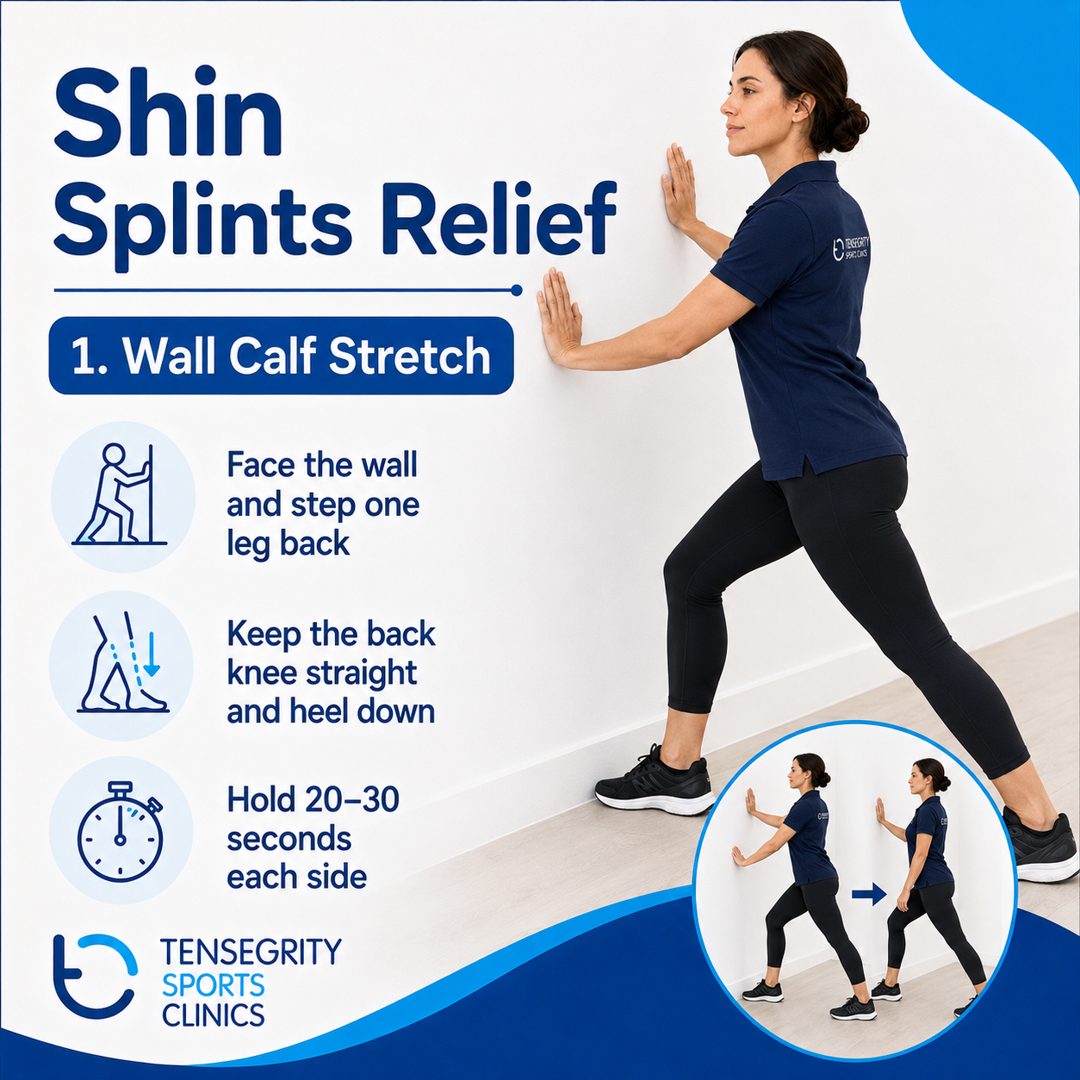
1. Wall calf stretch
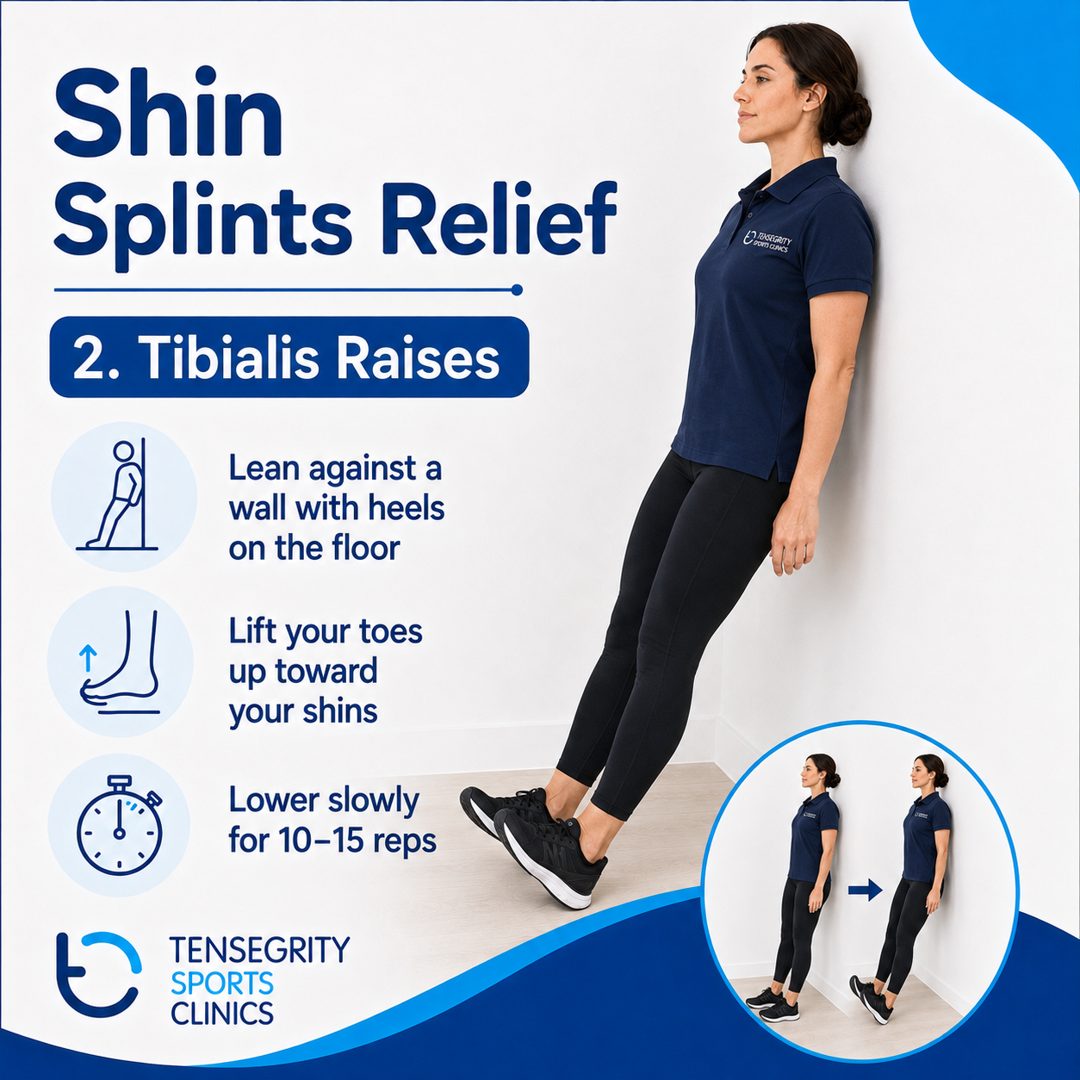
2. Tibialis raises
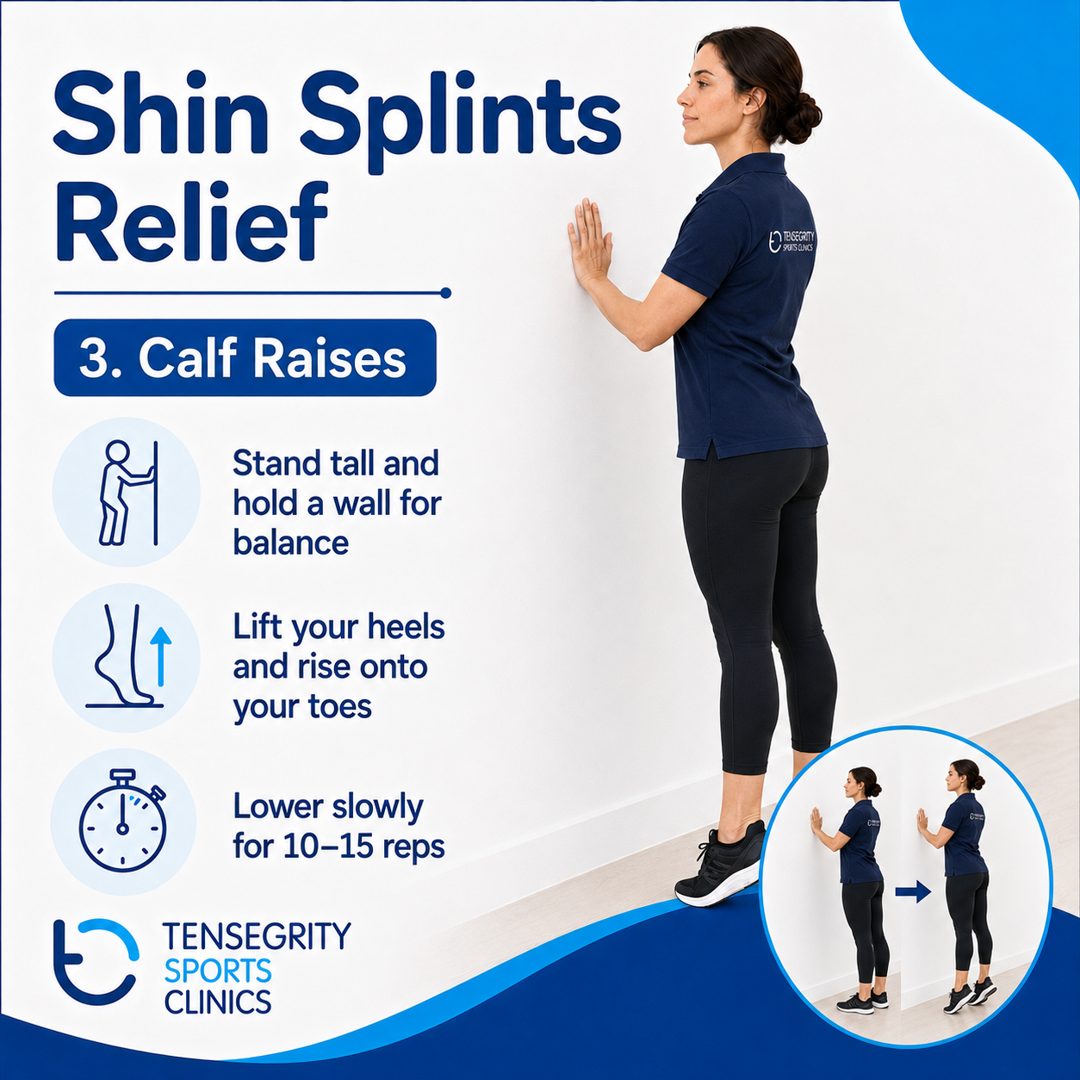
3. Calf raises
What our practitioners recommend:
These are the items our practitioners most often suggest for shin splints between appointments. They support your rehabilitation. They do not replace assessment, and what suits you depends on your presentation.
- Foam roller. For soft tissue work through the calf and shin, which often carry load when shin splints develop.
- Slant board. For calf stretching and controlled loading as running volume is rebuilt.
- Reusable gel ice pack. For icing along the shin after activity.
As an Amazon Associate I earn from qualifying purchases. We may earn a commission on these links. Our recommendations are based on clinical judgement and are not influenced by commission.
Prevention:
Strategies that may reduce the likelihood of shin splints include:
- Gradual progression: increase running distance and intensity slowly, and avoid sudden large increases in hills, speed work or volume.
- Recovery: allow adequate recovery between high-impact training sessions.
- Strength: maintain calf, foot, ankle and hip strength through the season.
- Footwear: review and replace shoes when appropriate.
- Training variety: vary training rather than performing high-impact exercise every day.
- Early attention: address shin discomfort early instead of training through progressively worsening pain.
Outlook:
Most people with shin splints recover well with appropriate load management and progressive rehabilitation. Recurrence is more likely when athletes return immediately to their previous training volume without addressing the factors that contributed to the original injury, so a structured return-to-running program is what rebuilds the tibia’s tolerance to impact.
Complete inactivity is not always necessary. Depending on symptom severity, lower-impact activities such as cycling, swimming or appropriately selected strength training may allow fitness to be maintained while tibial loading is temporarily reduced. Persistent, worsening or highly localised shin pain should be professionally assessed to rule out a stress fracture or other lower-leg condition.