
Caring for Sydney since 2012 · 17,500+ patients · ★ 5.0 from 163 Google reviews · North Shore Local Business Awards Winner · Australian Small Business Champion Finalist
Book at Wahroonga · Bella Vista · Macquarie Park · Brookvale
Overview:
Achilles tendinopathy, still widely known as Achilles tendinopathy, is a load-related condition of the Achilles tendon, the large tendon connecting the calf muscles to the heel bone. Current understanding is that the tendon changes structurally in response to repeated overload rather than simply becoming inflamed, which is why rest alone rarely settles it and progressive loading is central to treatment. This condition commonly occurs in individuals who engage in activities that place repetitive stress on the Achilles tendon, such as running, jumping, or sports involving sudden stops and starts. Achilles tendinopathy can range from mild discomfort to severe pain, affecting mobility and activity levels if left untreated.
Anatomy:
The Achilles tendon, also known as the calcaneal tendon, is the largest and strongest tendon in the human body. It plays a crucial role in facilitating movement, allowing the calf muscles to propel the body forward during walking, running, and jumping activities. The Achilles tendon attaches to the heel bone (calcaneus) and transmits forces from the calf muscles to the foot.
Causes:
Several factors can contribute to the development of Achilles tendinopathy, including:
- Overuse or Repetitive Stress: Engaging in activities that involve repetitive movements of the ankle, such as running or jumping, can strain the Achilles tendon and lead to inflammation.
- Sudden Increase in Activity: Rapidly increasing the intensity, duration, or frequency of exercise without proper conditioning or gradual progression can overload the Achilles tendon and predispose individuals to injury.
- Tight Calf Muscles: Reduced flexibility or tightness in the calf muscles can increase strain on the Achilles tendon during physical activity.
- Improper Footwear: Wearing footwear that lacks adequate support or cushioning, or shoes with worn-out soles, can contribute to abnormal biomechanics and place excessive stress on the Achilles tendon.
- Biomechanical Factors: Abnormal foot mechanics, such as overpronation (excessive inward rolling of the foot) or high arches, can alter the distribution of forces along the Achilles tendon and increase the risk of injury.
Symptoms:
Signs and symptoms of Achilles tendinopathy may include:
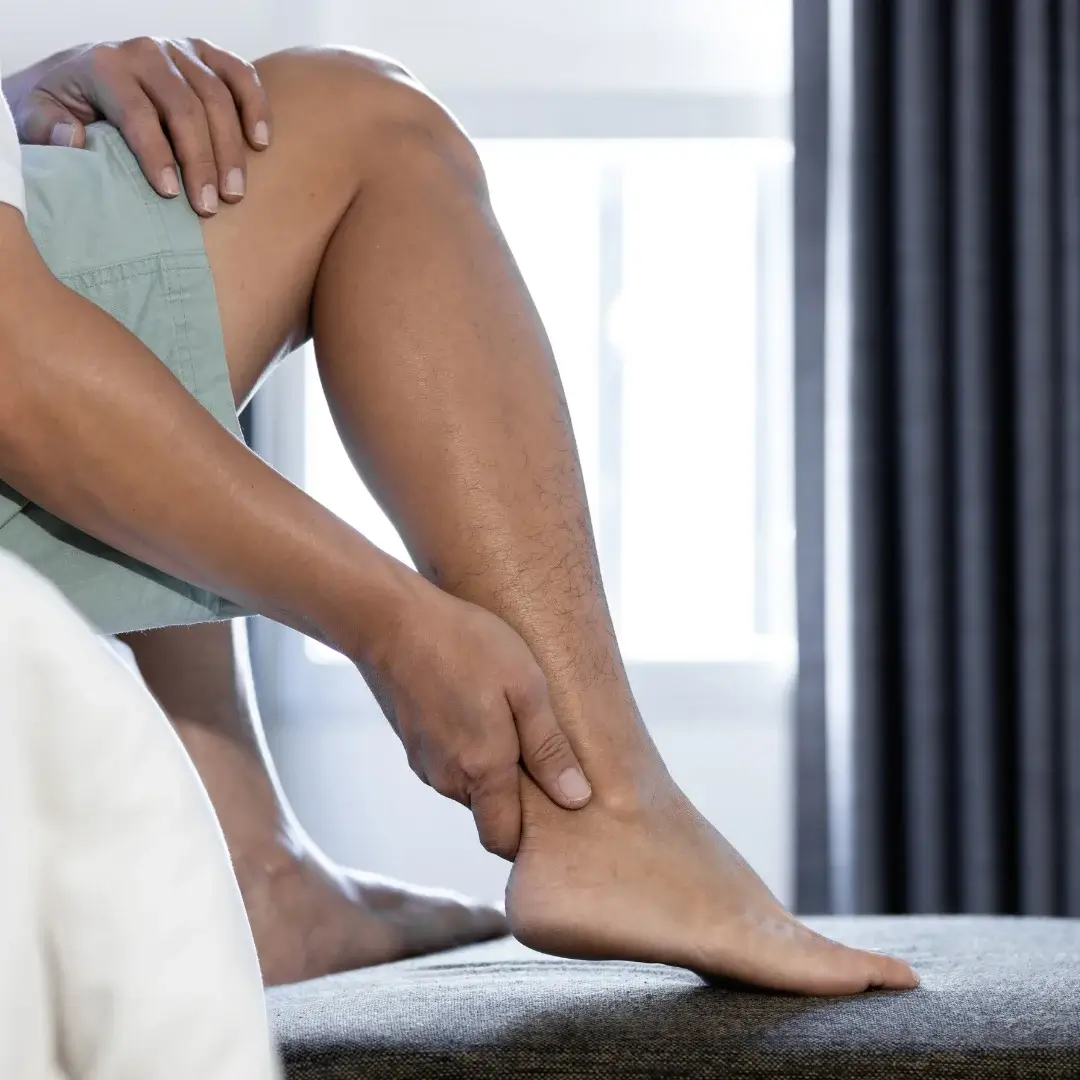
- Pain and stiffness along the back of the heel or lower calf, particularly upon waking or after periods of rest.
- Tenderness and swelling in the affected area, often accompanied by warmth or redness.
- Pain that worsens with physical activity, particularly during activities that involve pushing off or jumping.
- Thickening or enlargement of the Achilles tendon, especially in chronic cases.
- Decreased range of motion and flexibility in the ankle joint.
Treatment:
Treatment for Achilles tendinopathy aims to alleviate pain, reduce inflammation, and promote healing of the affected tendon:
- Rest and Activity Modification: Limit or avoid activities that exacerbate symptoms, such as running or jumping, and opt for low-impact exercises like swimming or cycling to maintain cardiovascular fitness.
- Ice Therapy: Apply ice packs to the affected area for 15-20 minutes several times a day to reduce pain and swelling.
- Calf Stretching Exercises: Perform gentle stretching exercises for the calf muscles to improve flexibility and reduce tension on the Achilles tendon.
- Orthotic Devices: Use supportive orthotic inserts or heel lifts in footwear to provide cushioning and reduce stress on the Achilles tendon.
- Exercise rehabilitation: your practitioner can prescribe tailored exercises to strengthen the calf muscles, improve ankle stability, and address biomechanical issues contributing to Achilles tendinopathy.
- Eccentric Strengthening: Eccentric exercises, which involve lengthening the Achilles tendon under tension, have been shown to be effective in treating Achilles tendinopathy.
- Shockwave therapy: extracorporeal shockwave is used as an adjunct in persistent Achilles tendinopathy, alongside the loading program rather than instead of it. It is available at every Tensegrity clinic except Willoughby. Your practitioner will tell you whether it suits your presentation.
- Medication and injection-based options: These sit outside a chiropractor’s scope of practice. If pain is limiting your sleep or stopping you starting rehabilitation, that is worth discussing with your GP rather than self-prescribing long term.
Three exercises for Achilles tendinopathy
These three were put together by our practitioners as a starting point. They are general exercises, not a personalised program.
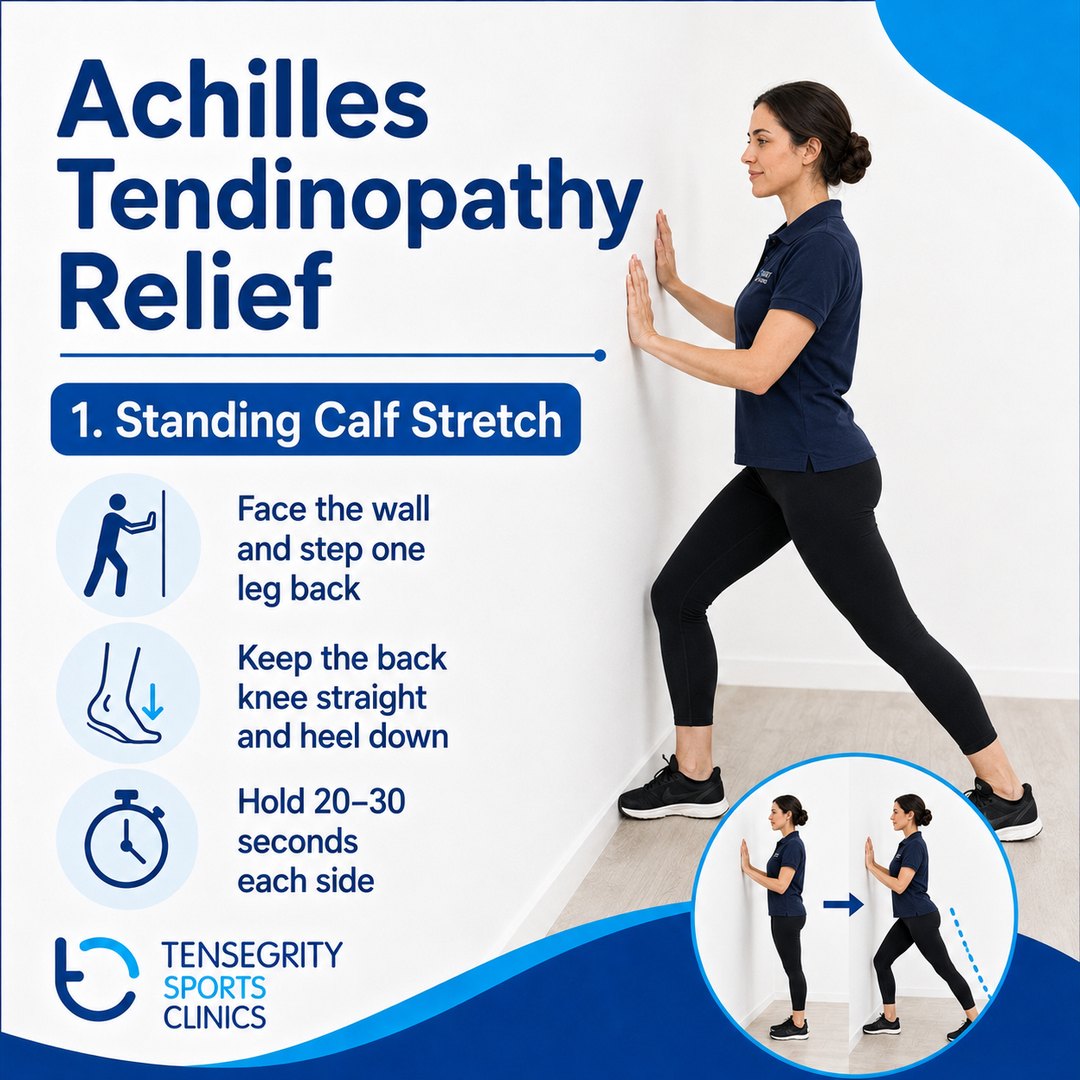
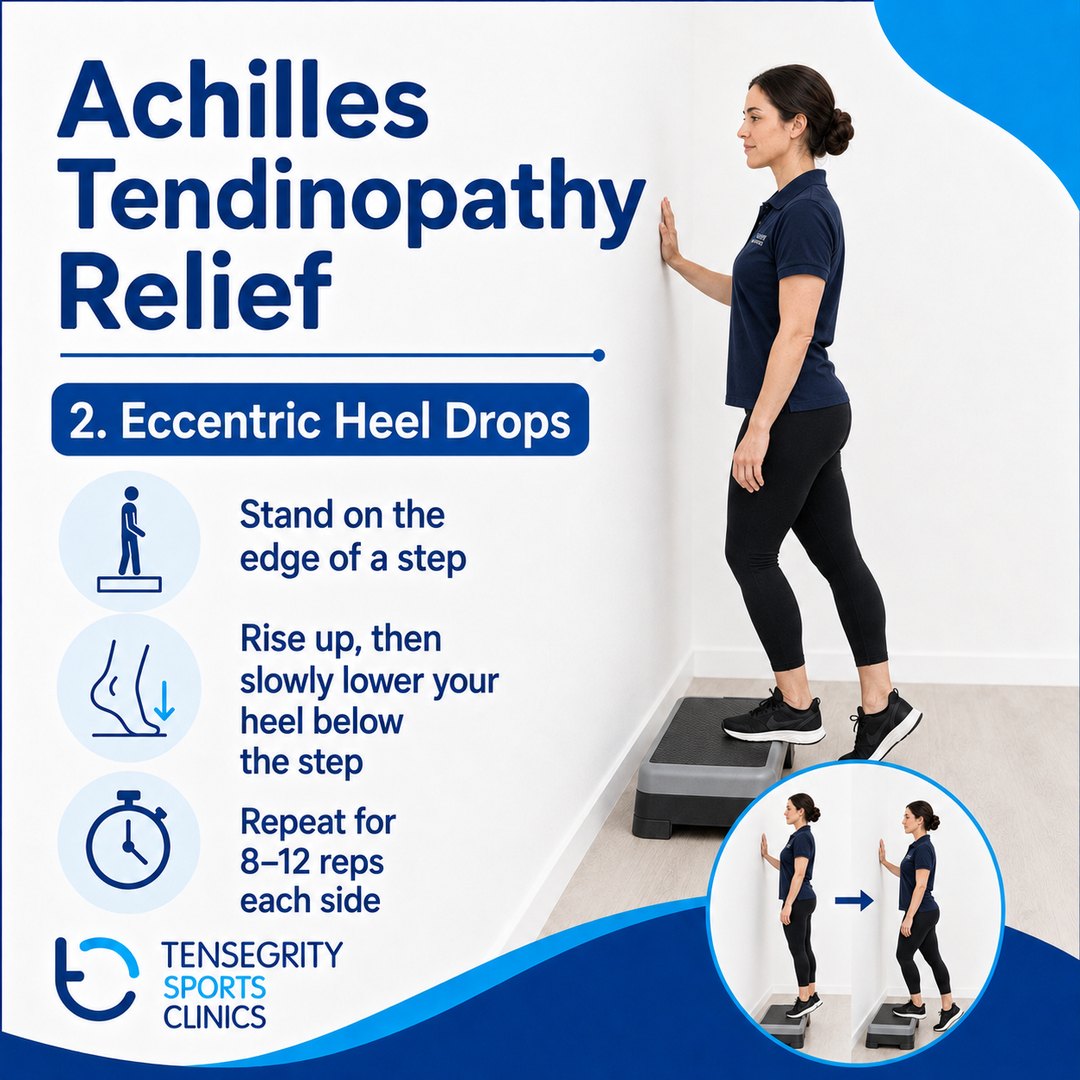
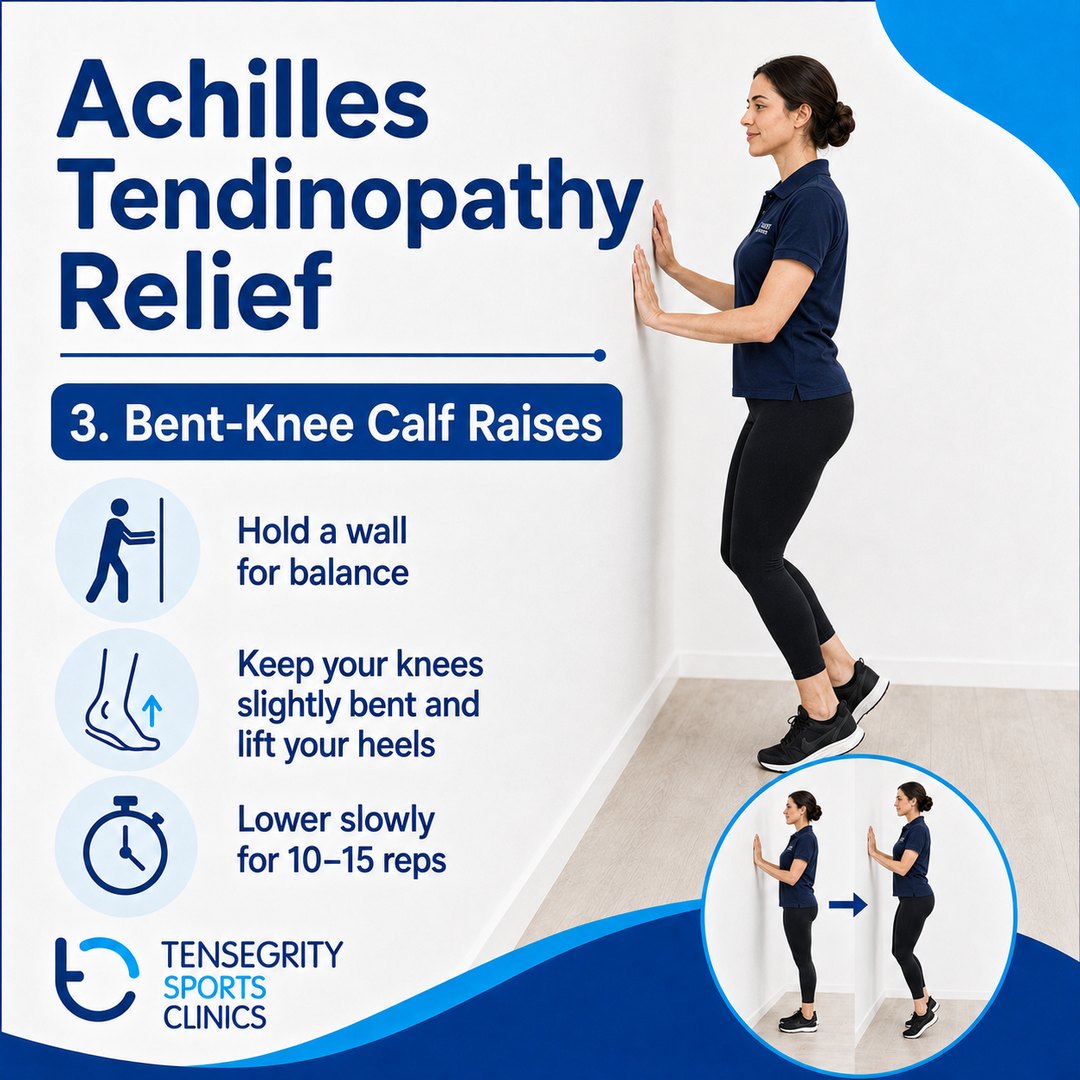
If the Achilles is not settling, or it is still stiff and sore for the first steps each morning, book an assessment so the loading can be matched to what the tendon can currently handle.
What our practitioners recommend:
These are the items our practitioners most often suggest for Achilles tendinopathy between appointments. They support your rehabilitation. They do not replace assessment, and what suits you depends on your presentation.
- Slant board. Supports eccentric heel drop loading, which is the exercise most often prescribed for Achilles tendinopathy.
- Foot strengthening board. Adds foot and calf strengthening alongside the tendon loading work.
- Reusable gel ice pack. For icing after loading sessions if the tendon is reactive.
As an Amazon Associate I earn from qualifying purchases. We may earn a commission on these links. Our recommendations are based on clinical judgement and are not influenced by commission.
Prevention:
To prevent Achilles tendinopathy and reduce the risk of recurrence, consider the following preventive measures:
- Gradually increase the intensity, duration, and frequency of exercise to allow the Achilles tendon to adapt and strengthen over time.
- Wear supportive footwear with proper cushioning, arch support, and shock absorption during physical activity.
- Incorporate regular calf stretching and strengthening exercises into your fitness routine to improve flexibility and reduce strain on the Achilles tendon.
- Avoid sudden changes in activity levels or training intensity, and allow adequate time for rest and recovery between workouts.
- Address biomechanical issues or foot abnormalities through orthotic devices or footwear modifications to promote proper alignment and reduce stress on the Achilles tendon.
When it just isn’t getting better
Some pain settles on its own. Some keeps coming back — after rest, after stretching, after everything you’ve already tried. That’s the pain we see every week. Our first job isn’t treatment — it’s finding out why it hasn’t settled. A thorough assessment, an honest explanation, and a clear plan, so you know exactly what’s going on and what to do next.
Already seen someone about this? Bring your scans and your story — we’re happy to be your second opinion.
Outlook/Prognosis:
With appropriate treatment and adherence to preventive measures, the outlook for individuals with Achilles tendinopathy is generally favourable. Most individuals experience significant improvement in symptoms with conservative measures such as rest, exercise rehabilitation, and activity modification. However, it may take several weeks to months for symptoms to fully resolve, and patience is essential during the healing process. If symptoms persist or worsen despite conservative treatment, consult a healthcare provider for further evaluation and management.
Every practitioner is university-qualified and AHPRA-registered. Between them, our team has delivered more than 195,000 treatments.