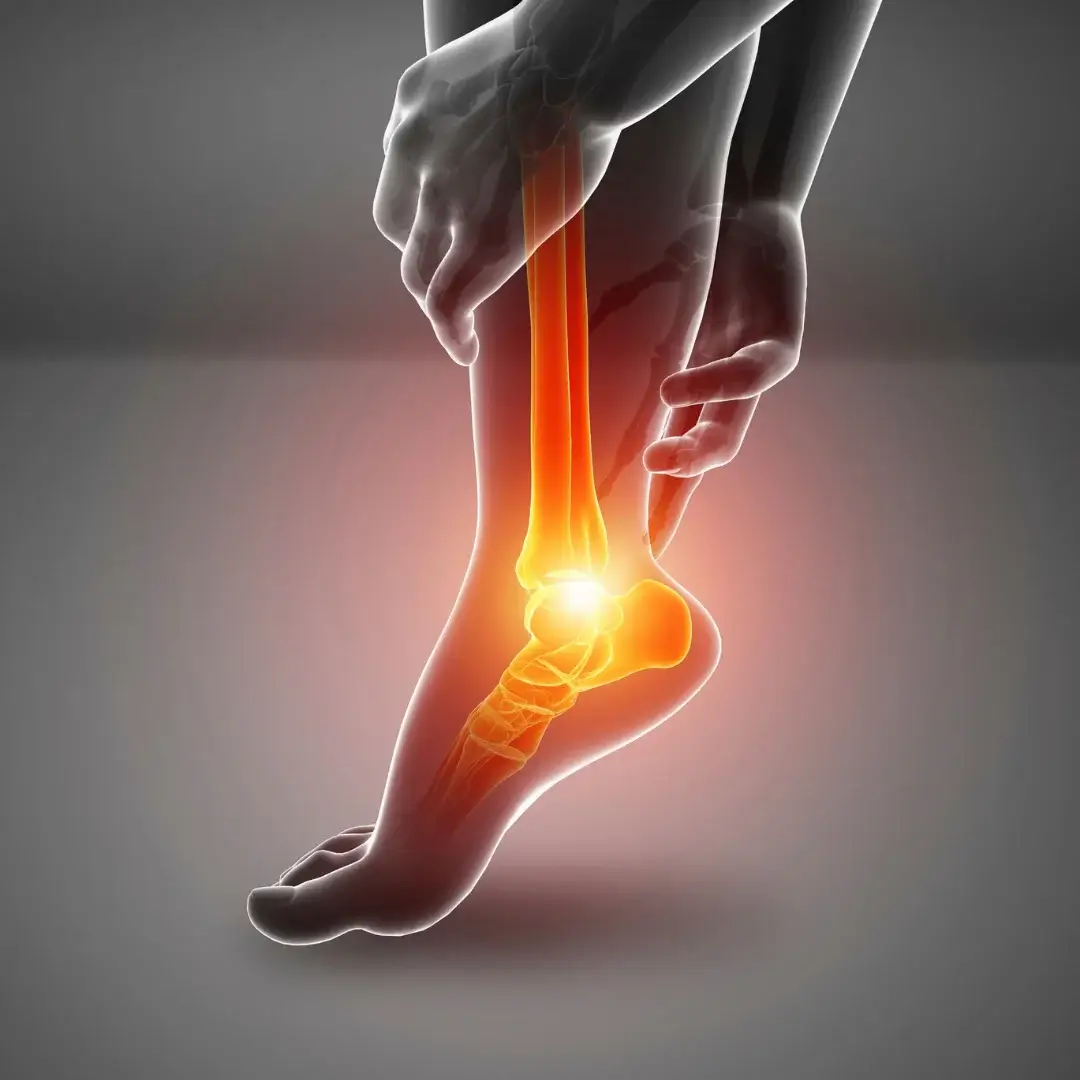

Initial assessment: 60 minutes, $175. Choose from seven Sydney clinics when you book. No referral needed, HICAPS on site.
Overview:
Plantar fasciitis is a common foot condition characterised by inflammation of the plantar fascia, a thick band of tissue that runs along the bottom of the foot, connecting the heel bone to the toes. This condition typically causes heel pain, particularly with the first steps in the morning or after periods of rest. Plantar fasciitis often develops gradually over time due to repetitive stress or excessive strain on the plantar fascia, leading to micro-tears and inflammation.
Anatomy:
The plantar fascia is a strong, fibrous band of connective tissue that provides support to the arch of the foot and helps absorb shock during weight-bearing activities. It originates from the heel bone (calcaneus) and extends forward to attach to the base of the toes. The plantar fascia plays a crucial role in maintaining the arch of the foot and assisting in propulsion during walking and running.
Causes:
Plantar fasciitis can develop as a result of various factors, including:
- Overuse or Repetitive Strain: Engaging in activities that involve repetitive movements of the foot, such as running, walking, or standing for prolonged periods, can strain the plantar fascia and lead to inflammation.
- Biomechanical Issues: Abnormal foot mechanics, such as flat feet (pes planus), high arches (pes cavus), or excessive inward rolling of the foot (pronation), can increase stress on the plantar fascia and predispose individuals to plantar fasciitis.
- Footwear: Wearing shoes with inadequate support, cushioning, or arch support, or shoes with worn-out soles, can contribute to improper foot mechanics and exacerbate plantar fasciitis symptoms.
- Obesity: Excess body weight places increased pressure on the plantar fascia and can contribute to the development or worsening of plantar fasciitis.
- Age: Plantar fasciitis is more common in middle-aged adults, although it can affect individuals of any age.
- Tight Calf Muscles: Reduced flexibility or tightness in the calf muscles can affect the biomechanics of the foot and increase strain on the plantar fascia.
Symptoms:
Signs and symptoms of plantar fasciitis may include:
- Heel pain, typically located on the bottom of the heel or along the arch of the foot.
- Pain and stiffness, particularly with the first steps in the morning or after prolonged periods of rest.
- Pain that improves with activity but worsens with prolonged standing, walking, or running.
- Tenderness and swelling along the bottom of the foot, near the heel.
- Sharp or stabbing pain upon palpation of the heel or arch.
Treatment:
Treatment for plantar fasciitis aims to alleviate pain, reduce inflammation, and promote healing of the affected plantar fascia:
- Rest and Activity Modification: Limit or avoid activities that exacerbate symptoms, such as running or standing for prolonged periods, and opt for low-impact exercises like swimming or cycling to maintain fitness.
- Ice Therapy: Apply ice packs to the affected area for 15-20 minutes several times a day to reduce pain and inflammation.
- Stretching Exercises: Perform gentle stretching exercises for the calf muscles and plantar fascia to improve flexibility and reduce tension.
- Orthotic Devices: Use supportive orthotic inserts, heel cups, or night splints to provide cushioning and support to the arch of the foot and reduce strain on the plantar fascia.
- Exercise rehabilitation: your practitioner can prescribe tailored exercises to strengthen the muscles of the foot and ankle, improve mobility, and address biomechanical issues contributing to plantar fasciitis.
- Shockwave therapy: extracorporeal shockwave is used as an adjunct in persistent plantar heel pain, alongside the loading program rather than instead of it. It is available at every Tensegrity clinic except Roseville. Your practitioner will tell you whether it suits your presentation.
- Medication and injection-based options. These sit outside a chiropractor’s scope of practice. If pain is limiting your sleep or stopping you starting rehabilitation, that is worth discussing with your GP rather than self-prescribing long term.
Rehabilitation:
Plantar heel pain responds to loading, not rest. Early on the aim is to settle the most irritable symptoms while keeping the foot moving, usually with stretching and gentle self-massage. From there the work shifts to building strength through the foot and calf, because the tissue has to tolerate your bodyweight thousands of times a day whether it is sore or not.
How long does it take? Most people notice meaningful improvement over about six to twelve weeks with consistent loading and sensible footwear. More established cases commonly take three to six months, and long-standing plantar heel pain can take longer again. That first-step pain in the morning is usually the last symptom to go, and it often improves in fits and starts rather than in a straight line.
Getting back to walking and running. Distance comes back before speed. A typical progression is comfortable daily walking, then foot and calf strengthening, then short easy runs on flat ground, then longer runs, then hills and faster work. Going straight back to your old weekly distance because the heel feels better on the day is the most common reason it returns.
Three exercises for plantar fasciitis
These three were put together by our practitioners as a starting point. They are general exercises, not a personalised program.


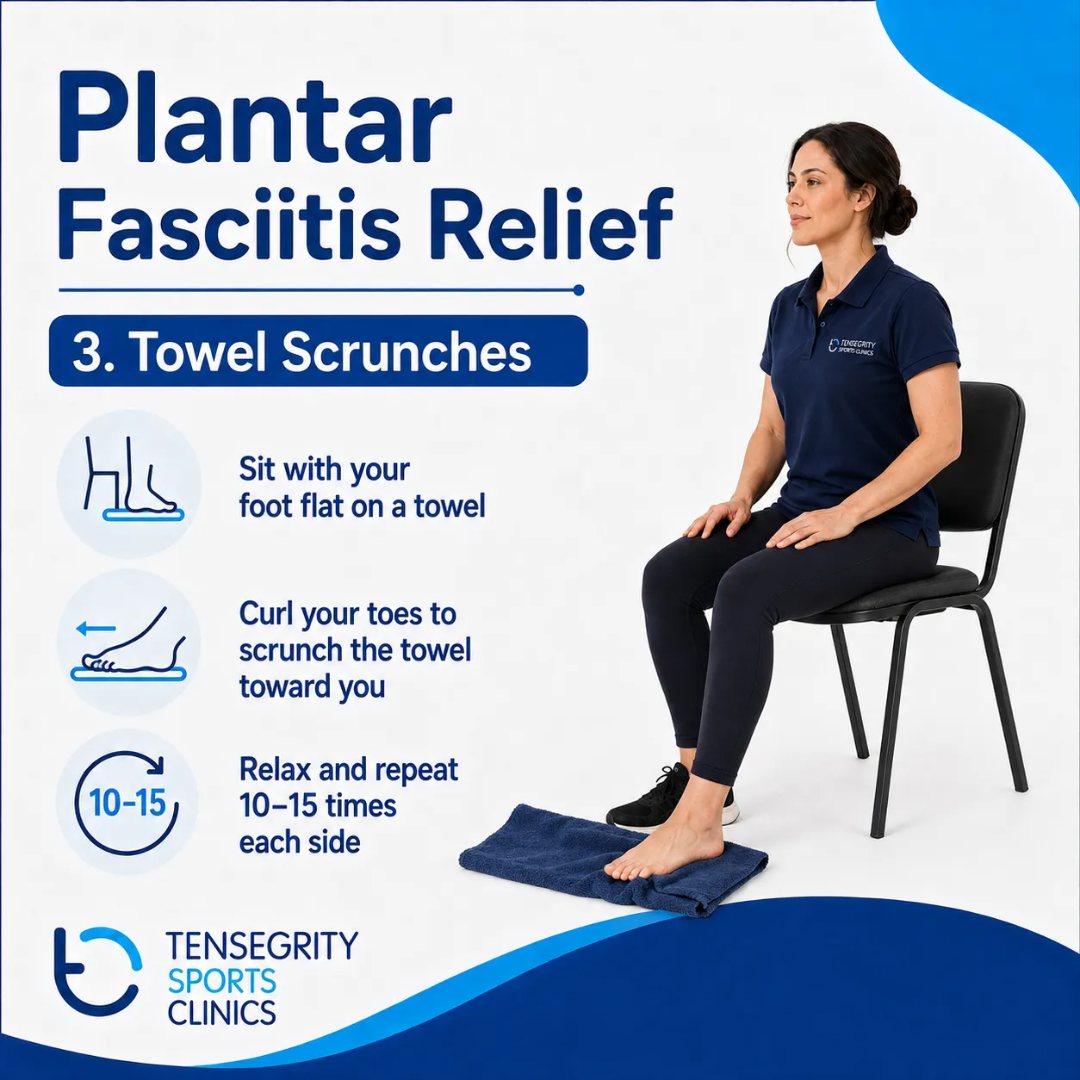
If the heel is not settling, or the pain is limiting your walking or training, book an assessment so the loading can be matched to what your foot can currently handle.
Prevention:
To prevent plantar fasciitis and reduce the risk of recurrence, consider the following preventive measures:
- Wear supportive footwear with proper arch support, cushioning, and shock absorption, particularly during weight-bearing activities.
- Gradually increase the intensity, duration, and frequency of exercise to allow the foot and plantar fascia to adapt and strengthen over time.
- Incorporate regular stretching exercises for the calf muscles and plantar fascia into your daily routine to improve flexibility and reduce strain.
- Maintain a healthy body weight to reduce pressure on the plantar fascia and minimise the risk of excessive strain.
- Avoid walking barefoot on hard surfaces, particularly for extended periods, to reduce stress on the plantar fascia.
Outlook/Prognosis:
With appropriate treatment and adherence to preventive measures, the outlook for individuals with plantar fasciitis is generally favourable. Most individuals experience significant improvement in symptoms within a few months with conservative measures such as rest, stretching, and supportive footwear. However, it may take several weeks to months for symptoms to fully resolve, and patience is essential during the healing process. If symptoms persist or worsen despite conservative treatment, consult a healthcare provider for further evaluation and management.