
Overview:
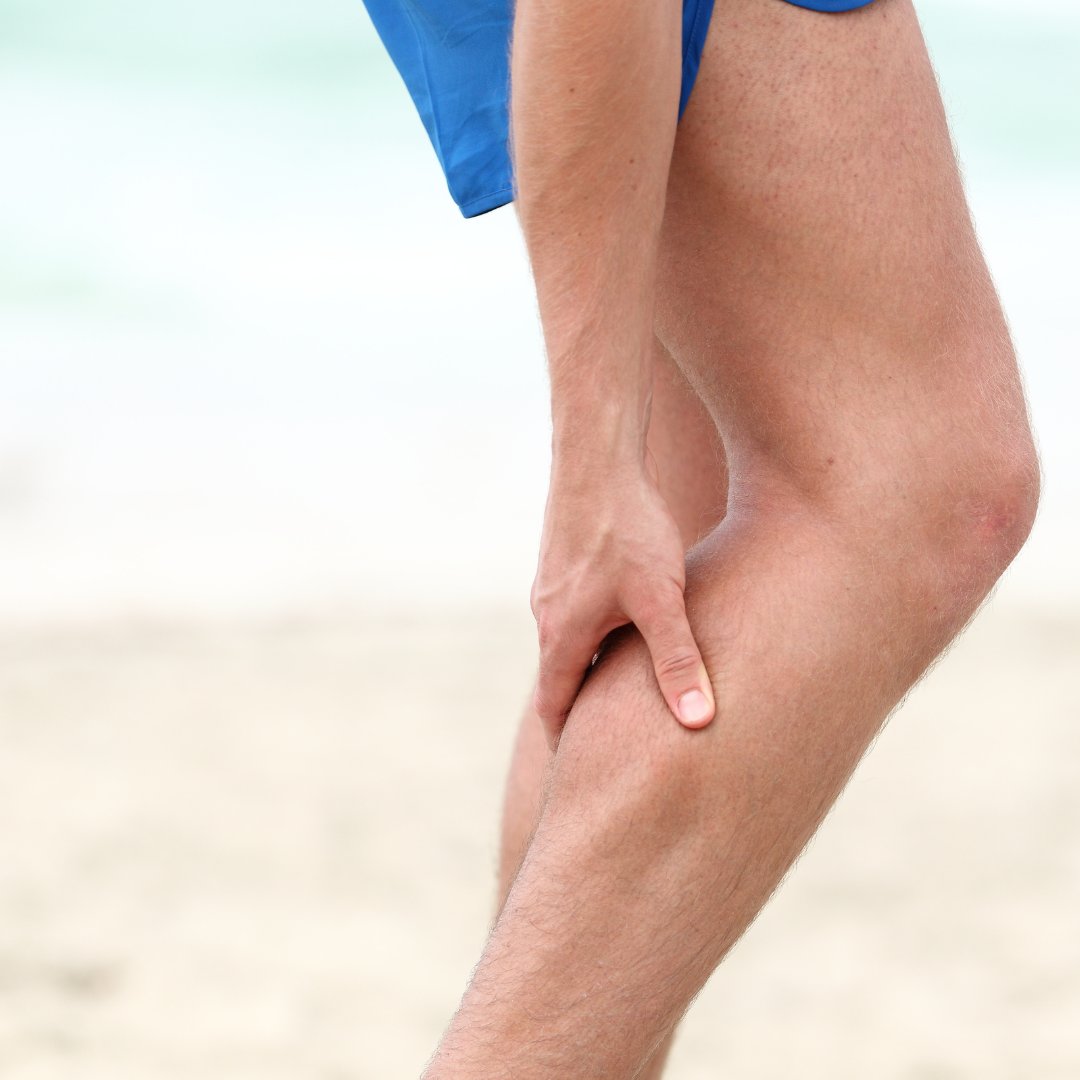
A calf strain is an injury involving overstretching or tearing of one or more muscles at the back of the lower leg. The gastrocnemius and soleus muscles are most commonly involved.
Calf strains frequently occur during running, sprinting, jumping and sports requiring rapid acceleration or changes of direction. The injury can range from a mild muscle strain to a substantial muscle tear that makes walking difficult.
Anatomy:
The calf contains two major muscles. The gastrocnemius is the larger, more superficial calf muscle that crosses both the knee and ankle joints, and it contributes strongly to explosive movements such as sprinting and jumping. The soleus is a deeper calf muscle that primarily crosses the ankle and plays an important role in walking, running and maintaining stability during weight-bearing.
These muscles combine with other tissues to form the Achilles tendon, which attaches to the heel bone. Because different calf muscles have different functions, identifying which structure has been injured can influence rehabilitation and return-to-sport planning.
Causes:
A calf strain occurs when the force placed through the muscle exceeds its ability to tolerate the load. Common causes and contributing factors include:
- Sudden acceleration or sprinting: Rapid contraction of the calf can overload muscle fibres.
- Jumping and landing: Explosive movements place substantial force through the gastrocnemius and soleus.
- Sudden changes of direction: Sports such as football, rugby, tennis, netball and basketball commonly involve movements capable of straining the calf.
- Fatigue: A fatigued calf may have reduced capacity to tolerate rapid or high-force movements.
- Inadequate conditioning: Returning to high-intensity sport without sufficient calf strength and endurance can increase injury risk.
- Previous calf injury: Previous strains are an important risk factor for future calf injuries.
- Rapid increases in training: Sudden increases in running volume, sprinting or high-intensity training may exceed the muscle’s current capacity.
- Age: Calf strains become increasingly common in recreational and competitive athletes as they get older.
Symptoms:
Symptoms depend on the severity and location of the injury and may include:
- Sudden pain in the back of the lower leg.
- A pulling, tearing or snapping sensation during activity.
- Localised calf tenderness, with swelling or bruising.
- Pain when walking or pushing through the toes.
- Pain when stretching the calf, and reduced calf strength.
- Difficulty running, jumping or climbing stairs.
More significant tears may cause substantial bruising, weakness and difficulty bearing weight. Sudden severe calf pain accompanied by a noticeable loss of push-off strength should also be assessed to exclude an Achilles tendon rupture.
Diagnosis:
Assessment typically includes:
- Injury history: how the injury occurred, and the location of pain and tenderness.
- Strength testing: calf strength, and the ability to walk and perform a calf raise.
- Movement assessment: knee and ankle movement, muscle length and flexibility.
- Functional testing: movements relevant to your sport or activity.
- Imaging tests: ultrasound or MRI may be recommended for more significant injuries, uncertain diagnoses, or where the extent and location of the tear need to be established.
Grading calf strains
Calf strains are often broadly classified according to severity:
- Grade 1, mild strain: A small number of muscle fibres are injured. There may be discomfort and tenderness, but walking and everyday activities are usually relatively well maintained.
- Grade 2, moderate strain: A greater proportion of muscle fibres are damaged. Pain, swelling, weakness and difficulty walking or exercising are more noticeable.
- Grade 3, severe strain: A major or complete muscle tear has occurred. There may be significant pain, bruising and loss of function, and medical assessment may be required.
Because calf pain can occasionally result from conditions unrelated to a muscle strain, unexplained swelling, warmth or redness should receive appropriate medical assessment.
Treatment:
Treatment depends on the severity and stage of the injury. Early management may involve:
- Relative rest: Temporarily reducing activities that reproduce significant pain while maintaining comfortable movement where appropriate.
- Compression: Compression garments or bandaging may help manage swelling during the early stages in appropriate cases.
- Progressive weight-bearing: Normal walking is generally restored progressively as symptoms allow.
- Calf rehabilitation: Progressive strengthening of both the gastrocnemius and soleus is an important component of recovery.
- Mobility exercises: Appropriate ankle and knee mobility exercises may be introduced according to the stage of healing.
- Progressive loading: Rehabilitation typically progresses from controlled strengthening to heavier calf loading, running, jumping and sport-specific movements.
- Manual therapy: Treatment of associated muscular or joint restrictions may complement an active rehabilitation program.
For athletes, being pain-free during everyday walking does not necessarily mean the calf is ready for sprinting or competition. Higher-speed activities place substantially greater forces through the calf.
Rehabilitation:
Recovery varies according to the location and severity of the muscle injury. A mild Grade 1 strain may recover sufficiently for normal activity within approximately 1 to 3 weeks. A moderate Grade 2 strain commonly requires approximately 3 to 8 weeks, although some injuries take longer. A significant muscle tear can require 8 to 12 weeks or several months, particularly when the injury involves a large portion of the muscle or occurs near the tendon.
Return to sport should be based on restoration of calf strength, endurance, running capacity and sport-specific function rather than time alone. The whole chain is screened along the way, because calf strains often share history with hamstring strain and Achilles tendinopathy.
Three exercises that help with calf strain
These are general strategies, not a personalised rehabilitation program. If any of them increases your calf pain, stop and book an assessment.
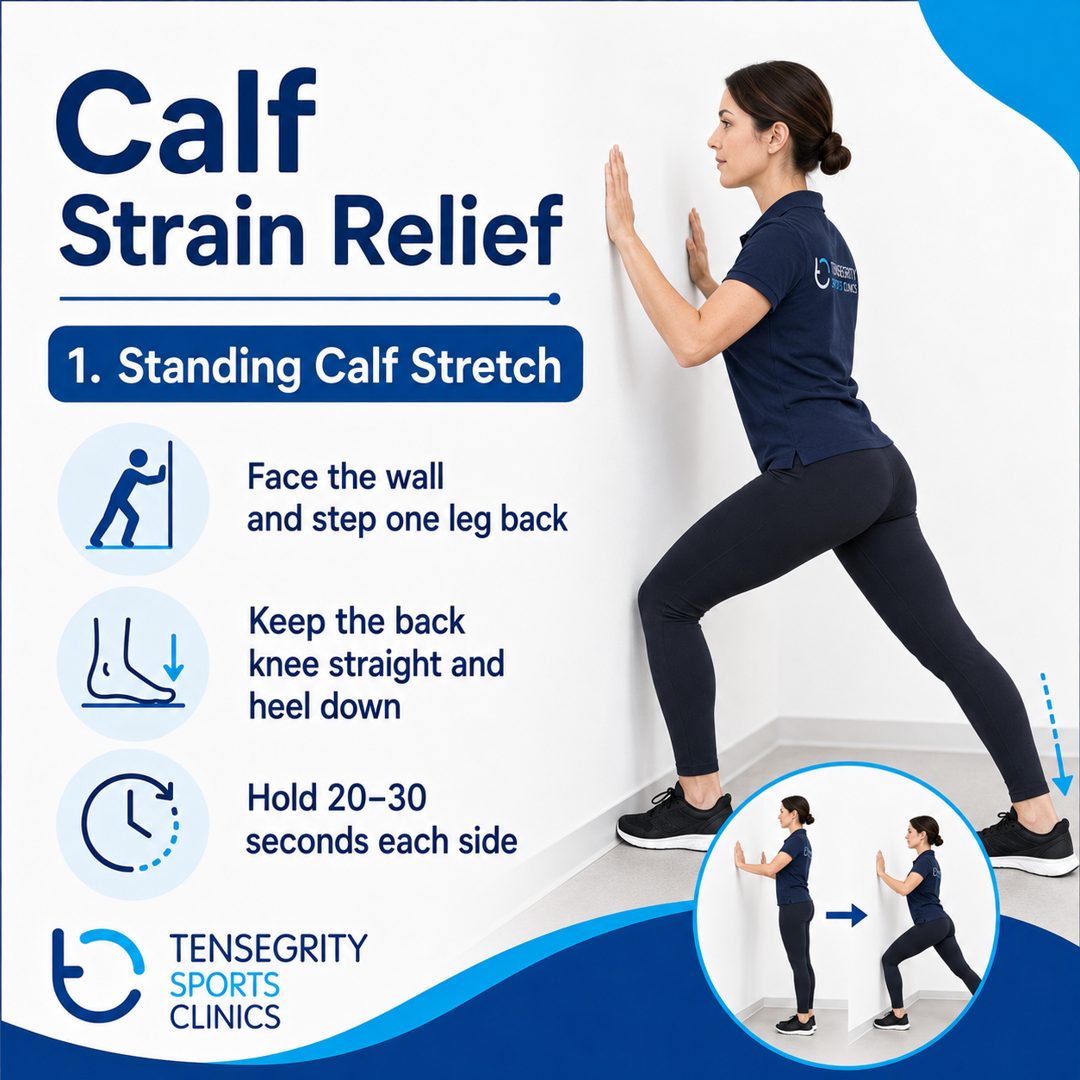
1. Standing calf stretch
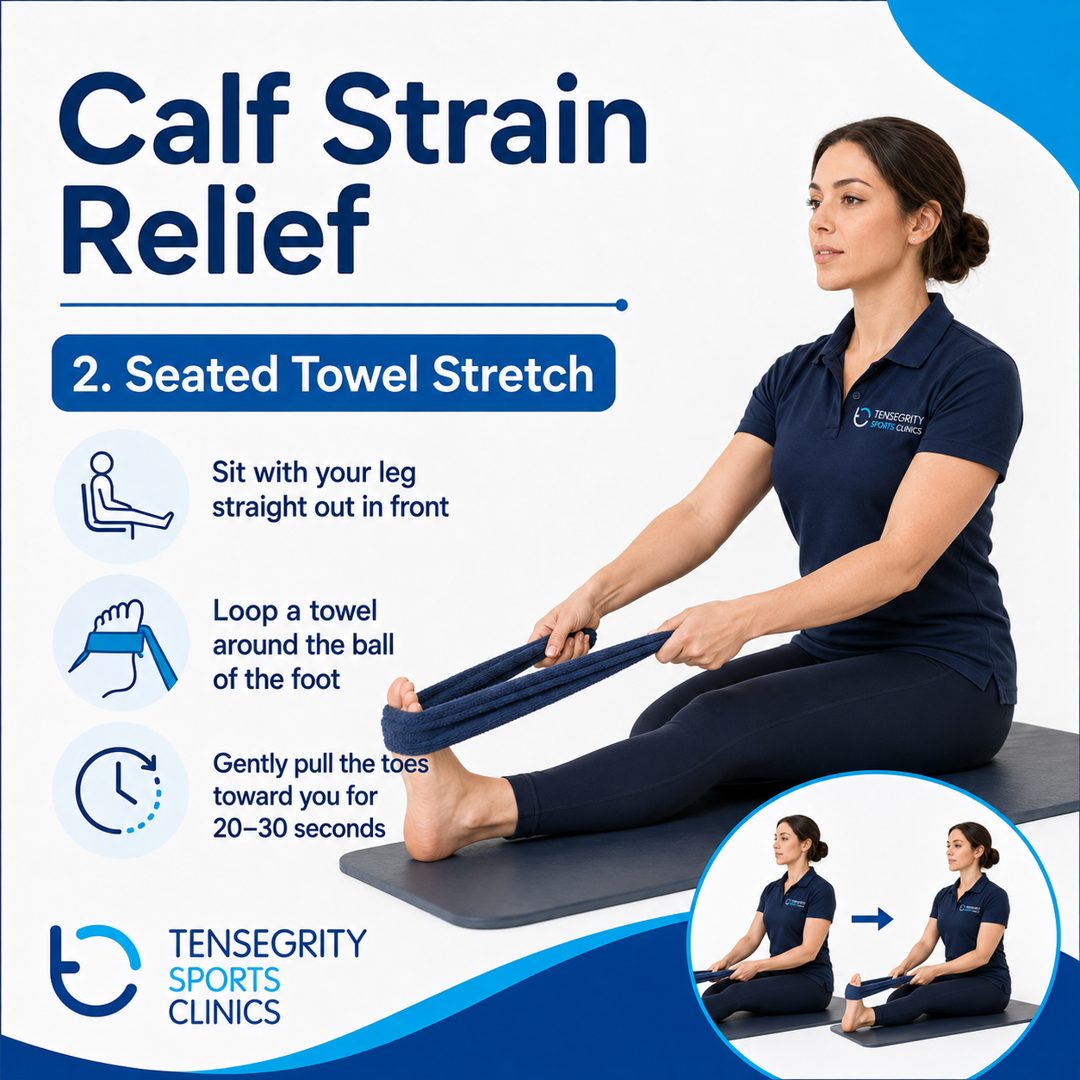
2. Seated towel stretch
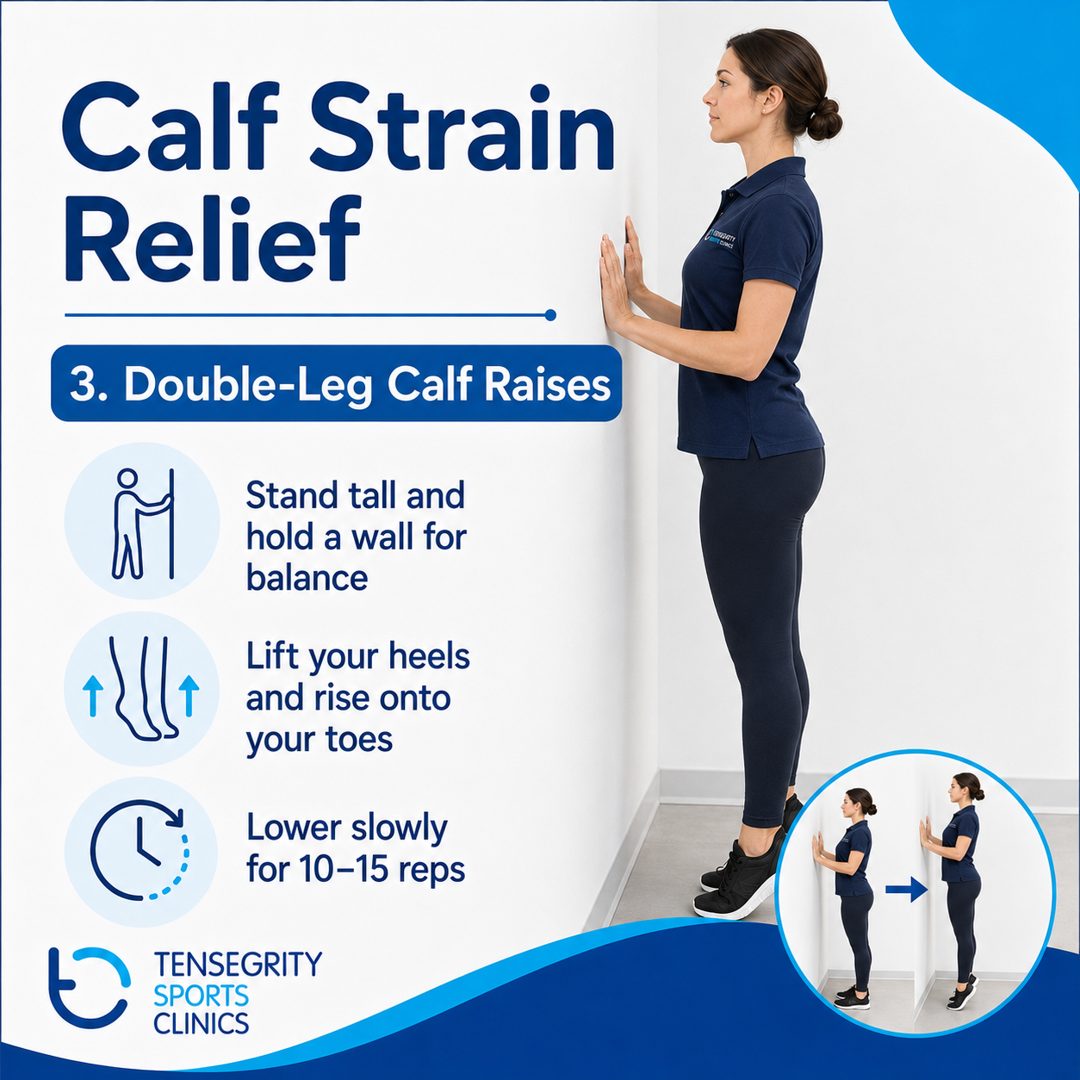
3. Double-leg calf raises
What our practitioners recommend:
These are the items our practitioners most often suggest for a calf strain between appointments. They support your rehabilitation. They do not replace assessment, and what suits you depends on your presentation.
- Foam roller. For soft tissue work through the calf once the acute stage has passed.
- Slant board. Used for progressive calf loading through range as the strain settles.
- Microwavable heat pack. Heat is commonly used before stretching or loading in the later stage of a calf strain.
As an Amazon Associate I earn from qualifying purchases. We may earn a commission on these links. Our recommendations are based on clinical judgement and are not influenced by commission.
Prevention:
Strategies that may reduce the risk of calf strains include:
- Calf capacity: maintain adequate calf strength and endurance, training both straight-knee and bent-knee work to target different calf muscles.
- Speed progression: progressively introduce sprinting and high-speed running.
- Load management: avoid sudden large increases in training intensity or volume, and allow adequate recovery after strenuous training.
- Warm-up: complete an appropriate sport-specific warm-up.
- Complete rehabilitation: finish the program after a previous calf injury rather than returning as soon as pain disappears.
- Whole-limb strength: maintain strength throughout the lower limb, including the hamstrings, quadriceps, gluteal muscles and foot and ankle complex.
Outlook:
Most calf strains recover successfully with progressive rehabilitation. However, calf strains can recur, particularly when an athlete returns to high-speed running before strength and tissue capacity have been adequately restored. Rehabilitation should therefore progress beyond simply relieving pain, because restoring calf strength, endurance, power and confidence under sporting loads is what reduces reinjury risk.
During recovery, activity can often be modified rather than stopped completely. Appropriate strength training and cardiovascular exercise may be maintained while higher-load activities such as sprinting and jumping are progressively reintroduced.
Seek medical assessment for severe calf pain, inability to walk, significant swelling or bruising, or symptoms that occur without a clear muscular injury. Calf swelling, warmth, redness or unexplained pain can occasionally indicate a blood clot (deep vein thrombosis) and requires prompt medical assessment.