

Overview:
“Rib out” is the everyday name for a sharp, localised pain where a rib meets the spine or the sternum. Despite the name, the rib has not slipped out of place. The joint and the soft tissue around it have become irritated and stiff, which is why the pain is often sharp with a deep breath, a twist, or rolling over in bed. Knowing what irritates a rib joint, what it feels like, and how it settles is the useful part.
Anatomy:
The rib cage, composed of 12 pairs of ribs, protects vital organs such as the heart and lungs and provides structural support for the thoracic cavity. Each rib attaches to the thoracic vertebrae in the back and articulates with the sternum or other ribs in the front, forming the ribcage. Ligaments and muscles surrounding the ribs help stabilise and facilitate movement of the rib cage during breathing and other activities.
Causes:
Rib joint irritation can come on for several reasons, including:
- Trauma or injury: Sudden impact or force to the chest or back, such as a fall, motor vehicle accident, or sports injury, can injure the joints and soft tissue around one or more ribs.
- Repetitive strain: Overuse or repetitive motions involving the upper body, such as heavy lifting, twisting, or repetitive overhead activities, can strain the muscles and ligaments supporting the ribs, leaving a rib joint irritated.
- Poor posture: Slouching or rounded shoulder posture can load the thoracic spine and ribcage unevenly, increasing the risk of a rib joint becoming irritated.
- Muscular imbalances: Weakness or tightness in the muscles surrounding the rib cage, such as the intercostal muscles or muscles of the back and chest, can change how well the ribcage shares load and moves.
- Structural abnormalities: Congenital abnormalities, spinal curvature disorders such as scoliosis, or degenerative changes in the spine can affect how the ribs move and make a rib joint more likely to flare.
Symptoms:
Common symptoms of a rib out may include:
- Localised pain or discomfort in the chest or back, often exacerbated by movement or deep breathing.
- Tenderness, and sometimes swelling, over the affected rib joint.
- Restricted range of motion or difficulty performing activities that involve chest or upper body movement.
- Sharp or stabbing pain with certain movements or palpation of the affected area.
- Muscle spasms or guarding in the surrounding muscles as a protective response to the irritated joint.
Diagnosis and Tests:
Diagnosing a rib out involves a comprehensive evaluation of symptoms, medical history, and physical examination by a healthcare provider or manual therapist. Diagnostic tests may include:
- Palpation: Gentle palpation of the ribcage and surrounding muscles to identify tender areas, asymmetries, or changes in how the ribcage moves.
- Range of motion assessment: Evaluating chest and upper body movement to assess for restrictions or limitations associated with an irritated rib joint.
- Orthopaedic tests: Performing specific orthopaedic tests, such as rib compression test or rib springing test, to elicit pain or reproduce symptoms associated with rib dysfunction.
- Imaging studies: X-rays, CT scans, or MRI may be ordered to rule out fractures or structural abnormalities and assess the rib cage and thoracic spine.
Management and Treatment:
Treatment for a rib out aims to settle the irritated joint, ease the pain, and get the ribcage moving normally again. Management options may include:
- Manual manipulation: Gentle hands-on techniques, such as chiropractic adjustments or osteopathic manipulative therapy, can be used to restore movement at a stiff, painful rib joint.
- Soft tissue therapy: Myofascial release, trigger point therapy, or massage techniques may help relieve muscle tension, reduce inflammation, and promote relaxation of the surrounding soft tissues.
- Therapeutic exercises: Stretching and strengthening exercises targeting the muscles of the chest, back, and abdomen can improve posture, improve how the ribcage handles load, and reduce the chance of it flaring again.
- Breathing exercises: Diaphragmatic breathing or deep breathing techniques can promote relaxation of the intercostal muscles and facilitate rib mobility and expansion, reducing discomfort in the affected area.
- Rest and activity modification: Avoiding aggravating activities or movements that exacerbate rib pain and allowing adequate rest and recovery can facilitate healing and prevent further irritation of the affected area.
- Medication and injection-based options: These sit outside a chiropractor’s scope of practice. If pain is limiting your sleep or stopping you starting rehabilitation, that is worth discussing with your GP rather than self-prescribing long term.
Three exercises for a rib out
These three were put together by our practitioners as a starting point. They are general exercises, not a personalised program.
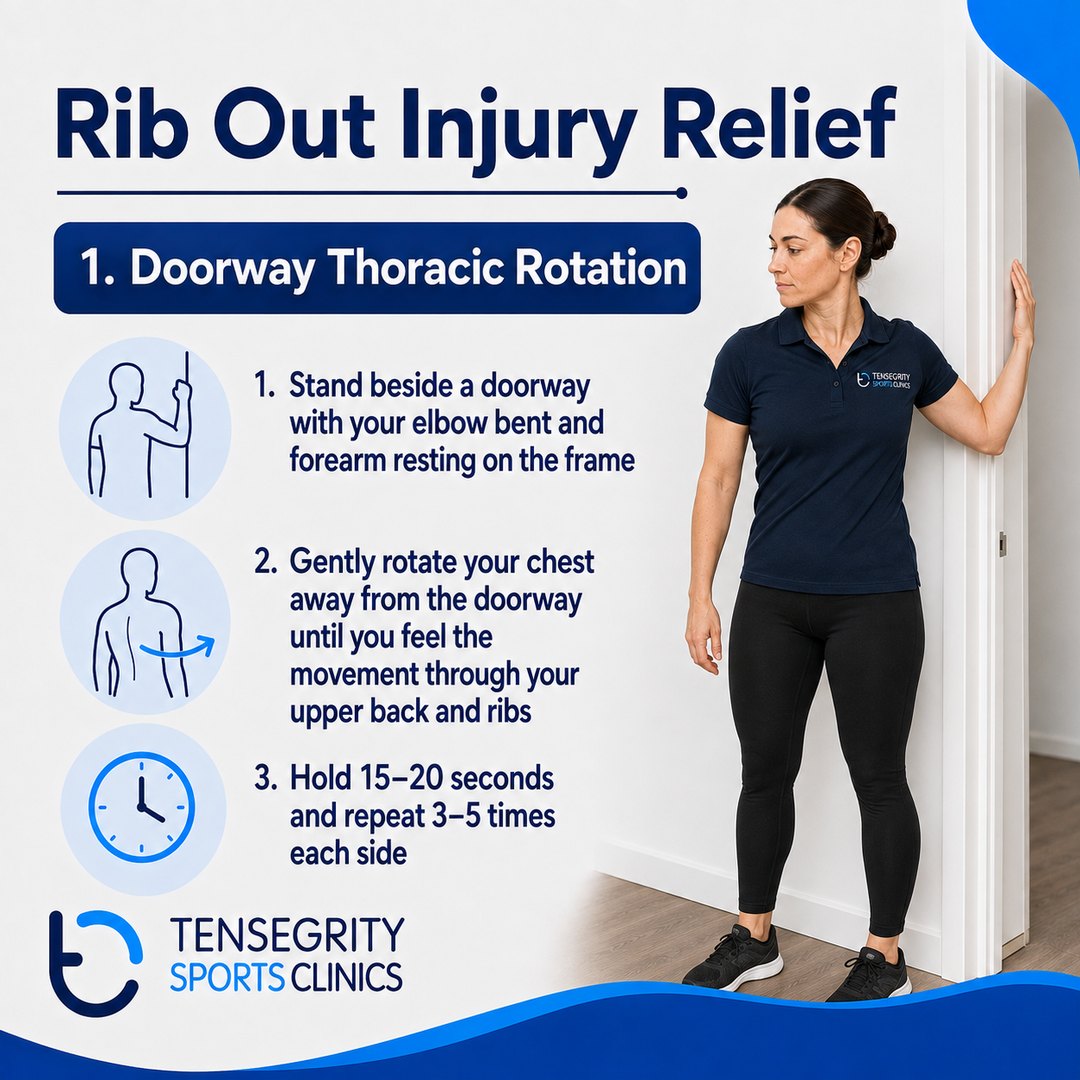
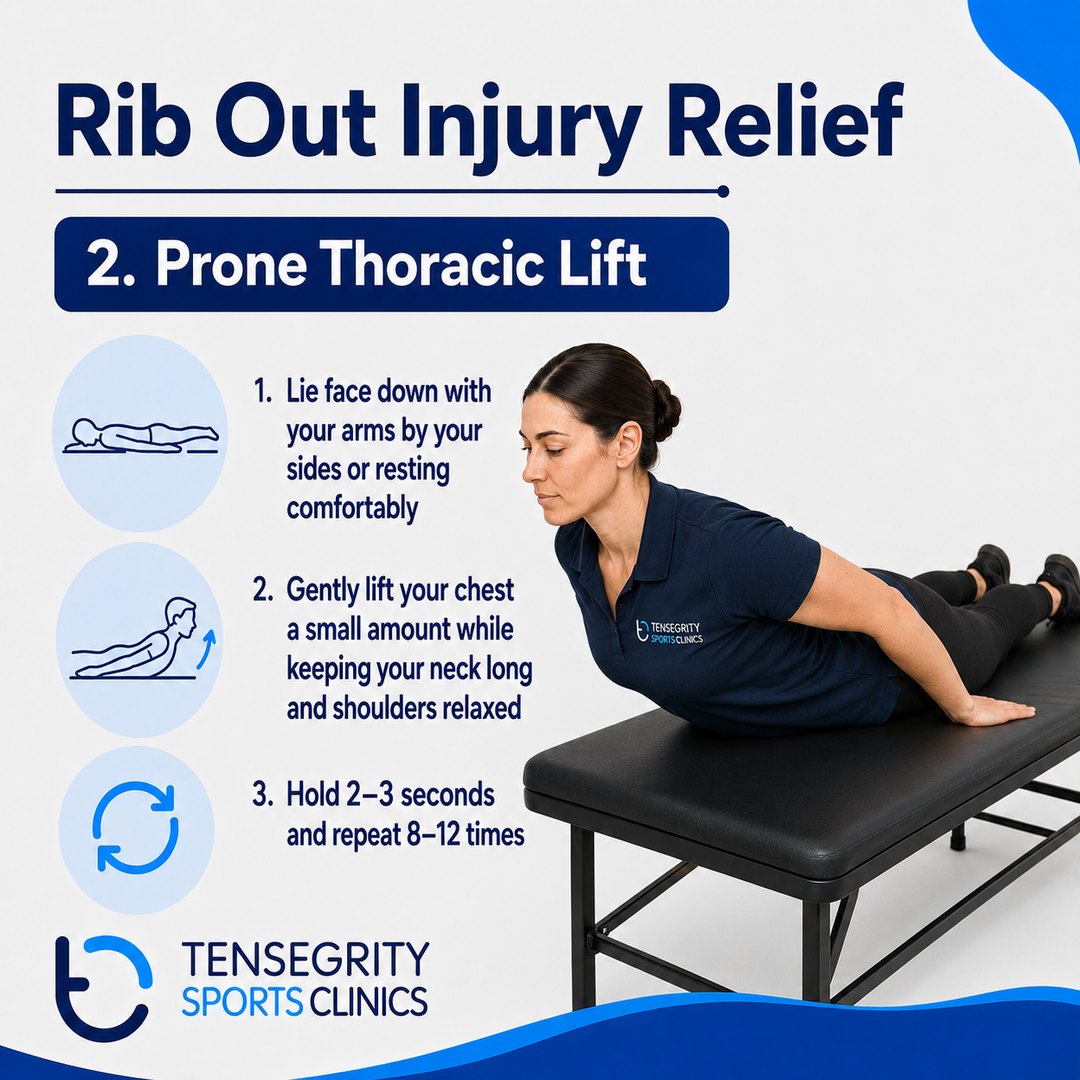
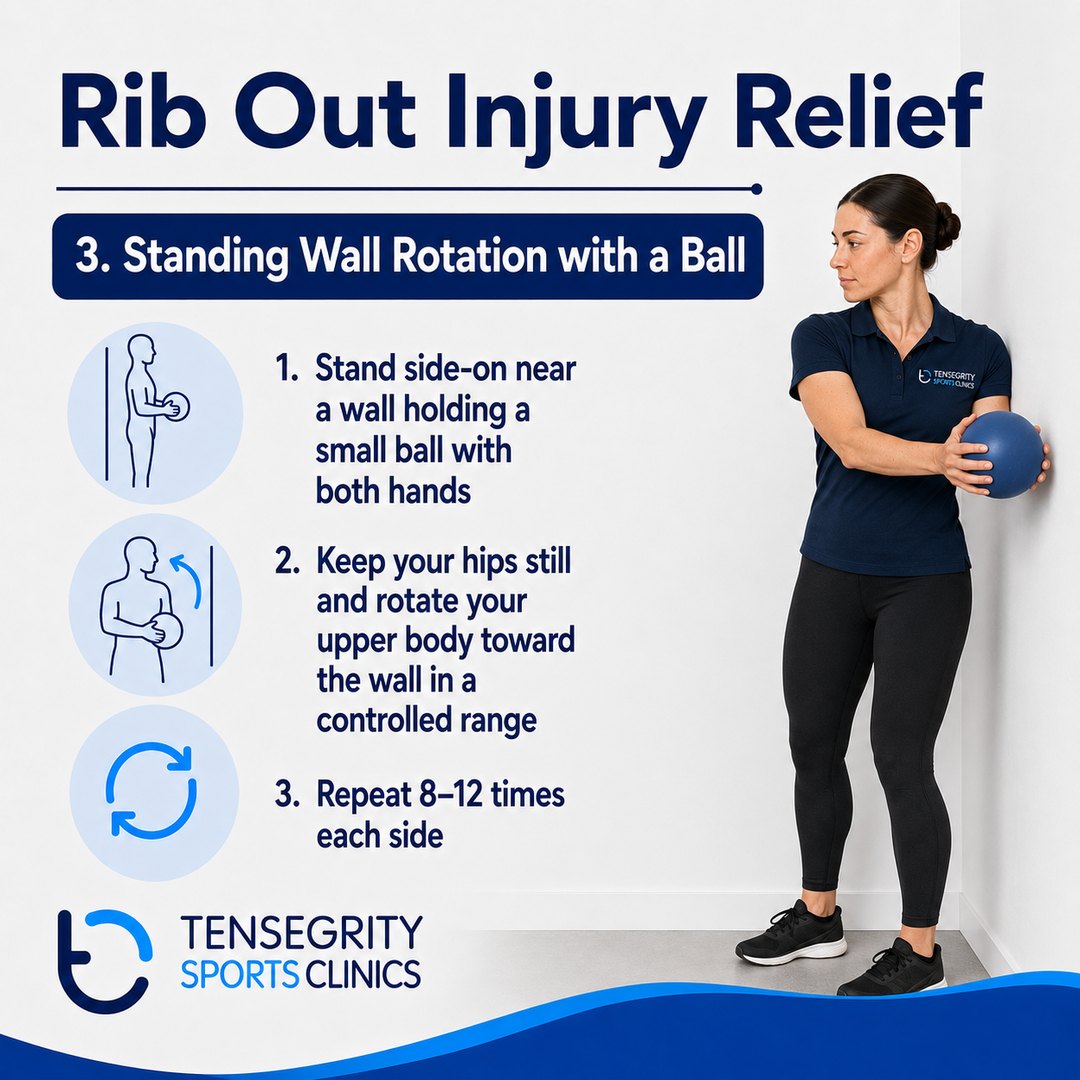
If the rib is not settling, or the catch keeps returning with deep breaths, book an assessment so the movement and loading can be matched to what your ribs can currently handle.
Prevention:
Measures that reduce the chance of a rib joint flaring include:
- Maintaining good posture: Practising proper posture habits, such as sitting and standing tall with the shoulders back and the chest lifted, can reduce strain on the ribcage and reduce the sustained loading that tends to irritate a rib joint.
- Strengthening exercises: Performing regular exercises to strengthen the muscles of the chest, back, and core can improve overall muscular support and stability of the ribcage, reducing the risk of a rib joint flaring.
- Ergonomic modifications: Using proper lifting techniques, adjusting workstation ergonomics, and avoiding repetitive movements that strain the upper body can minimise the risk of rib injury and joint irritation.
- Injury prevention: Wearing appropriate protective gear during sports or activities that pose a risk of chest or back injury, such as contact sports or heavy lifting, can help prevent traumatic rib injury.
Outlook / Prognosis:
The outlook depends on how irritated the joint is, what is driving it, and how you respond to treatment. With prompt diagnosis and appropriate management, most individuals experience significant improvement in symptoms and functional outcomes within a few weeks. However, a rib joint that keeps flaring, or an underlying issue that has not been addressed, may require ongoing treatment and preventive measures to prevent future episodes and promote long-term musculoskeletal health.
Living With:
Living with a rib out may require temporary modifications to activities or movements that exacerbate symptoms and adherence to recommended treatment strategies to promote healing and prevent recurrence. By practising good posture habits, incorporating therapeutic exercises, and addressing contributing factors such as muscle imbalances or poor biomechanics, individuals can manage a rib that keeps flaring and minimise discomfort, allowing for a return to normal activities and improved quality of life.