
Overview:
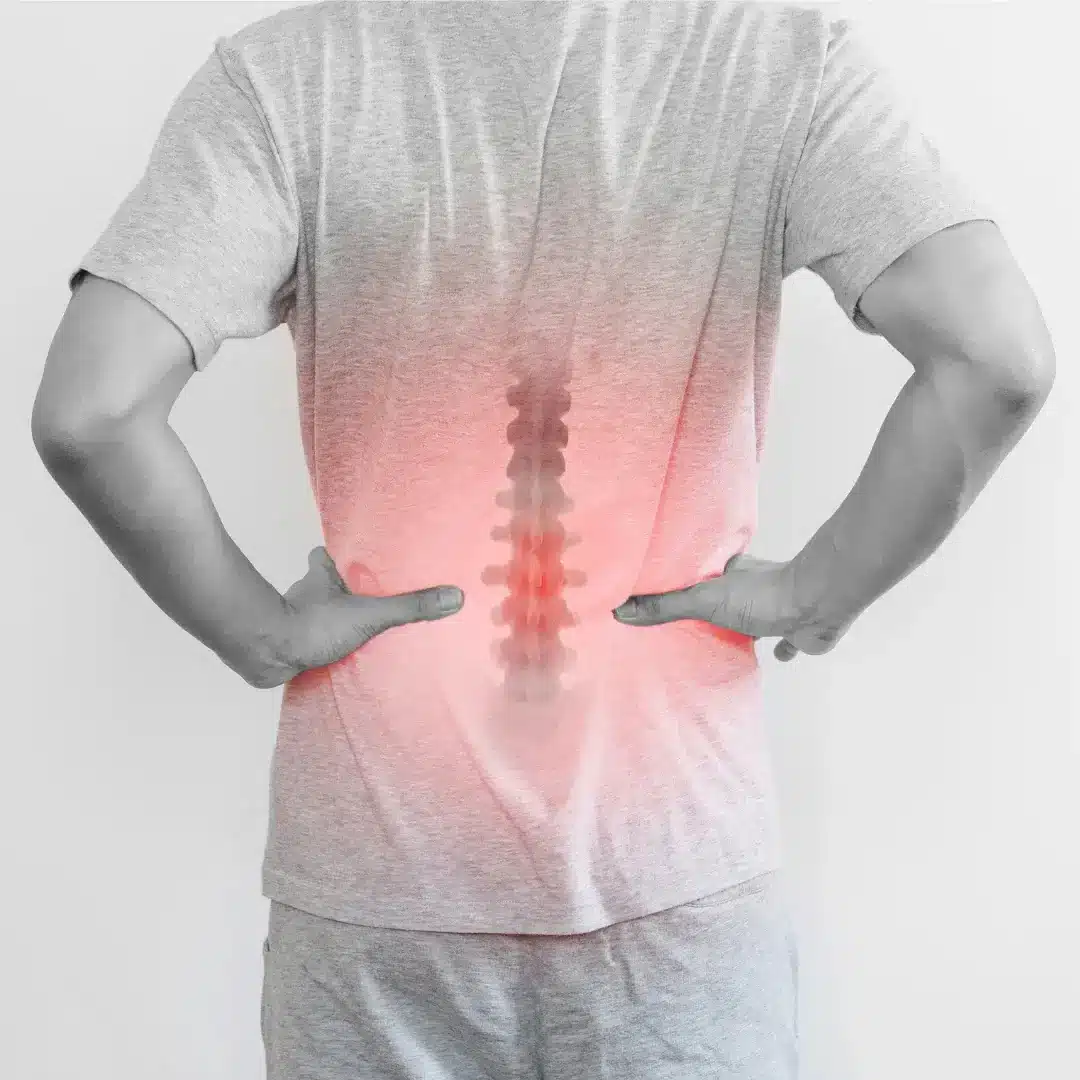
Mid back pain, also known as thoracic pain, refers to discomfort or stiffness experienced in the middle portion of the back, spanning from the base of the neck to the bottom of the rib cage. While not as prevalent as lower back pain, mid back pain can significantly impact daily activities and quality of life if left untreated.
Anatomy:
The mid back, or thoracic spine, consists of twelve vertebrae (T1-T12) situated between the cervical and lumbar regions. These vertebrae connect to the rib cage, providing structural support and facilitating movements such as bending, twisting, and lifting. Muscles, ligaments, and tendons surrounding the thoracic spine contribute to stability and mobility.
Causes:
Mid back pain can arise from various factors, including:
- Muscular strain: Overuse, repetitive movements, or improper lifting techniques can strain the muscles and soft tissues of the mid back, leading to discomfort and stiffness.
- Poor posture: Prolonged sitting, slouching, or hunching over electronic devices can contribute to postural imbalances and mid back pain.
- Trauma or injury: Falls, automobile accidents, or direct blows to the back can result in thoracic spine injuries, causing pain and inflammation.
- Degenerative changes: Age-related wear and tear, osteoarthritis, or degenerative disc disease may affect the thoracic spine, contributing to mid back pain.
Symptoms:
Mid back pain may present with the following symptoms:
- Dull, aching pain or sharp, stabbing sensations in the middle back region.
- Difficulty with movements such as bending, twisting, or lifting.
- Muscle stiffness, tension, or tightness in the mid back area.
- Radiating pain or discomfort into the chest, abdomen, or arms.
Diagnosis and Tests:
Diagnosis of mid back pain involves a comprehensive evaluation of symptoms, medical history, and physical examination by a healthcare provider. Diagnostic tests may include:
- X-rays: Imaging studies can assess the alignment of the thoracic spine, identify structural abnormalities, or rule out fractures.
- MRI or CT scans: Advanced imaging techniques may be utilised to visualise soft tissues, intervertebral discs, or spinal cord compression.
- Electromyography (EMG): Electrophysiological testing may be performed to assess nerve function and detect signs of muscle weakness or neuropathy.
Management and Treatment:
Treatment options for mid back pain aim to alleviate symptoms, improve mobility, and address underlying causes. Management strategies may include:
- Exercise rehabilitation: Tailored exercise programs, stretching routines, and postural correction techniques supervised by a physiotherapist can strengthen back muscles, improve flexibility, and promote spinal alignment.
- Manual therapy: Chiropractic adjustments, massage therapy, or acupuncture may help alleviate muscle tension, reduce inflammation, and improve spinal mobility.
- Lifestyle modifications: Adopting ergonomic principles, practising good posture, and engaging in regular exercise can prevent or alleviate mid back pain and promote spinal health.
- Medication and injection-based options: These sit outside a chiropractor’s scope of practice. If pain is limiting your sleep or stopping you starting rehabilitation, that is worth discussing with your GP rather than self-prescribing long term.
Three exercises for mid back pain
These three were put together by our practitioners as a starting point. They are general exercises, not a personalised program.
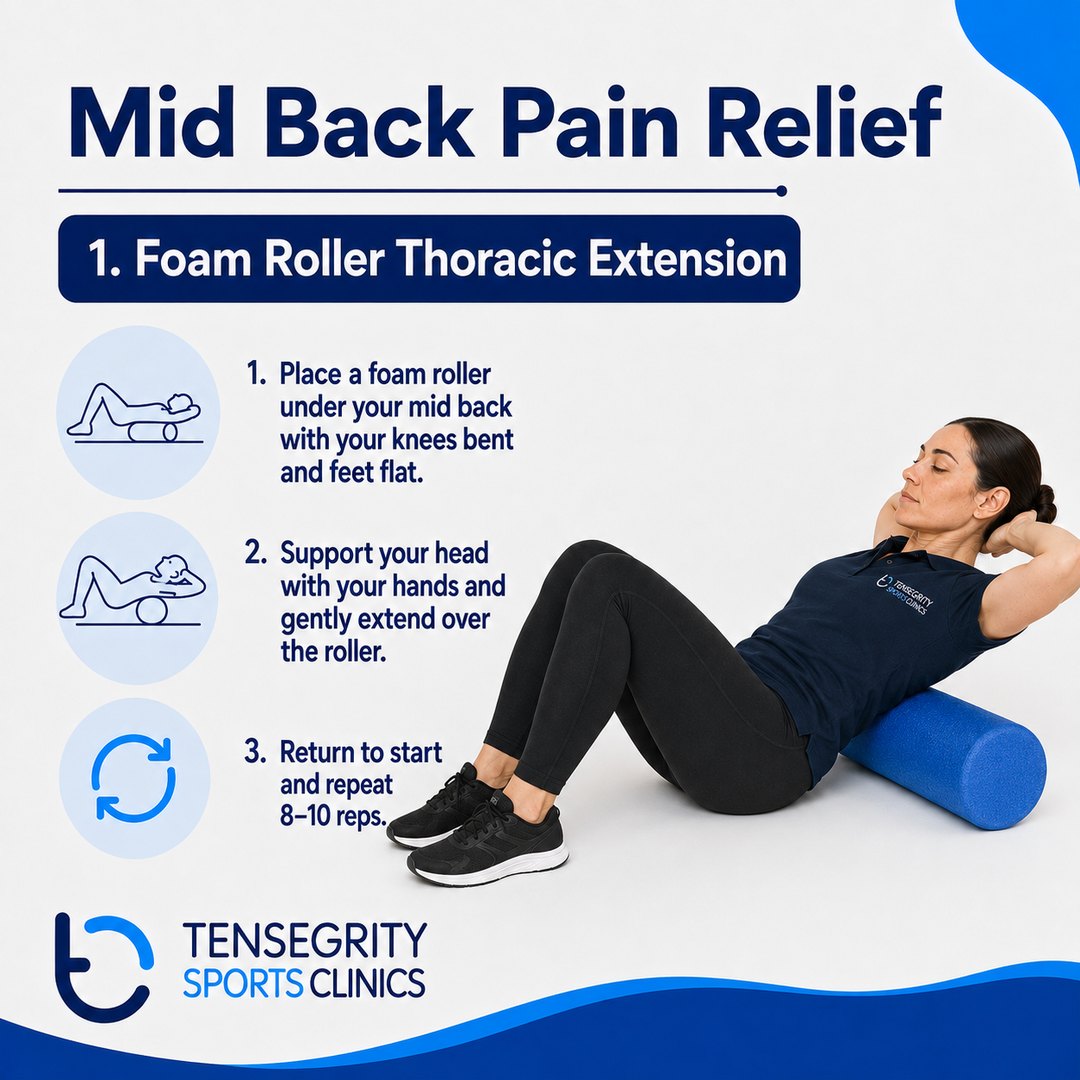
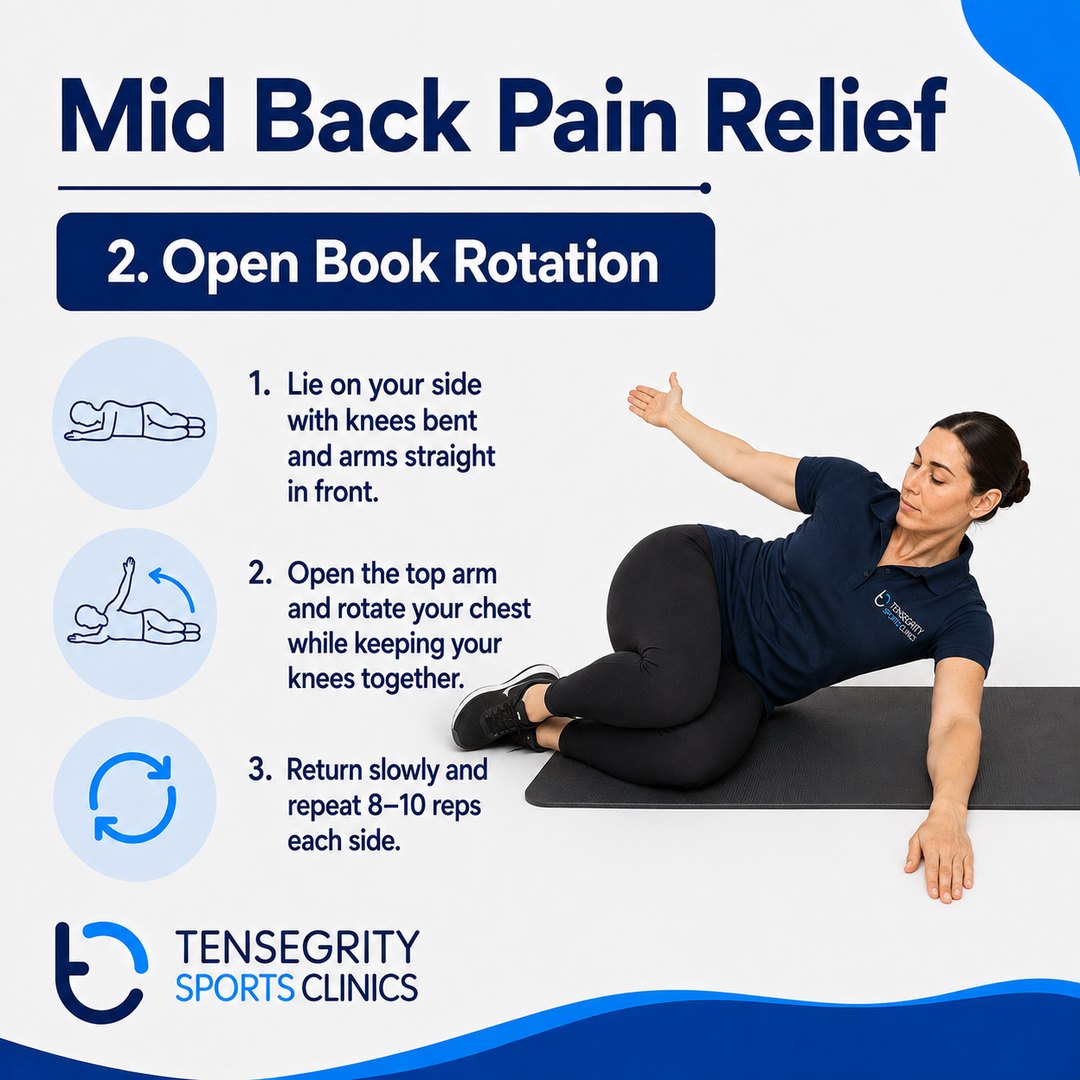
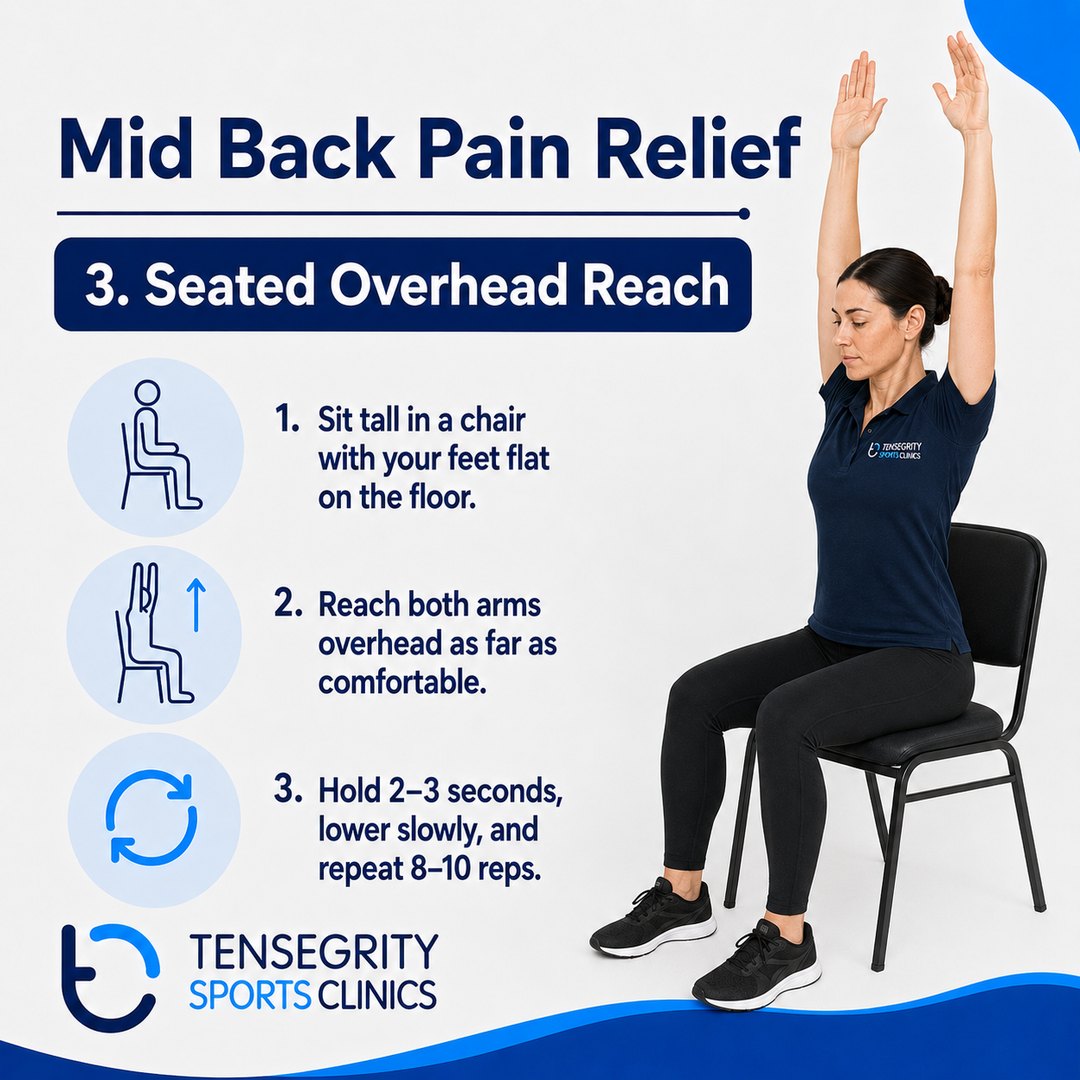
If the mid back is not settling, or it tightens up every time you sit for long, book an assessment so the loading can be matched to what your back can currently handle.
What our practitioners recommend:
These are the items our practitioners most often suggest for mid back pain between appointments. They support your rehabilitation. They do not replace assessment, and what suits you depends on your presentation.
- Foam roller. For thoracic extension mobility over the roller, the standard home exercise for this area.
- Posture support brace. Used as a short term postural cue, not a permanent support.
- Microwavable heat pack. Heat is commonly used before mobility work when the area is stiff.
As an Amazon Associate I earn from qualifying purchases. We may earn a commission on these links. Our recommendations are based on clinical judgement and are not influenced by commission.
Prevention:
Preventive measures for mid back pain include:
- Maintaining proper posture: Sitting and standing with a straight spine, avoiding slouching or hunching over, and using ergonomic furniture or supportive devices can reduce strain on the mid back.
- Incorporating regular exercise: Engaging in strengthening exercises, stretching routines, and core stabilisation activities can improve muscle strength, flexibility, and posture, reducing the risk of mid back pain.
- Practising safe lifting techniques: Using proper lifting mechanics, avoiding heavy lifting without assistance, and lifting objects close to the body can prevent injuries and strain on the mid back muscles.
Outlook / Prognosis:
The prognosis for individuals with mid back pain depends on the underlying cause, severity of symptoms, and response to treatment. With appropriate management strategies, including conservative measures, exercise rehabilitation, and lifestyle modifications, many individuals experience significant improvement in mid back pain and functional outcomes, enabling them to resume daily activities and maintain spinal health.
Living With:
Living with mid back pain necessitates adherence to treatment recommendations, ongoing monitoring by healthcare providers, and adoption of preventive measures. By incorporating ergonomic principles, practising good posture, and seeking timely medical intervention for symptoms, individuals can effectively manage mid back pain and enhance their overall well-being.