
Overview:
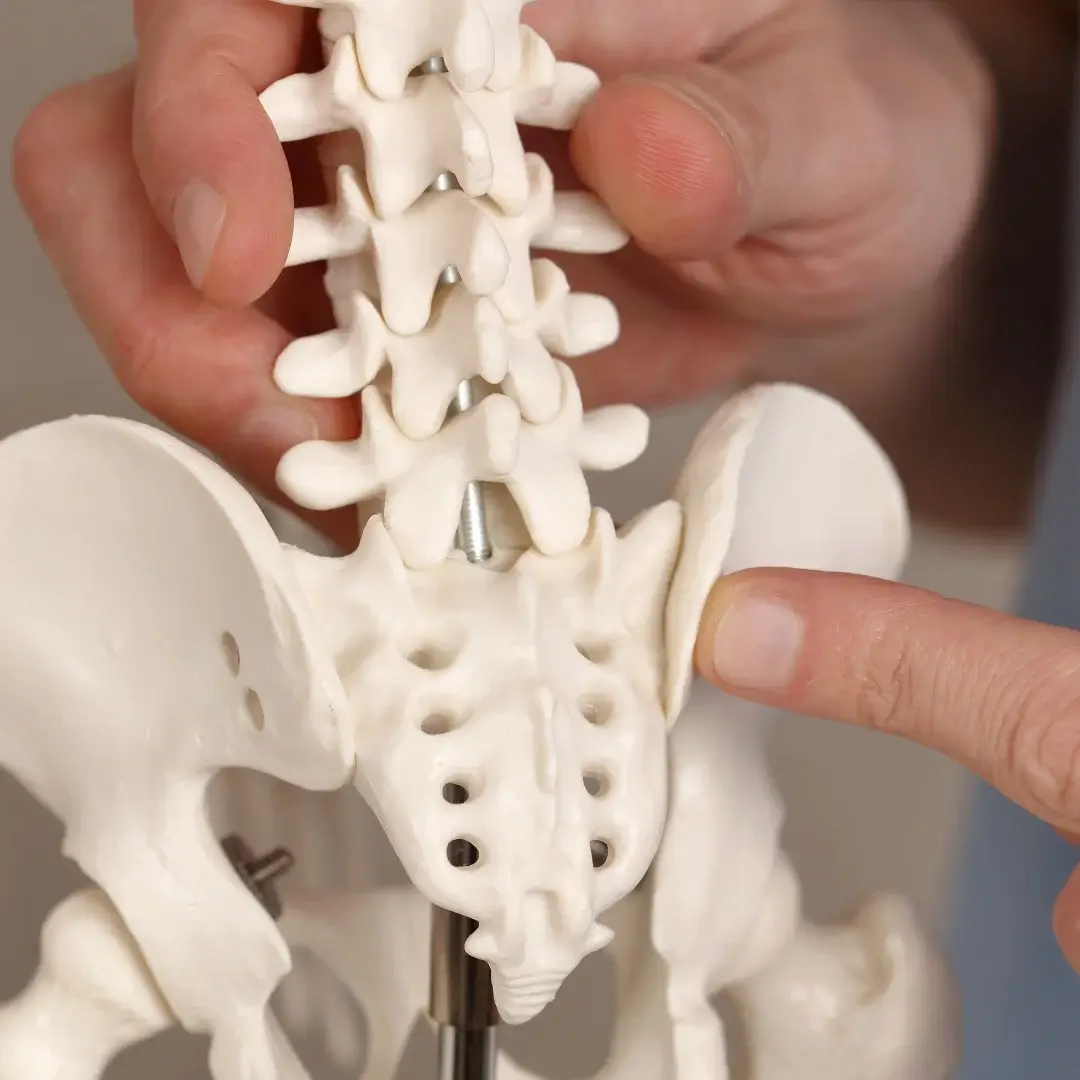
Tailbone pain, medically known as coccydynia, refers to discomfort or tenderness in the coccyx, the small triangular bone at the base of the spine. Coccydynia can result from various causes and may range from mild to severe, affecting daily activities and quality of life.
Anatomy:
The coccyx, or tailbone, consists of three to five small fused vertebrae located at the bottom of the spine, below the sacrum. Despite its small size, the coccyx plays a crucial role in providing support and stability to the pelvis and serving as an attachment site for various muscles, ligaments, and tendons.
Causes:
Tailbone pain can arise from several factors, including:
- Trauma or injury: Falls, direct blows to the tailbone, or childbirth trauma can cause bruising, fractures, or dislocation of the coccyx.
- Prolonged sitting: Sitting for extended periods on hard surfaces or in awkward positions can compress the coccyx and surrounding tissues, leading to inflammation and pain.
- Degenerative changes: Wear and tear or degeneration of the coccyx joints and surrounding structures due to ageing or repetitive stress may contribute to chronic coccydynia.
- Infection or inflammation: Infections, abscesses, or inflammatory conditions affecting the coccyx or nearby structures can cause localised pain and discomfort.
- Abnormalities: Congenital abnormalities, such as a hypermobile or dislocated coccyx, or structural anomalies in the tailbone region may predispose individuals to coccydynia.
Symptoms:
Common signs and symptoms of tailbone pain include:
- Pain or tenderness in the tailbone area, worsened by sitting or pressure on the coccyx.
- Discomfort or difficulty when transitioning from sitting to standing or vice versa.
- Pain during bowel movements or straining.
- Pain during sexual intercourse or activities that put pressure on the coccyx.
- Localised swelling, redness, or bruising around the tailbone.
Diagnosis and Tests:
Diagnosing coccydynia typically involves:
- Medical history and physical examination: Healthcare providers evaluate symptoms, medical history, and conduct a thorough physical examination, including palpation of the tailbone area to assess tenderness, swelling, or abnormalities.
- Imaging studies: X-rays, MRI, or CT scans may be ordered to evaluate the coccyx, rule out fractures or structural abnormalities, and assess the extent of tissue damage or inflammation.
Management and Treatment:
Management and treatment options for tailbone pain focus on relieving symptoms and addressing underlying causes, including:
- Conservative measures: Rest, avoiding prolonged sitting, and using cushioning or donut-shaped pillows to relieve pressure on the coccyx.
- Exercise rehabilitation: Gentle stretching exercises, pelvic floor strengthening, and manual therapy techniques may improve flexibility, reduce muscle tension, and promote healing of coccydynia.
- Medication and injection-based options: These sit outside a chiropractor’s scope of practice. If pain is limiting your sleep or stopping you starting rehabilitation, that is worth discussing with your GP rather than self-prescribing long term.
Three exercises for tailbone pain
These three were put together by our practitioners as a starting point. They are general exercises, not a personalised program.
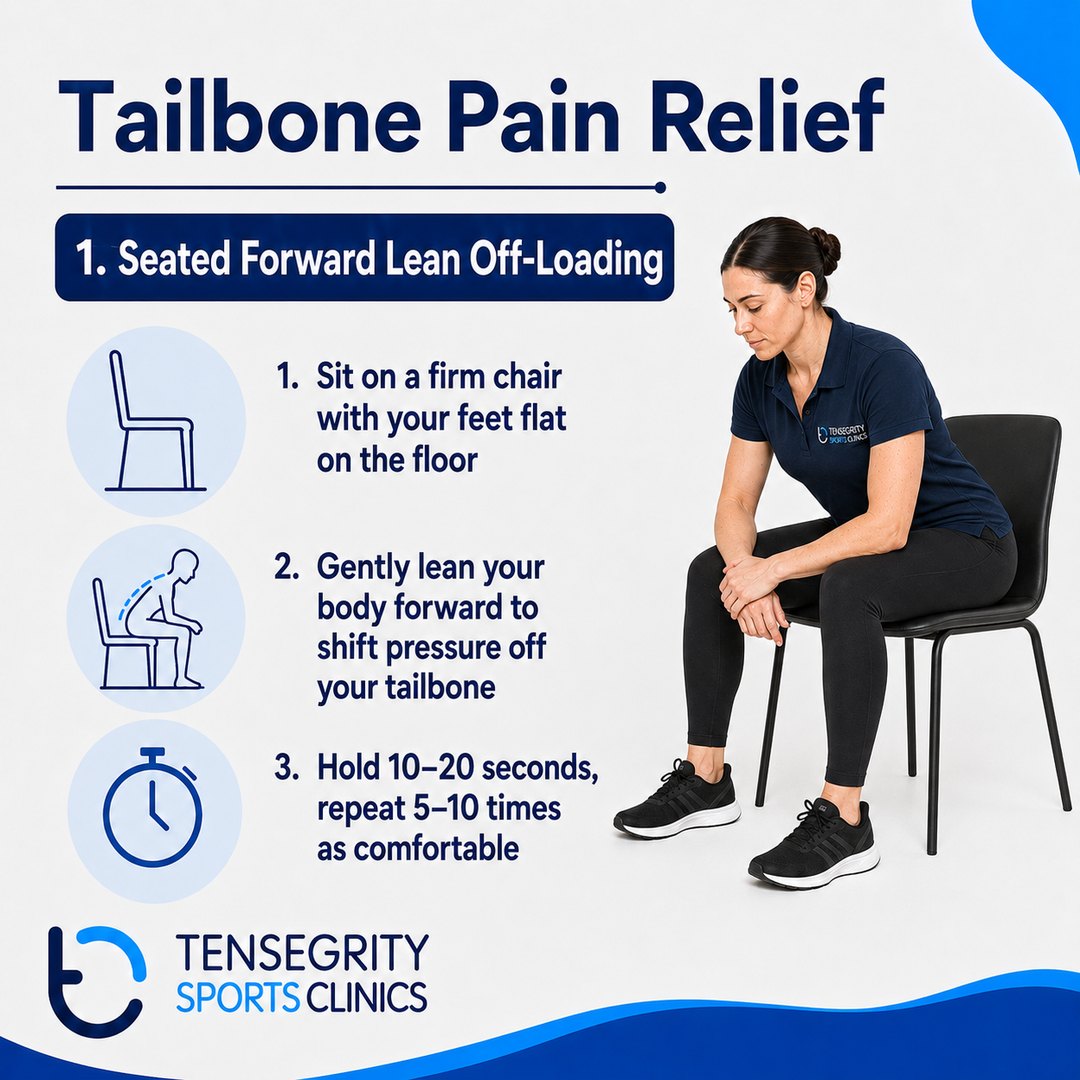
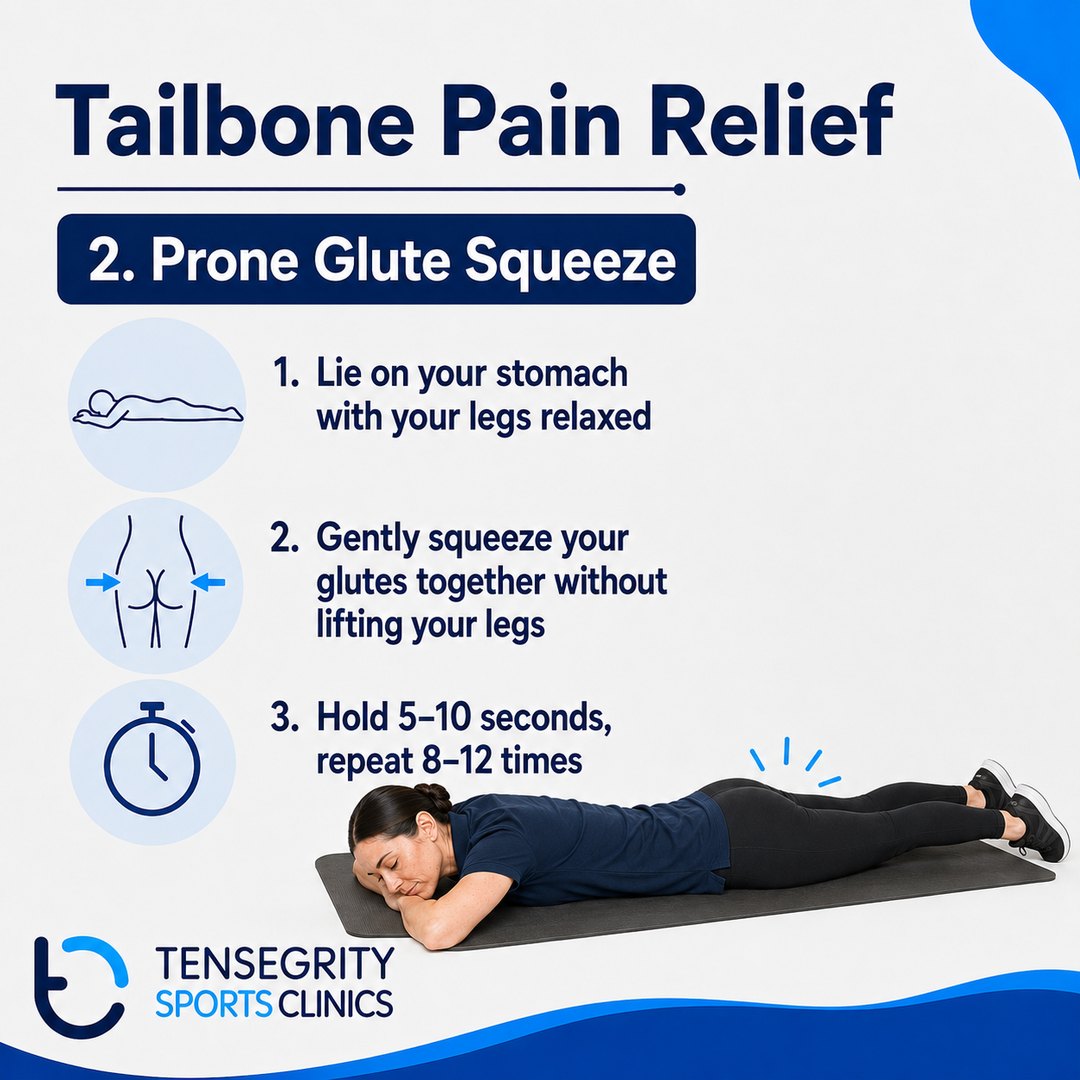
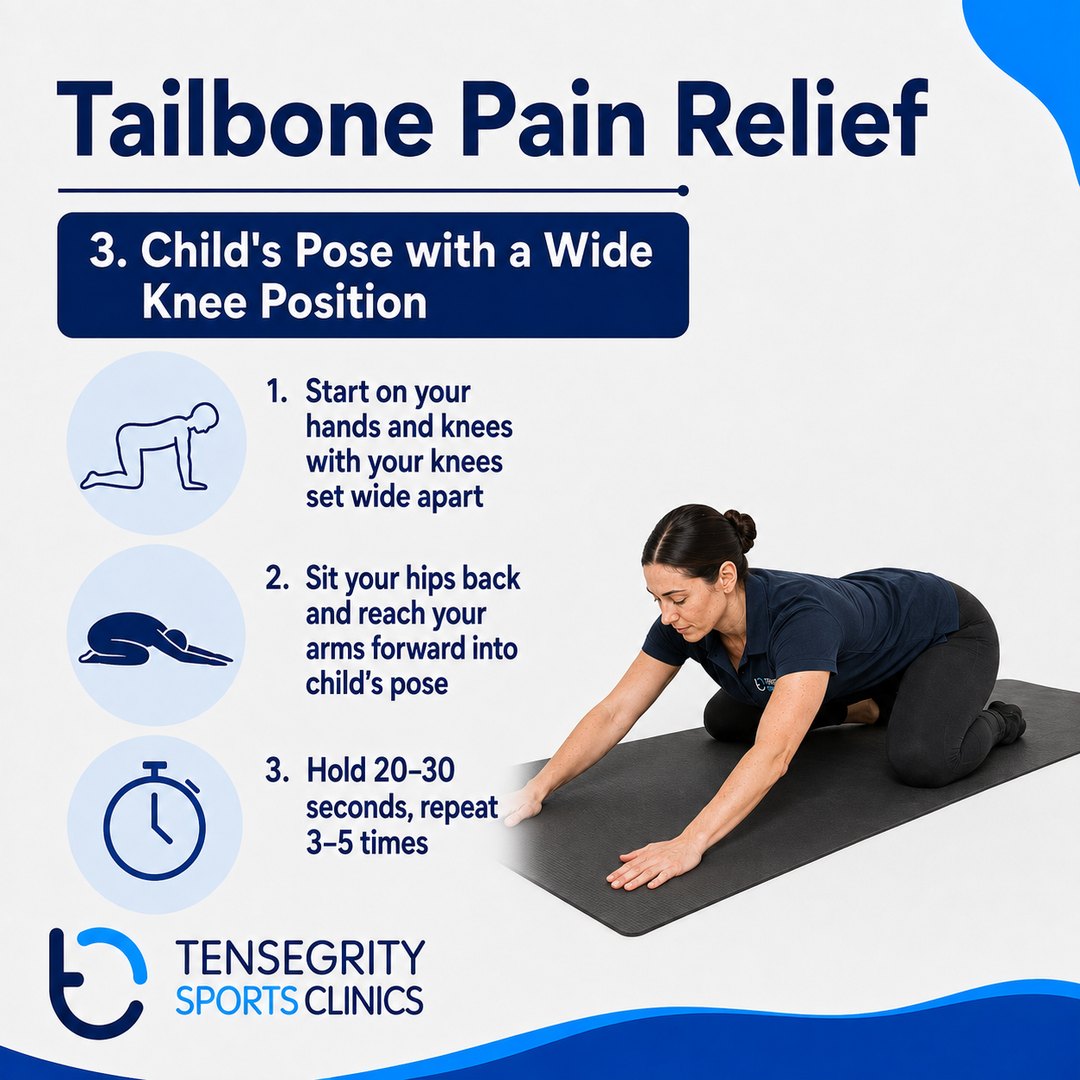
If the tailbone is not settling, or sitting is still the problem, book an assessment so your sitting set-up and loading can be matched to what you can currently handle.
Prevention:
Preventive measures to reduce the risk of tailbone pain include:
- Practising good posture: Maintaining proper posture while sitting, standing, or lifting heavy objects can help distribute weight evenly and reduce strain on the coccyx and spine.
- Using ergonomic seating: Using supportive chairs with adequate cushioning, lumbar support, and adjustable features can help alleviate pressure on the tailbone during prolonged sitting.
- Taking regular breaks: Avoiding prolonged sitting or sedentary activities by taking frequent breaks, stretching, and changing positions can prevent coccyx compression and reduce the risk of developing tailbone pain.
Outlook / Prognosis:
The outlook for individuals with tailbone pain depends on the underlying cause, severity of symptoms, and response to treatment. Most cases of acute coccydynia resolve with conservative measures and self-care within a few weeks to months. However, chronic or recurrent coccydynia may require ongoing management, lifestyle modifications, or additional interventions to achieve symptom relief and improve quality of life.
Living With:
Living with tailbone pain involves adopting lifestyle modifications, practising self-care strategies, and seeking appropriate medical care to manage symptoms effectively. By implementing preventive measures, maintaining a healthy lifestyle, and addressing underlying risk factors, individuals with coccydynia can minimise discomfort, optimise function, and enhance overall well-being.