
Overview:
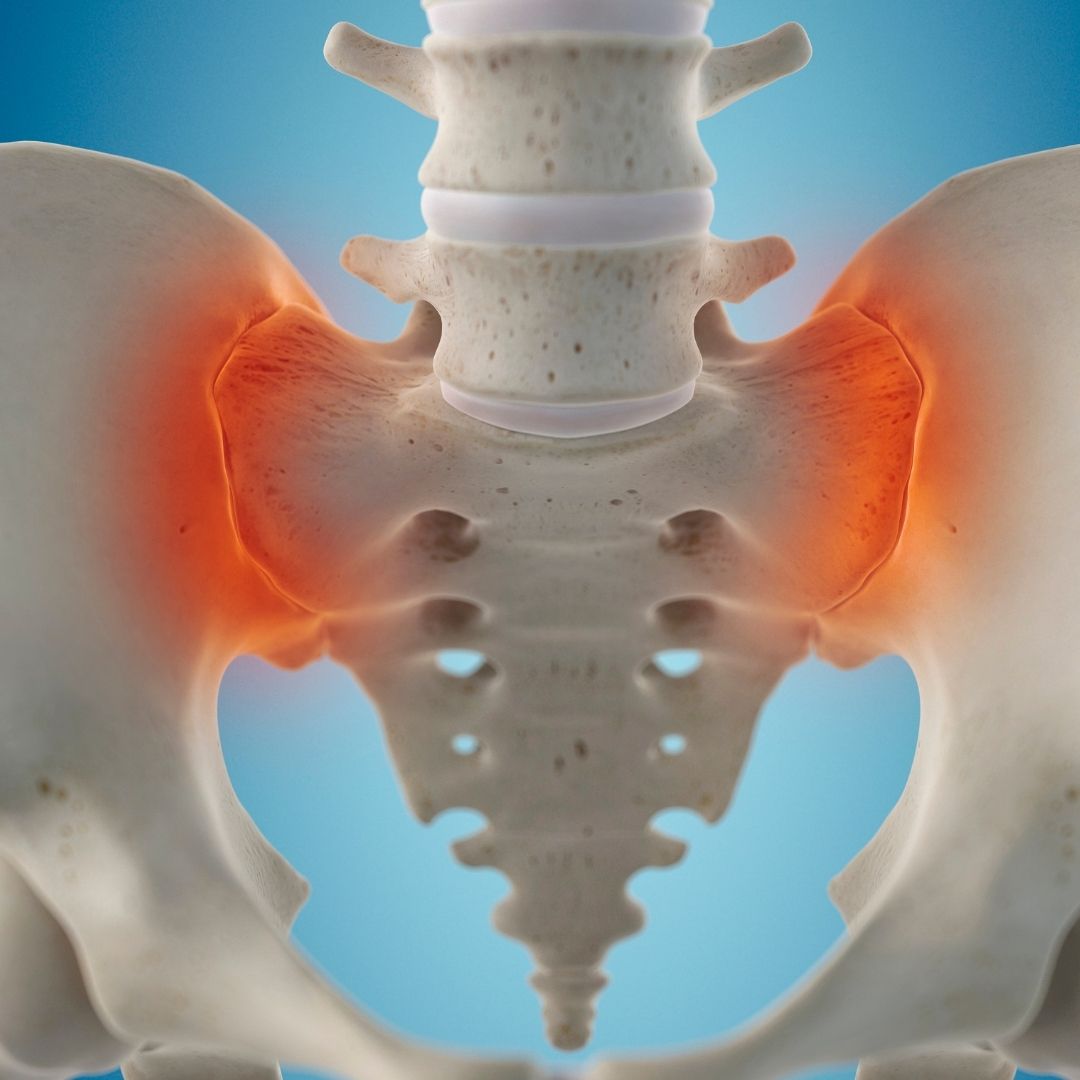
The sacroiliac joints sit either side of the base of your spine, where the sacrum meets the pelvis. SI joint dysfunction describes pain coming from one of these joints, usually felt as a deep ache low on one side of the back, just inside the dimple above the buttock.
People often point to it with one finger, which is unusual and useful. It accounts for a meaningful share of low back pain, and it is commonly mistaken for a disc problem or for sciatica because the pain can spread into the buttock and the back of the thigh.
Anatomy:
The SI joints are strong, stable joints designed to transfer load between your spine and your legs. They move only a few millimetres, and they are held by some of the thickest ligaments in the body.
Because they move so little, the useful question is rarely how much they move. It is whether the joint and the surrounding tissue are tolerating the load being asked of them. The gluteal muscles, the deep abdominals and the pelvic floor all contribute to how well that load is shared.
Causes:
SI joint pain can start suddenly or build gradually.
- A specific loading event: A fall onto one buttock, a missed step off a kerb, or lifting with a twist.
- Pregnancy and the postpartum period: Hormonal changes and a changing centre of mass increase load through the pelvis.
- Asymmetric loading habits: Long periods standing on one leg, sitting on a wallet, or driving long distances.
- A change in activity: A jump in running volume, or returning to sport after a break.
- Reduced hip or lower back movement: When the joints above and below do not contribute their share, the SI joint takes up the difference.
Symptoms:
The location is usually the most telling feature.
- Deep pain on one side, low in the back, often pointed to with a single finger.
- Pain that spreads into the buttock and sometimes the back of the thigh, but rarely below the knee.
- Worse rolling over in bed, getting out of a car, standing up from sitting, or standing on one leg to dress.
- Discomfort sitting for long periods, often with a sense of needing to shift weight off one side.
- Pain that eases with walking in some people and worsens with it in others, which is why the assessment matters more than the label.
Diagnosis and Tests:
There is no single test that confirms SI joint pain, so a cluster of findings is used together.
- History: Where you point, what positions provoke it, and whether there was a specific event.
- Provocation testing: A group of tests that load the joint in different directions. When three or more reproduce your familiar pain, the joint is the likely source.
- Movement assessment: Watching you walk, stand on one leg, and bend, to see how load is being shared through the pelvis.
- Excluding other sources: Lower back and hip testing, because disc, facet and hip problems can produce pain in a similar area.
- Imaging: Not routinely useful. X-ray or MRI is reserved for suspected inflammatory conditions, fracture, or when symptoms are not behaving as expected.
Management and Treatment:
Treatment aims to settle the joint, then improve how load is shared through the pelvis.
- Hands-on treatment: Manual therapy to the SI joint and surrounding tissue to reduce pain and improve comfort with movement.
- Activity modification: Identifying and changing the specific positions that keep provoking it, which is often the fastest source of relief.
- Progressive strengthening: Glute and trunk work to improve how the pelvis handles load. This is what reduces the chance of it returning.
- Addressing the joints above and below: Restoring hip and lower back movement so the SI joint is not absorbing what they are not doing.
- Support belts: Occasionally useful in the short term, particularly during pregnancy, as a bridge while strength work takes effect.
- Medication and injection-based options: These sit outside a chiropractor’s scope of practice. If pain is limiting your sleep or stopping you starting rehabilitation, that is worth discussing with your GP rather than self-prescribing long term.
Three exercises for SI joint dysfunction
These three were put together by our practitioners as a starting point. They are general exercises, not a personalised program.
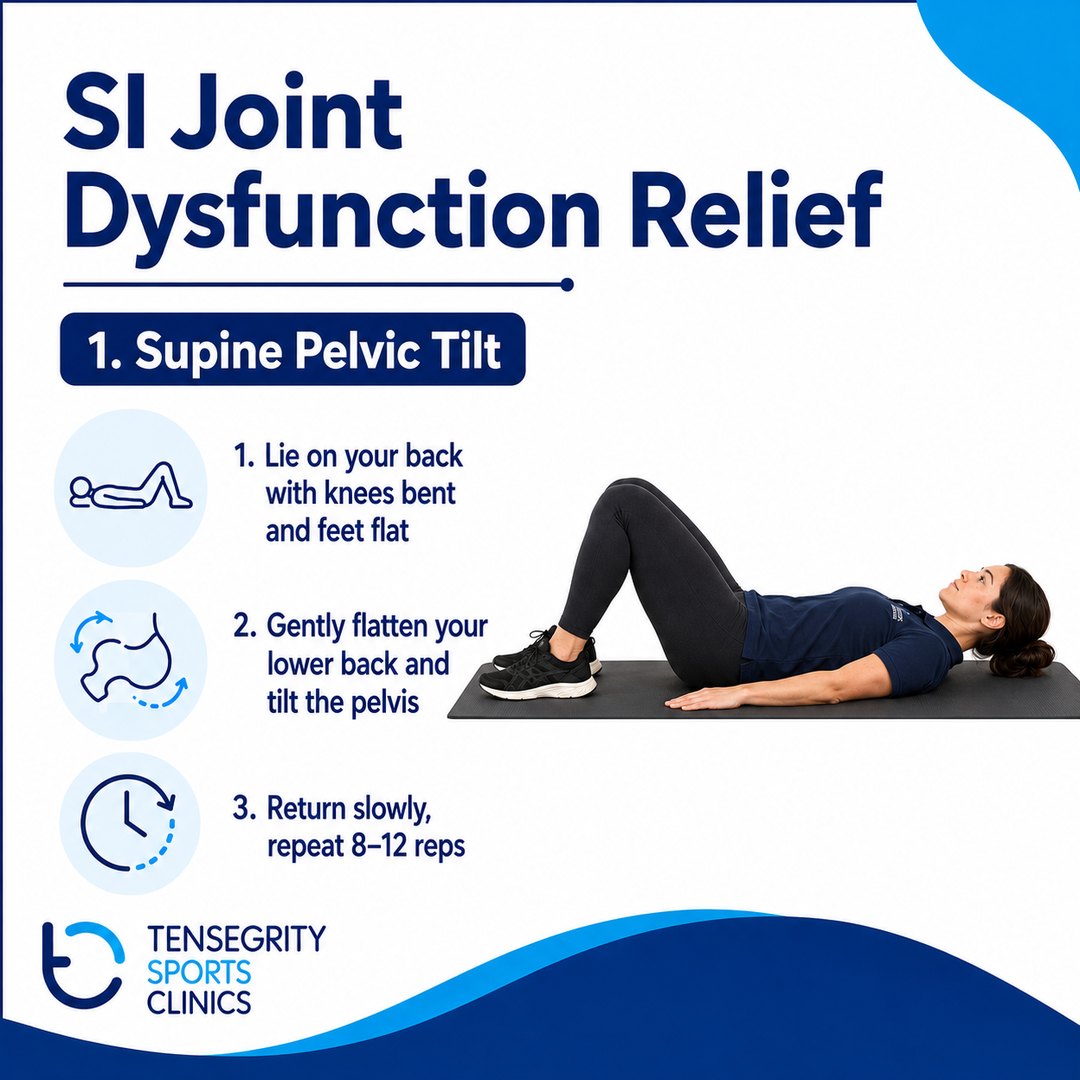
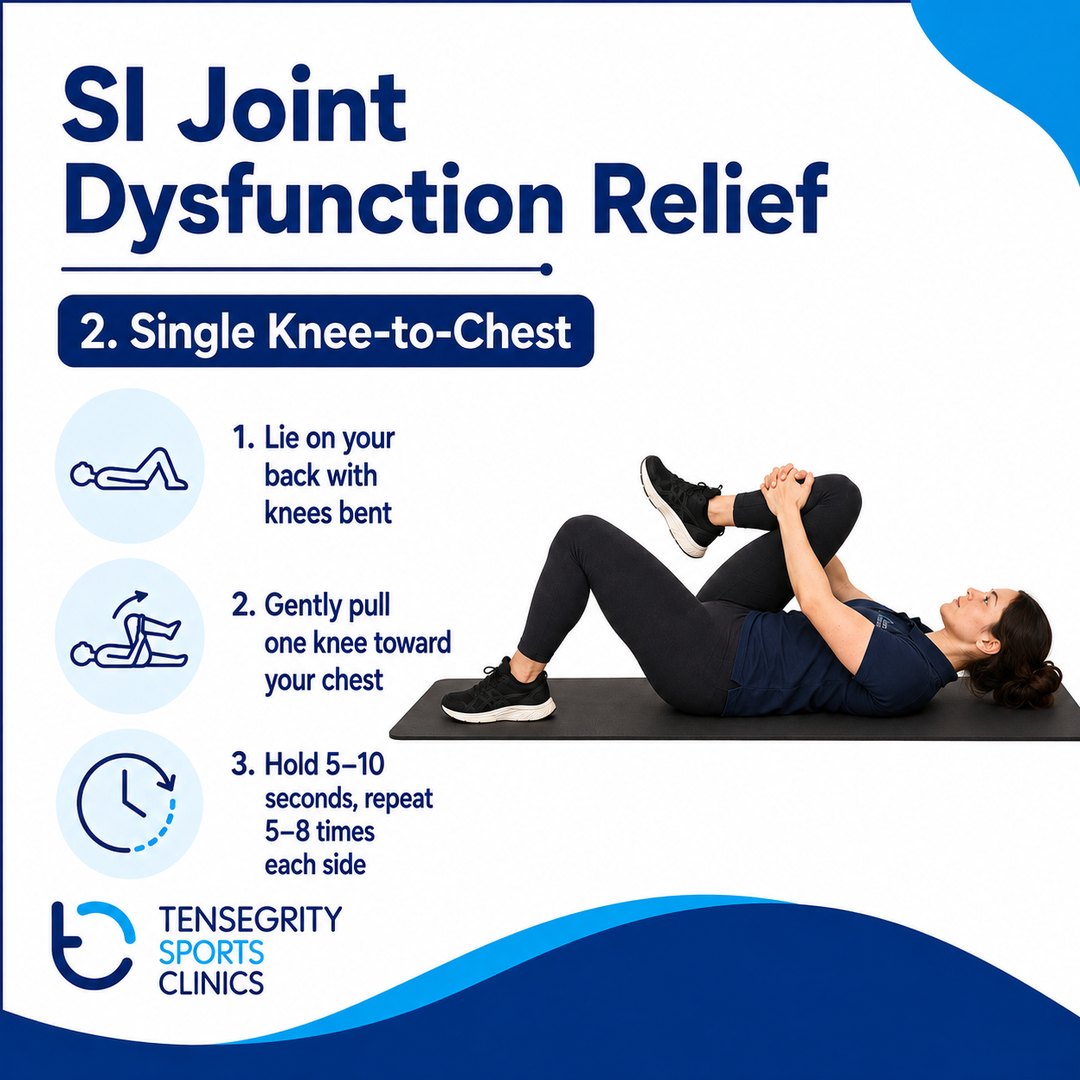
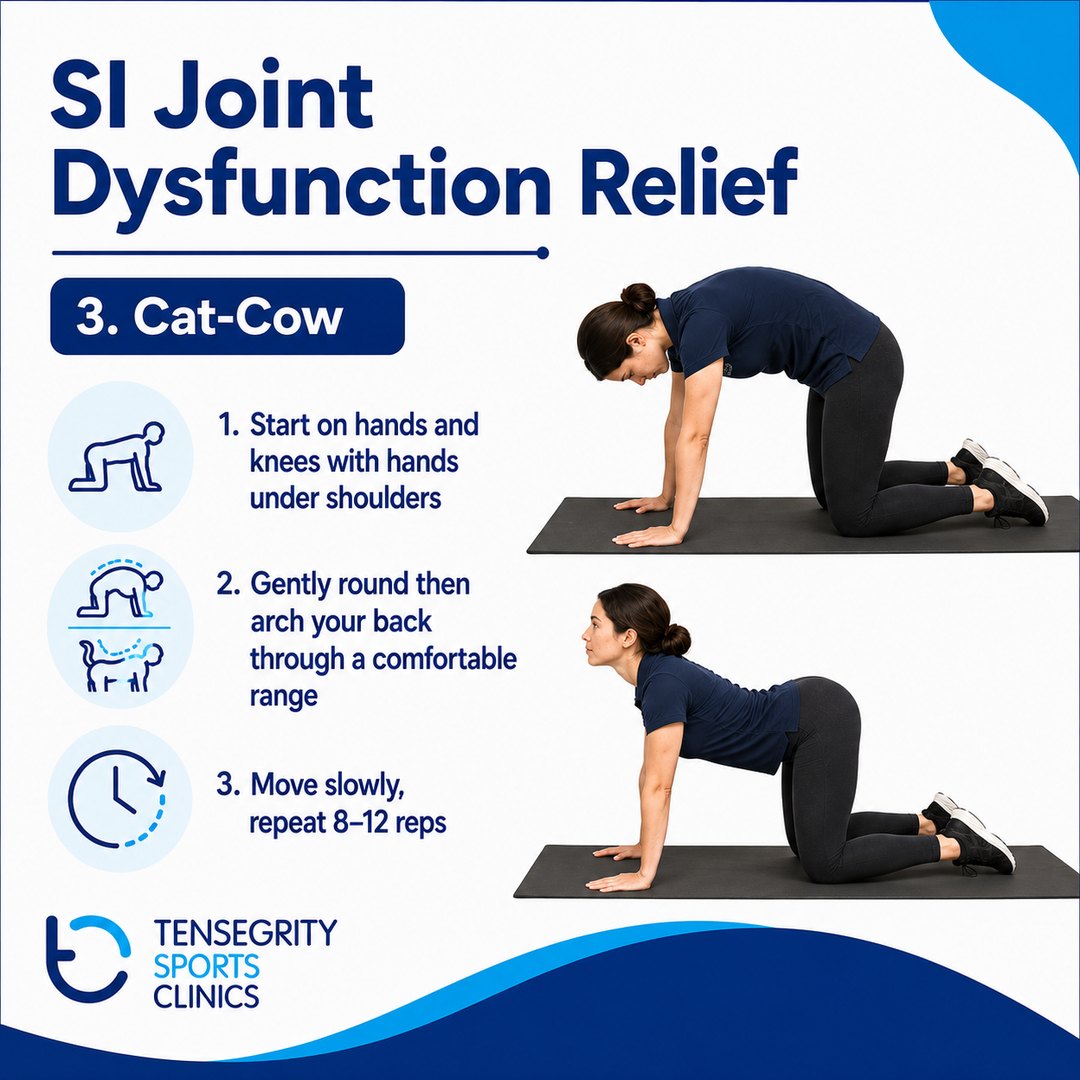
If the pain is not settling, or it is limiting rolling over in bed, driving or standing on one leg, book an assessment so the loading can be matched to what your pelvis can currently handle.
Prevention:
Once an episode settles, a few habits reduce the chance of it coming back.
- Keep glute and trunk strength work in your week rather than stopping once the pain goes.
- Break up long periods of sitting or driving, and avoid sitting on a wallet or phone in a back pocket.
- Stand evenly through both legs rather than resting on one hip.
- Build running and walking load gradually, especially after a break.
- Change position before the ache builds rather than after it.
Outlook / Prognosis:
Most episodes of SI joint pain settle within a few weeks with treatment and sensible load management. Pain that comes on suddenly after a specific event usually resolves faster than pain that has built up over months.
Recurrence is common if the underlying loading pattern is not addressed, which is why the strengthening component matters more than the hands-on treatment in the long run. Pregnancy-related pelvic pain follows its own course and is covered on the pregnancy and postpartum page.