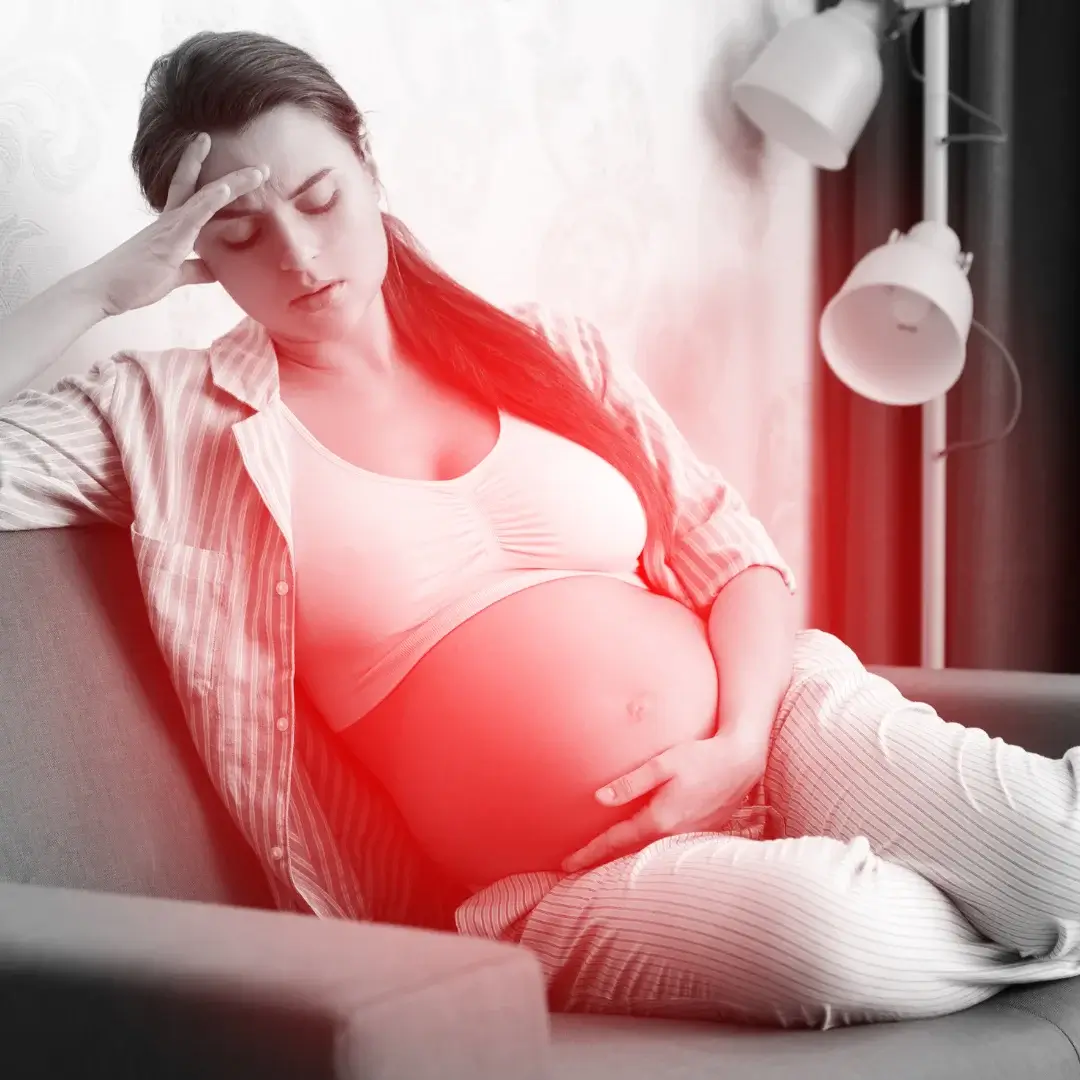

Overview:
Pregnancy changes how your body carries load, and the changes happen faster than most people expect. Back pain, pelvic pain and pain through the hips are common during pregnancy and in the months after birth. Common does not mean you have to put up with it.
This page covers the musculoskeletal side: what changes, why it hurts, what helps, and when to get assessed. For anything to do with the pregnancy itself, your GP and midwife are the right people.
Anatomy:
Several things change at once.
- The uterus expands: it grows from roughly the size of a pear to the size of a watermelon by full term, shifting your centre of gravity forwards.
- Relaxin rises: this hormone increases ligament laxity through the pelvis to prepare for birth. More available movement at the pelvic joints means the muscles around them work harder to keep things steady.
- The abdominal wall stretches: the rectus abdominis lengthens and often separates at the midline, which reduces how much support the trunk gives the lower back.
- The pelvic floor takes more load: it carries increasing weight through pregnancy and is directly affected by birth.
- Posture adapts: the lower back curve usually increases to balance the growing weight in front, which loads the joints of the lower back and pelvis differently.
Causes:
- Increased ligament laxity: more movement available at the sacroiliac joints and pubic symphysis, with the same muscles asked to control it.
- Rapid load change: the weight and its position shift over weeks, faster than tissue adapts.
- Reduced trunk support: abdominal separation changes how force transfers between the ribcage and pelvis.
- Asymmetric daily loading after birth: carrying a baby on one hip, feeding in the same position, lifting a capsule in and out of a car.
- Broken sleep: less recovery time, and pain tolerance drops when you are short on sleep.
- Previous back or pelvic pain: the strongest predictor of pain in a later pregnancy is pain in an earlier one.
Symptoms:
- Lower back pain: often worse at the end of the day or after standing.
- Pelvic girdle pain: felt at the back of the pelvis, at the front near the pubic bone, or both.
- Pain rolling over in bed: one of the most common and most disruptive.
- Pain on single-leg tasks: stairs, getting in and out of a car, putting on pants.
- Clicking or grinding through the pelvis: often noticed with walking.
- Postpartum pain that has not settled: particularly through the lower back, pelvis or tailbone.
- A sense of instability: the feeling that the pelvis is not holding.
Diagnosis:
Assessment is clinical. Your practitioner takes a history covering the stage of pregnancy or time since birth, what aggravates and eases the pain, sleep, and any previous episodes. Movement testing then looks at how the pelvis, hips and lower back share load, and what happens on single-leg tasks.
Imaging is rarely needed and X-ray is not used in pregnancy. Where a pain pattern does not fit a musculoskeletal picture, or where there are signs that belong with your GP or midwife, we refer.
Treatment:
- Hands-on treatment: gentle joint and soft tissue work through the pelvis, lower back and hips, adapted to the stage of pregnancy and to positions you can comfortably lie in.
- Webster technique: Georgia Orr at our Bella Vista clinic is Webster certified. It is a chiropractic assessment and adjustment approach for the pelvis in pregnancy.
- Load management: identifying the daily tasks driving the pain and changing how they are done, which is often the fastest change available.
- Strengthening: work through the hips, glutes and trunk, dosed to what you can currently tolerate.
- Support and taping: a pelvic support belt suits some presentations, particularly pelvic girdle pain.
- Positioning advice: sleeping, feeding and carrying positions that reduce repeated one-sided load.
Remedial massage is available alongside chiropractic care at our Bella Vista and Wahroonga clinics.
Rehabilitation:
Pregnancy-related pain responds to load management and strength, not rest alone. Early on the aim is to reduce the tasks that spike the pain while keeping you moving. From there the work builds capacity through the hips, trunk and pelvic floor so daily tasks stop provoking symptoms.
How long does it take? Pain during pregnancy often improves within a few weeks of changing load and starting targeted strength work, though it can return as the pregnancy progresses. After birth, most people notice meaningful change over about six to twelve weeks of consistent work.
Three exercises for pregnancy and postpartum recovery
These three were put together by our practitioners as a starting point. They are general exercises, not a personalised program.
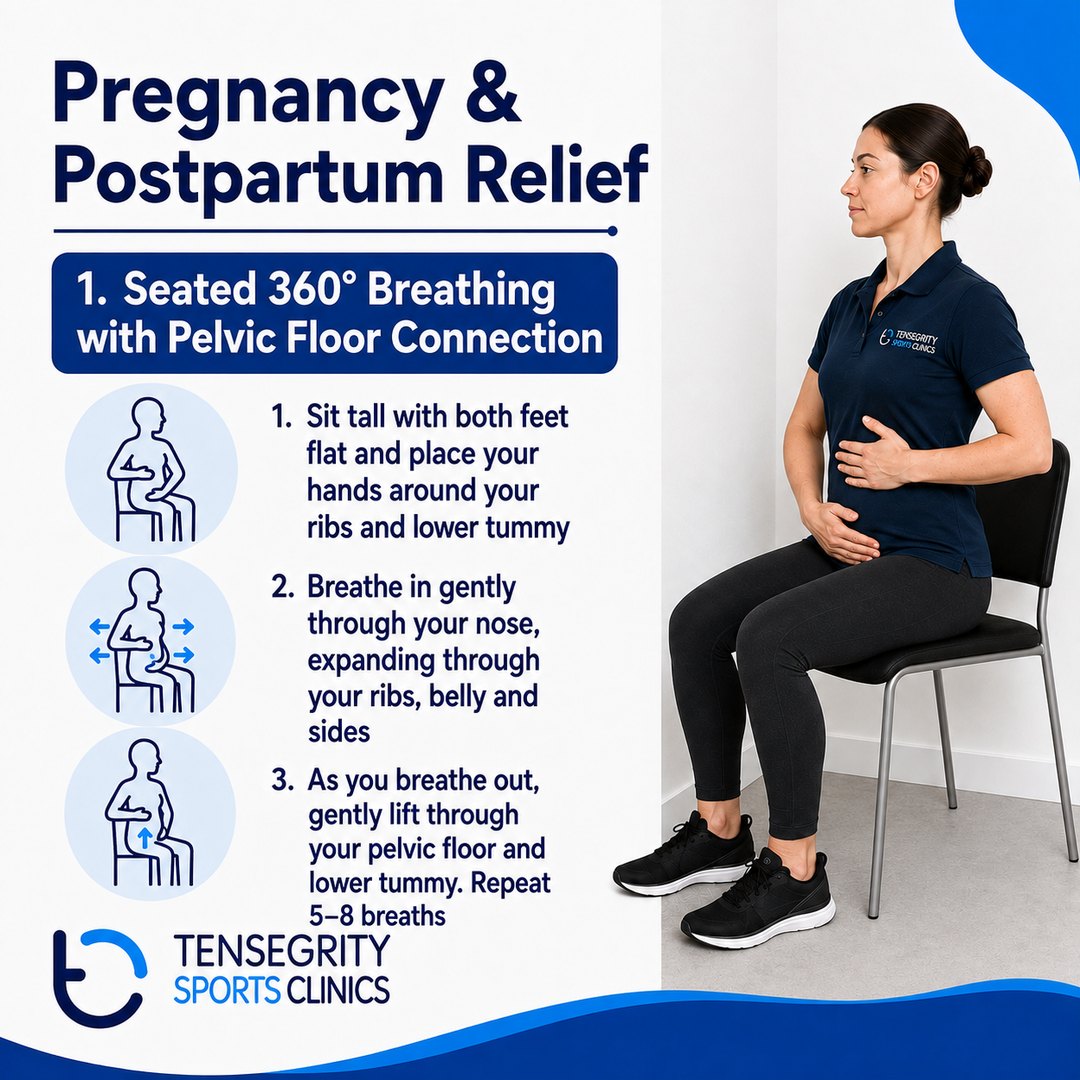
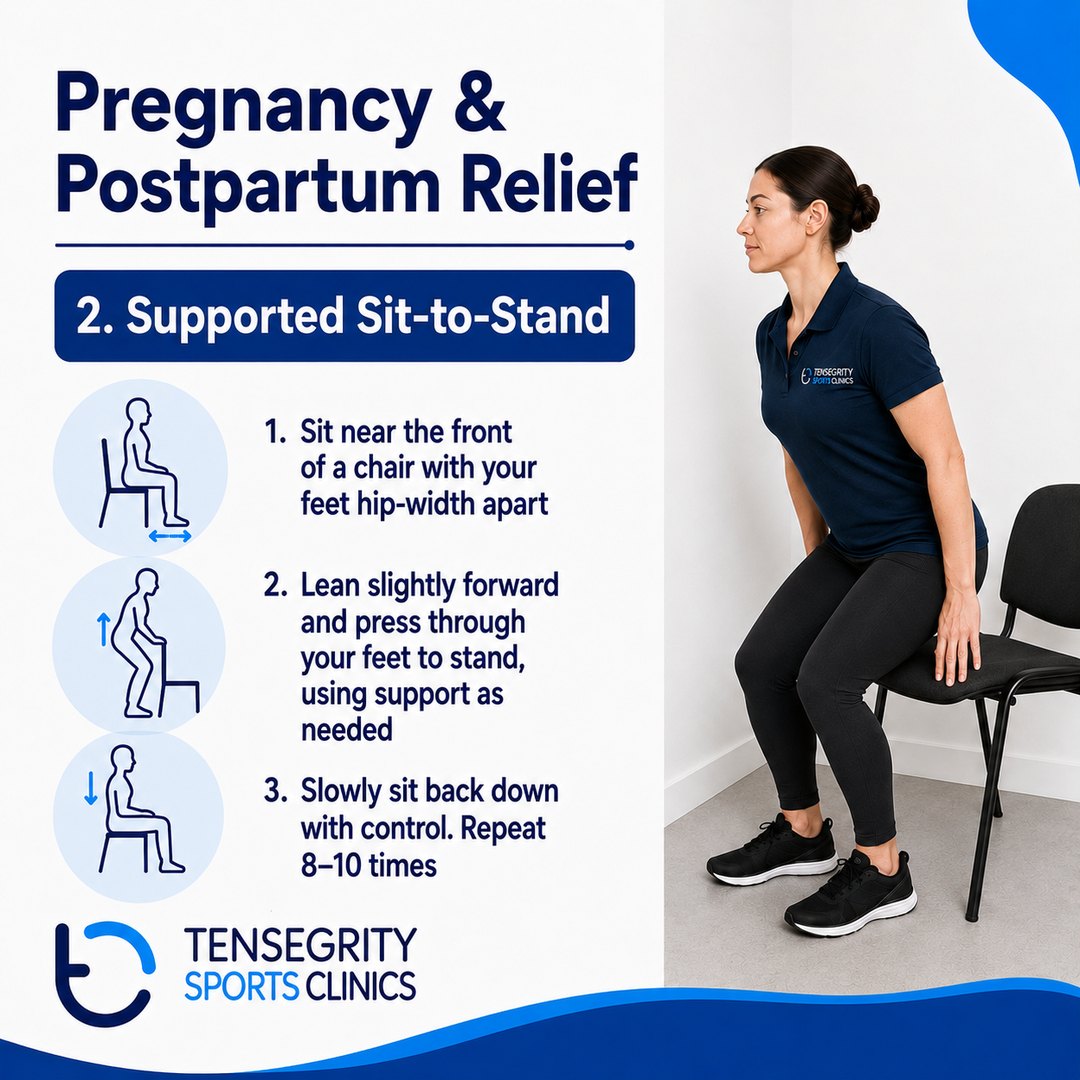
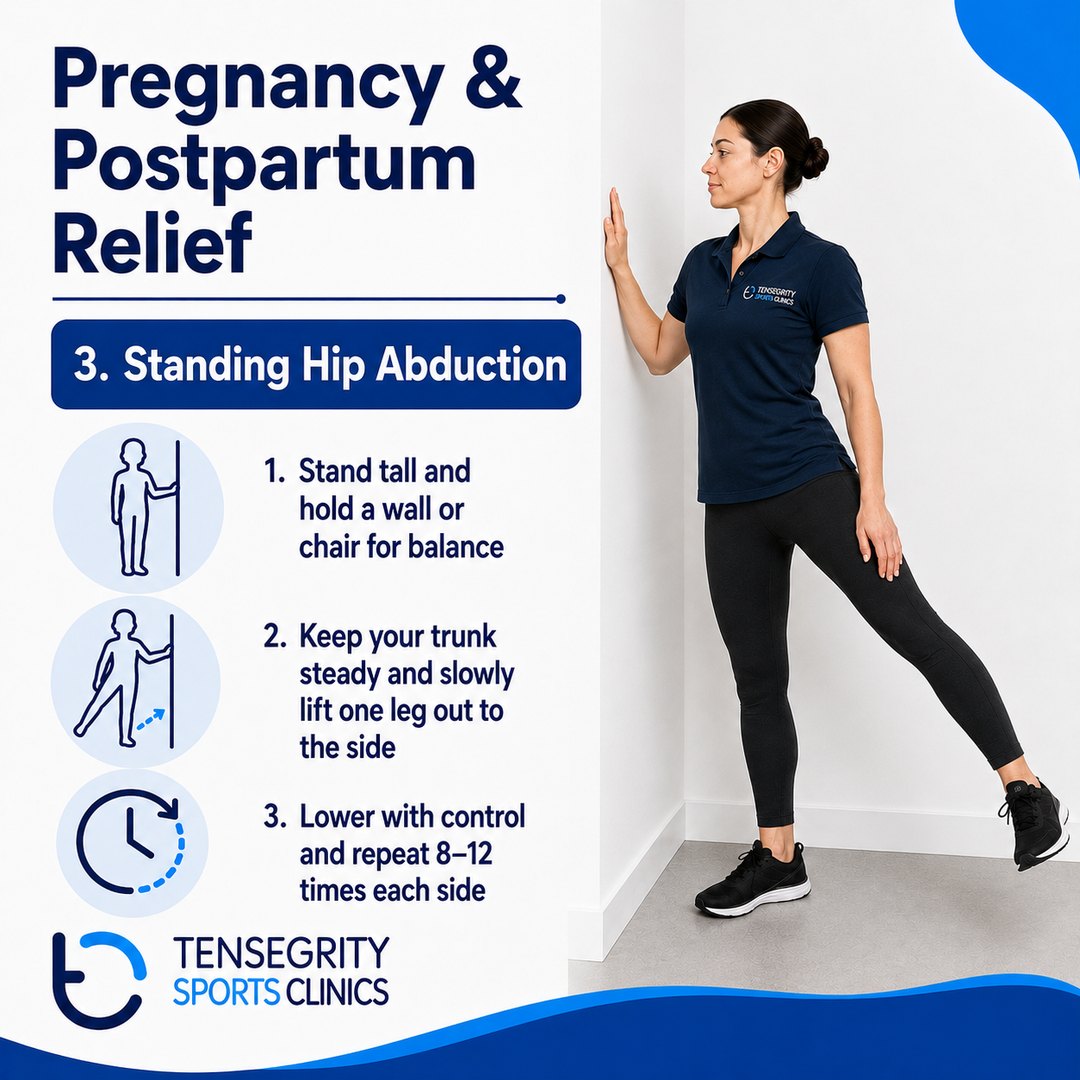
If the pain is not settling, or it is limiting walking, stairs or sleep, book an assessment so the loading can be matched to what your body can currently handle. Check with your midwife, obstetrician or GP before starting anything new if you have had a complicated birth or a caesarean.
What our practitioners recommend:
These are the items our practitioners most often suggest for pregnancy and postpartum SI joint pain between appointments. They support your rehabilitation. They do not replace assessment, and what suits you depends on your presentation.
- Postpartum support belt. A support belt is commonly used during pregnancy and after a caesarean. Check with your practitioner or midwife before use.
- Swiss ball. Used for pelvic control work and as a seated position option in later pregnancy.
As an Amazon Associate I earn from qualifying purchases. We may earn a commission on these links. Our recommendations are based on clinical judgement and are not influenced by commission.
Prevention:
- Keep moving through pregnancy: walking, swimming and modified strength work, adjusted as you go.
- Build strength before and between pregnancies: the best window is before symptoms start.
- Vary how you carry: swap sides, and use both arms where you can.
- Set up your feeding position: supported back, feet down, and the baby brought to you rather than you folding down to the baby.
- Get assessed early: pain that has been there two weeks is easier to change than pain that has been there five months.
Outlook:
Most pregnancy-related back and pelvic pain improves after birth, though not always immediately and not always without help. Where pain persists past the early postpartum months it usually responds to strengthening and load management rather than time alone.
Pain in one pregnancy raises the likelihood of pain in the next, which is a good reason to build strength in between rather than waiting.
Our Bella Vista clinic has the broadest team in the network, on-site parking, and Georgia Orr is Webster certified. No GP referral is needed and HICAPS is available on site.