

Overview:
A tibial stress fracture is a small crack in the shin bone caused by repeated loading rather than by a single injury. It is the most common stress fracture in runners, and it sits at the serious end of a spectrum that starts with shin splints.
The distinction between the two matters a great deal. Shin splints produce a diffuse ache along the inside border of the shin that often eases as you warm up. A stress fracture produces a sharp, pinpoint pain that gets worse as you run and does not settle with warming up. Continuing to run on a stress fracture can turn it into a complete fracture.
Anatomy:
The tibia carries most of the load through your lower leg. Bone is living tissue that constantly remodels itself, breaking down and rebuilding in response to the loads placed on it.
A stress fracture develops when the breaking down outpaces the rebuilding. That balance depends on how quickly load increases, on recovery time between sessions, and on whether the body has the energy and nutrients available to rebuild. The middle third of the tibia has a poorer blood supply and is a higher-risk site.
Causes:
Stress fractures are almost always a load management problem rather than a single event.
- Rapid increases in training: More distance, more intensity, or more frequency, added too quickly or all at once.
- Inadequate recovery: Not enough time between hard sessions for bone to rebuild.
- Low energy availability: Not eating enough for the training load. This is a significant and often missed factor, particularly in distance runners.
- Changes in surface or footwear: Moving from grass to concrete, or a sudden change in shoe type.
- Reduced calf and hip strength: Muscles absorb load, and when they fatigue the bone takes more of it.
- Previous stress fracture: A history of one is a strong predictor of another.
Symptoms:
The pattern of the pain is what separates this from shin splints.
- Pinpoint pain you can cover with one fingertip, usually on the front or inside of the shin.
- Pain that worsens through a run rather than easing after the first kilometre.
- Pain that continues after you stop, sometimes aching at night.
- Tenderness on pressing directly over one spot on the bone.
- Pain on hopping on that leg, which is often the point people realise it is not just shin splints.
- Occasionally a small area of swelling over the site.
Diagnosis and Tests:
Getting this diagnosis right early is what prevents a much longer layoff.
- History: The training history in the six to twelve weeks before symptoms started is usually where the answer is.
- Palpation: Focal tenderness over a small area of bone, rather than a diffuse line of tenderness.
- Hop test: Pain on single-leg hopping raises suspicion considerably.
- Screening questions: Energy availability, menstrual history where relevant, and previous stress fractures, because these change the risk picture.
- Imaging: X-ray often appears normal in the first two to three weeks. MRI is the investigation of choice and will show bone stress before a fracture line is visible. Referral for imaging is arranged where a stress fracture is suspected.
Management and Treatment:
The first step is removing the load that caused it, and the second is working out why the bone could not keep up.
- Relative rest from impact: Stopping running is not optional. The timeframe depends on the site and grade of the injury.
- Maintaining fitness without impact: Cycling, swimming, or deep water running, guided by what is pain-free.
- Addressing the cause: Reviewing training load, recovery, footwear and energy availability. Without this step, the next one is likely.
- Referral where appropriate: Front-of-shin stress fractures behave differently and are higher risk. These warrant a sports physician or orthopaedic opinion.
- Nutrition review: Where low energy availability is suspected, referral to a dietitian with sports experience is appropriate.
- Graded return to running: A structured walk-run progression, increasing only when the previous stage is comfortable.
- Medication and injection-based options: These sit outside a chiropractor’s scope of practice. If pain is limiting your sleep or stopping you starting rehabilitation, that is worth discussing with your GP rather than self-prescribing long term.
Three exercises for tibial stress fracture recovery
These three were put together by our practitioners as a starting point. They are general exercises, not a personalised program.
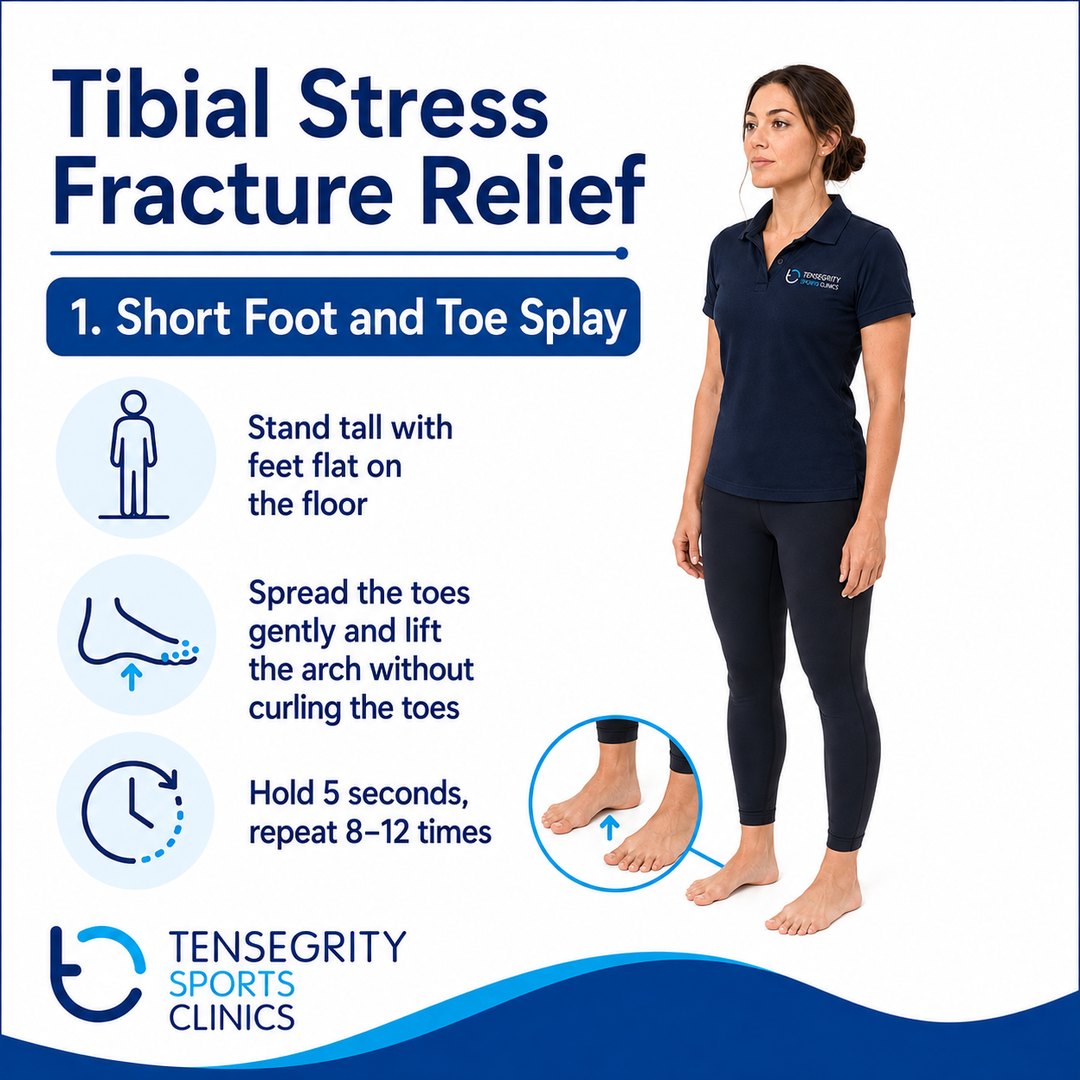
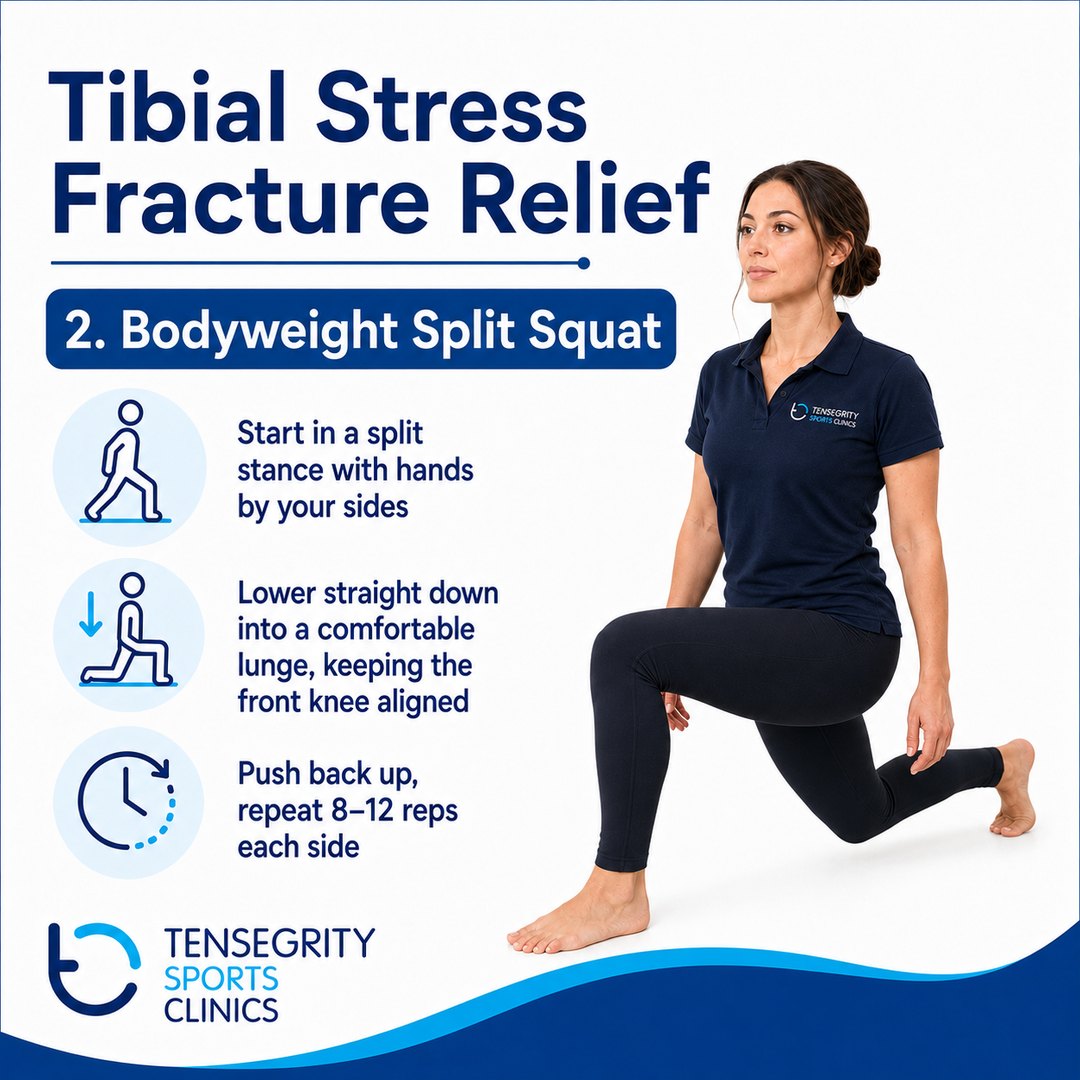
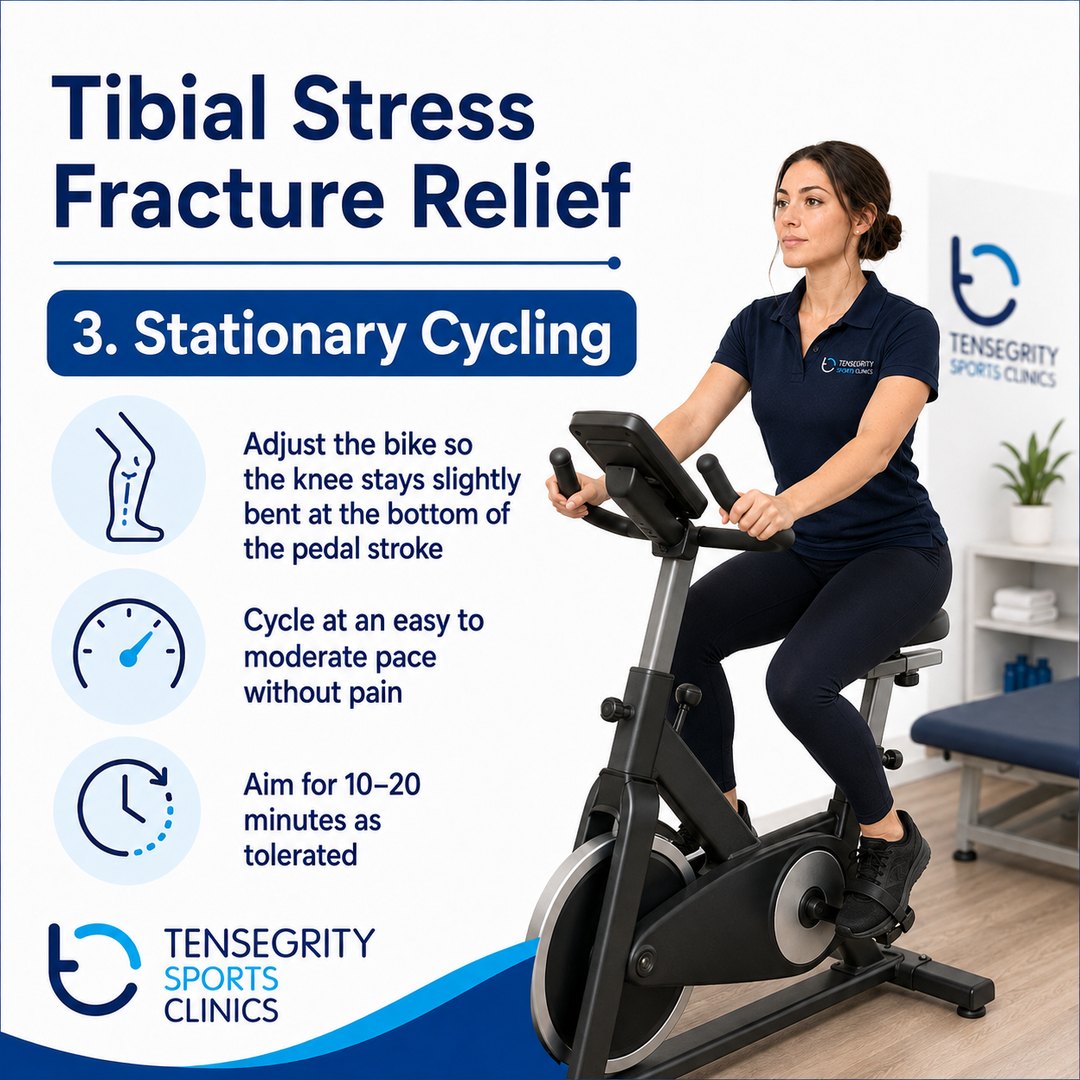
Start these only once your diagnosis is confirmed and you have been cleared for loading. If you have pinpoint shin pain that is getting worse as you run, stop running and book an assessment before doing any of this.
Prevention:
Bone adapts well to load when the load arrives gradually and the recovery is there.
- Increase running volume gradually, and change only one variable at a time.
- Build in genuine recovery days rather than training through fatigue.
- Eat enough for your training load. Under-fuelling is a bone health issue, not just a performance one.
- Include strength training twice a week. Strong calves and hips absorb load that would otherwise reach the bone.
- Take pinpoint shin pain seriously early rather than pushing through for weeks.
- Introduce surface and footwear changes gradually.
Outlook / Prognosis:
Most tibial stress fractures on the inside of the shin heal within six to eight weeks of removing impact, followed by a graded return to running over a further four to eight weeks. Returning too early is the most common reason for a longer recovery.
Stress fractures on the front of the shin are a different matter. They heal more slowly, have a higher rate of non-union, and often require a longer period out and review by a sports physician or orthopaedic surgeon. Whichever site is involved, the cause needs addressing, because a recurrence in the same season is common when the training pattern goes unchanged.