
Overview:
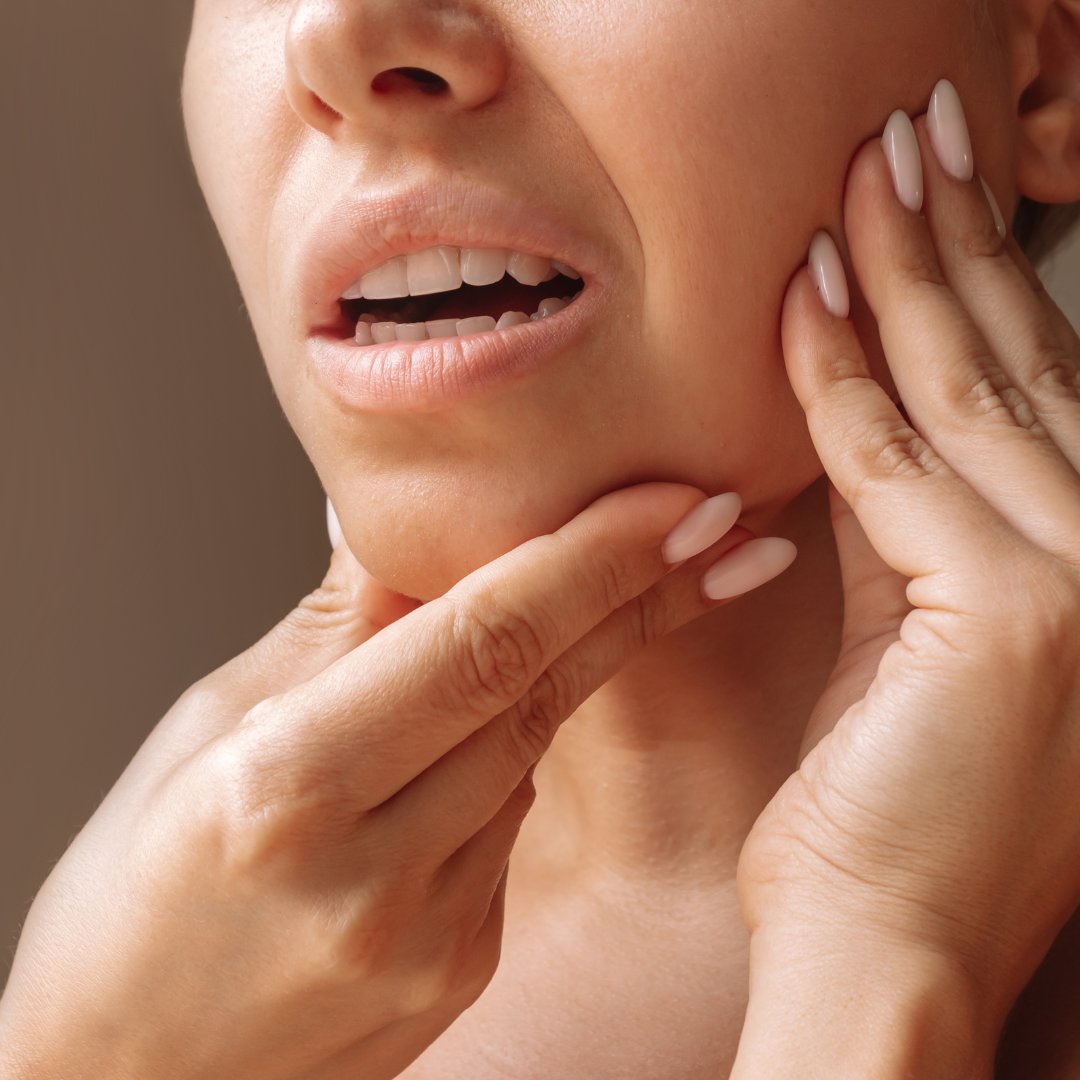
Jaw pain is a common symptom associated with temporomandibular joint disorders (TMD), often simply referred to as TMJ problems. TMJ disorders affect the jaw joints, chewing muscles and surrounding structures and can cause pain around the jaw, face, temples and ears.
Some people experience a constant dull ache, while others notice sharp jaw pain when chewing, yawning or opening their mouth. TMJ problems may also cause clicking or popping, jaw stiffness, headaches and difficulty opening the mouth fully.
Jaw pain does not always originate directly from the temporomandibular joint. Muscles responsible for chewing, dental problems, teeth grinding, neck dysfunction and other conditions can produce similar symptoms, making an appropriate assessment important.
Anatomy:
The temporomandibular joints (TMJs) are located just in front of each ear and connect the lower jaw (mandible) to the temporal bones of the skull. These joints allow the jaw to open, close, rotate and glide during everyday activities such as talking, chewing, biting, swallowing and yawning.
A small articular disc sits within each TMJ and helps distribute load while allowing smooth movement between the jaw and skull. The jaw is also controlled by several muscles, including the masseter, temporalis and pterygoid muscles. Pain can therefore arise from the joint itself, the articular disc, surrounding muscles and connective tissues, or a combination of these structures.
Causes:
There is not always one identifiable cause of TMJ-related jaw pain. Common contributing factors include:
- Teeth grinding or jaw clenching: Bruxism can repeatedly overload the jaw muscles and joints, particularly during sleep or periods of increased stress.
- Jaw muscle tension: Persistent tension in the masseter, temporalis and other chewing muscles can cause aching, tenderness and fatigue around the jaw and face.
- TMJ disc displacement: The articular disc can move from its normal position, potentially causing clicking, popping, catching or locking.
- Jaw injury: Sporting injuries, falls, direct impacts or other trauma can irritate the joint and surrounding tissues.
- Arthritis: Osteoarthritis and inflammatory arthritis can affect the TMJ, resulting in pain, stiffness and reduced movement.
- Repetitive jaw loading: Frequent gum chewing, nail biting, chewing particularly hard foods or repeatedly opening the mouth widely can aggravate sensitive structures.
- Dental factors: Tooth pain, dental infections and other dental conditions can sometimes present as jaw or facial pain.
- Neck dysfunction: The jaw and cervical spine have closely related muscular and neurological systems. In some people, neck dysfunction may coexist with or contribute to jaw symptoms.
- Stress: Stress can increase unconscious jaw clenching, teeth grinding and muscle tension, potentially aggravating existing symptoms.
Symptoms:
TMJ disorders can present differently from person to person. Common symptoms include:
- Jaw pain on one or both sides.
- Pain when chewing, biting or opening the mouth widely.
- Tenderness around the jaw muscles, and jaw stiffness, particularly in the morning.
- Clicking or popping when opening or closing the mouth, or grinding and crunching sensations within the joint.
- Difficulty opening the mouth fully, or the jaw catching or locking.
- Facial pain or aching, and pain around or in front of the ear.
- Headaches, particularly around the temples.
- Neck and shoulder discomfort.
- Changes in how the upper and lower teeth meet.
- Jaw fatigue after prolonged talking or chewing.
Jaw clicking without pain or restriction is relatively common and does not necessarily indicate a problem requiring treatment.
Diagnosis:
Assessment of jaw pain generally begins with a detailed discussion of your symptoms, medical and dental history and activities that aggravate or relieve your pain. A musculoskeletal assessment may examine:
- Jaw movement: opening and closing, range of motion and movement symmetry.
- Joint signs: clicking, popping or grinding, and joint tenderness.
- Muscle assessment: jaw muscle tenderness and tension, and jaw strength and control.
- Neck and posture: cervical spine movement and function, and head, neck and shoulder posture.
- Contributing habits: activities or habits that may be feeding your symptoms.
- Imaging tests: not necessary for every case. Where significant joint pathology, trauma, persistent locking or another condition is suspected, X-rays, CT or MRI may be recommended.
Dental or oral and maxillofacial assessment may also be appropriate when symptoms suggest a dental condition, significant bruxism or structural TMJ disorder.
Treatment:
Treatment depends on whether the jaw pain is primarily muscular, joint-related, disc-related or associated with another condition. Most uncomplicated TMJ disorders are initially treated conservatively. Treatment may include:
- Jaw rehabilitation: Specific mobility, coordination and strengthening exercises may help restore comfortable and controlled jaw movement.
- Manual therapy: Appropriate manual therapy may be directed towards the jaw, surrounding muscles, cervical spine and associated musculoskeletal structures.
- Soft-tissue treatment: Treatment targeting the masseter, temporalis and surrounding muscles may help reduce muscular tension and tenderness.
- Neck rehabilitation: Where cervical spine dysfunction contributes to symptoms, treatment may include mobility, strengthening and postural exercises.
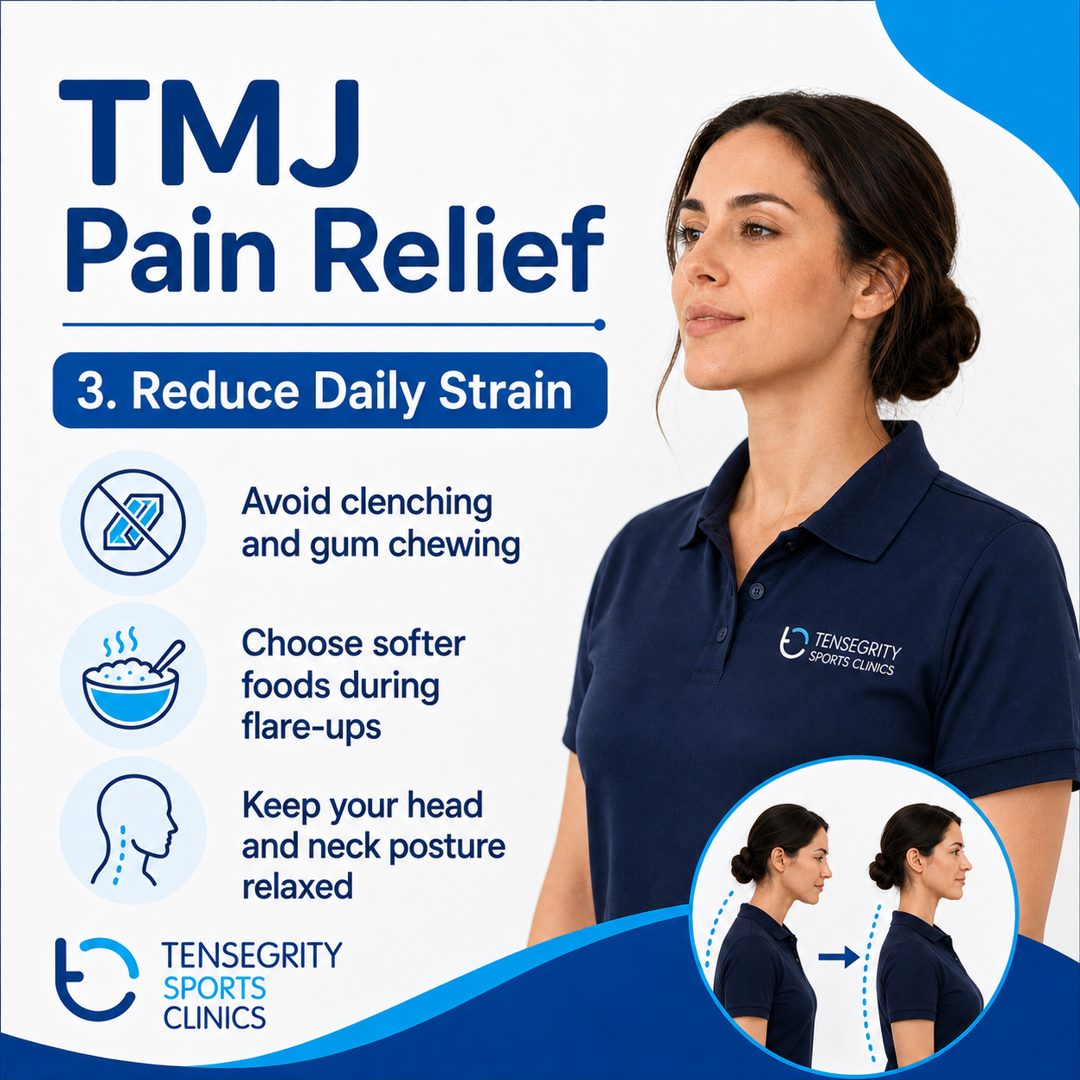
- Activity modification: Temporarily reducing hard or chewy foods, excessive gum chewing, very wide yawning and other aggravating activities can allow irritated structures to settle.
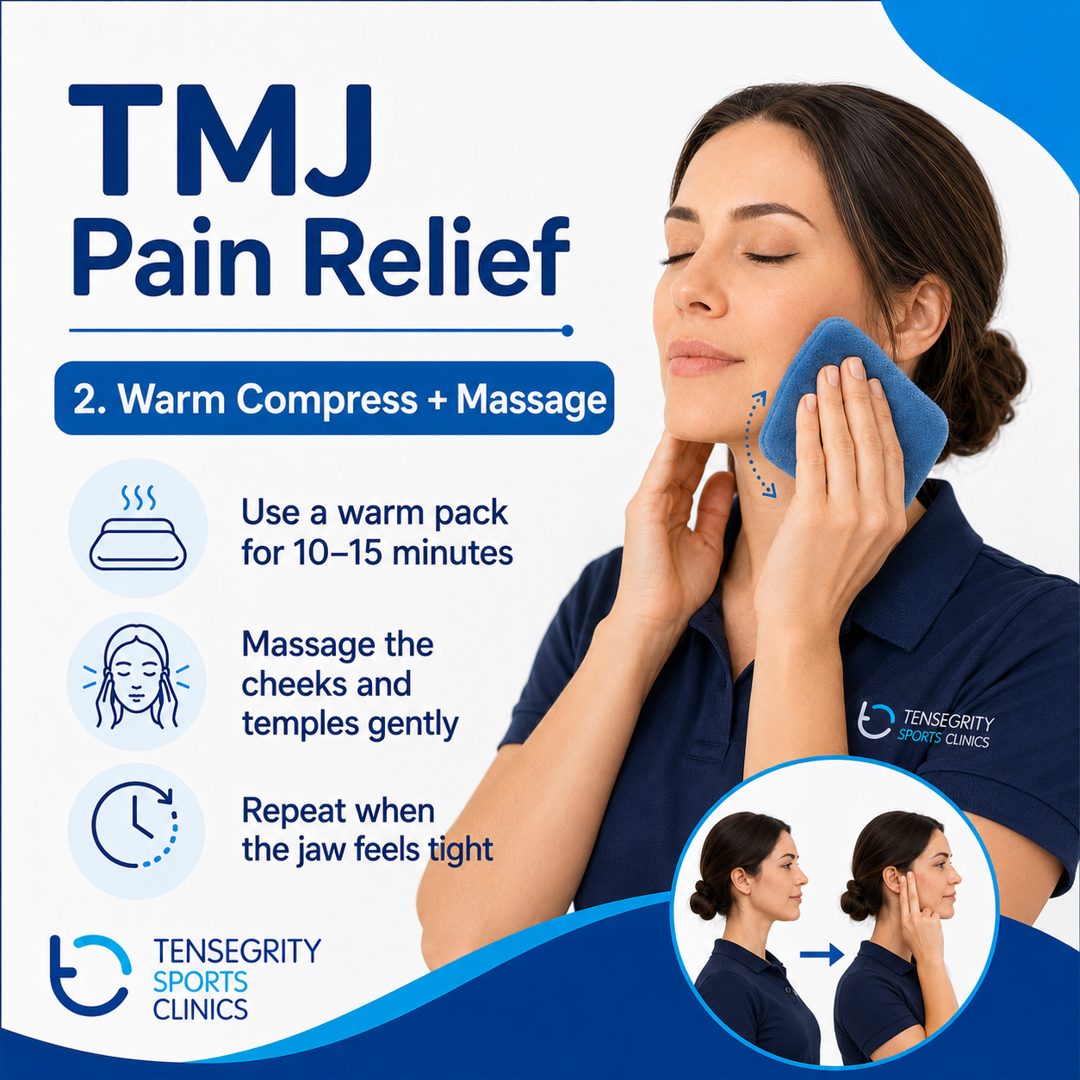
- Heat or cold therapy: Heat may help relax tight jaw muscles, while cold therapy may be appropriate following an acute aggravation.
- Medication: Your doctor or pharmacist may recommend appropriate pain-relieving or anti-inflammatory medication where clinically suitable.
- Dental management: If teeth grinding or clenching is contributing to symptoms, assessment by a dentist may be recommended. Some patients may benefit from a professionally prescribed occlusal splint.
- Onward referral: Persistent locking, significant structural abnormalities, severe arthritis or symptoms that do not respond to conservative treatment may require assessment by a dentist, oral and maxillofacial surgeon or other appropriate healthcare professional.
Rehabilitation:
Recovery depends heavily on the underlying cause. A mild episode of muscular jaw pain may improve within several days to a few weeks, particularly when aggravating behaviours such as excessive clenching or chewing are addressed. More persistent muscular or joint-related TMJ conditions may require approximately 6 to 12 weeks or longer of rehabilitation and behavioural modification. Disc-related TMJ disorders, arthritis and chronic jaw pain can take several months to improve and may require longer-term management.
Recovery can be influenced by how long symptoms have been present, the underlying cause, teeth grinding or clenching, sleep quality, stress, associated neck problems, previous jaw injuries, and how closely you stick to the rehabilitation and activity changes.
Three exercises that help with TMJ pain
These are general strategies, not a personalised treatment plan. If any of them increases your jaw pain, stop and book an assessment.
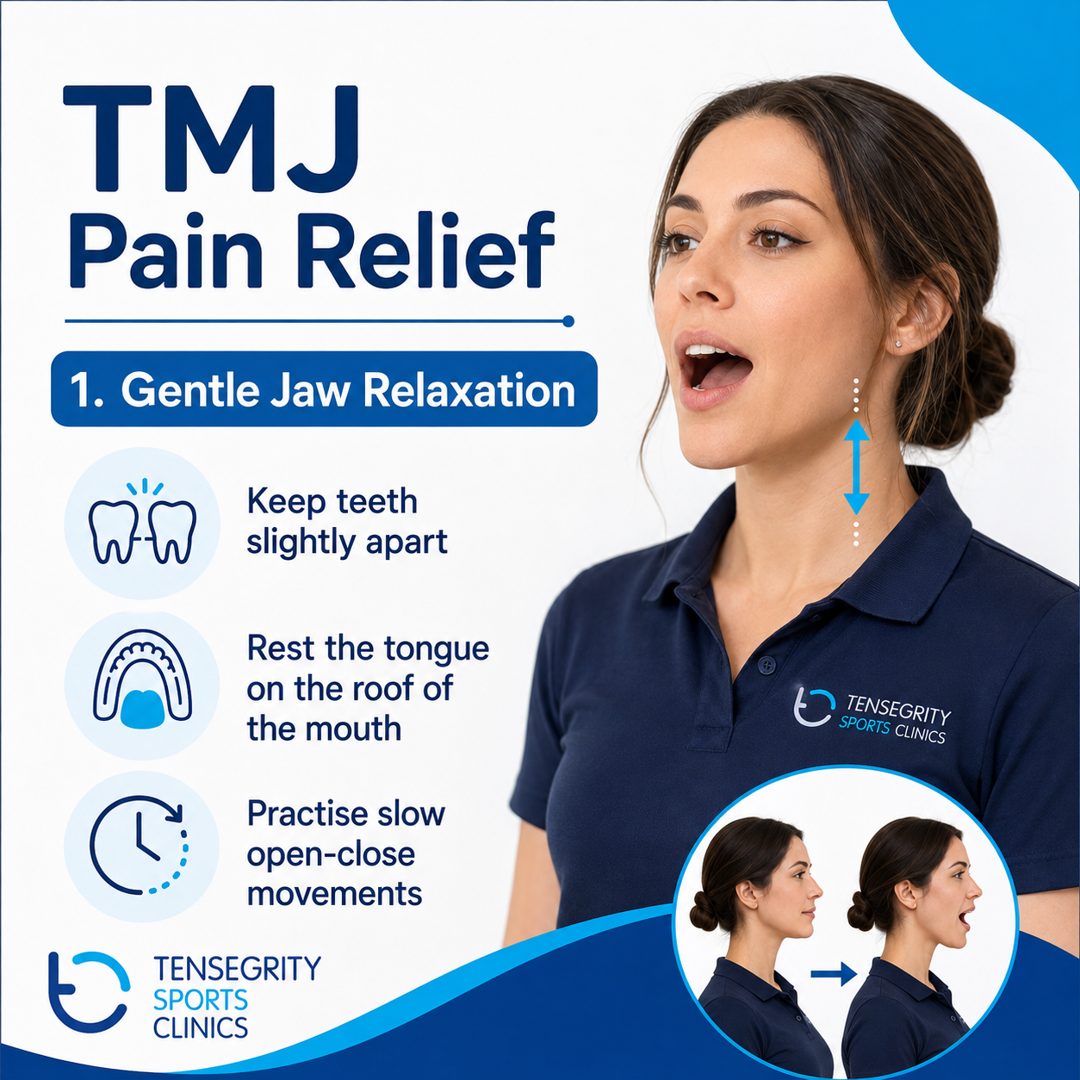
1. Gentle jaw relaxation
2. Warm compress and massage
3. Reduce daily strain
What our practitioners recommend:
These are the items our practitioners most often suggest for TMJ dysfunction between appointments. They support your rehabilitation. They do not replace assessment, and what suits you depends on your presentation.
- Cervical traction device. The upper cervical spine is closely linked to the jaw. Used for short daily sessions where your practitioner has cleared it.
- Microwavable heat pack. Heat over the jaw and upper neck muscles is commonly used before jaw mobility work.
As an Amazon Associate I earn from qualifying purchases. We may earn a commission on these links. Our recommendations are based on clinical judgement and are not influenced by commission.
Prevention:
Strategies that may help reduce recurrent TMJ and jaw pain include:
- Resting jaw position: allow the jaw to rest naturally with the teeth slightly apart when you are not eating, and avoid unnecessary clenching during the day.
- Chewing habits: limit excessive gum chewing, and avoid regularly biting nails, pens or other objects.
- Jaw opening: avoid repeatedly forcing the mouth into very wide positions.
- Dental advice: seek dental assessment if you regularly grind your teeth.
- Posture and breaks: take regular movement breaks during prolonged desk and screen work, and maintain appropriate neck and upper-body strength and mobility.
- Stress: address stress where it contributes to jaw clenching or muscle tension.
- After a flare-up: gradually return to normal chewing rather than unnecessarily avoiding jaw movement for prolonged periods.
Outlook:
Most people with uncomplicated TMJ disorders and muscular jaw pain respond well to conservative treatment. Symptoms can fluctuate, particularly during periods of increased stress, teeth grinding, prolonged clenching or changes in activity. Recurring symptoms do not necessarily mean that the joint is becoming progressively damaged.
Identifying the structures contributing to the pain and addressing factors such as muscle tension, jaw loading, neck function and clenching habits can help improve long-term outcomes.
TMJ and jaw pain can affect eating, talking, sleeping and concentration, but avoiding jaw movement altogether is generally unnecessary. A gradual return to comfortable, normal jaw movement, combined with appropriate rehabilitation and management of contributing factors, can help restore function and reduce the likelihood of recurring symptoms.
Jaw pain should be assessed if it is persistent, worsening or significantly interfering with eating, speaking, sleeping or normal daily activities. Prompt medical or dental assessment is particularly important if you experience a jaw that becomes persistently locked, significant facial or jaw swelling, fever or signs of infection, jaw pain following significant trauma, sudden changes in your bite, significant difficulty opening your mouth, or unexplained and progressively worsening facial pain.