
Overview:
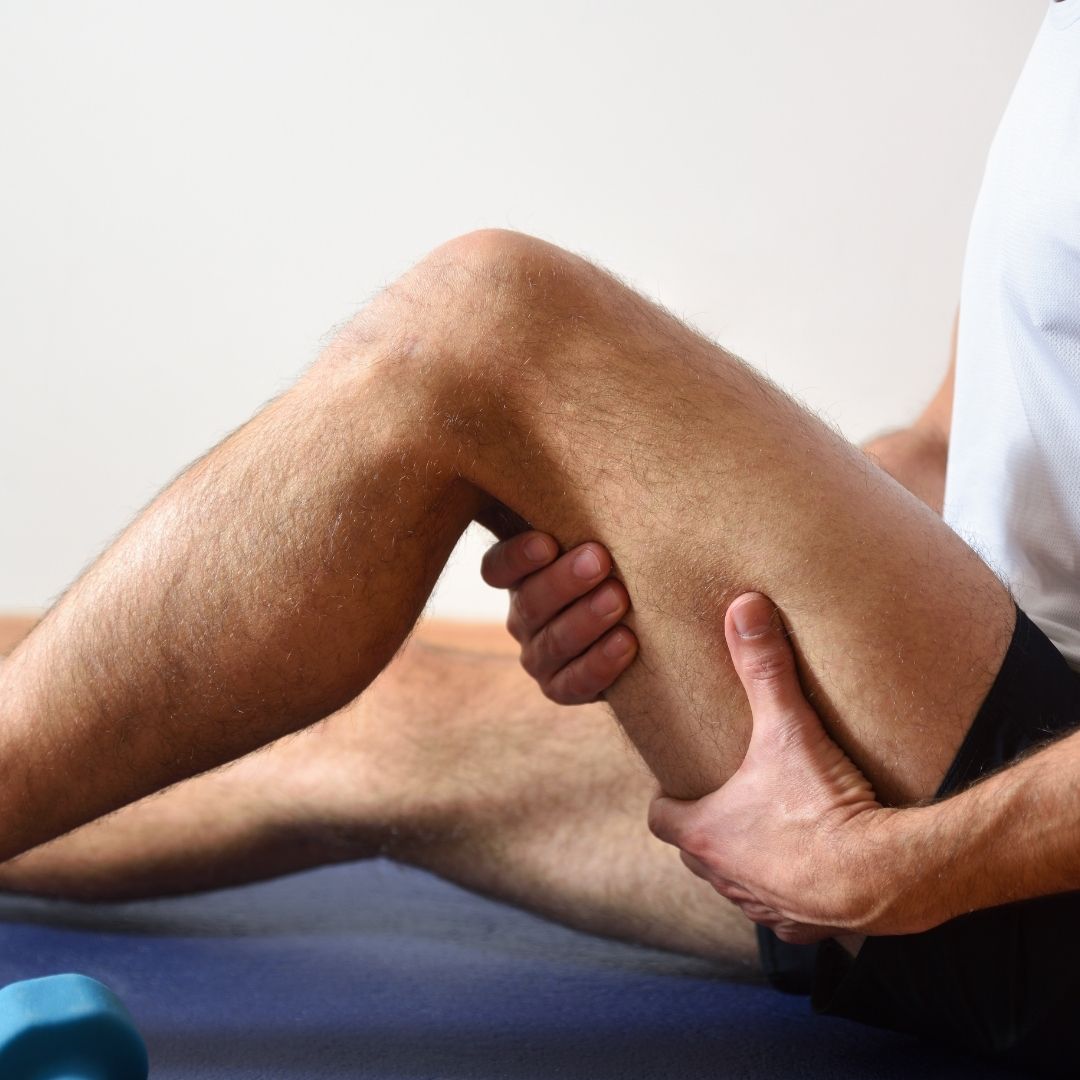
Proximal hamstring tendinopathy is pain where the hamstring tendons attach to the sitting bone, deep in the lower buttock. It is often called high hamstring tendinopathy, and people usually describe it as pain right on the bone they sit on.
It is common in distance runners, sprinters, hurdlers and cyclists, and also in people who sit for long periods on hard surfaces. It is frequently mistaken for a hamstring strain, for sciatica, or for a glute problem, and it behaves quite differently from all three.
Anatomy:
The three hamstring muscles share a common tendon that attaches to the ischial tuberosity, the sitting bone at the base of the pelvis. This attachment takes very high loads during running, particularly in the swing phase just before the foot lands.
The sciatic nerve runs close by, which is why the pain sometimes spreads down the back of the thigh and gets confused with sciatica. The tendon is also compressed against the bone whenever the hip is bent forward, which is the key to understanding what aggravates it.
Causes:
Like other tendinopathies, this is a load problem, with compression playing a particular role.
- A change in running load: More speed work, more hills, or a jump in distance. Speed and hills load this tendon hardest.
- Prolonged sitting: Especially on hard surfaces, which compresses the tendon against the sitting bone.
- Deep hip flexion positions: Deep squats, deadlifts through a large range, and aggressive hamstring stretching all compress the attachment.
- Stretching the hamstring: A common and counterproductive response. Stretching compresses an already irritated tendon and often makes it worse.
- Reduced gluteal strength: When the glutes do not contribute, the hamstrings take more of the load.
- A previous hamstring injury: Changes how load is shared along the muscle and tendon.
Symptoms:
The location and the pattern of aggravation are both quite specific.
- Deep pain right at the sitting bone, sometimes described as sitting on a stone.
- Worse with sitting, particularly on hard chairs, and worse the longer you sit.
- Pain with running, especially uphill or at speed, and often worse at the start of a run.
- Pain with driving, and with sitting in low or deep seats.
- Discomfort that can spread down the back of the thigh but rarely below the knee.
- Stiffness after sitting, easing after a few minutes of walking.
Diagnosis and Tests:
Assessment separates this from a hamstring muscle strain and from referred pain from the back.
- History: The sitting pain is the giveaway. A hamstring strain does not usually hurt more the longer you sit.
- Palpation: Tenderness directly over the ischial tuberosity.
- Loading tests: A group of tests that load the tendon at increasing degrees of hip flexion, which reproduce the pain in a predictable pattern.
- Strength testing: Hamstring strength at different knee angles, compared side to side.
- Excluding other sources: Lower back and SI joint testing, and screening for referred nerve pain.
- Imaging: Not usually needed. MRI is reserved for suspected significant tearing or where symptoms are not responding as expected. Tendon changes on imaging are common in people without pain.
Management and Treatment:
The two priorities are reducing compression and progressively loading the tendon.
- Removing compression: Reducing time in deep hip flexion, using a cushion when sitting, and stopping hamstring stretching, which is usually the fastest change people notice.
- Isometric loading first: Sustained holds at low hip flexion angles, which often reduce pain in the short term and start rebuilding capacity.
- Progressive strengthening: Building through the range, adding hip flexion angle gradually as tolerance improves. This is the core of the program.
- Gluteal strengthening: Reducing the share of load the hamstring is carrying.
- Running modification: Reducing hills and speed work temporarily rather than stopping running altogether in most cases.
- Patience with the timeline: This tendon responds more slowly than most, and progressing too quickly is the usual reason for a flare.
- Medication and injection-based options: These sit outside a chiropractor’s scope of practice. If pain is limiting your sleep or stopping you starting rehabilitation, that is worth discussing with your GP rather than self-prescribing long term.
Three exercises for proximal hamstring tendinopathy
These three were put together by our practitioners as a starting point. They are general exercises, not a personalised program.
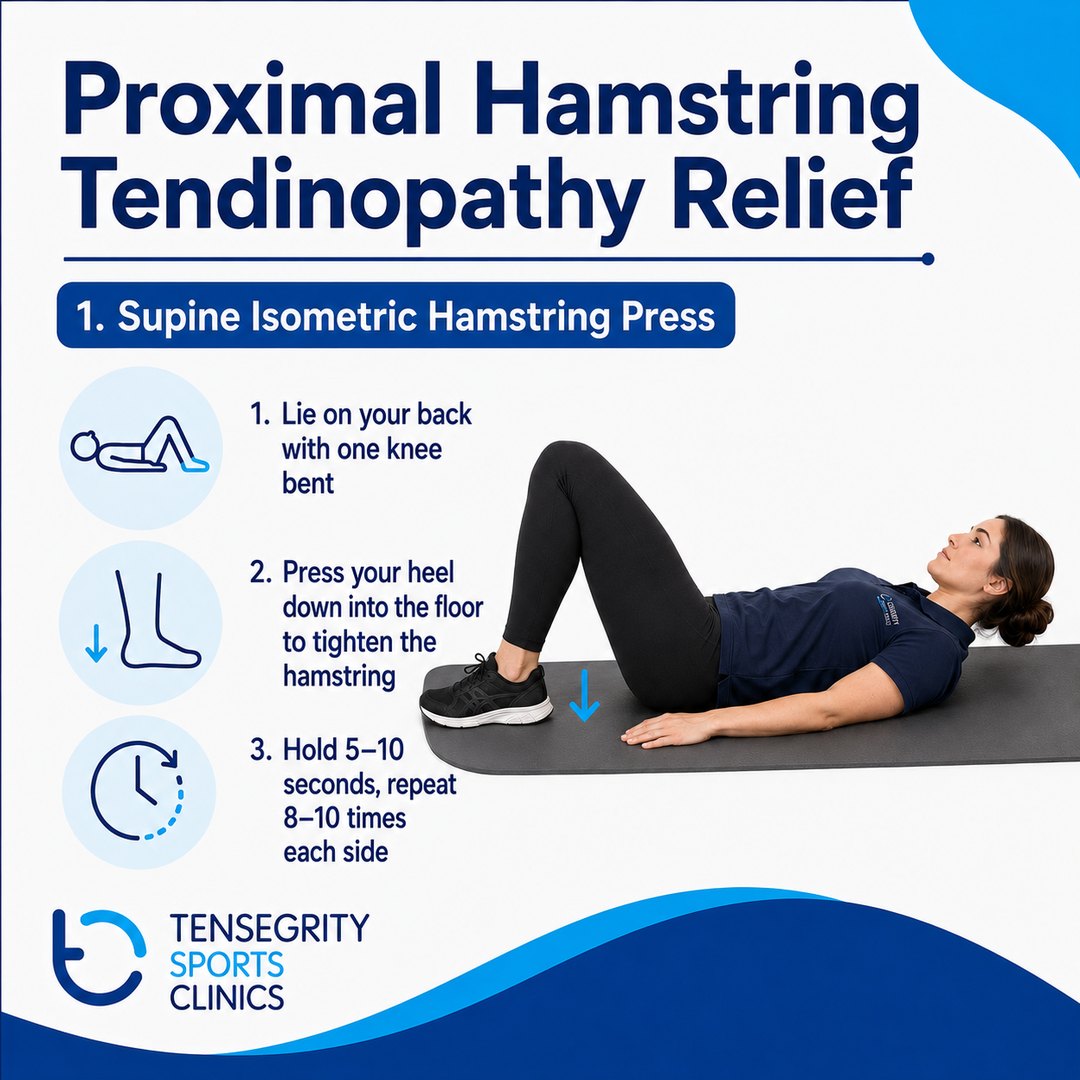
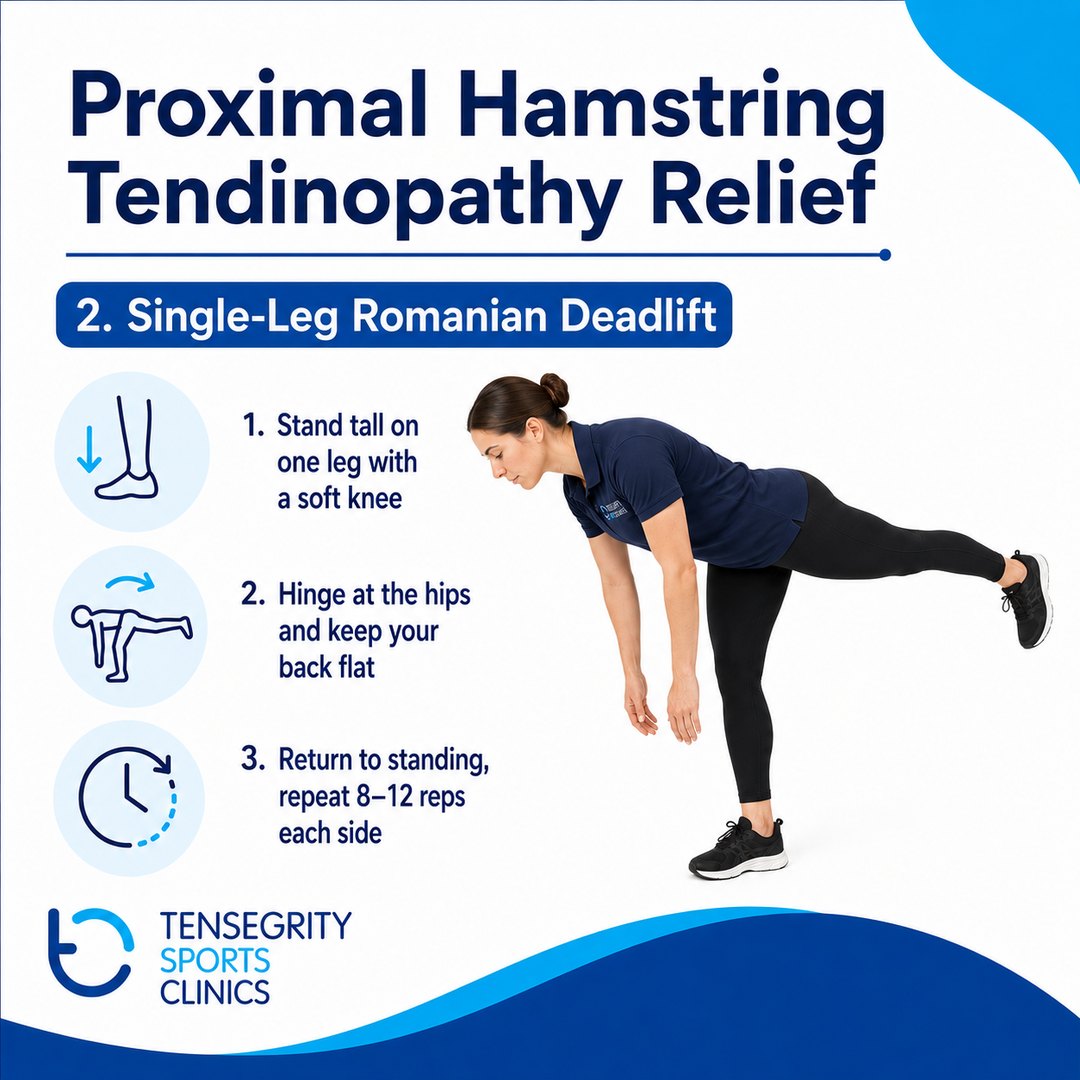
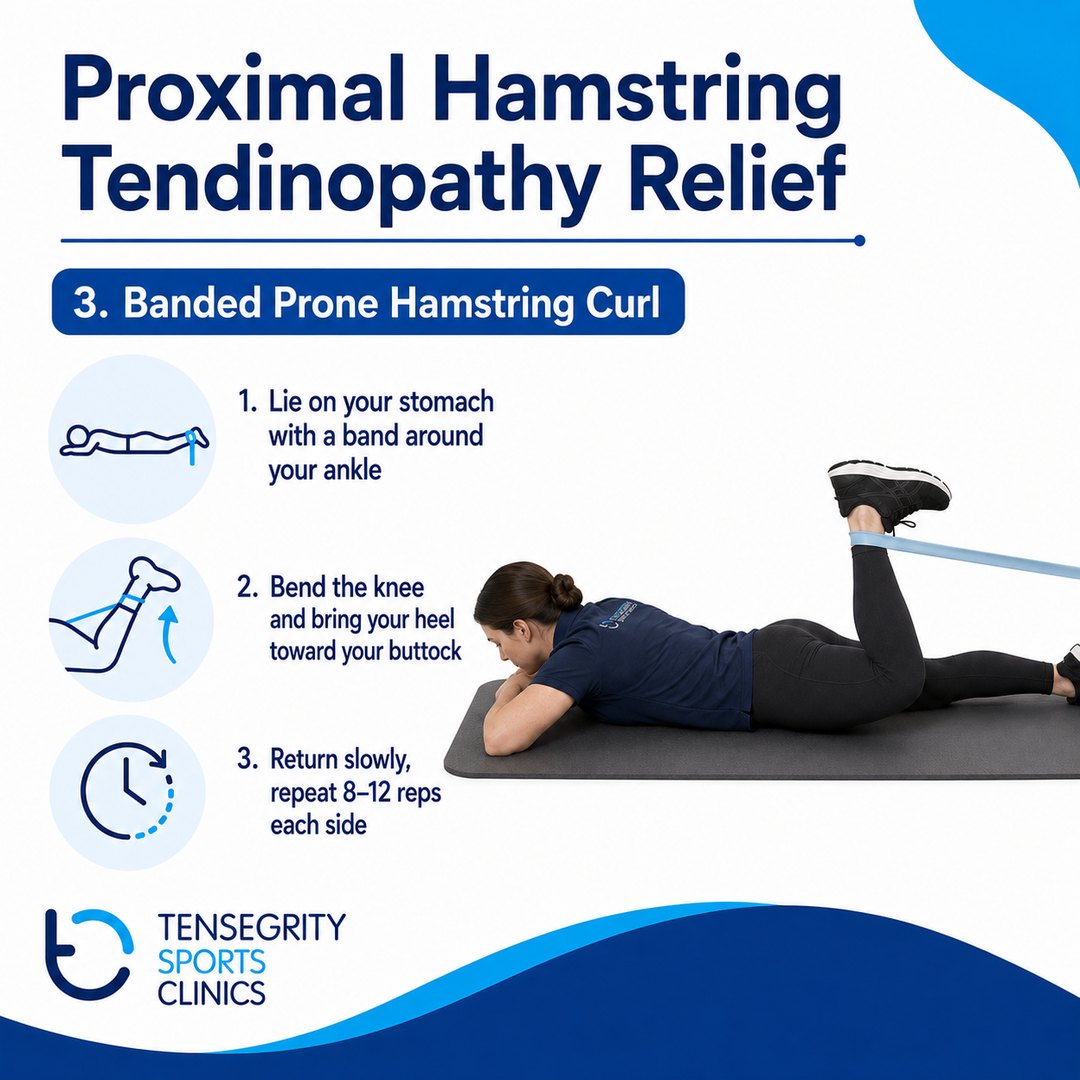
If sitting is still the problem, or the pain returns every time you add speed or hills, book an assessment so the loading can be matched to what the tendon can currently handle.
Prevention:
Most flares follow the same triggers, so the same measures reduce the chance of recurrence.
- Add speed work and hill running gradually and separately, not in the same week.
- Break up long periods of sitting, and use a cushion on hard seats.
- Keep hamstring and glute strength work going year round.
- Avoid aggressive hamstring stretching as a response to tightness in this area.
- Return to full training in stages after any hamstring injury.
Outlook / Prognosis:
This tendon is slow. Most people see meaningful improvement within three months of consistent loading, and a full return to running at speed often takes closer to six. That is normal for a compressive tendinopathy and not a sign that treatment is failing.
The strongest predictor of a good outcome is sticking with the progressive loading after the pain has settled. Stopping early is the most common reason it returns the following season.