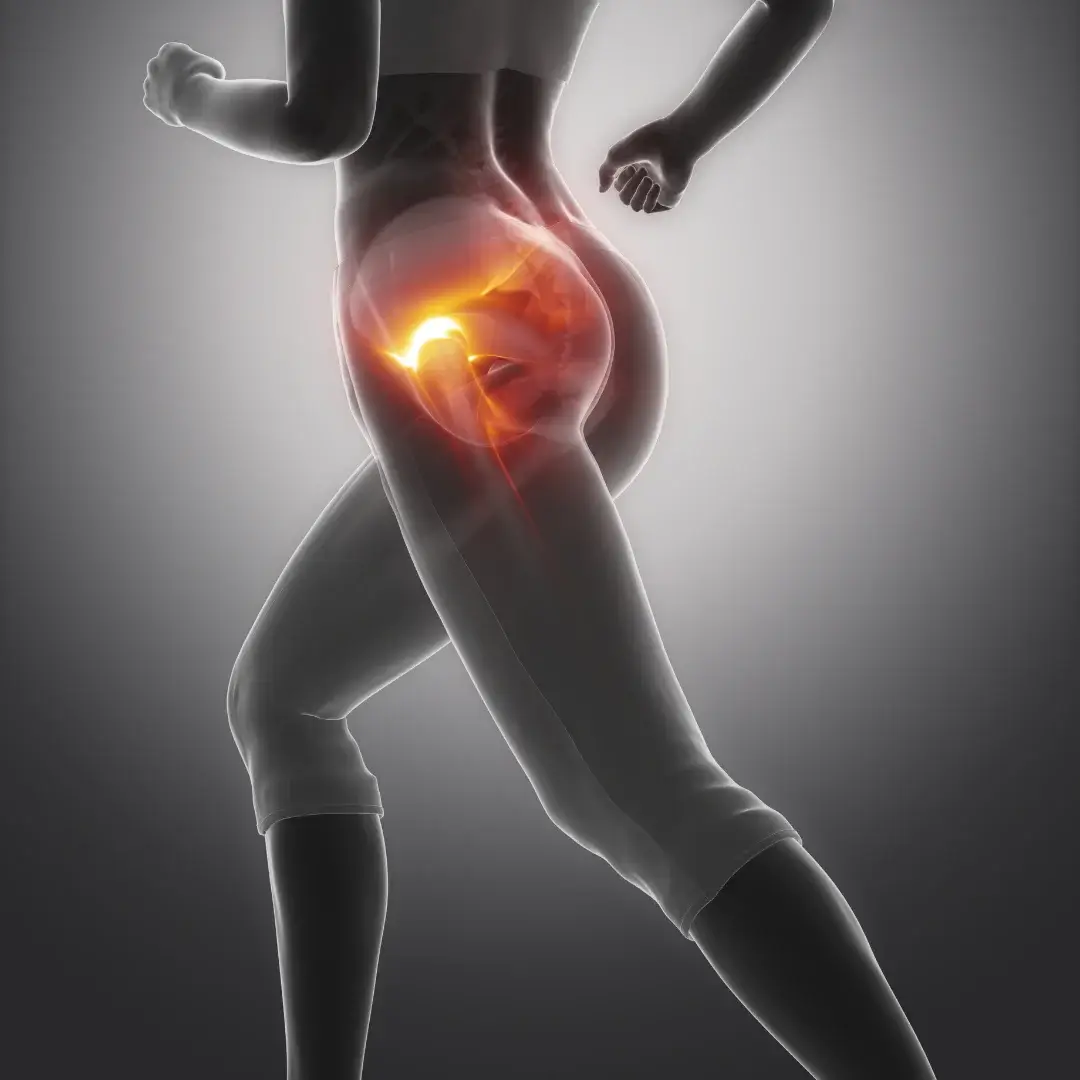

Overview:
Hip arthritis, also known as hip osteoarthritis, is a degenerative joint condition characterised by the gradual breakdown of cartilage in the hip joint. This condition commonly affects older adults but can also occur due to injury, excessive wear and tear, or underlying medical conditions.
Anatomy:
The hip joint is a ball-and-socket joint where the rounded head of the femur (thigh bone) fits into the acetabulum (socket) of the pelvis. Articular cartilage covers the surfaces of the bones, providing cushioning and allowing smooth movement of the joint. In hip arthritis, the cartilage becomes worn and damaged, leading to friction, pain, and stiffness in the hip joint.
Causes:
Hip arthritis typically develops gradually over time due to a combination of factors, including:
- Age: The risk of developing hip arthritis increases with age as cartilage naturally deteriorates over time.
- Joint Overuse: Repetitive stress or excessive use of the hip joint, such as from high-impact activities or heavy lifting, can accelerate cartilage wear and tear.
- Joint Injury: Previous hip injuries, fractures, or trauma to the hip joint can predispose individuals to develop arthritis later in life.
- Genetics: Genetic factors may play a role in the development of hip arthritis, with certain individuals being more susceptible to cartilage degeneration.
- Obesity: Excess body weight places increased stress on the hip joint, leading to accelerated cartilage breakdown and joint degeneration.
Symptoms:
The symptoms of hip arthritis may vary in severity but commonly include:
- Hip Pain: Persistent pain or discomfort in the hip joint, often described as a deep ache or throbbing sensation.
- Stiffness: Decreased range of motion and stiffness in the hip joint, particularly after periods of inactivity or prolonged sitting.
- Limited Mobility: Difficulty performing activities that require bending, lifting, or weight-bearing on the affected hip.
- Joint Swelling: Swelling or inflammation around the hip joint, accompanied by warmth and tenderness to the touch.
- Joint Instability: Feeling of instability or weakness in the hip joint, especially when walking or standing.
- Decreased Function: Impaired ability to walk, climb stairs, or engage in physical activities due to hip pain and stiffness.
Diagnosis:
Diagnosis of hip arthritis typically involves a comprehensive evaluation by a healthcare provider, including:
- Medical History: Discussion of symptoms, previous hip injuries, medical conditions, and family history of arthritis.
- Physical Examination: Assessment of hip joint mobility, range of motion, and signs of inflammation or joint deformity.
- Imaging Studies: X-rays, magnetic resonance imaging (MRI), or computed tomography (CT) scans may be ordered to visualise changes in the hip joint, including cartilage loss, bone spurs, and joint deformities.
Treatment:
Treatment for hip arthritis aims to alleviate pain, improve joint function, and enhance quality of life. Common treatment options include:
- Exercise rehabilitation: Gentle stretching and strengthening exercises under the guidance of your practitioner can help improve hip joint mobility, stability, and muscle strength.
- Weight Management: Maintaining a healthy weight through diet and exercise can help reduce stress on the hip joint and slow the progression of arthritis.
- Assistive Devices: Using a cane, walker, or other assistive devices can help offload weight from the affected hip and improve mobility.
- Lifestyle Modifications: Avoiding high-impact activities, modifying daily activities to reduce joint stress, and practising proper posture can help manage symptoms and preserve hip joint function.
- Medication and injection-based options: These sit outside a chiropractor’s scope of practice. If pain is limiting your sleep or stopping you starting rehabilitation, that is worth discussing with your GP rather than self-prescribing long term.
Three exercises for hip arthritis
These three were put together by our practitioners as a starting point. They are general exercises, not a personalised program.
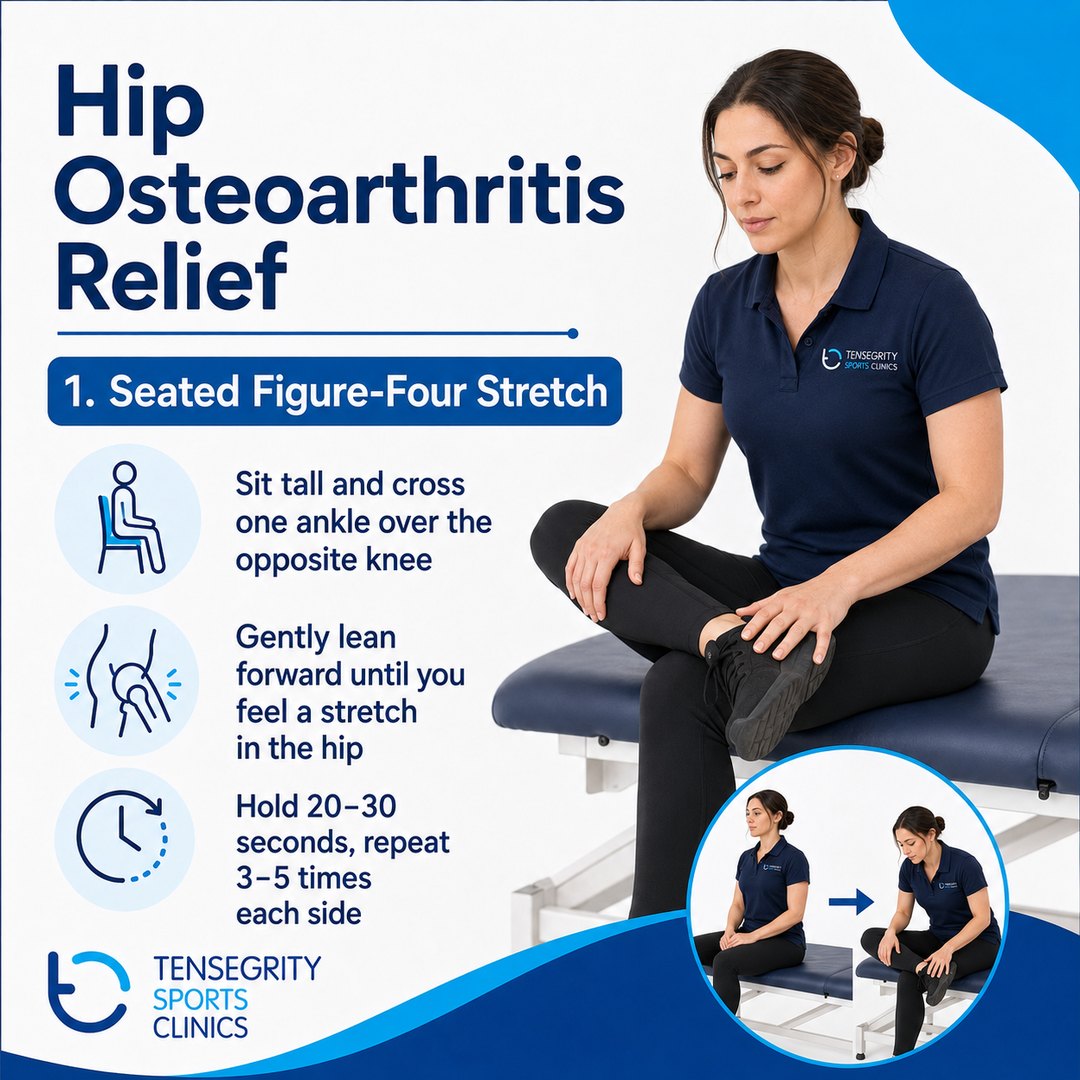
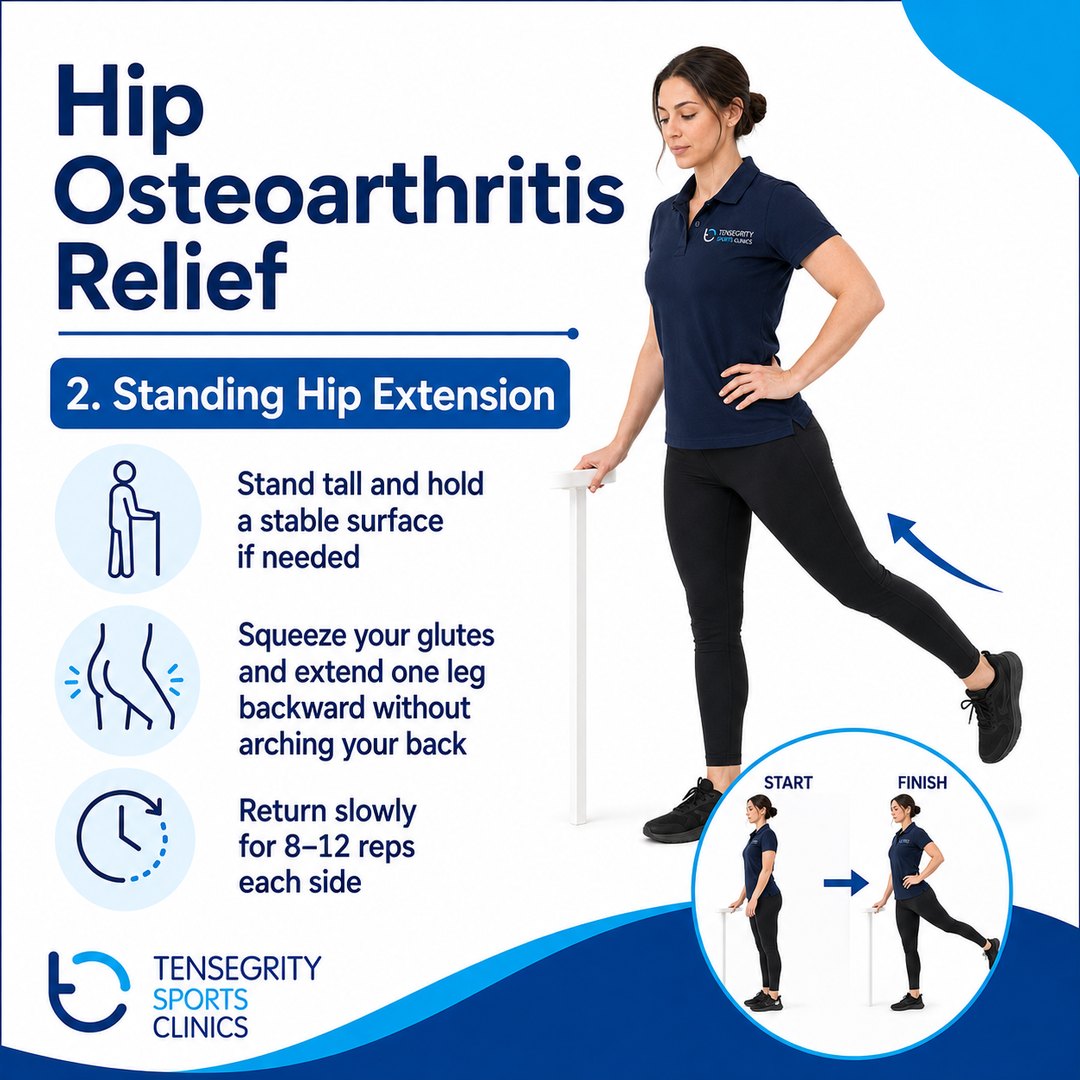
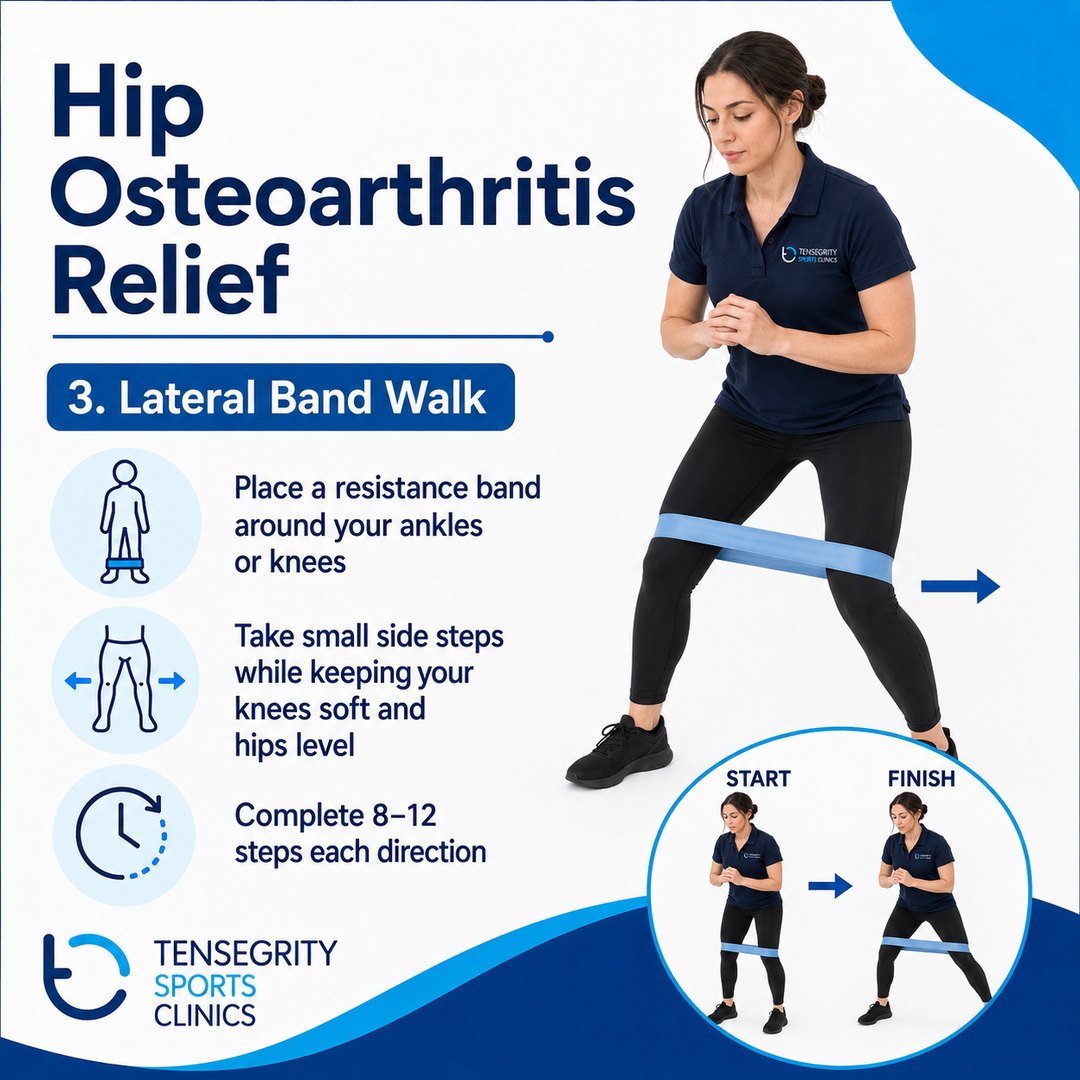
If the hip is not settling, or it is limiting your walking or your sleep, book an assessment so the loading can be matched to what the joint can currently handle.
What our practitioners recommend:
These are the items our practitioners most often suggest for hip arthritis between appointments. They support your rehabilitation. They do not replace assessment, and what suits you depends on your presentation.
- Walking cane. Only if your practitioner has discussed a walking aid with you. Height needs to be set correctly.
- Microwavable heat pack. Heat is commonly used before movement on stiffer mornings.
- Latex loop bands, pack of 5. For the hip strengthening that carries most of the load in arthritis management.
As an Amazon Associate I earn from qualifying purchases. We may earn a commission on these links. Our recommendations are based on clinical judgement and are not influenced by commission.
Outlook/Prognosis:
The prognosis for hip arthritis depends on the severity of the condition, individual response to treatment, and adherence to lifestyle modifications. While hip arthritis is a chronic and progressive condition, appropriate management strategies can help alleviate symptoms, slow disease progression, and improve overall quality of life. By working closely with healthcare providers and implementing targeted interventions, individuals with hip arthritis can effectively manage their symptoms and maintain functional independence for as long as possible.