
Overview:
A hamstring tear, also known as a hamstring strain or pulled hamstring, is a common injury involving the tearing or stretching of the muscles or tendons located at the back of the thigh. This injury can occur during sports activities, sudden movements, or overexertion, leading to pain, weakness, and impaired mobility.
Anatomy:
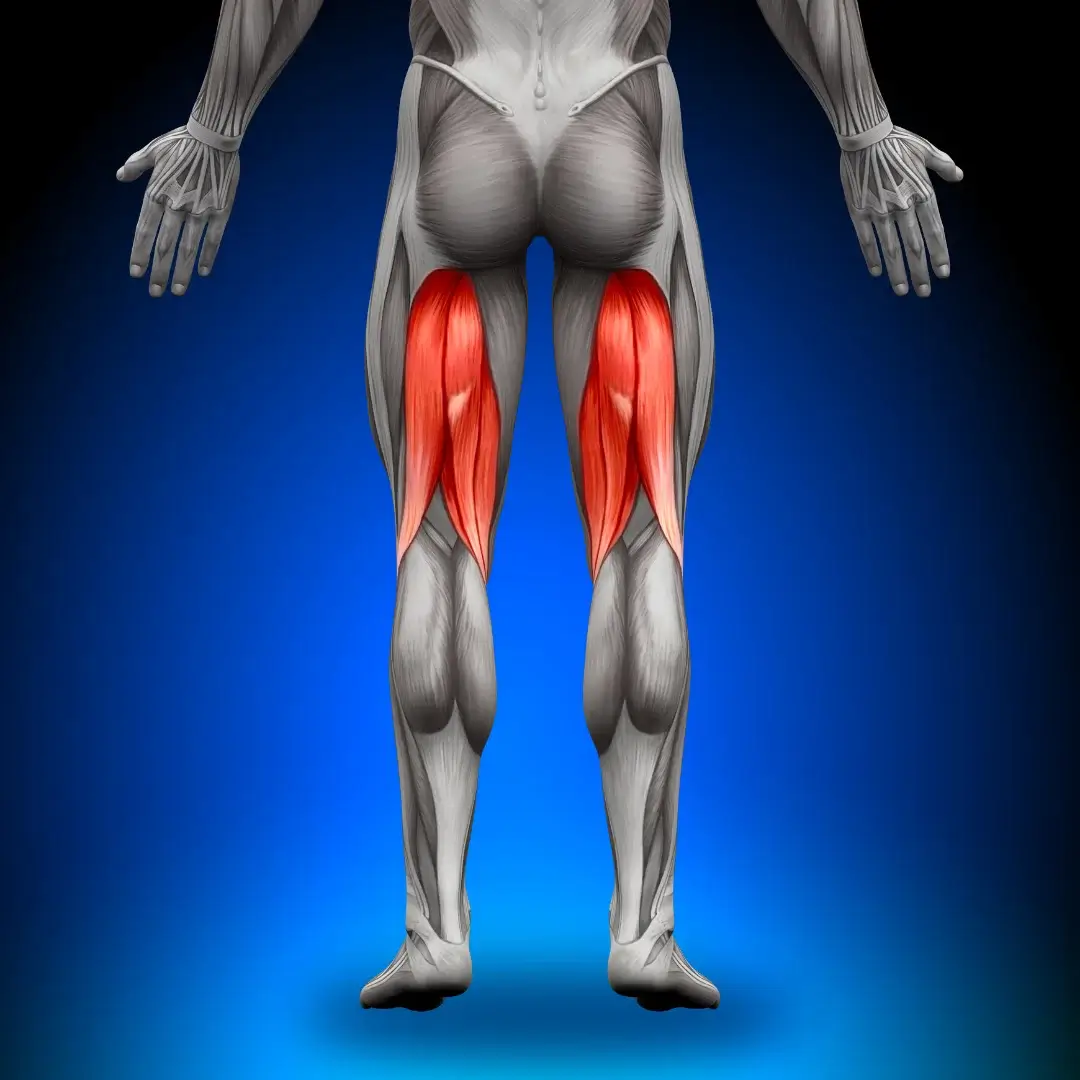
The hamstring muscles consist of three main muscles located at the back of the thigh: the semitendinosus, semimembranosus, and biceps femoris. These muscles originate from the pelvis and extend down to the knee joint, playing a crucial role in bending the knee and extending the hip.
Causes:
Hamstring tears often occur due to:
- Sudden Acceleration or Deceleration: Rapid movements, such as sprinting, jumping, or changing direction abruptly, can place excessive stress on the hamstring muscles, leading to tears or strains.
- Overstretching: Stretching the hamstring muscles beyond their normal range of motion, especially during activities like stretching or kicking, can result in muscle fibre damage and injury.
- Poor Warm-up or Muscle Fatigue: Inadequate warm-up exercises or fatigue of the hamstring muscles due to prolonged activity may increase the risk of injury during physical exertion.
- Muscle Imbalance or Weakness: Weakness or imbalance between the hamstring and opposing muscle groups, such as the quadriceps, can predispose individuals to hamstring injuries.
Symptoms:
Signs and symptoms of a hamstring tear may include:
- Sudden, Sharp Pain: Acute pain or a tearing sensation in the back of the thigh during physical activity.
- Swelling and Bruising: Swelling, tenderness, and bruising may develop around the injured area within hours or days of the injury.
- Muscle Weakness: Difficulty bearing weight on the affected leg or performing activities that involve bending the knee or extending the hip.
- Limited Range of Motion: Decreased flexibility and range of motion in the hamstring muscles, particularly with stretching or bending movements.
- Difficulty Walking: Pain and discomfort while walking or bearing weight on the injured leg, especially when pushing off the ground.
Diagnosis:
Diagnosis of a hamstring tear typically involves a comprehensive evaluation of symptoms, medical history, and physical examination by a healthcare professional. Imaging tests, such as ultrasound or MRI scans, may be ordered to assess the severity and extent of muscle or tendon damage.
Treatment:
Treatment for a hamstring tear aims to relieve pain, reduce inflammation, promote healing, and restore muscle function:
- Rest and Immobilization: Avoiding activities that aggravate pain and limiting weight-bearing on the injured leg can facilitate the healing process and prevent further injury.
- Ice Therapy: Applying ice packs to the affected area for 15-20 minutes every few hours can help alleviate pain and reduce swelling.
- Compression: Using compression bandages or wraps around the thigh can minimise swelling and provide support to the injured muscles.
- Elevation: Elevating the injured leg above heart level, especially during rest or sleep, can reduce swelling and promote fluid drainage.
- Exercise rehabilitation: Gentle stretching and strengthening exercises prescribed by your practitioner can improve flexibility, strength, and range of motion in the hamstring muscles.
- Gradual Return to Activity: Gradually reintroducing activities and exercises once pain and swelling have subsided can help rebuild muscle strength and function while minimising the risk of reinjury.
- Medication and injection-based options: These sit outside a chiropractor’s scope of practice. If pain is limiting your sleep or stopping you starting rehabilitation, that is worth discussing with your GP rather than self-prescribing long term.
Three exercises for a hamstring tear
These three were put together by our practitioners as a starting point. They are general exercises, not a personalised program.
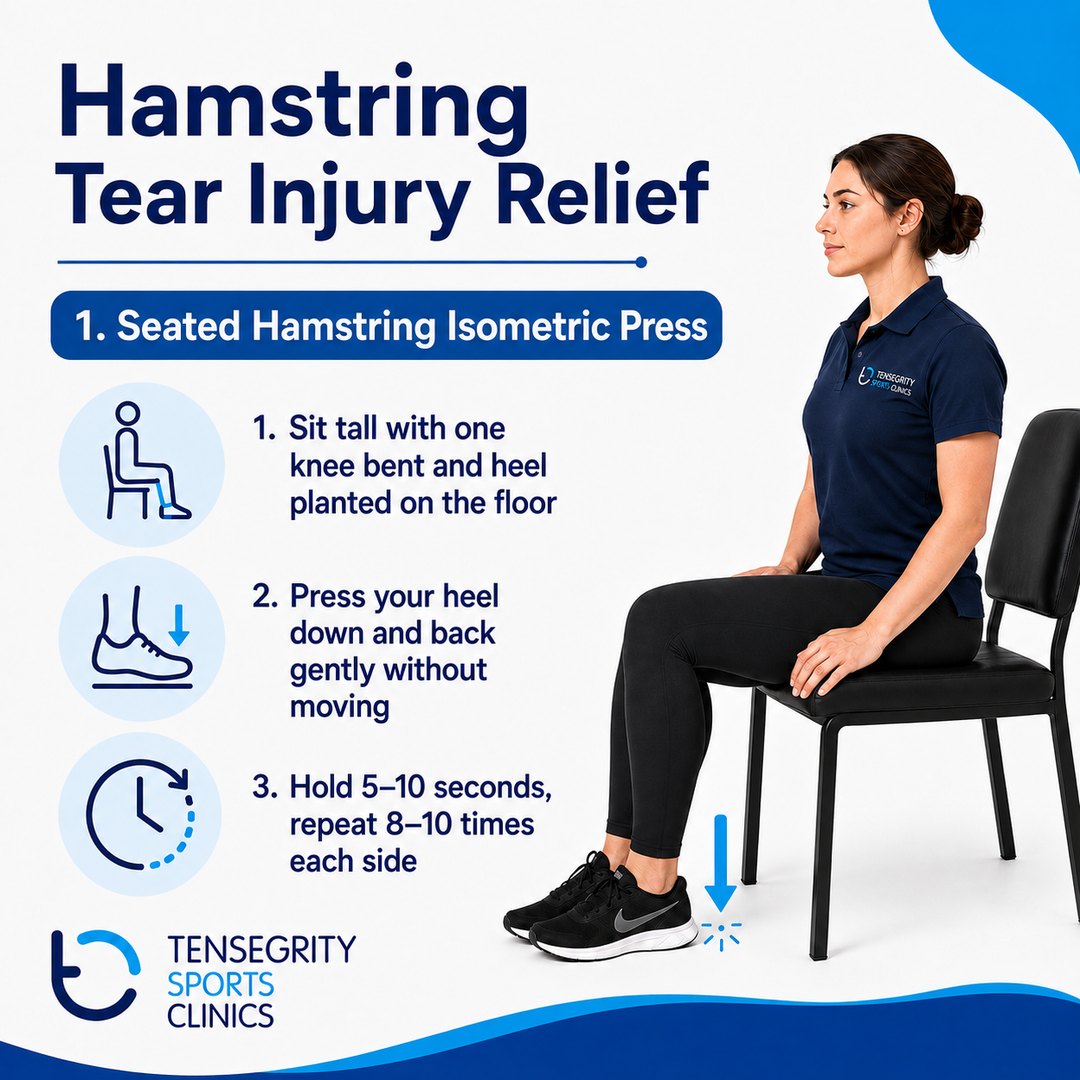
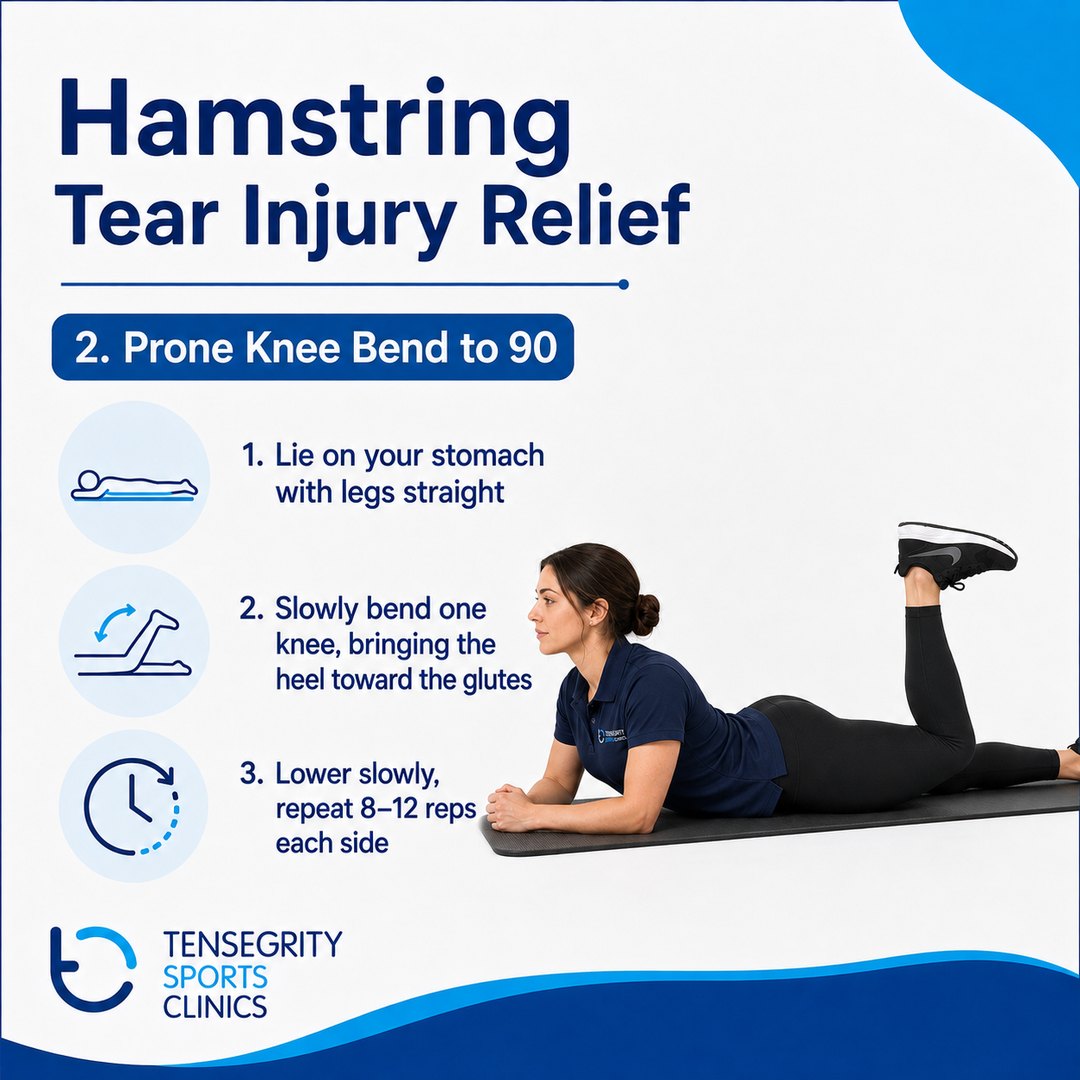

If the hamstring is not settling, or you are still guarding when you lengthen it, book an assessment so the loading can be matched to what the muscle can currently handle.
What our practitioners recommend:
These are the items our practitioners most often suggest for a hamstring tear between appointments. They support your rehabilitation. They do not replace assessment, and what suits you depends on your presentation.
- Resistance bands, pack of 5. For the graded loading program your practitioner sets once the tear has stabilised.
- Reusable gel ice pack. For icing in the early stage while swelling and bruising settle.
As an Amazon Associate I earn from qualifying purchases. We may earn a commission on these links. Our recommendations are based on clinical judgement and are not influenced by commission.
Outlook/Prognosis:
The prognosis for a hamstring tear depends on the severity of the injury, promptness of treatment, and adherence to rehabilitation protocols. Most mild to moderate hamstring tears heal within a few weeks with conservative management, while severe tears or those involving tendon rupture may require longer recovery times and possibly surgical intervention. Early intervention, proper rest, and guided rehabilitation are essential for optimal recovery and prevention of recurrent injuries. If symptoms persist or worsen despite conservative measures, further evaluation by a healthcare provider may be necessary to explore additional treatment options.