

Overview:
Greater trochanteric pain syndrome, or GTPS, is pain on the outside of the hip, over the bony point you can feel through the side of your thigh. It is the most common cause of lateral hip pain, and it is often mistaken for hip arthritis or a problem coming from the lower back.
The name covers what used to be called trochanteric bursitis. The bursa can be involved, but in most cases the main driver is the gluteal tendons where they attach to the bone, which is why it is now grouped with the tendinopathies. It is most common in women between 40 and 60, and in runners of any age who have recently changed their training.
Anatomy:
The greater trochanter is the bony prominence at the top and outside of the femur. The gluteus medius and gluteus minimus tendons attach to it, and those muscles are what keep your pelvis level when you stand on one leg.
Two bursae sit between the tendons and the bone to reduce friction, and the iliotibial band passes directly over the top. When the tendons are loaded beyond what they can currently handle, the whole area becomes sensitive, and compression from the band above makes it worse.
Causes:
GTPS usually builds up over weeks or months rather than starting with one event.
- Change in load: A jump in running distance, a return to walking after time off, or new hill or stair work. This is the most common trigger.
- Compression positions: Sitting cross-legged, standing with your weight hung on one hip, or sleeping on the sore side. These squash the tendon against the bone.
- Hip and trunk control: When the gluteal muscles do not hold the pelvis level, the tendons take more load with every step.
- Hormonal and age-related change: Tendon tissue becomes less tolerant of rapid load change from the mid-forties onward, which is part of why the condition clusters in this age group.
- A period of rest or illness: Coming back to normal walking after a layoff, when the tendons have lost capacity, is a common start point.
Symptoms:
The pattern is fairly distinctive, and most people describe some version of the following.
- Pain over the bony point on the outside of the hip, sometimes spreading down the outside of the thigh but rarely past the knee.
- Pain lying on the affected side at night, which is often the symptom people find hardest to live with.
- Pain with stairs, getting out of a car, or standing up after sitting for a while.
- Tenderness when you press directly over the bony point.
- Aching after walking rather than sharp pain during it.
Diagnosis and Tests:
GTPS is diagnosed on history and examination. Imaging is used to answer a specific question, not as a starting point.
- History: Where the pain sits, what brings it on, whether it disturbs your sleep, and what changed in the weeks before it started.
- Palpation: Direct tenderness over the greater trochanter is the single most useful finding.
- Loading tests: Single-leg stance held for 30 seconds, and resisted hip abduction, usually reproduce the pain.
- Ruling out other sources: Hip joint and lower back testing, because arthritis and referred back pain can present in a similar area.
- Imaging: Ultrasound or MRI when the presentation is unusual, when there is a suspicion of a significant tendon tear, or when symptoms are not responding as expected. Tendon changes are common on scans in people with no pain at all, so results are read alongside the examination.
Management and Treatment:
Management is built around reducing compression on the tendon first, then rebuilding its capacity.
- Removing compression: Simple changes such as not crossing your legs, sleeping with a pillow between your knees, and not standing hung on one hip often settle night pain within a couple of weeks.
- Load management: Adjusting walking distance, hills and stairs to a level the hip tolerates, then building back up gradually.
- Progressive strengthening: Isometric holds early, then loaded hip abduction work. This is the part with the strongest evidence behind it and it is the part most people skip.
- Hands-on treatment: Soft tissue work through the hip and thigh to help symptoms settle while the strengthening does the longer-term work.
- Reviewing your running or walking pattern: Small changes to step width and cadence can reduce how much the tendon is compressed with each step.
- Medication and injection-based options: These sit outside a chiropractor’s scope of practice. If pain is limiting your sleep or stopping you starting rehabilitation, that is worth discussing with your GP rather than self-prescribing long term.
Three exercises for greater trochanteric pain syndrome
These three were put together by our practitioners as a starting point. They are general exercises, not a personalised program.
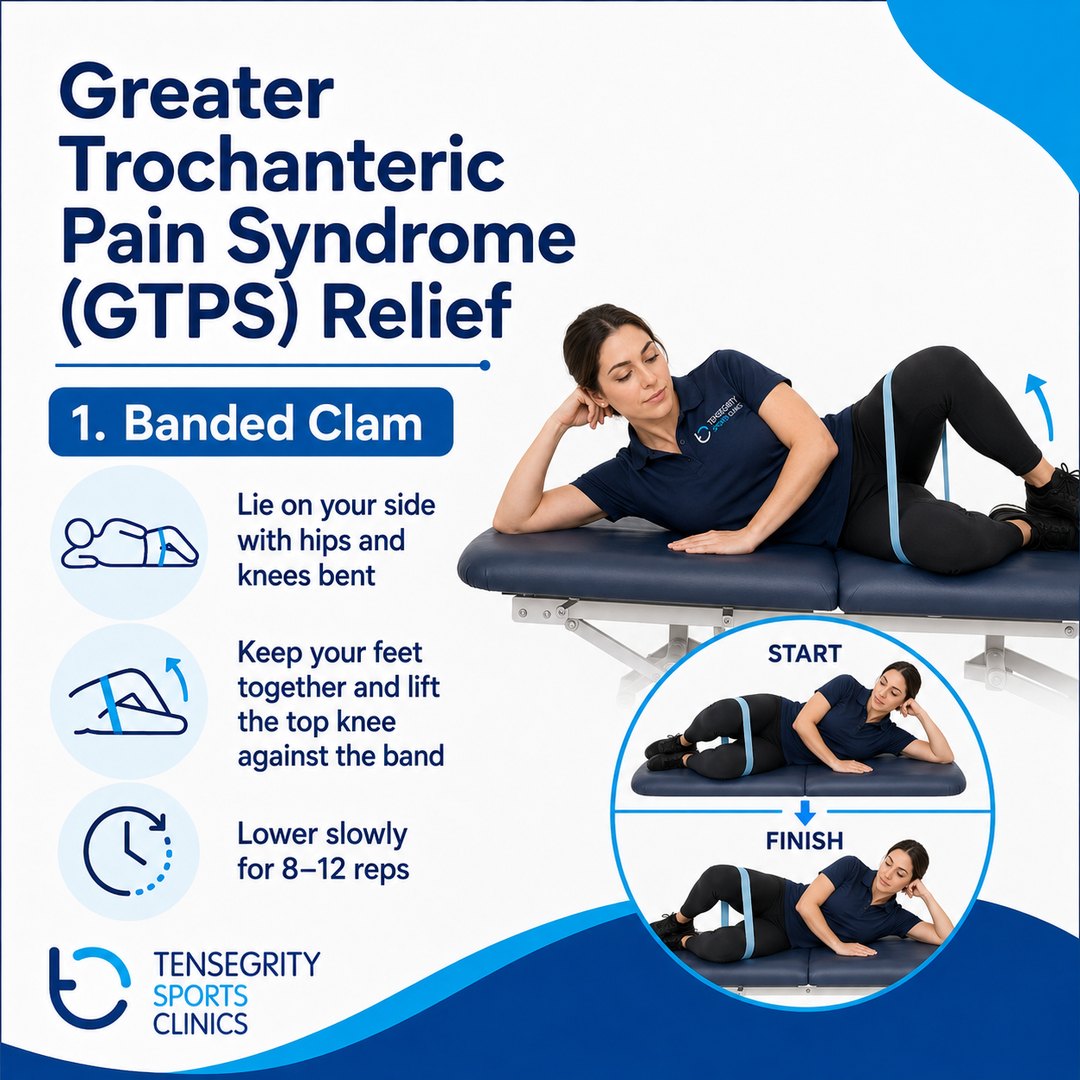
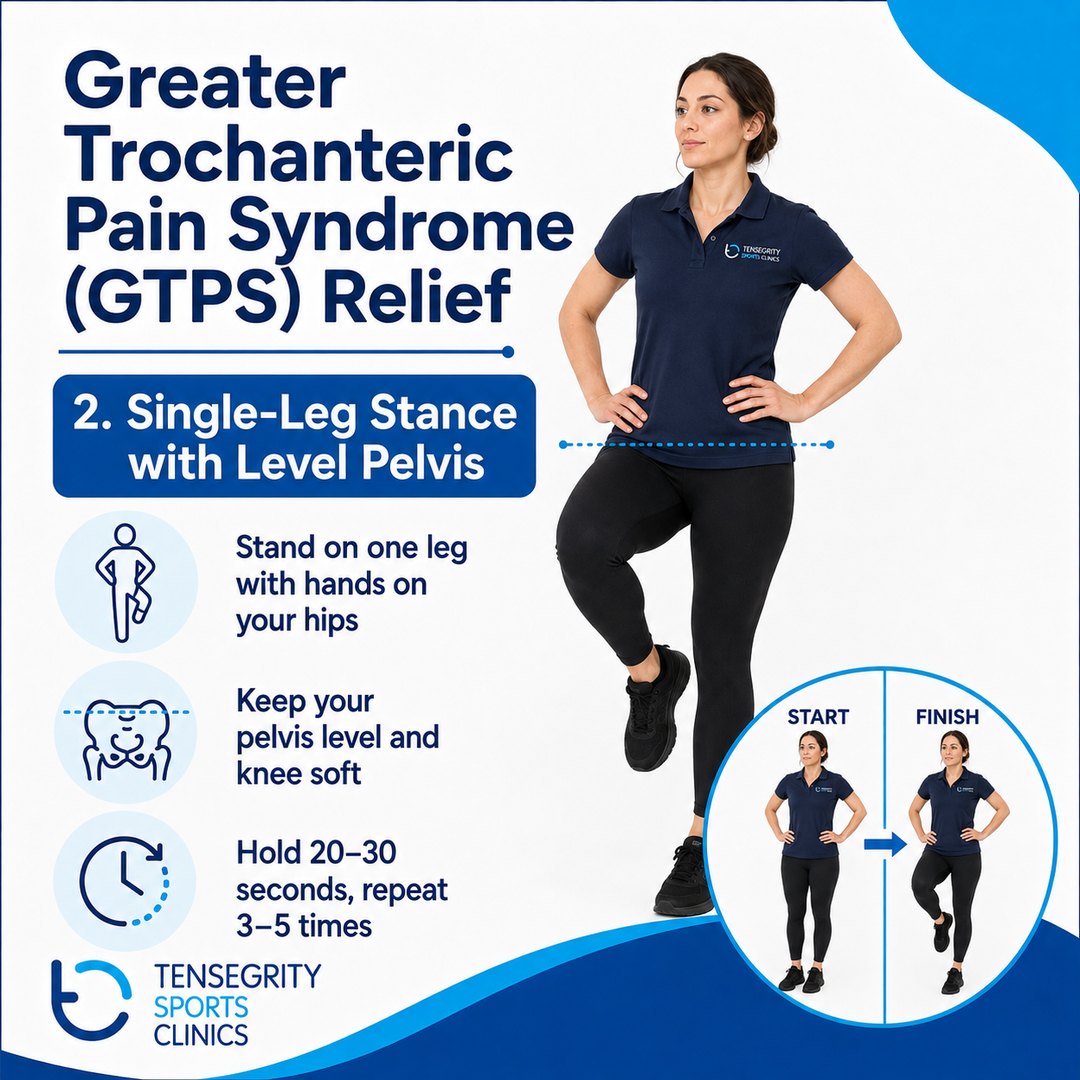
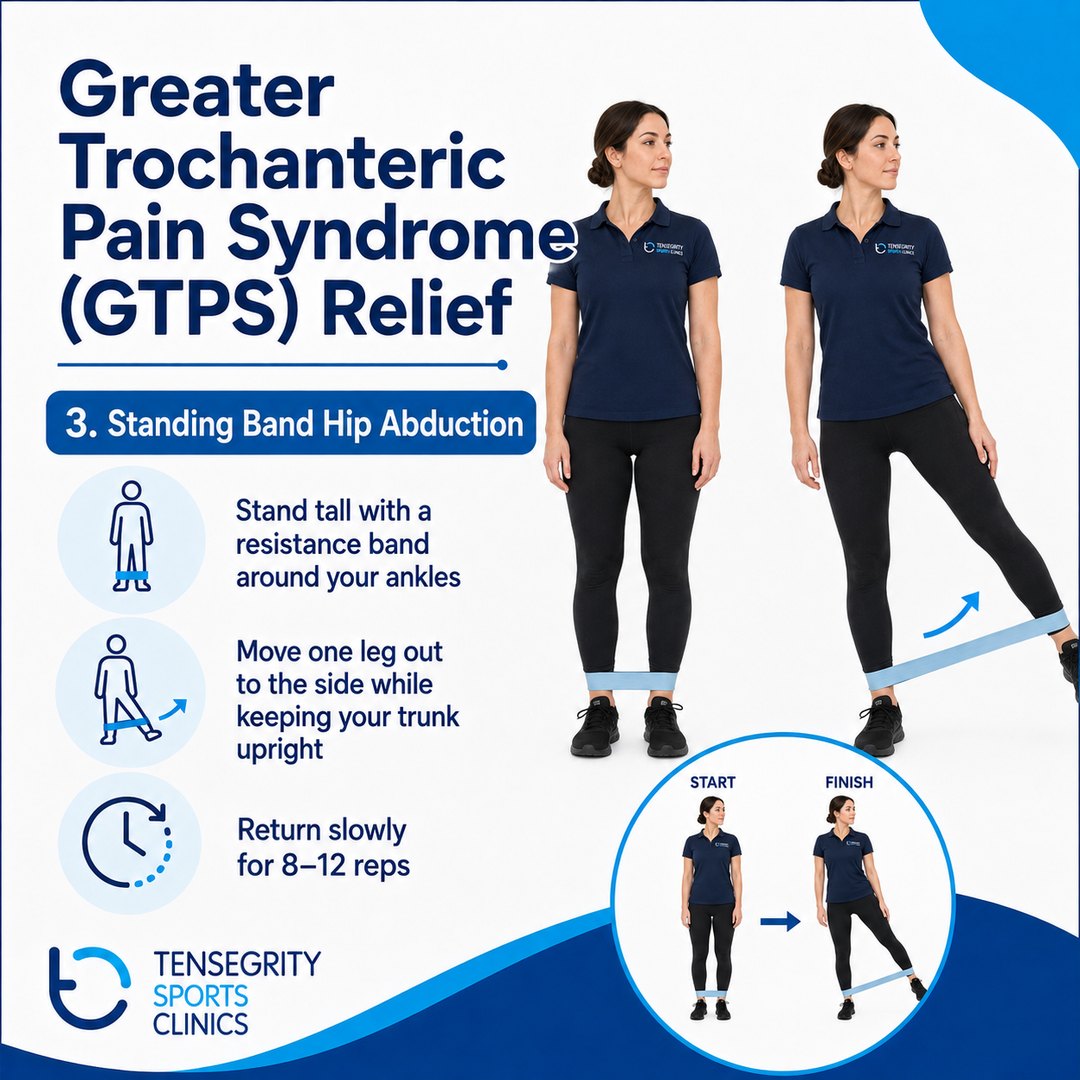
If the hip is not settling, or it is still waking you at night, book an assessment so the loading can be matched to what the tendon can currently handle.
Prevention:
Most recurrences follow the same pattern as the first episode, so the same measures apply.
- Build walking and running load gradually, particularly after time off.
- Keep hip abductor strength up rather than only training when symptoms appear.
- Avoid long periods sitting with your legs crossed or standing with your weight hung on one hip.
- Use a pillow between your knees if you sleep on your side.
- Introduce hills and stairs as a separate step, not at the same time as a distance increase.
Outlook / Prognosis:
GTPS responds well to load management and progressive strengthening, but it is slower than most people expect. Night pain often settles within two to six weeks once compression is removed. Rebuilding tendon capacity usually takes three to six months, because tendon adapts slowly.
The most common reason it returns is stopping the strengthening once the pain has gone. If you have had one episode, keeping some hip strength work in your week is the most useful thing you can do.