
Overview:
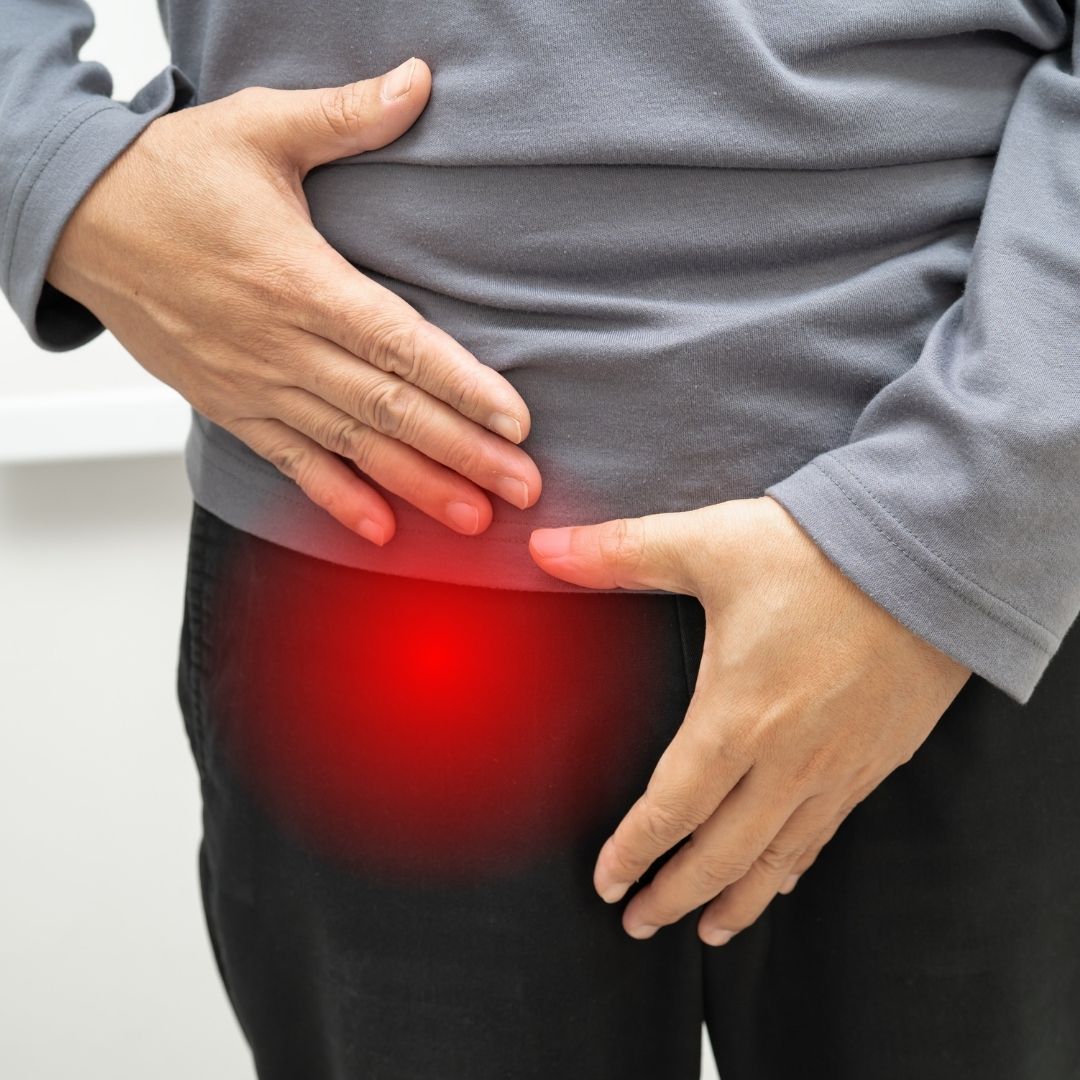
Athletic pubalgia, often called a sports hernia, is chronic groin and lower abdominal pain caused by strain of the soft tissue around the pubic bone. Despite the common name, there is usually no actual hernia, and nothing is protruding through the abdominal wall.
It is a stubborn condition seen most often in field and court sport, particularly where players sprint, twist and kick repeatedly. It often coexists with adductor tendinopathy and osteitis pubis, and the three together are sometimes grouped as groin pain in athletes. Getting a clear picture of which structures are involved is what makes the difference to management.
Anatomy:
The pubic symphysis sits at the front of the pelvis where the two halves meet. The abdominal muscles pull upward on it from above and the adductors pull downward from below, creating opposing forces across a small area.
Athletic pubalgia involves strain of the structures in this region, commonly the rectus abdominis attachment, the conjoint tendon, or the posterior wall of the inguinal canal. Because so many structures converge here and share the same load, symptoms overlap and a single tidy diagnosis is often not possible.
Causes:
The mechanism is repetitive loading of the front of the pelvis, usually across a season rather than in one moment.
- Repeated twisting and cutting: Sports that involve rapid change of direction while the trunk rotates.
- High kicking volume: Loading the abdominal and adductor attachments in opposition.
- Imbalance between abdominal and adductor strength: One of the more consistent contributing factors.
- Restricted hip rotation: Where the hip does not rotate freely, the pelvis absorbs more of the movement.
- Rapid increases in training: Pre-season intensity added too quickly.
- A previous groin injury: Altered loading patterns that persist after return to sport.
Symptoms:
The pattern is typically activity-dependent and slow to resolve.
- Deep pain in the groin or lower abdomen, usually on one side, sometimes both.
- Pain with sprinting, cutting, kicking and sit-ups.
- Pain on coughing or sneezing, which is one of the more distinctive features.
- Symptoms that ease with rest and return promptly on going back to sport.
- Tenderness around the pubic bone and lower abdominal wall.
- No palpable lump, which is what distinguishes it from a true inguinal hernia.
Diagnosis and Tests:
This is a diagnosis that benefits from a careful assessment, because several structures can be involved at once.
- History: The sport, the mechanism, how long it has been present, and what specifically brings it on.
- Palpation: Mapping tenderness around the pubic bone, the adductor attachment and the abdominal wall.
- Resisted testing: Resisted sit-up and resisted adduction, often positive together.
- Hernia examination: To exclude a true inguinal hernia, which is a different problem requiring different management.
- Hip assessment: Range of motion and impingement testing, as hip pathology commonly coexists.
- Imaging and referral: MRI is often warranted here, both to assess the soft tissue and to exclude bone stress. Where a true hernia or a surgical lesion is suspected, referral to a GP and on to a surgeon is the right step.
Management and Treatment:
Structured rehabilitation is the first line, and most people improve without surgery.
- Activity modification: Reducing the specific loads that provoke it while maintaining fitness in other ways.
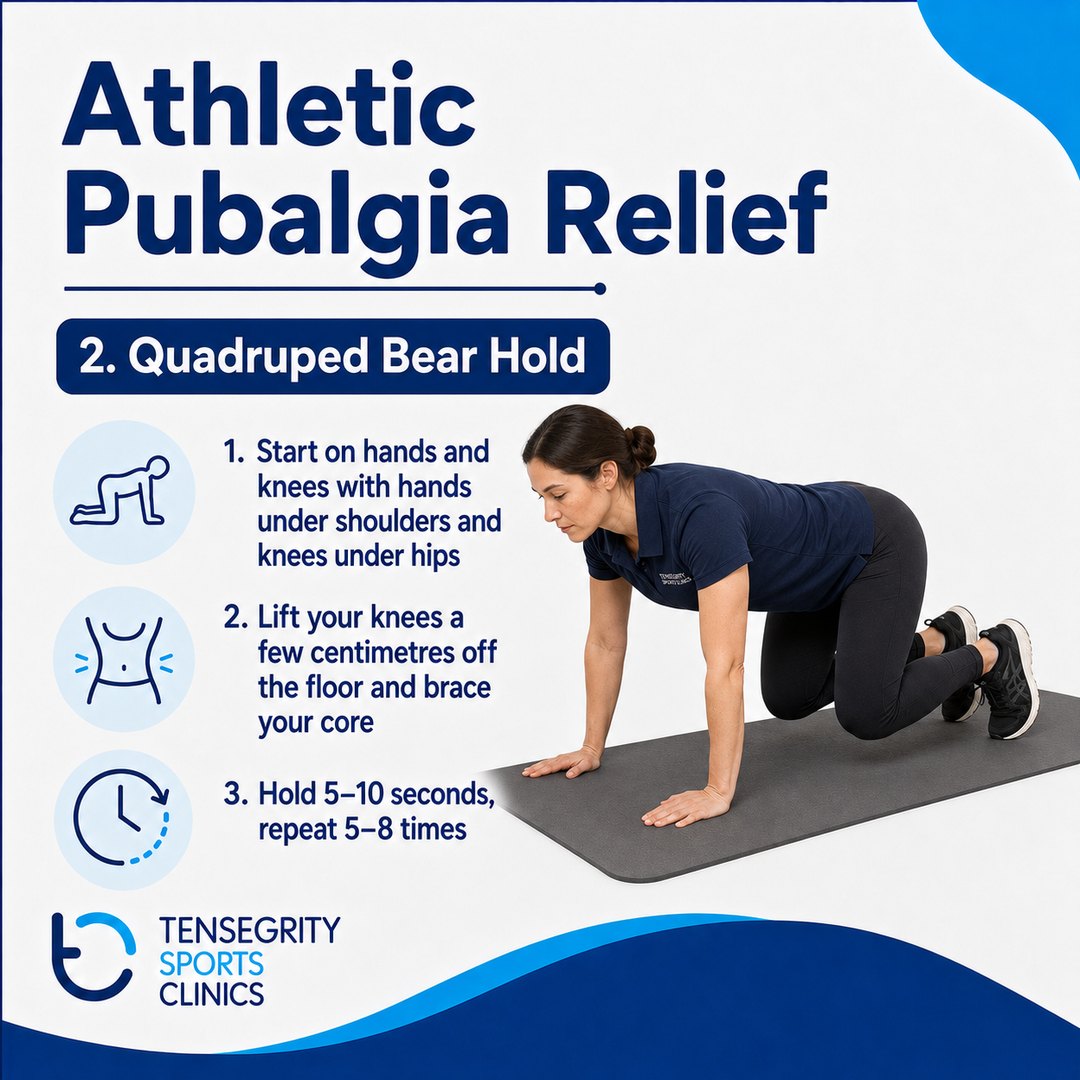
- Progressive core and adductor strengthening: Rebuilding the balance of forces across the front of the pelvis. This is the central component.
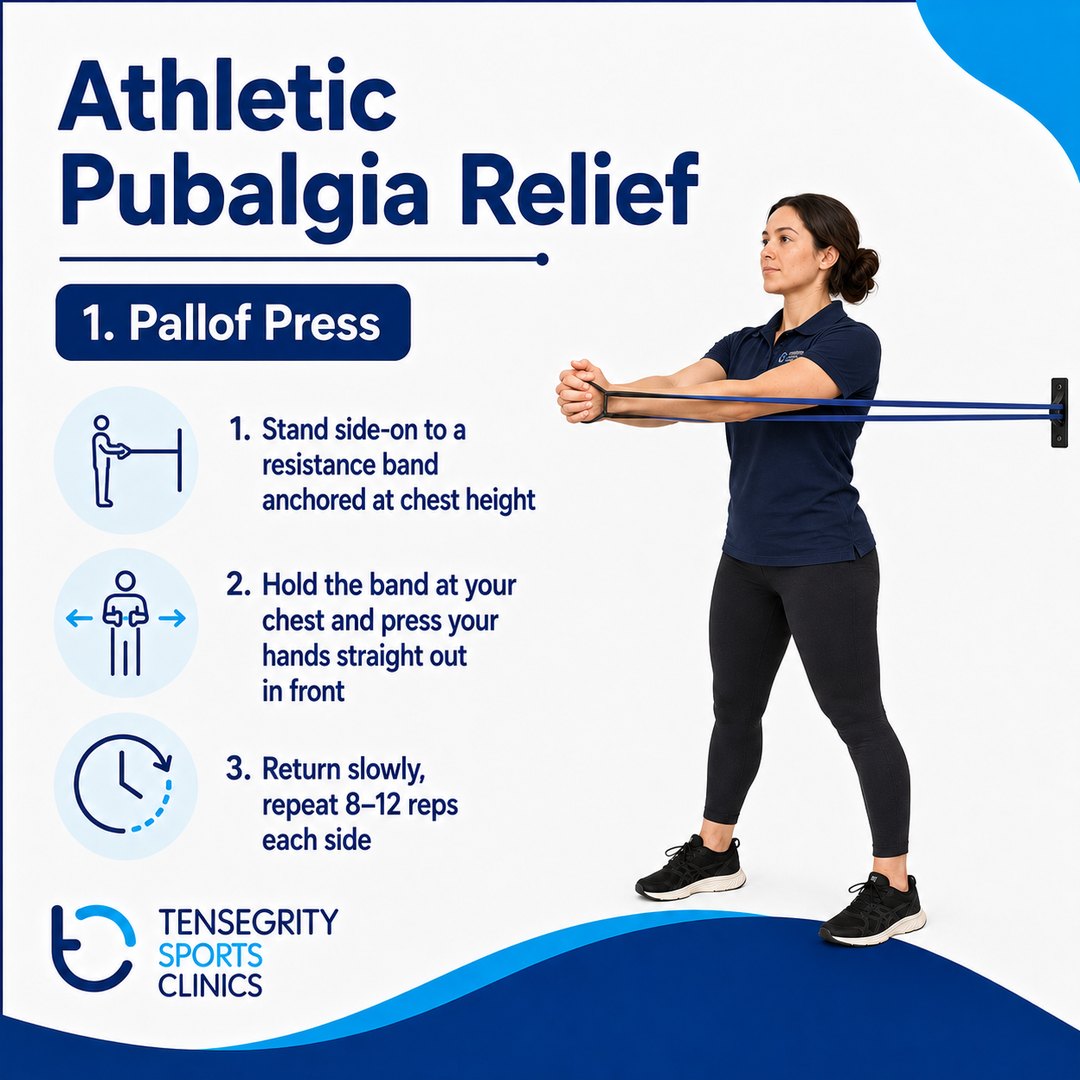
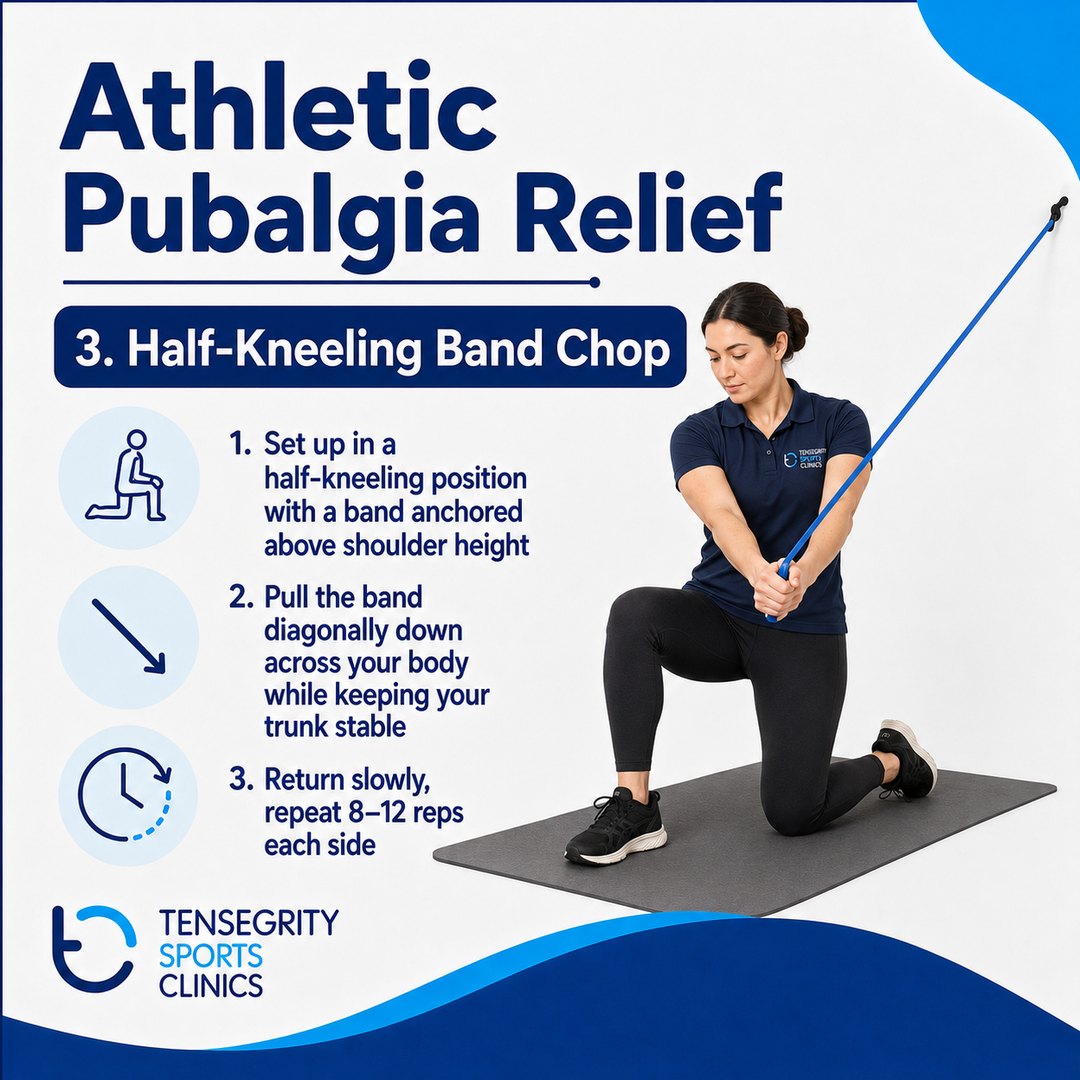
- Anti-rotation training: Exercises that teach the trunk to resist rotation under load, which is the demand that fails in this condition.
- Hip mobility work: Reducing how much movement the pelvis has to absorb.
- Graded return to sport: Reintroducing sprinting, cutting and kicking as separate progressions rather than all at once.
- Surgical opinion: Considered where a genuine rehabilitation program of at least three months has not produced meaningful change, or where imaging shows a lesion likely to need repair. That decision sits with a surgeon.
- Medication and injection-based options: These sit outside a chiropractor’s scope of practice. If pain is limiting your sleep or stopping you starting rehabilitation, that is worth discussing with your GP rather than self-prescribing long term.
Three exercises for athletic pubalgia
These three were put together by our practitioners as a starting point. They are general exercises, not a personalised program.
If the groin pain keeps returning every time you go back to sprinting or kicking, book an assessment so the structures involved can be identified and the loading matched to them.
Prevention:
Prevention overlaps closely with groin injury prevention generally.
- Include adductor and core strengthening through pre-season and in-season.
- Build sprinting, kicking and change of direction volume separately and gradually.
- Maintain hip rotation range alongside strength work.
- Address a groin strain fully before returning to full training.
- Take early season groin pain seriously rather than managing it week to week for a whole season.
Outlook / Prognosis:
Most athletes improve with a structured rehabilitation program, though it is slower than many expect. Three months of consistent work is a reasonable trial before considering other options, and returning to sport before that point is the usual reason symptoms persist.
Where surgery is required, outcomes are generally good and most players return to their previous level, with rehabilitation continuing afterwards. Because several structures around the pubic bone are often involved together, addressing only one of them is a common reason for incomplete recovery.