
Overview:
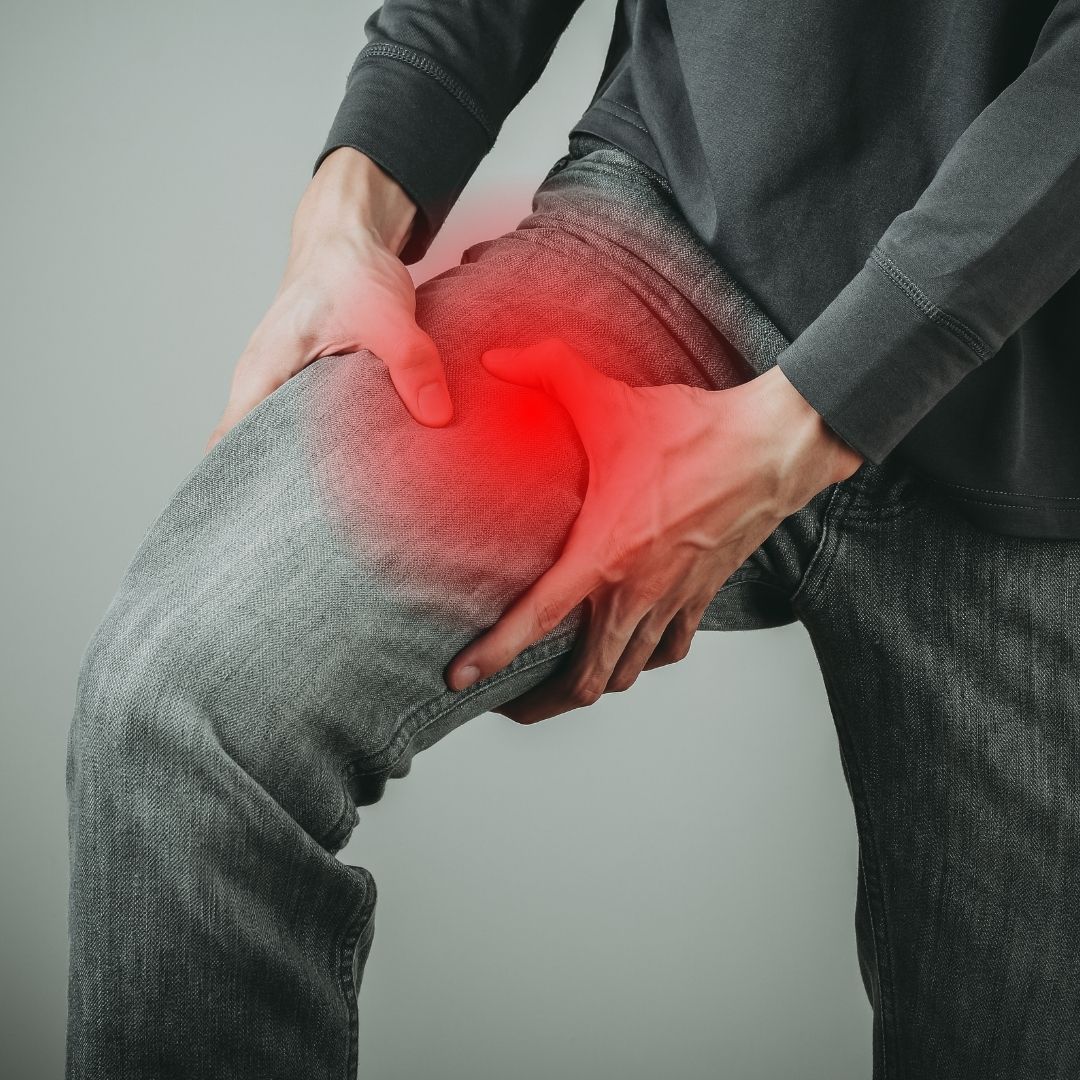
Adductor tendinopathy is persistent groin pain coming from the tendons of the inner thigh muscles where they attach to the pubic bone. It is the long-running version of a groin problem, as distinct from an acute groin strain, which is a sudden tearing injury.
It is one of the most common causes of groin pain in field and court sport, particularly in soccer, AFL, rugby and hockey, where kicking, sprinting and changing direction load these tendons repeatedly. It tends to build over weeks and is often played through until it stops being possible.
Anatomy:
The adductor group runs down the inside of the thigh, with adductor longus the most commonly involved. These muscles pull the leg inward and also help control the leg when you plant and turn.
The tendons attach to the pubic bone, close to where the abdominal muscles attach from above. That shared area is why adductor tendinopathy, osteitis pubis and athletic pubalgia can look similar and sometimes occur together. Working out which structure is driving the pain is the point of the assessment.
Causes:
The load pattern here is repetitive rather than a single incident.
- A change in training load: More sprinting, kicking or change of direction, added too quickly. Common in pre-season.
- Kicking volume: Repeated kicking loads the adductors hard, particularly with the non-dominant leg.
- Reduced adductor strength: Weakness relative to the demand is one of the more consistent findings in players who develop it.
- Restricted hip movement: A stiff hip changes how the groin is loaded during rotation.
- Poor trunk control: When the pelvis is not well controlled, the adductors work harder to stabilise it.
- An incompletely rehabilitated groin strain: Returning to sport before strength has been restored.
Symptoms:
The pain is usually well localised and closely tied to activity.
- Pain at the top of the inner thigh, near the groin crease, sometimes spreading down the inside of the thigh.
- Pain with kicking, sprinting, and pushing off to change direction.
- Stiffness and soreness the morning after playing.
- Pain on squeezing the knees together, which is often how people first notice it.
- Tenderness on pressing the tendon where it attaches near the pubic bone.
- Symptoms that warm up during a session and return worse afterwards.
Diagnosis and Tests:
The main task is identifying which of several nearby structures is responsible.
- History: The sport, the position, recent training changes, and whether there was a specific incident.
- Palpation: Tenderness along the adductor tendon and at its attachment.
- Squeeze test: Resisted adduction at different hip angles, measured where possible so progress can be tracked.
- Strength testing: Adductor strength compared to abductor strength and to the other side.
- Hip assessment: Range of motion and impingement testing, since hip joint problems can present as groin pain.
- Imaging: Not routinely required. MRI is used where the diagnosis is unclear, where a hernia or bone stress is suspected, or where symptoms are not responding. Referral is arranged where appropriate.
Management and Treatment:
Progressive adductor strengthening is the core of this, and the evidence for it is good.
- Load management: Reducing kicking and change of direction volume in the short term rather than stopping entirely.
- Progressive adductor strengthening: Beginning with isometric squeezes and building to the Copenhagen exercise, which has the strongest supporting evidence in this area.
- Hip mobility work: Where restriction is contributing to how the groin is loaded.
- Trunk and gluteal strengthening: Improving pelvic control so the adductors are not compensating.
- Hands-on treatment: Soft tissue work to help symptoms settle alongside the loading program.
- Graded return to sport: Reintroducing kicking and change of direction in stages, with strength testing to guide progression rather than time alone.
- Medication and injection-based options: These sit outside a chiropractor’s scope of practice. If pain is limiting your sleep or stopping you starting rehabilitation, that is worth discussing with your GP rather than self-prescribing long term.
Three exercises for adductor tendinopathy
These three were put together by our practitioners as a starting point. They are general exercises, not a personalised program.
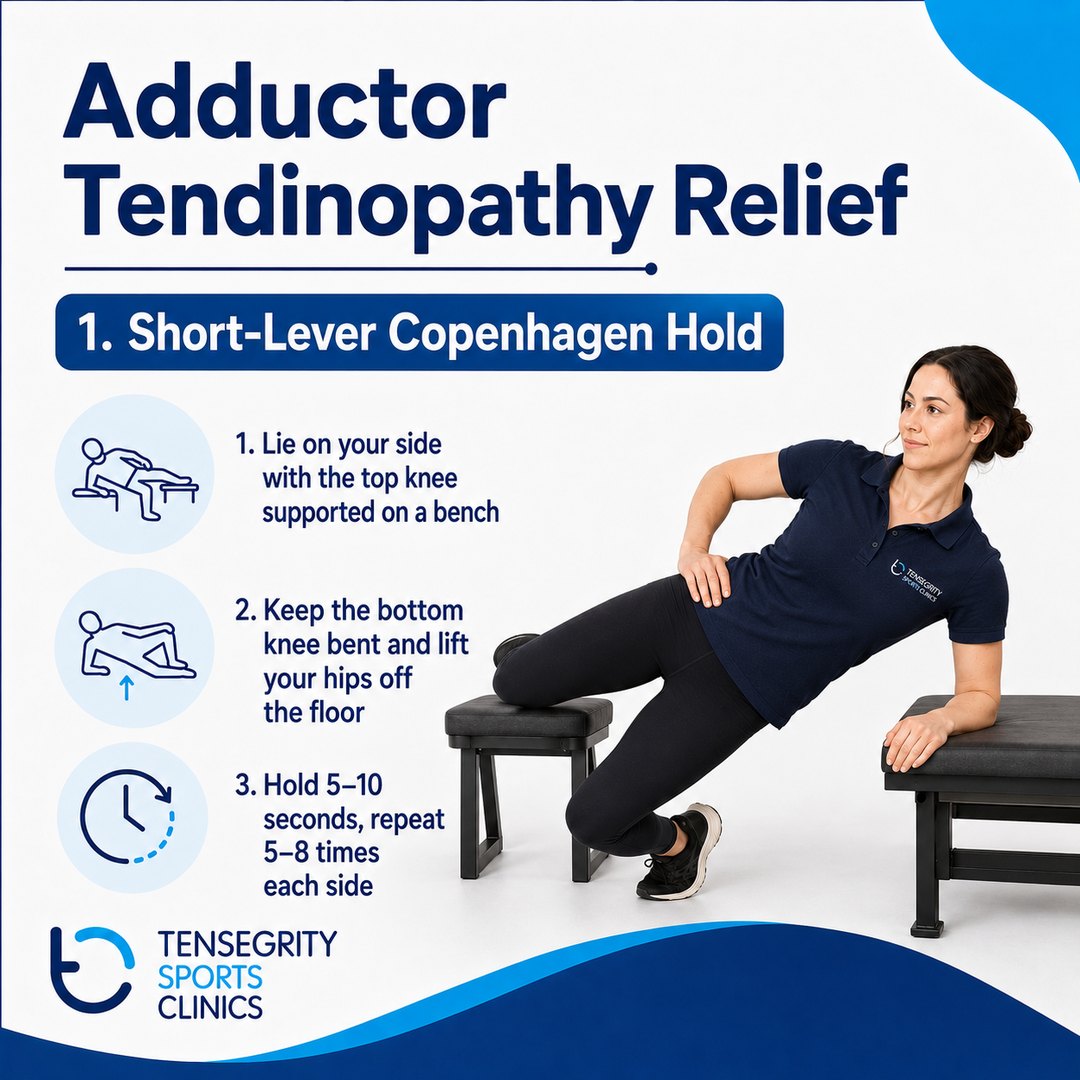
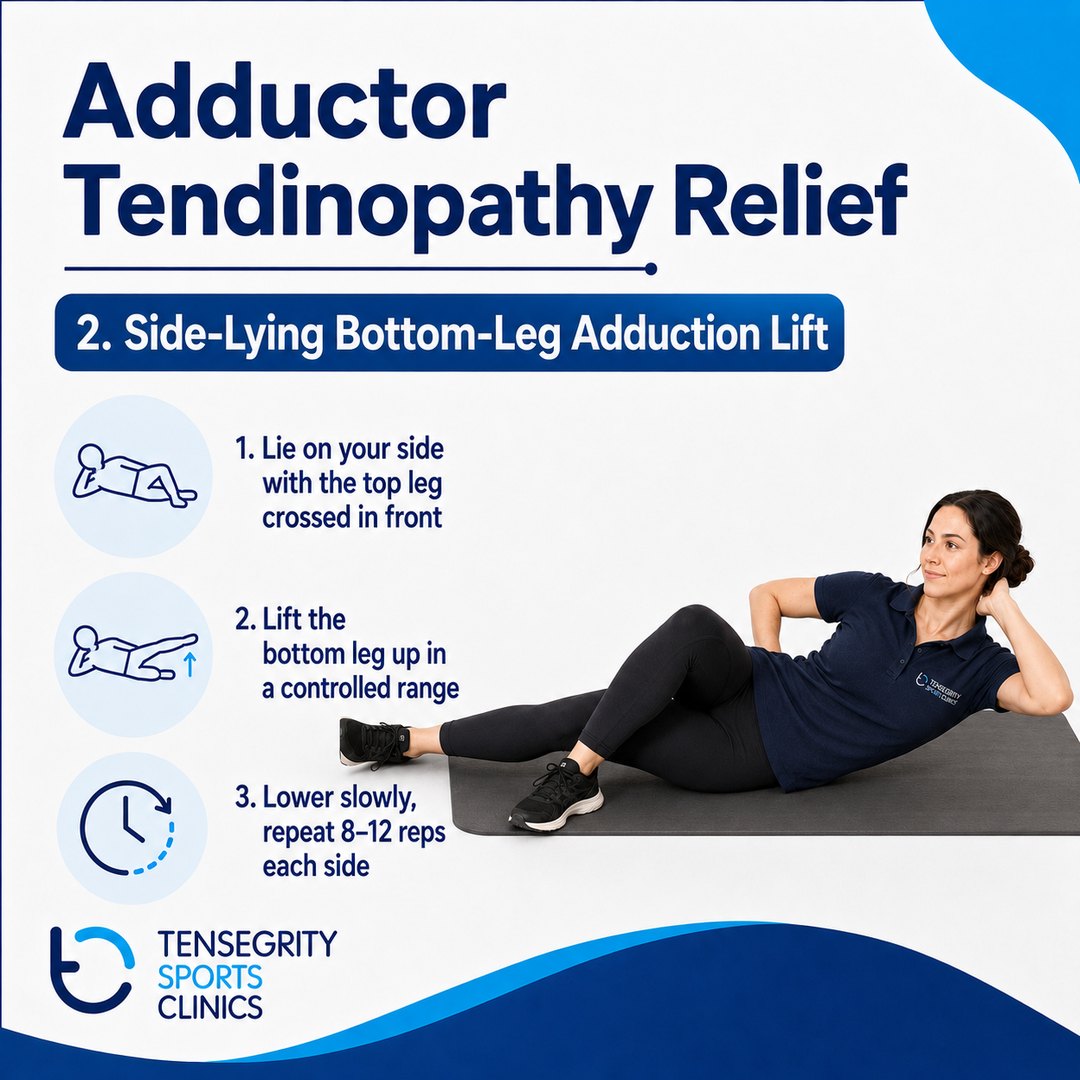
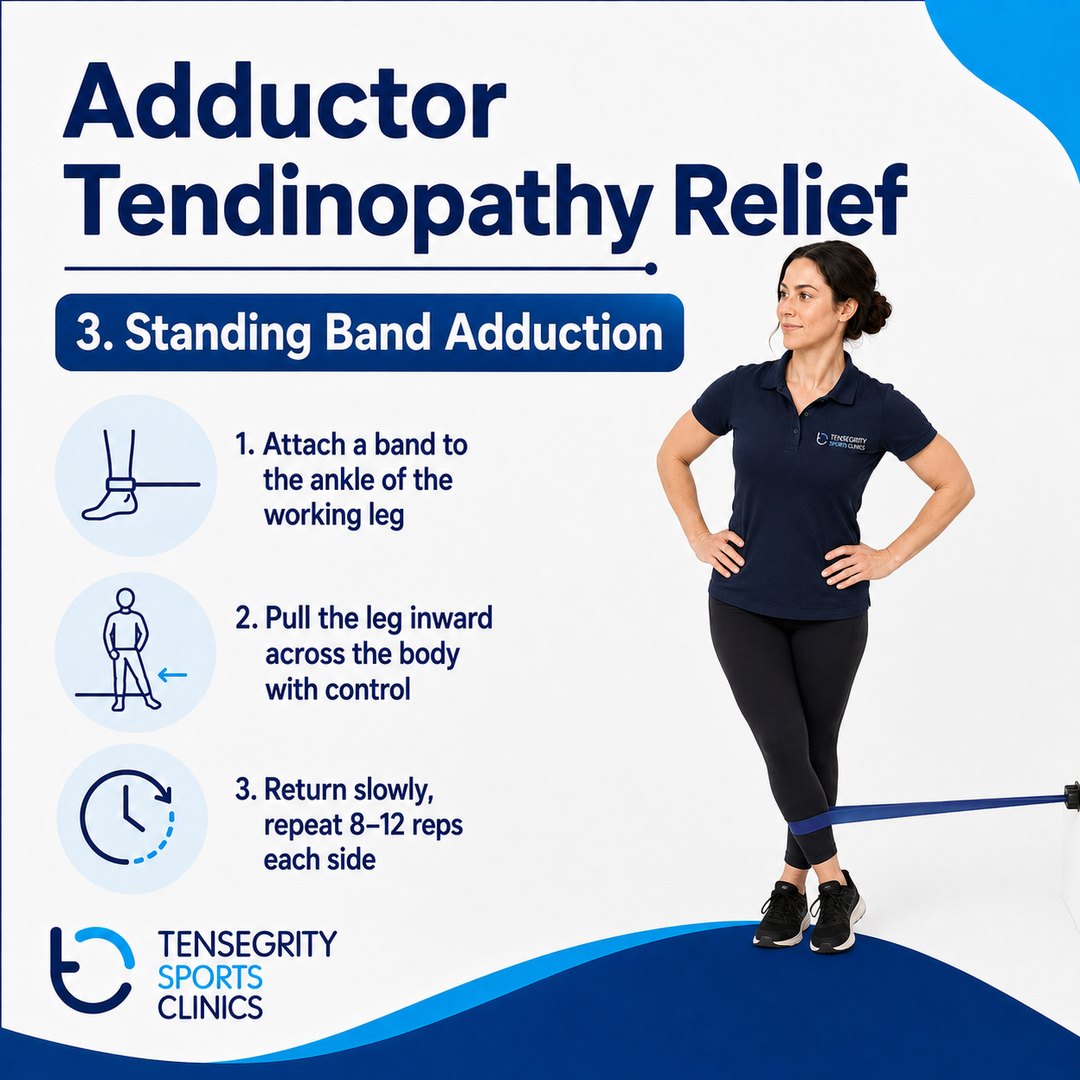
If the groin is not settling, or it flares every time you return to kicking, book an assessment so the loading can be matched to what the tendon can currently handle.
Prevention:
Adductor strengthening programs reduce groin injury rates in field sport, and this is one of the better-supported prevention measures in sports medicine.
- Include the Copenhagen exercise or equivalent adductor work through pre-season and in-season.
- Build kicking volume gradually, especially at the start of a season.
- Maintain hip mobility alongside strength.
- Rehabilitate a groin strain to restored strength, not just to the absence of pain.
- Treat early season groin soreness as a signal rather than something to play through for a month.
Outlook / Prognosis:
Most cases respond well to a structured strengthening program, with meaningful improvement over six to twelve weeks. Athletes usually continue training in a modified form throughout rather than stopping completely.
Cases that have been present for many months take longer, and those with more than one structure involved around the pubic bone take longer again. The most common reason for recurrence is returning to full kicking and change of direction volume before adductor strength has been rebuilt.