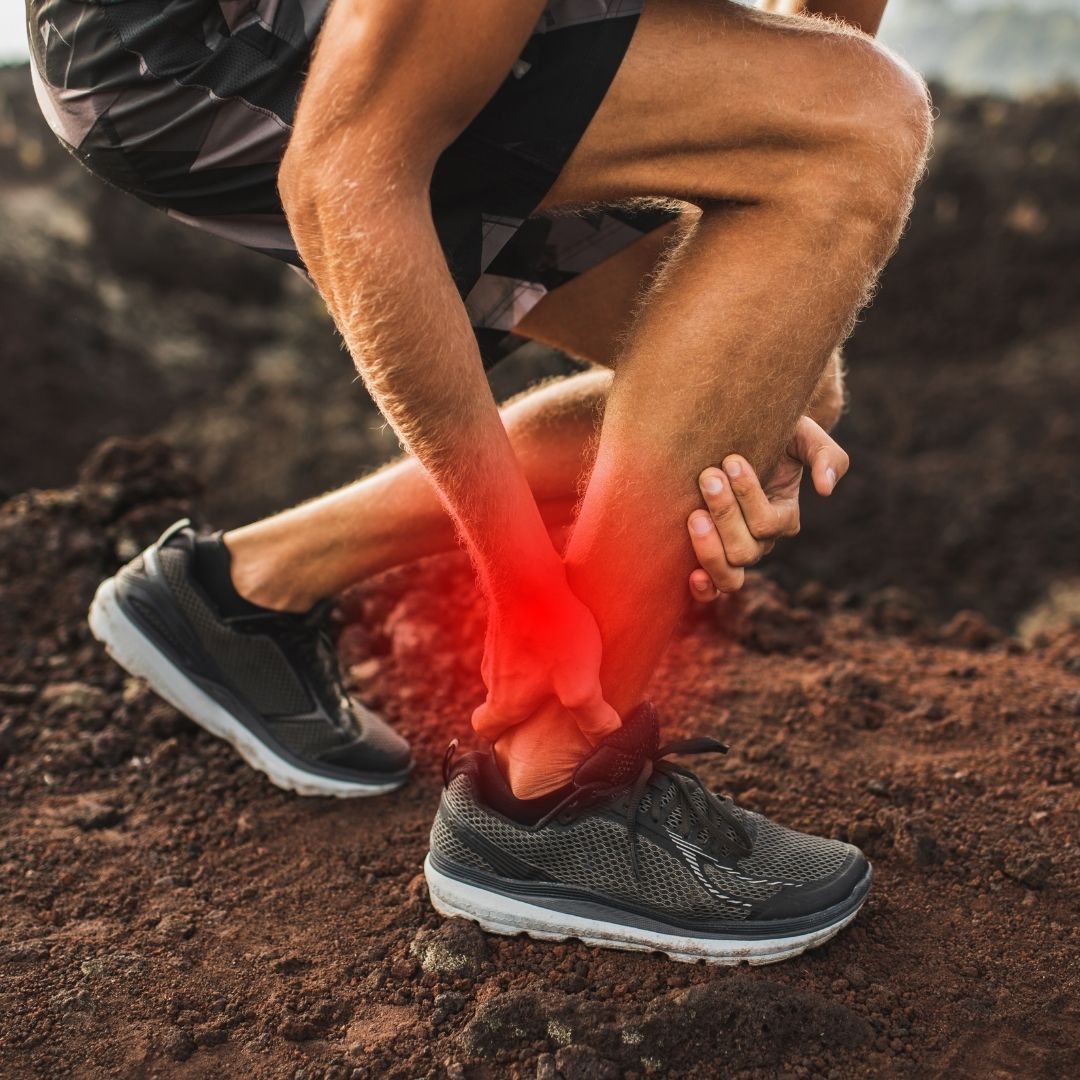

Overview:
An Achilles tendon rupture is a complete or near-complete tear of the tendon connecting your calf muscles to your heel bone. It is a significant injury with a long recovery, and it needs prompt assessment.
The description is consistent enough to be almost diagnostic. People report a sudden sharp pain at the back of the ankle, often with an audible snap, and a distinct sense of having been kicked or hit from behind even though nobody was there. It is most common in men between 30 and 50 returning to sport after a period away.
Anatomy:
The Achilles is the largest and strongest tendon in the body. It joins the gastrocnemius and soleus muscles to the calcaneus, and it transmits the force that lifts your heel with every step.
It routinely handles several times body weight during running and jumping. Its blood supply is relatively poor around six centimetres above the heel, and this is where most ruptures occur. Many ruptures happen in tendons that had shown no symptoms beforehand.
Causes:
The typical mechanism is a sudden, forceful load on a tendon that was not prepared for it.
- Explosive push-off: Sprinting from a standing start, jumping, or lunging for a ball. Very common in tennis, basketball, squash and social football.
- Returning to sport after time away: The classic presentation is someone playing their first game in months.
- A sudden upward stretch of the ankle: Stepping into a hole or falling forward with the foot fixed.
- Pre-existing tendon change: Long-standing Achilles tendinopathy can precede a rupture, though many ruptures occur without warning.
- Certain medications: Some antibiotics and corticosteroid use are associated with an increased risk. This is a question for your GP, not something to self-assess.
Symptoms:
The presentation is usually dramatic and quite specific.
- Sudden sharp pain at the back of the ankle, often with a snapping or popping sound.
- The feeling of being struck or kicked in the back of the leg.
- Difficulty pushing off, and an inability to rise onto the toes on that leg.
- A palpable gap in the tendon a few centimetres above the heel, particularly in the first hours before swelling develops.
- Swelling and bruising around the back of the ankle and heel.
- Walking may still be possible, using other muscles, which is why some people delay getting it looked at. Being able to walk does not rule out a rupture.
Diagnosis and Tests:
This is a time-sensitive diagnosis and warrants same-day assessment.
- History: The mechanism and the description of a snap are highly suggestive on their own.
- Calf squeeze test: With you lying face down, squeezing the calf should move the foot. Absence of that movement strongly suggests a rupture.
- Palpation: Feeling for a gap along the tendon.
- Heel raise test: An inability to perform a single-leg heel raise.
- Imaging: Ultrasound or MRI to confirm the diagnosis and assess the gap between the tendon ends, which informs the treatment decision. Urgent referral is arranged where a rupture is suspected.
Management and Treatment:
The choice between surgical repair and non-surgical management is made with an orthopaedic surgeon, and both are legitimate paths with comparable long-term outcomes in the right patient.
- Immediate referral: A suspected rupture is referred for orthopaedic assessment. Early management influences the outcome, so this is not something to wait on.
- Non-surgical management: Immobilisation in a boot with the foot pointed down, progressively brought back towards neutral over several weeks, followed by structured rehabilitation.
- Surgical repair: Considered particularly in younger patients, athletes, and where the gap between the tendon ends is large. The rehabilitation program follows the surgeon’s protocol.
- Staged rehabilitation: Whichever path is taken, the rehabilitation is the same shape. Protected range of motion, then isometric loading, then progressive calf strengthening, then return to running and hopping.
- Rebuilding calf capacity: Calf strength commonly remains below the other side for a year or more, and closing that gap is what the later stages of rehabilitation are for.
- Medication and injection-based options: These sit outside a chiropractor’s scope of practice. If pain is limiting your sleep or stopping you starting rehabilitation, that is worth discussing with your GP rather than self-prescribing long term.
Three exercises for Achilles tendon rupture recovery
These three were put together by our practitioners as a starting point. They are general exercises, not a personalised program.
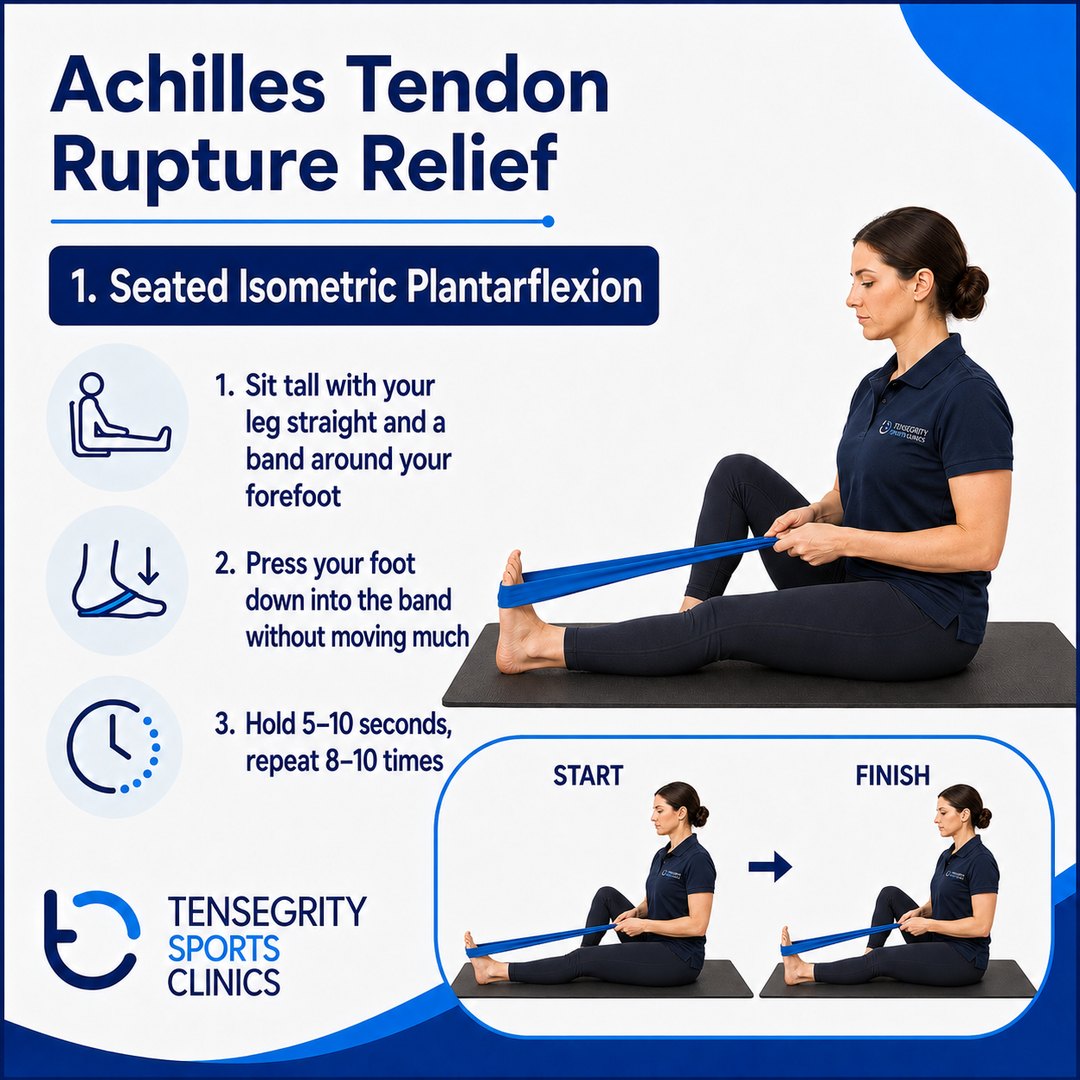
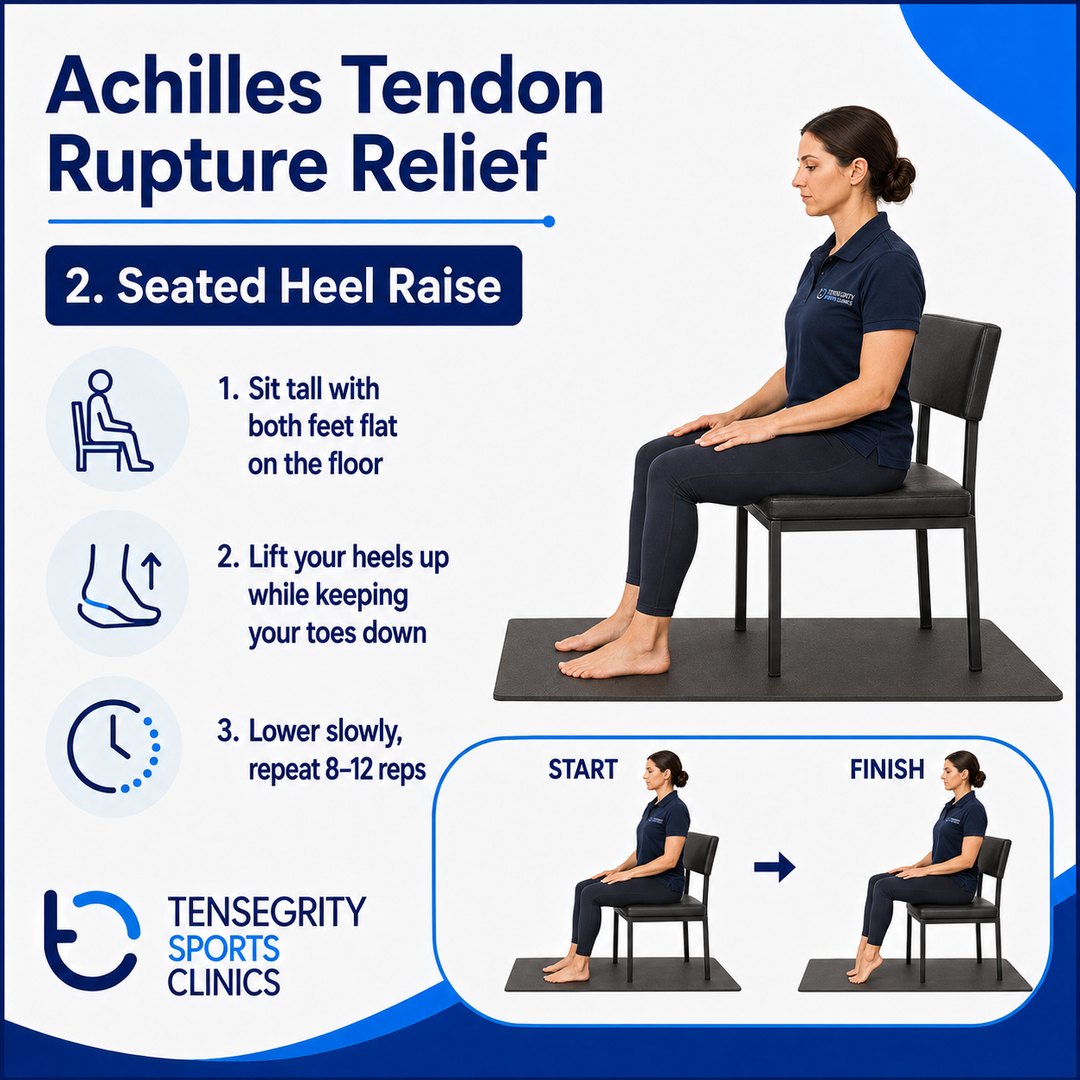
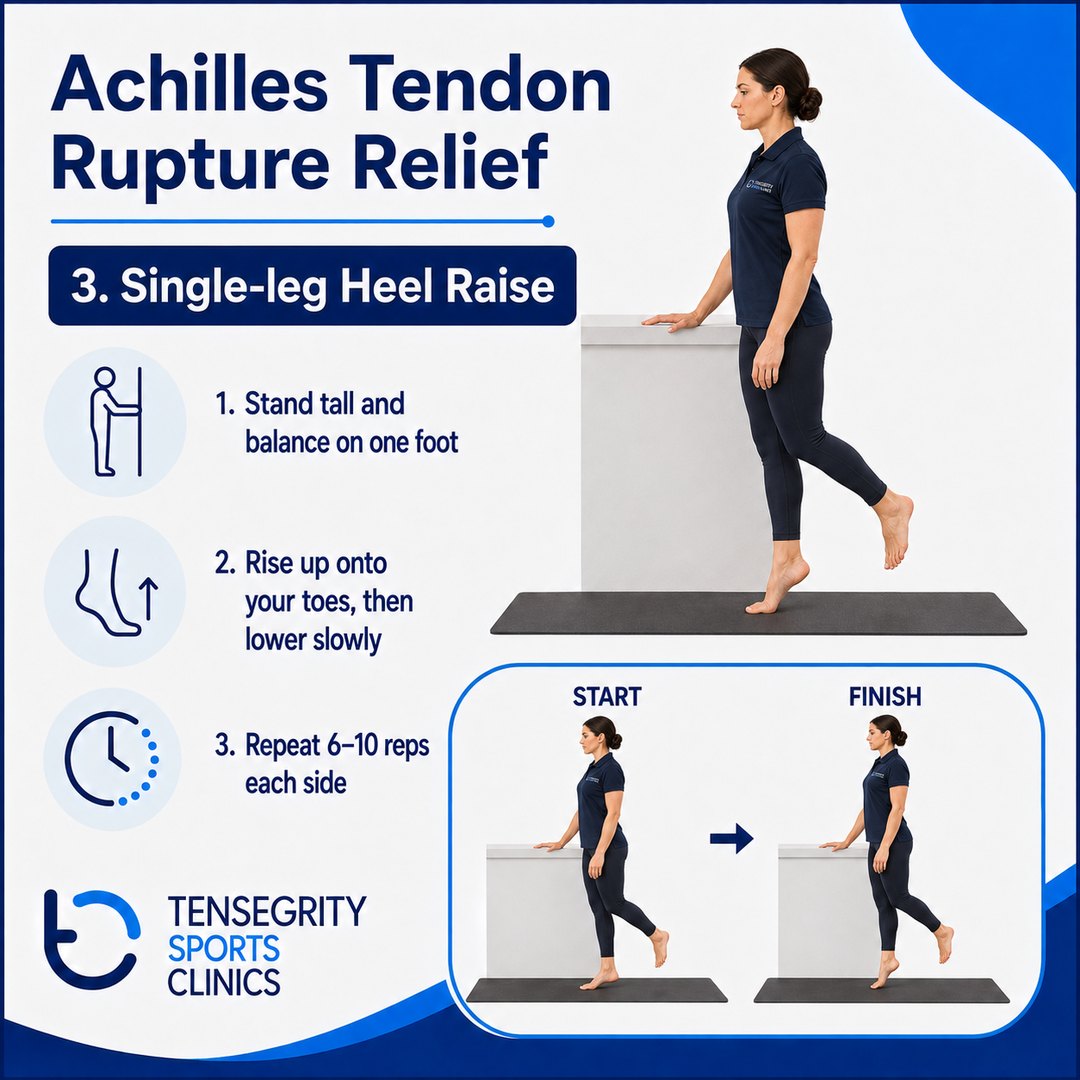
These are later-stage exercises and the right time to start each one depends on your surgeon’s protocol or the stage of your boot program. If you have had a rupture, book an assessment so the loading is matched to where you actually are rather than to a general timeline.
Prevention:
Not every rupture is preventable, but the risk pattern is well recognised.
- Build back gradually after time away from sport rather than playing a full game in week one.
- Keep calf strength up year round, including single-leg heel raises.
- Warm up properly before explosive activity, particularly in colder weather.
- Take persistent Achilles pain seriously rather than training through it for months.
- Discuss tendon risk with your GP if you are prescribed a medication associated with it.
Outlook / Prognosis:
Recovery is long. Most people are walking without a boot by three months, jogging between four and six months, and returning to change of direction sport somewhere between nine and twelve months. Rushing any stage increases the risk of re-rupture, which is highest in the first year.
Long-term outcomes are generally good with either surgical or non-surgical management when rehabilitation is completed properly. The most common lasting deficit is calf strength and endurance on the injured side, which is why the later stages of the program matter as much as the early ones.